The Renaissance period, which began in the 14th century, was a time when the philosophies, arts, and values of Ancient Greece and Rome were rediscovered, and civilization began to rise again through a sort of revival. This period lasted until approximately the 16th century and later came to be known as the “Renaissance.” The Renaissance first began in the cities of Florence and Siena and gradually spread. In this article, we will explore this period, which is of great importance in the history of civilization.
Early Renaissance Art
Since the Renaissance was a period that spanned centuries and gave rise to numerous innovations, we divide it into two distinct phases: the Early Renaissance and the High Renaissance. The Renaissance emerged in Italy and the Flanders region in the 14th century, developing alongside various artists, philosophers, and scientists, and eventually spread throughout Europe. Although it came to an end around the 16th century, the ideas, works, and innovations that emerged or were introduced during this long period profoundly influenced the centuries that followed.
In the 15th century, the expansion of the printing press’s use and scope across Europe laid the groundwork for the rapid development of written culture. As a nation, Italy already drew its roots from the cultures of Ancient Greek and Roman civilizations. Consequently, a renewed interest in these ancient cultures began to emerge in Italy’s developing cities. Thus, Gothic art and architecture, which had drawn inspiration from the spirit of the Middle Ages, gradually began to lose their influence across Europe. The ideas of Greek philosophers were revisited, and attempts were made to offer new interpretations. In this way, the spirit of the Renaissance began to revive.
One of the ideas that reemerged during the Renaissance was humanism. Humanists argued that learning and self-improvement should be a person’s foremost concerns. In doing so, they occasionally found themselves at odds with the teachings of the Church. Fueled by the influence of written culture, humanism spread rapidly across Europe.
With the Renaissance, secular thought also began to spread rapidly. Religious teachings still held sway, but artists were now turning their attention to more secular subjects; topics such as humanity’s place in the universe, death and life, the world, and humanity itself were highly valued. All of this led to Renaissance art being practiced with different objectives.
Art was no longer created for religious purposes but for its own intrinsic value. With the revival of classical culture, the primary concern in Renaissance art became depicting the world as closely as possible to reality. Furthermore, Renaissance artists were no longer anonymous figures spreading the word of God; they became well-known individuals who received numerous commissions and were widely recognized among the people.
We see that many Early Renaissance artists brought about significant developments in art. While Giotto di Bondone (1266/7–1337) was revolutionizing painting in Florence, Duccio di Buoninsegna (1255/60–1315/18) was doing the same in Siena, spreading the spirit of the Renaissance. Giotto and Duccio produced figures that were realistic, natural-looking, and richly colored, in keeping with Renaissance art. In doing so, they broke away from the conventional patterns of Byzantine and Gothic art, introducing new paradigms.
Masaccio (1401–1428) redefined the direction of painting through his use of linear perspective. Piero della Francesca (1415–1492) pushed the boundaries of light and shading by incorporating the ideas of his contemporaries. Drawing inspiration from Giotto in the realistic figures he created, he rendered these figures far more lifelike through the use of linear perspective and shading. Other notable Renaissance artists, such as Paolo Uccello (1397–1475), can also be cited as examples.
At that time, Flanders was a region experiencing a revival in Renaissance art, attracting the interest of wealthy merchants with its many innovative ideas. Renaissance artists living in this region were producing realistic illuminated manuscripts and receiving numerous commissions.
Around 1410, they began using pigments mixed with oil instead of egg tempera as a new technique. They worked on wooden panels using this method. Oil helped them produce much more impressive works. Colors became more vibrant, brighter, and more profound. Jan van Eyck mastered oil painting. In this way, he produced brighter, more colorful, and masterfully executed works. Rogier van der Weyden and Robert Campin produced extremely realistic paintings by depicting spatial depth in a much more realistic manner. They also placed particular emphasis on interior details.
High Renaissance: The Maturity of Art
With the innovations brought by the Renaissance, art became far more productive and rich. This allowed young artists to produce more daring and skillful works. Renaissance artists were deeply committed to their craft, and there was an abundance of creative and ingenious ideas. By the late 15th century, the Renaissance had reached its mature phase. The Early Renaissance had now come to an end, and the High Renaissance—which we consider the second phase of the Renaissance—began. Aiming to achieve the technical mastery found in Roman and Greek art, artists sought to produce the most realistic, balanced, and dramatic interpretations of paintings and sculptures.
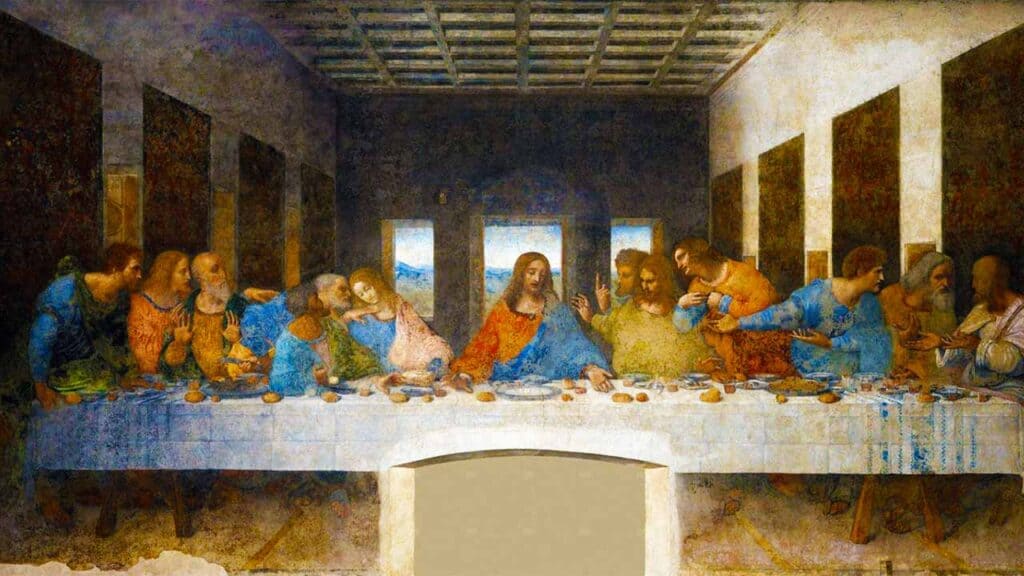
Some historians argue that the primary reason for the transition from the Early Renaissance to the High Renaissance was Leonardo da Vinci’s painting *The Last Supper* (1495–1498). Northern masters such as Dürer (1471–1528) and Holbein (1497–1564) created many sophisticated works. Venetian painters such as Giorgione (1477–1510) and Titian (1488–1576) created highly impressive, eye-catching, and colorful compositions.
The Greatest Artists
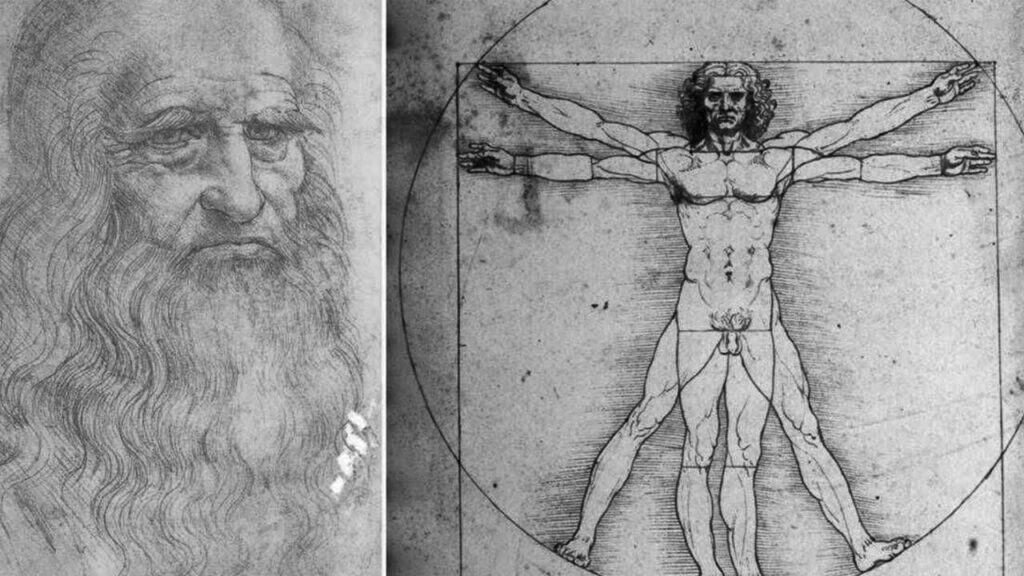
Great masters such as Leonardo, Michelangelo (1475–1564), and Raphael (1483–1520) also left their mark on art history and Renaissance art through their superior techniques and monumental works. Leonardo da Vinci was a painter, sculptor, inventor, mathematician, philosopher, architect, engineer, and scientist. Drawing on the wealth of knowledge gained from this versatility, he developed innovative methods and compositions.
One example of his inventions is the sfumato technique. The sfumato technique is a blurred painting method he used to create soft, gradual transitions—almost misty tones—rather than sharp ones. By examining Leonardo’s surviving works and notebooks, we can see why he is considered one of the great masters of the Renaissance and appreciate his extraordinary, brilliant intellect. This Renaissance artist, whom we might call a genius, also left behind many unfinished projects.
Another master artist, Michelangelo, was regarded as the most important artist of his century. A poet, painter, sculptor, and architect, Michelangelo left an indelible mark on Renaissance art with his revolutionary ideas in painting and sculpture. As a third master artist alongside Leonardo and Michelangelo, we can cite the Italian artist Raphael.
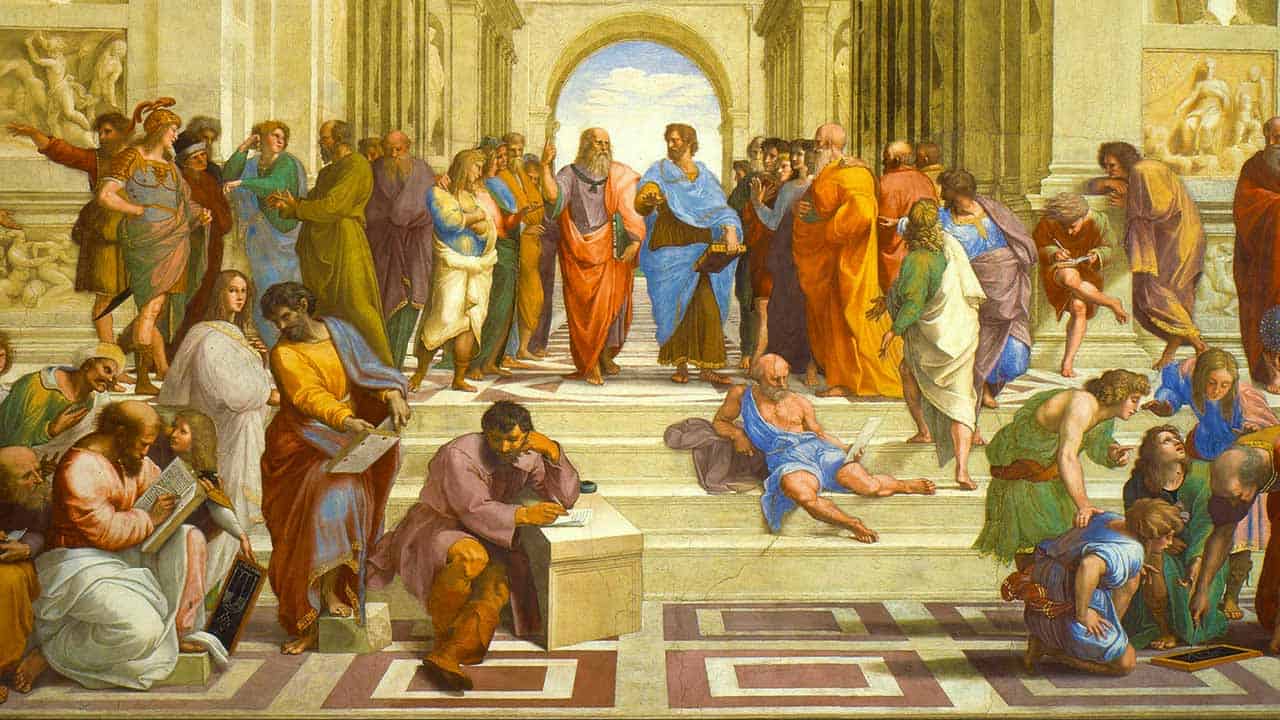
Raphael also possessed a multifaceted personality. In his works, which explore mythological and religious themes, he inspired admiration among people with his holistic narrative and harmonious use of color. The third Italian artist, who was hailed as a genius throughout his career, is Raphael—a master painter and architect. Raphael has inspired great admiration through the composition and color harmony in his portraits and works with mythological and religious themes, as well as his serene and pure depictions.
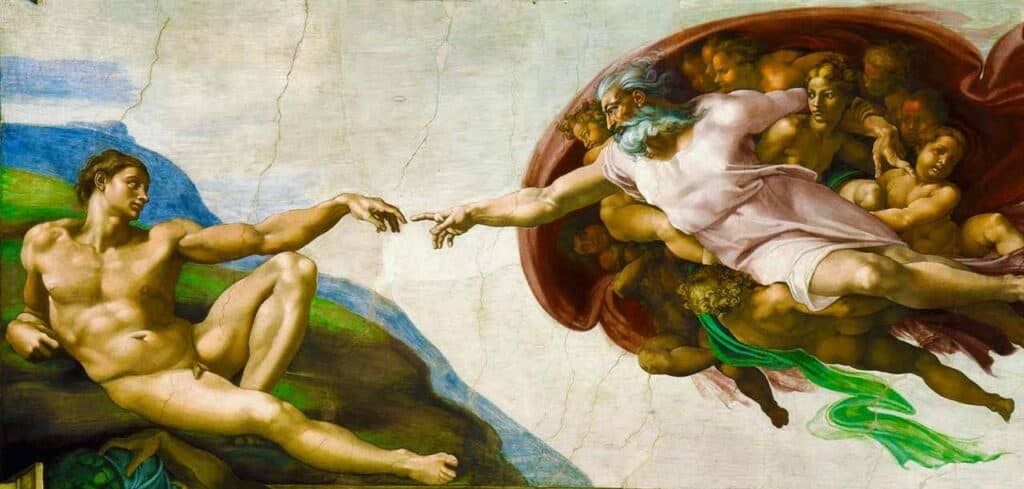
During the High Renaissance, artists took a keen interest in anatomy in order to achieve more realistic depictions of figures and the human body. Leonardo used the cadavers of executed criminals to gain a better understanding of the body’s structure and function. Michelangelo left behind notes detailing his studies of human anatomy. In this way, new standards for the human figure were established. High Renaissance artists moved away from focusing solely on religious themes. Art became an integral part of daily life. One of the most distinctive ideas of the Renaissance spirit was the pushing of the boundaries of human endeavor and the encouragement of such efforts. Skill and talent were protected, nurtured, and rewarded.
In this article, we have examined the Renaissance period, Renaissance art, and the leading artists of this era. The Renaissance, in all its aspects, is a rebirth, a kind of longing for the past. The rational and realistic principles inherent in ancient Greek and Roman cultures reemerged and became dominant even a thousand years later. This is the spirit of the Renaissance. It is the reawakening of the spirit of ancient Greece across all of Europe.
An example of this is how Michelangelo’s ideas about art align with the meaning of art in Plato’s philosophy. From this perspective, we see just how powerful Greek philosophy and art were. Consequently, we can understand how valuable this legacy is for the history of human culture and civilization. Renaissance art, in turn, serves as an example of the rebirth of this legacy. The significance of the Renaissance for the history of art is undeniable. We will also have other articles about the leading Renaissance artists.