Claude Monet is one of the Impressionist painters of immense importance to modern art. Monet particularly loved painting landscapes, and the landscape paintings he created during his lifetime continue to leave a lasting impact. Monet’s bold and vibrant color choices and dynamic use of light are among the characteristics that define his integration with Impressionist art.
Monet and His Legacy
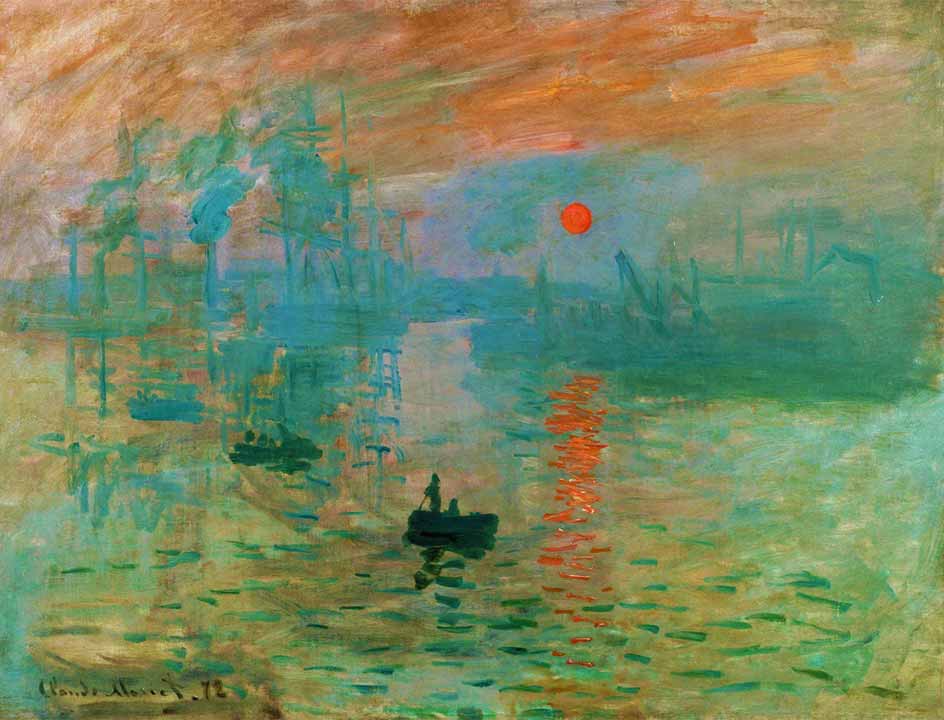
Claude Monet is one of the most important figures in modern art. When Monet’s painting *Impression, Sunrise* was first exhibited in 1874, it stunned viewers. This was because Claude Monet was openly defying traditional notions of art with the hazy, sketch-like appearance he created in the painting. For this reason, it quickly sparked a major backlash in the art world and came under fire from critics. However, despite all this backlash and criticism, as the years passed, the opposition waned, and the “Impressionism” movement—named after Monet—grew and gained immense popularity. The Impressionist movement continued to exert its influence almost until the 1900s.
Monet was such an influential artist that he was known as the “Father of Impressionism.” Through the bright and luminous color palettes he preferred in his works, he became a symbol of movement and dynamism in art. Monet left behind a rich legacy of more than 2,000 works. Like his contemporaries, Monet’s style was unique and original. Although his rejection of traditional elements in painting plunged him into a quagmire of poverty and misunderstanding, his innovative and original approach, combined with his resolute character, made him one of the leading artists of his time.
During the period when he was fully immersed in his art, Monet was quite demanding and self-centered. While this attitude could be attributed to his artistic temperament, he became unbearable when his paintings did not turn out as he had envisioned. Throughout his life, he worked alongside highly educated people and formed close friendships. He strove to live as high a quality of life as possible. Although he challenged traditional taboos in art, he lived in harmony with the social structure of his time.
Monet came of age at a time when artists, since the Renaissance, had received rigorous training and learned their craft within a strict framework of rules. Over the course of more than forty years of his life, he rebelled against the traditional, rigid artistic practices that had permeated the very depths of French art. Despite the constant criticism he faced, his family’s lack of support, and financial hardships, he continued to practice his art in his own style. Boudin had said that Monet possessed the most important qualities a landscape painter should have. By the time Monet’s 86-year life came to an end, his works were world-renowned and would continue to inspire future generations of artists.
The Life of Monet
Oscar-Claude Monet was born in Paris in 1840. His early years in Le Havre greatly influenced his perspective on seascapes and the changes in nature. His first forays into painting began when, at the age of 15, he drew and sold caricatures of people in his neighborhood. Although he went by the name Oscar during his early years, Monet would begin using the name Claude by the time he reached his 20s. While Monet and his family were not particularly wealthy, it is known that they occasionally faced financial difficulties. Monet first enrolled in a private school but later left to attend a public school closer to home at the age of 11.
At this public school, he received an education in subjects such as Latin, Greek, French, mathematics, and art. The art education he received there was provided by Jean-François Ochard, a student of Jacques-Louis David, Napoleon’s court painter. For this reason, art had been Monet’s favorite subject from a very young age. Ochard had his students practice traditional figure drawing using plaster casts of famous sculptures. Monet enjoyed this kind of work.
However, when we look at Monet’s personality, the nonconformity that would shape his life in later years was already evident during his school days. In fact, Monet himself had this to say on the subject: “…Even as a child, I was never one to follow the rules… School always made me feel like a prisoner, and even for just four hours a day, I could never bring myself to submit to life there.”
Later, when Monet was forced to stay with his aunt, she supported him both financially and emotionally, knowing of his interest in art. The landscapes of land and sea painted by Eugene Boudin were displayed in Gravier’s shop window above the caricatures Monet had drawn as a child. At that age, Monet did not care for Boudin’s art and considered his own work far superior. In fact, on one occasion when he had the chance to meet Boudin, he turned down the opportunity outright, believing he had nothing to learn from him.
However, as time went on and Monet found himself in a position where he had to meet Boudin, he took pride in the praise he received for his art. Over time, there was more interaction between Monet and Boudin. Boudin encouraged Monet even more in his painting. Later, Monet would write to Boudin, “I have not forgotten that you were the first to teach me how to see and understand.”
Monet later went to Paris, where he enrolled at the Académie Suisse. In Paris, he studied the paintings exhibited at the Salon. There, he had the opportunity to see works by artists associated with the Barbizon School, such as Charles-François Daubigny. Among the students at the Académie Suisse, alongside Monet, were figures like Delacroix, Corot, and Gustave Courbet. The school was quite flexible in its approach to education.
Class schedules were not rigid but very flexible, and students could come and go as they pleased. A more liberal art education was provided. For this reason, traditional conventions were not imposed on the students here. Later, due to mandatory military service, Monet was sent to Algeria as a soldier. There, he encountered natural scenes and color harmonies that would later influence his artistic style.
Monet later met the painter Jongkind, whose landscape paintings he had already been following and of whom he was a great admirer. Monet said the following about Jongkind: “Jongkind completed the training I received from Boudin. From that moment on, he became my true master. I owe the ultimate development of my artistic vision to him.” In 1864, Monet returned to Normandy to paint outdoors and make better use of the light.
After working there for a while, he decided to return to Paris and open a studio due to disputes with his father. The disputes with his father also put Monet in a difficult financial situation. However, he began to feel a bit more at ease when he and Bazille started running a studio together in Paris. This studio also became a regular gathering place for Sisley and Renoir. There, Monet painted scenes from every corner of the city.
Although Monet received portrait commissions and garnered praise, none of this prevented him from struggling financially. For this reason, in 1869, Renoir took Monet to La Grenouillère to help him out. Over time, as Monet began interacting with art dealers, he met Gaudibert, an art dealer. Gaudibert continued to purchase works from Monet until his death in 1870. However, financial problems still plagued Monet. Monet continued to paint alongside Renoir, but both were facing financial difficulties.
They both believed that their paintings of Bougival scenes would capture the interest of the French public. In 1870, Monet married a woman named Camille Doncieux. Recently emerging diplomatic tensions led Napoleon to declare war on Prussia. This war was a complete disaster for Monet. Although he himself was not drafted, Renoir was called to serve, and his friend Bazille lost his life in the conflict.
Not wanting to remain in this chaotic environment, Monet left Paris with his wife and went to London. The commune government established in France after the war fell shortly thereafter. Monet wanted to take advantage of this development to leave London, but he did not want to return to the unstable situation in France either. For this reason, he took a different path with his family and decided to go to the Netherlands. There, Monet found the Dutch to be very hospitable and welcoming, which had a positive impact on his artistic productivity.
When he returned to Paris in 1871, Monet was deeply saddened by the sight of what remained after the war’s destruction. Despite all this, Monet did not lose heart and experienced what were perhaps the most productive years of his life between 1872 and 1873. He had begun to get back on his feet financially and was happy with his wife and daughter. He had reached a point where he could hold one exhibition after another in Paris. During this period, however, Monet occasionally faced financial difficulties again.
A Life Devoted to Art
In 1879, Monet was approaching his 40s and was incredibly productive. Since arriving in France, he had participated in four Impressionist exhibitions. Although Impressionism was still subject to criticism, this did not deter Monet. That same year, he lost his wife, who had served as his model and been his friend for 13 years. Monet was overcome with grief and spent weeks writing letters to his loved ones, expressing the sorrow caused by his wife’s death. On the other hand, his wife’s death had sparked an artistic transformation in Monet.
Abandoning his old style, he began to focus more on the raw, unadorned aspects of nature. He began traveling all over France and captured numerous scenes. He held more Impressionist exhibitions. While working in his native region, Monet faced family hardships. He had to care for many children, and the local community did not view him as one of their own.
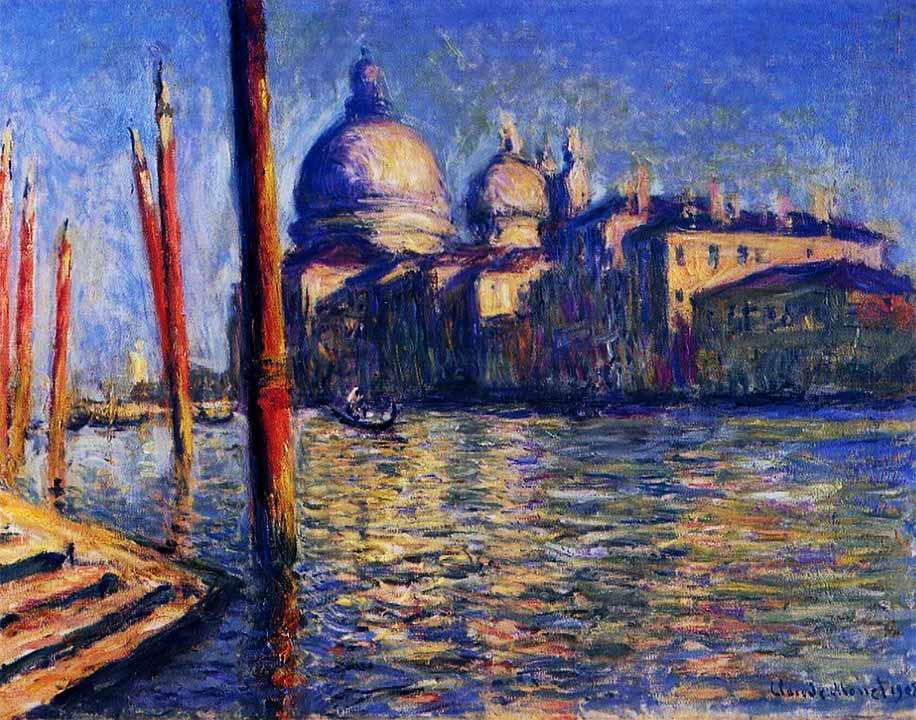
By 1886, Monet had traveled to New York and participated in the first Impressionist exhibition there. The Impressionist exhibition attracted considerable interest from the local public, and the response to Monet was positive. However, despite being well-received there, Monet did not wish to remain in the United States, so he returned to Givemy. There, he spent most of his time painting his family and began to receive positive feedback. For a time, Monet traveled to various locations in the Mediterranean, creating new landscape paintings.
He traveled to Venice with his wife, Alice, and was captivated by the city’s canals. However, the death of his wife, Alice, and the loss of some of his children soon plunged Monet into deep sorrow, bringing his traveling period to an end. Monet shut himself away at home for a long time. In the 1920s, facing the threat of blindness, Monet underwent four cataract surgeries. He wrote that he was able to work much better after these surgeries. A few years later, in 1926, Monet died at the age of 86 due to pulmonary fibrosis.