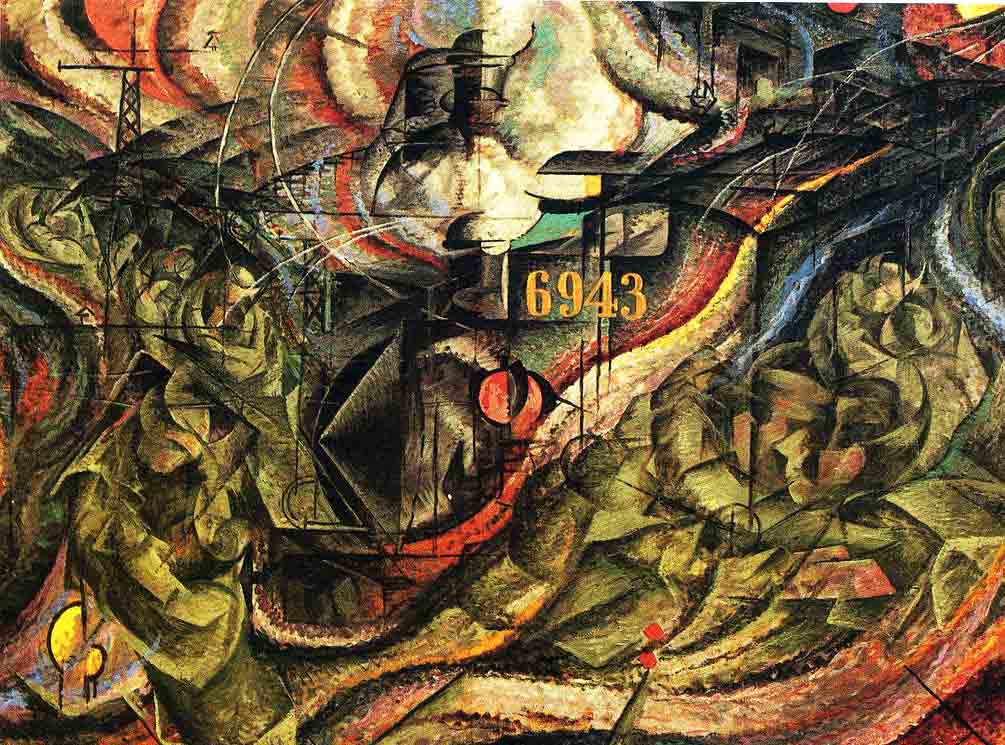
While the Cubists continued their work in France, a group of artists in Italy was debating other artistic ideas. Calling themselves the Futurists, they embarked on a form of artistic production that embraced what they saw as the new and magnificent world of modern technology—from 1910 to 1916—a movement they believed was forward-looking and turned its back on Italy’s artistic tradition.
Futurism is the only avant-garde art movement of the 20th century centered in Italy rather than Paris. In 1909, poet and editor Filippo Tommaso Marinetti (1876–1944) wrote the Futurist Manifesto, which glorified youth, machines, motion, power, and speed. At that time, no Futurist artwork had yet emerged; all ideas were purely theoretical. For Marinetti and his friends, cars, airplanes, and other technological advancements represented excitement and the promise of a better future for everyone. They believed the time had come for everyone to leave behind classical tradition and Renaissance ideals and begin embracing new ideas. The Glorification of Violence Marinetti’s publication of the first Futurist Manifesto in December 1908 in the Italian newspaper *La Gazzetta dell’Emilia* and a month later in the French newspaper *Le Figaro* served as a source of inspiration for other writers, artists, architects, designers, and composers.
The Rejection of the Past and The Glorification of Violence in Futurism
The ideas presented in the manifesto were revolutionary in nature, and there was a consensus that the age of the machine would improve everyone’s lives. In 1910, a group of artists—including Umberto Boccioni (1882–1916), Gino Severini (1883–1966), Giacomo Balla (1871–1958), Luigi Russolo (1885–1947), and Carla Carra (1881–1966), published a second manifesto titled The Manifesto of the Futurist Painters. This manifesto was even more specific than Marinetti’s 1909 manifesto. It called on Italian artists to stop looking to the past and to look toward the future. They criticized classical painting and extolled modern technology. A month later, they published the Technical Manifesto of Futurist Painting, encouraging artists to find ways to express dynamism and movement in their works.
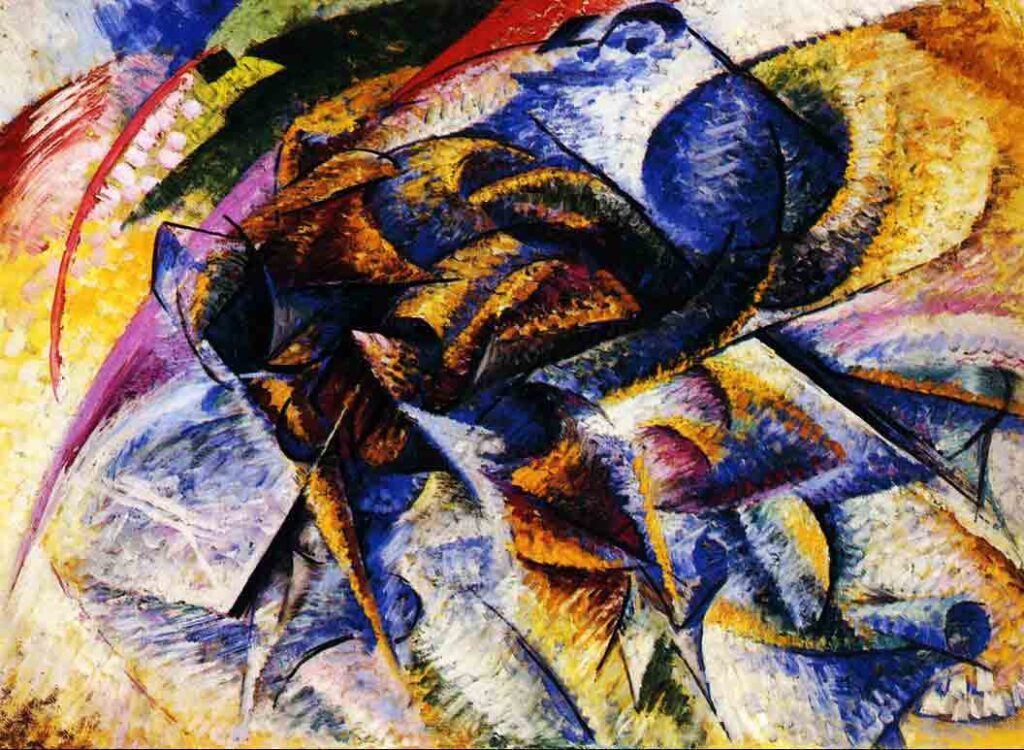
Between 1909 and 1916, more than fifty Futurist manifestos were published, containing guidelines on how to approach the new art style and the artists’ philosophies. In addition to modern technology and industrialization, the Futurists were influenced by Expressionism, Neo-Impressionism, Cubism, and the music of Igor Stravinsky (1882–1971). All forms of mechanization and new technology—even war—were, in their view, exciting, fast-paced, and modern phenomena worthy of depiction, as they believed these would help people break free from social prejudices. They defined war as “the world’s only hygiene.” Even before facing the horrors of World War I, they held views that glorified violence.
The Unity of Rhythm and Sequence
In his manifesto, Marinetti wrote about the birth of a new beauty—the beauty of speed. Above all, the Futurists aimed to depict speed and motion. To achieve this, they employed rhythmic, repetitive lines, fragmented sequences, or blurred forms, demonstrating their familiarity with photography and the newly discovered X-rays. Objects were depicted from different angles at once, though not as strongly as in Cubism. Bold colors, curved or jagged brushstrokes, fragmented, sinuous, or diagonal lines helped them create two- or three-dimensional effects of movement and light. Complementary colors were placed side by side to make the paintings appear bright and vivid. While most works depicted the real world, some were abstract. Many artists believed that the process of creating a work was just as important as the finished product, and that intuition and simultaneity (multiple perspectives) were more important than meticulous planning.
The first major Futurist exhibition opened in Milan in 1911. In 1912, the group organized an exhibition that began in Paris and toured other European cities. The exhibition, which traveled to Zurich, Vienna, Beden, London, and Brussels, caused a sensation, and Futurist thought spread rapidly, influencing many artists in different countries. With their radical ideas that rejected past traditions, the Futurists soon began to criticize Cubism as well, believing it lacked sufficient foresight. Cubism, on the other hand, ultimately proved to be a more widespread and influential movement. While Futurism was interpreted across various art forms such as sculpture, poetry, and music, the first Futurist group was so adept at publicizing their work through seminars, public gatherings, and promotional campaigns that they unwittingly played a significant role in the development of modern public relations techniques.
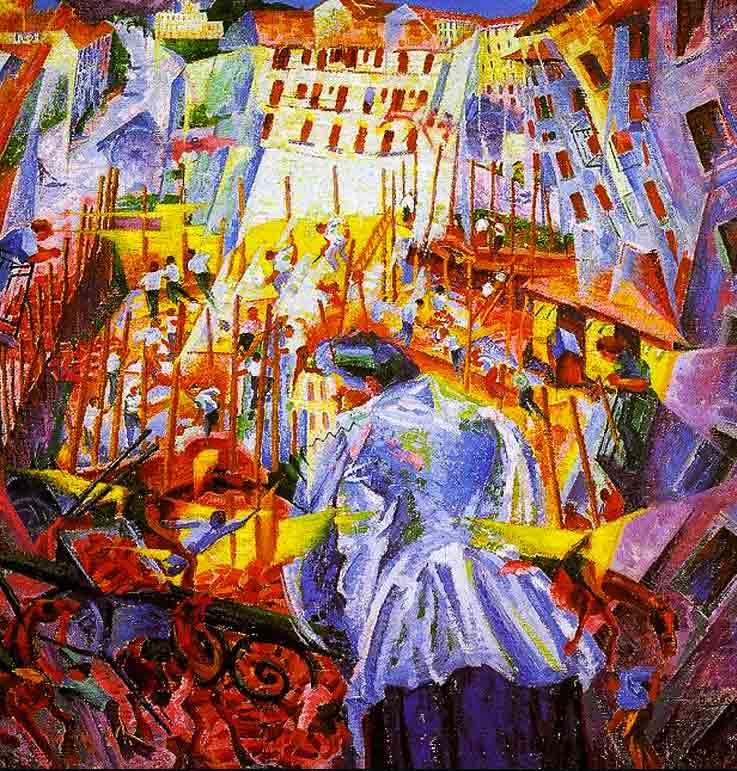
The future excited the Futurists so much that they overlooked the futility of war and the destructive power of the machine gun they had glorified. In 1915, with Italy’s entry into World War I, these naive notions were shattered. Boccioni and the Futurist architect Antonio Sant’Elia (1888–1916) were killed in the war, and Russolo was seriously wounded in 1916. Although a Futurist group reformed in 1918, the ideals of these disillusioned artists had changed. Although Futurism, having lost its former enthusiasm, eventually faded away, its influence spread to many countries and shaped 20th-century avant-garde art and design movements such as Russian Futurism, Art Deco, Vorticism, Constructivism, Dada, and Surrealism.