When we try to form an idea of what art is, the fact that it has been and continues to be used as a tool for many purposes complicates this process. Throughout history, art has proven to be a highly effective tool for reflecting elements such as beauty, ideologies, stories, and religious depictions. In this article, we will examine the Egyptian art and ancient art.
Prehistoric Art
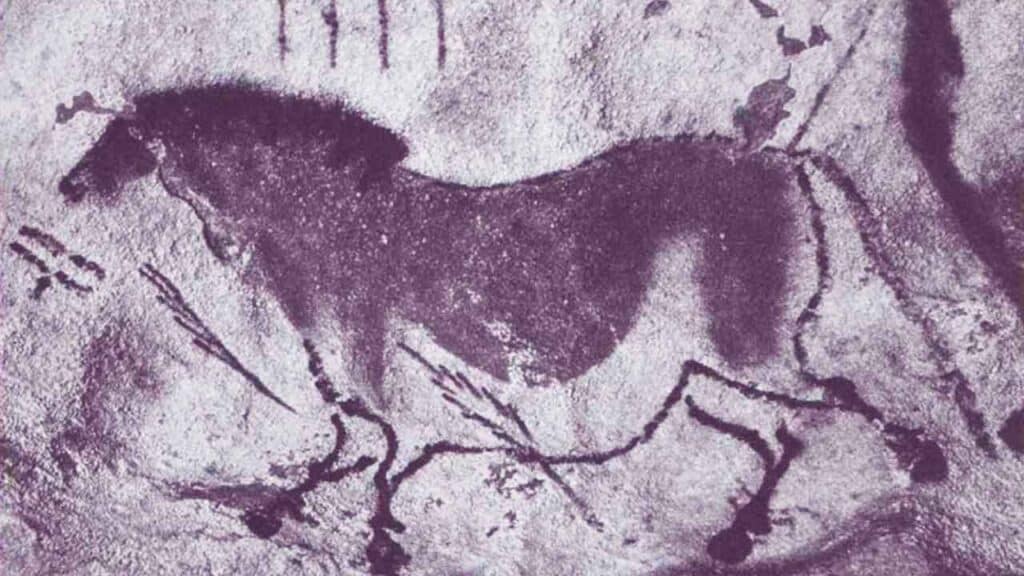
Through the works of art that have survived from prehistoric societies to the present day, we can gain insights into those societies’ religious practices, beliefs, and customs. During this period, the role of art was not merely decorative; it also possessed a magical dimension and was utilized as a tool in that capacity. What we might call the first works of art are actually hunting scenes, animal depictions, and various other motifs painted on cave walls and rocks between 15,000 and 9,000 BCE. In other words, the first works of art predate the earliest written records.
The most well-known examples of prehistoric artworks are the cave paintings found in France, Spain, Italy, and Russia. For example, in Lascaux, France, there are two caves featuring nearly 1,500 engravings and about 300 drawings. Furthermore, these drawings and engravings are surprisingly well-executed for their time, even from a technical standpoint. During this period, another function of art was the belief that it would bring good luck to individuals.
We know that rounded female figures made of limestone have existed in Austria since as far back as 25,000 B.C.; these figures are also known as Venus figurines. Similar sculptures are found in various regions of Europe. It is believed that these figurines symbolize fertility and abundance. Even today, there is no single consensus regarding prehistoric artistic works. However, there is some agreement regarding common elements seen in many cave drawings.
When we look back to the Paleolithic era, we can see that people held a belief in using art to invoke supernatural powers. There are also studies suggesting that women were among the cave artists of the prehistoric era. The likelihood that art was used for spiritual purposes is quite strong. When we consider details such as how, where, and what the works represent, we can clearly see that this claim is a strong one.
The Story Behind the Guernica Painting
Ancient Egyptian Art
When we look back at Ancient Egypt—that is, around 3000 B.C.—we see that art was developed within a specific system and practiced according to that system for a long time. The effort to please the gods and the belief that prosperity would follow—as in other civilizations—deeply influenced the artistic philosophy of Egyptian civilization.
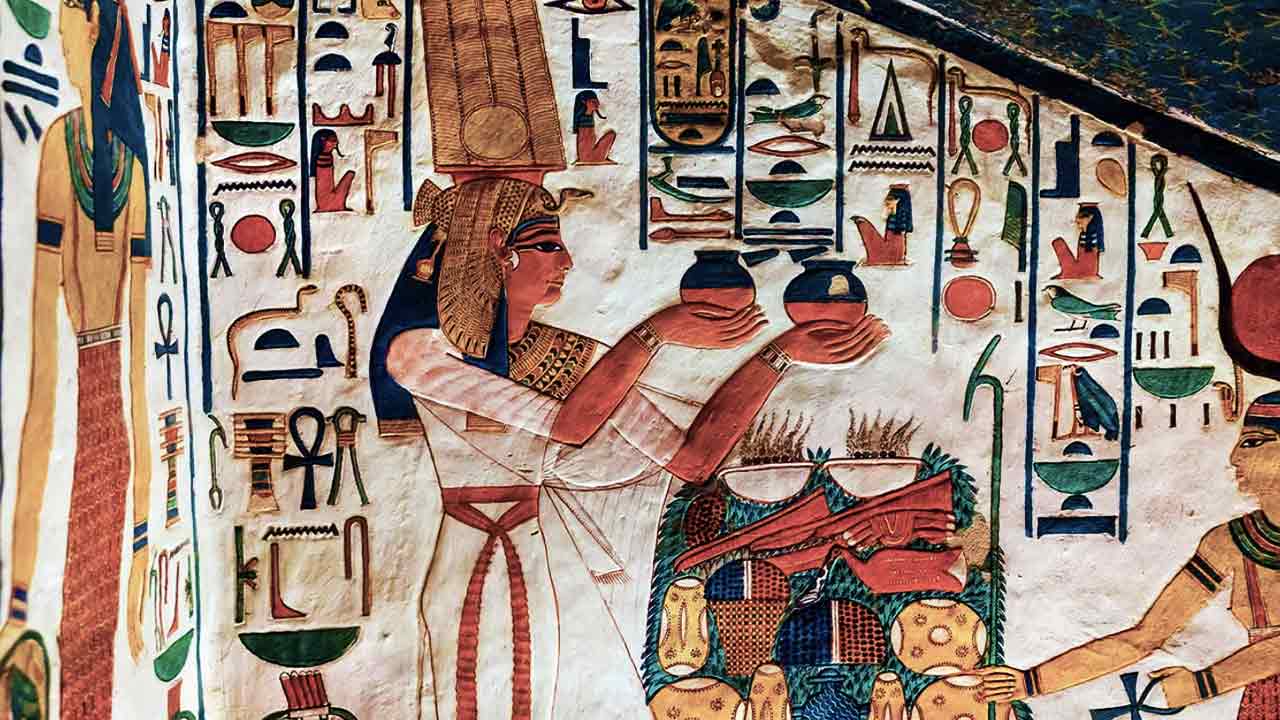
However, Egyptian artists did not create art for purposes such as decoration or to produce objects believed to bring good luck; instead, they pursued the intriguing goal of guiding the deceased and serving as their guides on their journey after death. For this reason, we see tombs adorned with objects used in daily life. A beautiful example of tombs from this period is the tomb of Queen Nefertari. The queen’s tomb is adorned with colorful reliefs depicting scenes from her life and certain religious texts. The hieroglyphs in the tomb depict the queen’s human body separating and transforming into a bird, symbolizing her transition to the afterlife.
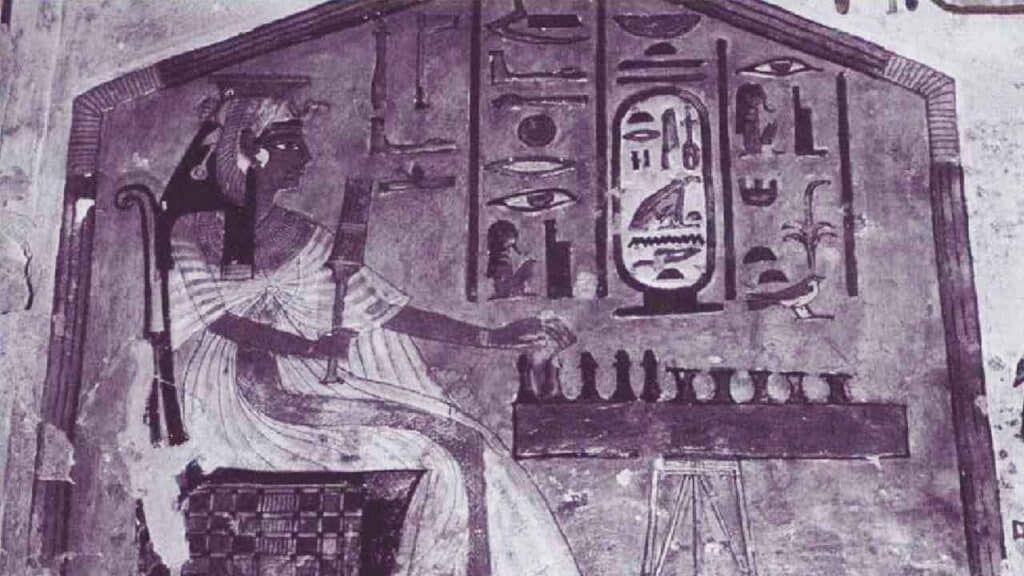
Art was practiced according to a specific system. Consequently, personal depictions and interpretations were prohibited in works of art. Artists underwent rigorous and systematic training for many years within the master-apprentice relationship. In Egyptian art, we can observe a geometric and mathematical harmony and balance. This harmony and order have provided us with the opportunity to experience a unique artistic language that still inspires awe today. The figures depicted on the largest scales in Egyptian paintings were also the most important individuals.
Men were depicted in darker tones, while women were depicted in light yelow tones. Men were drawn larger than their female counterparts. There were strict rules regarding the depiction of hundreds of gods. Since the priority in drawing, relief carving, or sculpting was not the most accurate representation of reality but adherence to pre-determined methodological practices and rules, the pharaohs’ statues did not resemble them exactly.
The reason the amulets, prayers, and symbols used were defined within these rules was the Egyptians’ belief that these methods would protect their deceased in their tombs. Although there were attempts to move away from this rigid artistic approach during the reign of Akhenaten, after his death, the systematic artistic approach of the past once again became dominant.
There are many subtleties to Egyptian art. However, what makes Egyptian art so magnificent may be the way the Egyptians have artistically interpreted their ancient beliefs, which are imbued with a divine aura. Everyone should explore Egyptian art, even if only a little, and experience that divine atmosphere. In this article, we’ve taken a brief look at the ancient understanding of art and the captivating world of Egyptian art. More content on Egyptian art is coming soon. Let this article serve as our first piece on the subject.