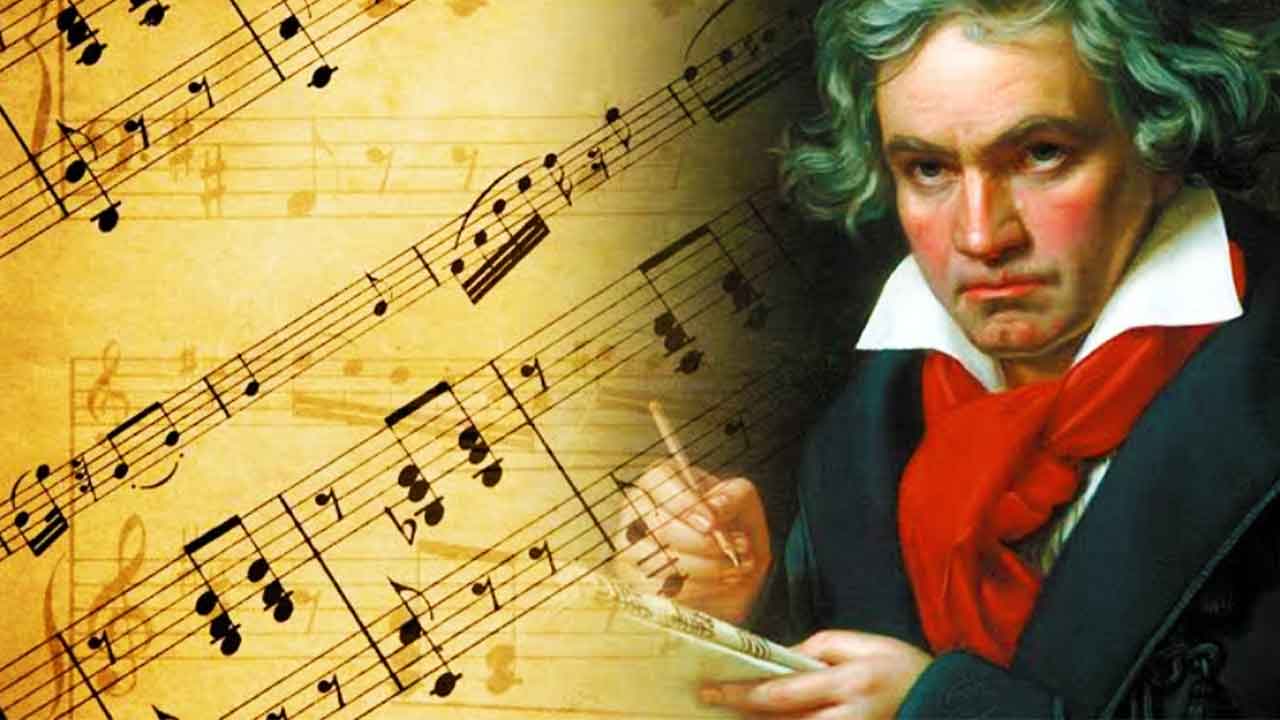
Ludwig van Beethoven, one of the most important figures in music history, with his striking and inspiring compositions, has inspired many people to believe that European aristocrats could establish themselves as serious artists. Beethoven laid the foundations of the piano in the modern sense and transformed it into an instrument through which the splendor of the human mind could be expressed.
One of Beethoven’s greatest qualities—which set him apart from his contemporaries and enabled him to push the boundaries of emotional expression on the piano—was his ability to conceive of music from an orchestral perspective and adapt this approach to the piano. Thanks to this approach, Beethoven was able to push the limits of musical performance on the piano and weave deep and rich narratives into his works.
We can say that his works, which possessed an expressive power that transcended his era in terms of emotion and expression, actually laid the foundation for Romanticism. In addition, Beethoven’s music has served as a source of inspiration for subsequent musicians and composers in many ways. Examples of such great artists include Wagner, Brahms, Berlioz, and Liszt. In his work *Symphonie fantastique*, Liszt was influenced by Beethoven’s music, particularly in his use of sudden and recurring motifs.
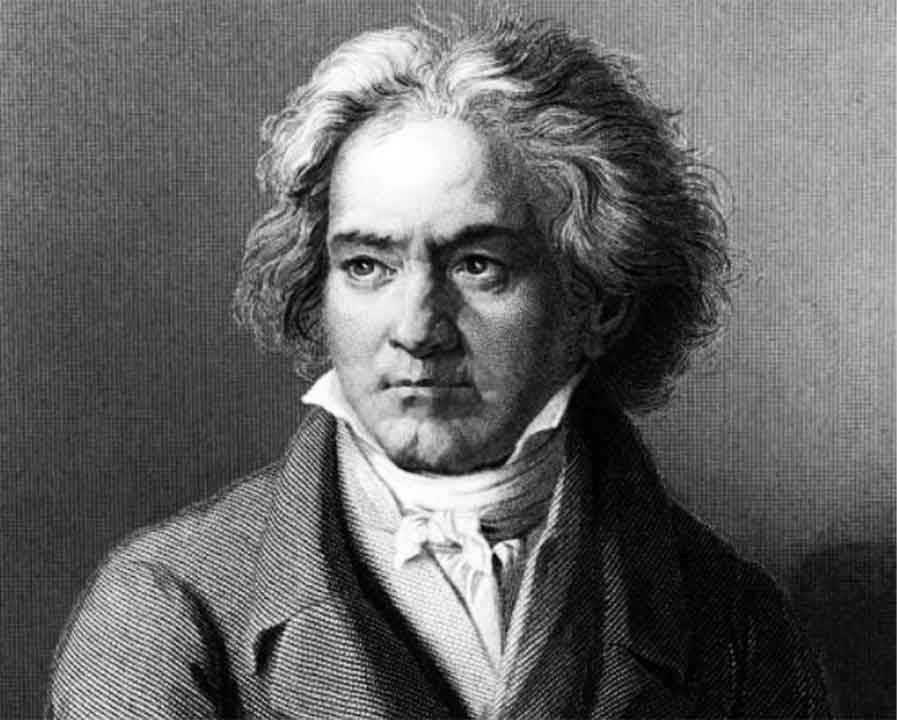
A Source of Inspiration for Romantics
The dynamic narrative structure found in Wagner’s works was inspired by Beethoven’s music. In *Brahma*, Wagner drew inspiration from Beethoven in many ways. Thus, Beethoven and his creative music provided a foundation that served as a point of reference for subsequent generations of music scholars. One of the major factors influencing Beethoven’s music was the prevailing political and social climate of his time. Beethoven’s Ninth Symphony would serve as a source of inspiration for the Romantic movement in the years to come.
The fact that later Romantic musicians and composers based their ideas on Beethoven—particularly regarding the emphasis on epic and emotional expression in musical art—demonstrates his pioneering nature. We can say that the Ninth Symphony is the Beethoven work that most influenced two great artists: Liszt and Wagner. Beethoven created enduring works not only as a Romantic but also as a Classical composer, adhering to traditional musical norms while simultaneously pushing their boundaries.
One of the factors that makes Beethoven unique is that he emerged during a transitional period and served as a bridge between tradition and modernity. For this reason, Beethoven is neither a Romantic nor a Classical composer. In his works, Beethoven adhered to the principles of Classicism, yet he never confined himself to narrow boundaries. Another reason for the musical diversity in Beethoven’s music was that he actually played many of the instruments found in an orchestra.
Beethoven frequently used classical forms in his symphonies and multi-movement works, but at times he extended or stretched these forms to prioritize his rhythmic objectives. As we can see in his sketchbooks, Beethoven was engaged in a quest for “beauty.” In his works, he sought to bring out the most beautiful elements by grounding them in the principles of simplicity and necessity.
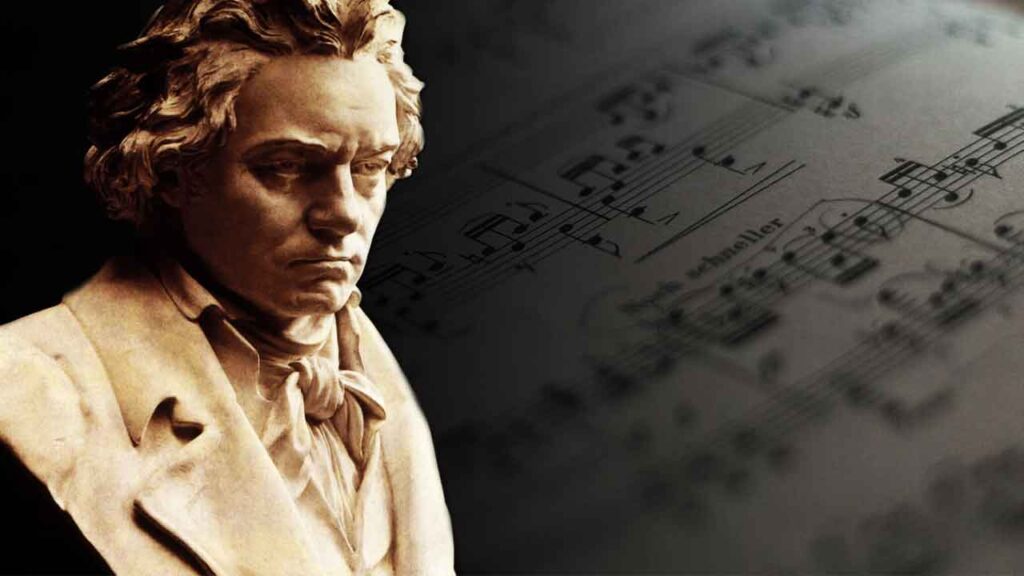
Beethoven and His Libertarian Spirit
Among the events that influenced Beethoven and his understanding of music were political and social phenomena. One of the most significant of these social events was the French Revolution. Beethoven would reflect the passion for freedom and the desire for a republic—ignited in his heart by the French Revolution—in his artistic style. Another example is Beethoven’s admiration for and subsequent disillusionment with Napoleon. Beethoven initially admired Napoleon because of the democratic and libertarian stance he displayed. However, as Napoleon gained power, he resorted to expansionist policies, trampled on democracy in his quest to establish an empire, and the Napoleonic Wars became a source of disillusionment for Beethoven.
This disappointment is also reflected in Beethoven’s works. One of Beethoven’s most popular works, the “Eroica” Symphony, originally bore the title “Bonaparte,” but after Napoleon declared himself Emperor of France, Beethoven changed the symphony’s name to “Eroica.” Beethoven faced hearing problems from a young age. His hearing difficulties, which began in 1795, reached their peak when he became completely deaf in the final years of his life. This was a great source of sorrow for Beethoven, and as these problems emerged, he increasingly withdrew from the world. However, despite all these challenges, the art of music was what kept him alive.
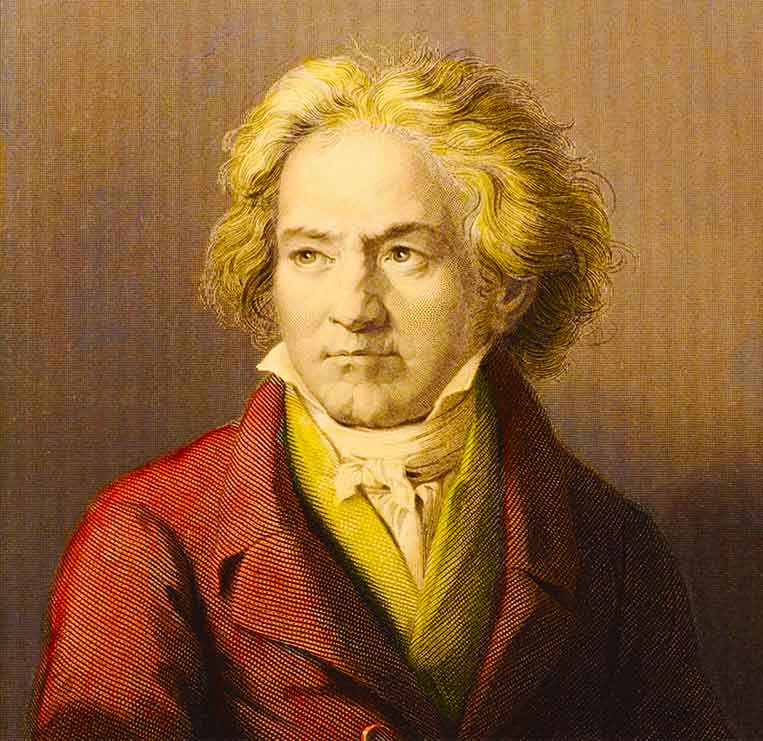
Beethoven wrote that while he did everything in his power to become a great artist, he still felt the pain of leaving this world prematurely—or, more accurately, of leaving before he could fully realize his ambitions. Nevertheless, with his warrior-like spirit, he clung tenaciously to the art of music. Beethoven’s Ninth Symphony continues to have a profound impact even today. For example, the European Union’s official anthem is based on the music from the “Ode to Joy” movement of the Ninth Symphony. Similarly, excerpts from the Ninth Symphony are performed and covered at celebrations, major holidays, and festivals around the world. It has even carved out a place for itself in popular culture.