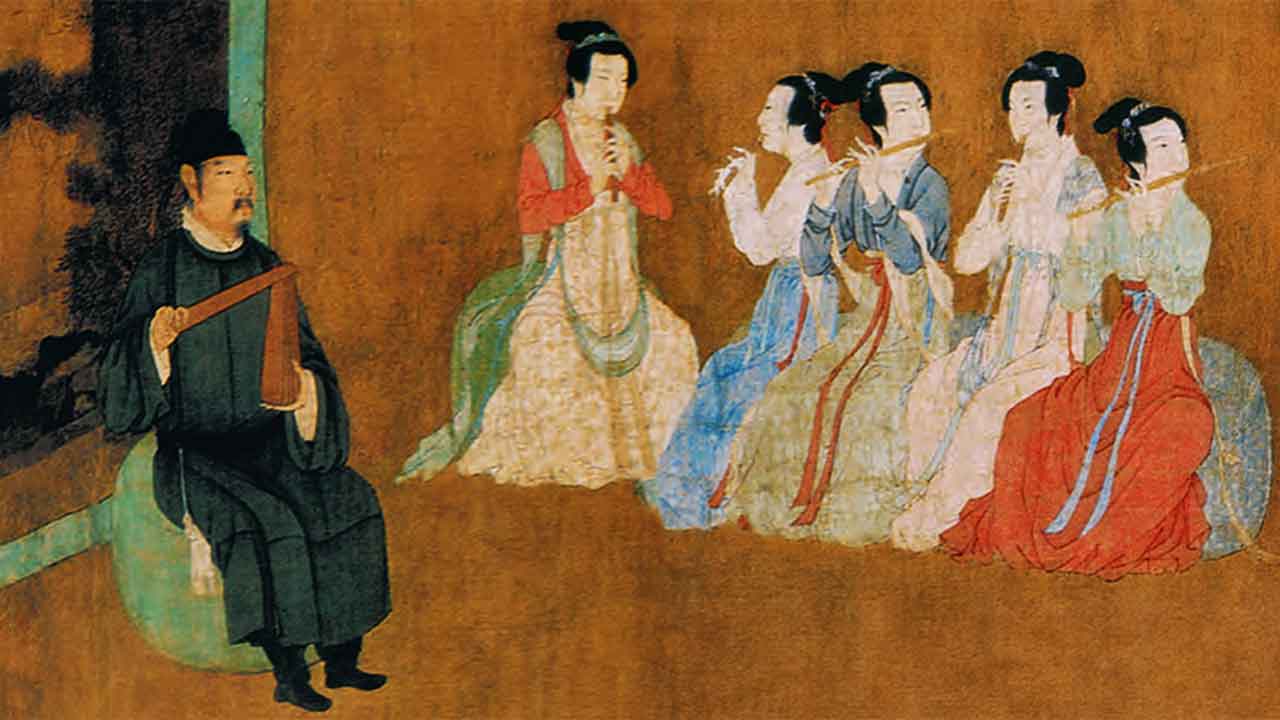
The art of music is a branch of art in which the emotions and thoughts intended to be conveyed are interpreted harmoniously through sound, using specific regular and mathematical intervals. Music is an ancient and very old art form; at least it has been so throughout human history. For this reason, almost every culture has its own unique musical genres and systems. The history of music also goes back a long way in China. Here is our article on Chinese music.
The Birth of Chinese Music
In ancient times, the worship of the people or hunting rituals in archaic folk songs in China, he said afterwards like the first stages of the development of music creates. !in 986, 21 flutes made of bone were unearthed near the village of Jiahu, and these flutes belong to the Neolithic era. Historically, these flutes were made 8000-9000 years ago. As time progressed, Chinese music also developed and diversified. The change in society has also led to changes in Chinese music. Today, both traditional and modern Chinese music coexist. We can only discern the distinctiveness of Western music and Chinese music by comparing these two characteristic styles. In this way, we can better understand the unique identity of Chinese music. In general, we can list the characteristic features of Chinese music as follows.
The first characteristic is that Chinese music forms a subtle melody as a single line within the fabric of time, setting aside harmony. Western music, on the contrary, attaches great importance to the organization of the sound and harmony. But Chinese music focuses on changes in musical sound. The second characteristic is that the purpose of Chinese music is for the artist performing it to enjoy themselves. In Western music, however, the artist places importance on entertaining other people. For this reason, Western music pays more attention to intense emotional expressions and acoustic effects. But in Chinese music, the artist plays for himself. In ancient China, Chinese scholars and bureaucrats had to take courses in four areas. The first of these lessons is the reed playing lesson. This indicates that music is viewed as an art form aimed at personal development, shaping and controlling emotions, and enhancing the quality of life.
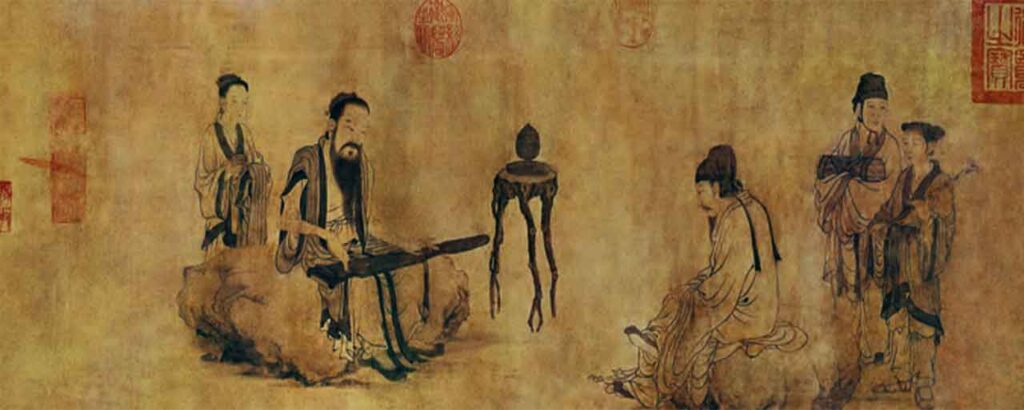
The third feature is that while Chinese music is superior to Western music in terms of depth, the opposite is true when it comes to intensity. Chinese music penetrates directly into the soul, profoundly affecting the person; whereas Western music affects the body equally, creating resonance in the sensory organs. Therefore, Chinese music creates an inner satisfaction for those who listen to it. In ancient China, ceremonies had a composite structure with musical performances, and the two concepts were of equal importance.
Read Our Article on Chinese Theater Culture
Here, the term “ceremony” refers to religious rituals. Of course, even though ceremonies were held for different purposes in later periods, their structure, which was always intertwined with music, remained the same. In Chinese music, dances are an integral part of the musical art form. During the Western Zhou dynasty, ceremonies became more rigidly structured and regulated, and Chinese music encompassed various activities and rituals. In this way, a truly ceremonial-musical system emerged.
The most commonly used instrument types in Chinese music can be described as percussion instruments, wind instruments, string instruments, and stringed instruments. The oldest type of instrument is percussion instruments in Chinese music. The use of percussion instruments also increased significantly during the warring States period. Bells and flat cymbals were made of bronze and were among the most commonly used musical instruments. The structures formed by the bells respond to the aesthetic needs of the audience and enhance the grandeur of the series of bells.
There are 10 popular classical tunes in Chinese music. These; The Flowing River, the High mountain, The Spring Moonlight Hitting the Flowers, The Autumn Moon on the Top of the Han Palace, The White Snow at the Beginning of Spring, The Conversation Between the Fisherman and the Woodcutter, The Eighteen Rhythms of the Nomadic Flute, the Guangling Melody, the Plum Blossom Melody—Three Variations, Wild Geese on the Beach and the Siege from All Sides. These classical Chinese music melodies have a soothing effect and touch people’s souls.
Unique Music Genres
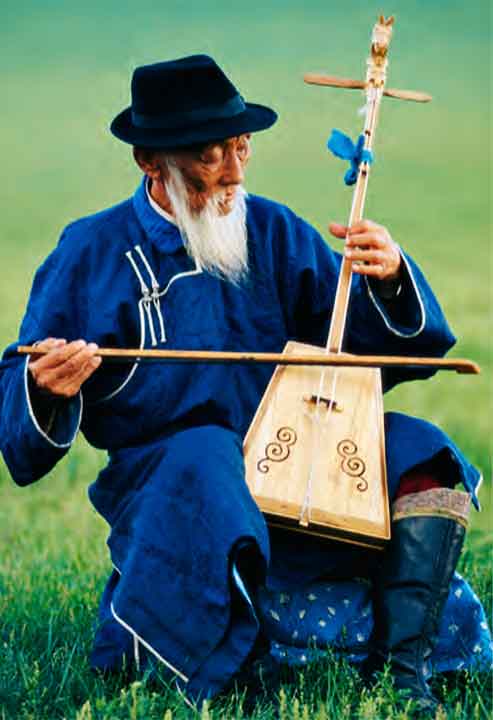
The most important reason for the richness of Chinese music is that Chinese society consists of 56 ethnic groups. Music serves as a medium through which ethnic groups express their unique styles. Today, different cultures have distinct makam systems that they use when performing musical art. The peoples of Arabia, Turkey, Iran, India, and Central Asia have their own traditions. The Sincian makam are the most important in terms of variety richness in the world. The long songs of the Mongols, an ancient ethnic group, are an important part of their culture. For thousands of years, the Mongols have matured their long songs through oral tradition, passing them down to new generations. Many of the long poems depict white clouds, rivers, and lakes. Another ethnic group, the Dong people, are a deep-rooted people who lived in Guizhou, Hunan, and Guangxi regions and have a history spanning 2,500 years. The songs of this people are folk choruses sung in a versatile manner without a conductor or musical instrument.
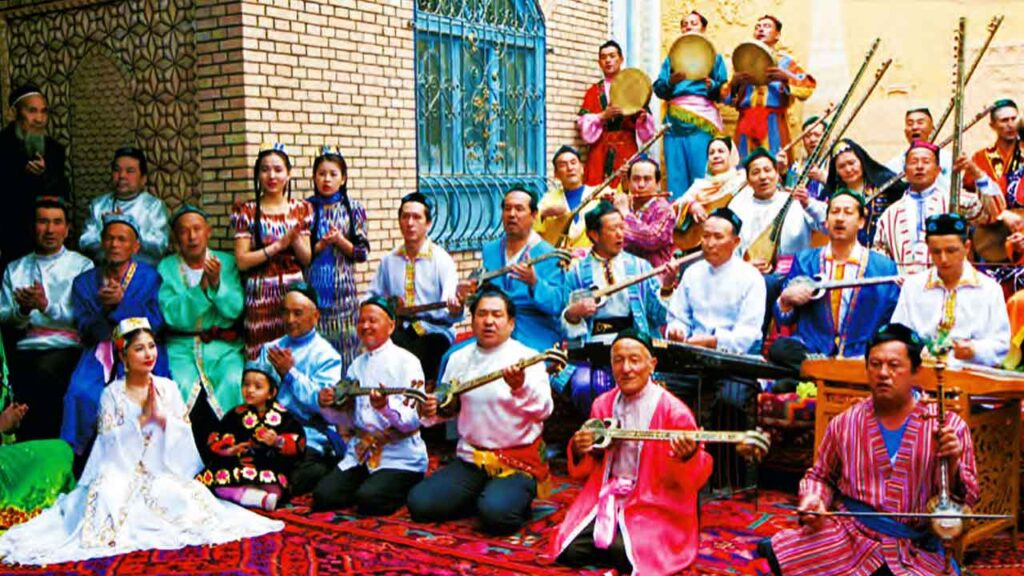
The local songs of the Dong people are very distinctive and special in terms of their emotional impact and singing techniques. While a single singer performs the song, many people with different vocal ranges sing along. This choral music has a unique style all over the world. Among the songs that can be examples of the amazing songs of the Dong people are songs such as “The Song of Cicadas, the Song of Squirrels, Beautiful Mountains” Dec. Mzukik holds an important place in most ethnic groups in China. Aik songs form an important part of the musical cultures of these ethnic minority groups. According to statistics that have not yet been completed, China’s 55 ethnic minority groups have more than 500 musical instruments in different forms, including string instruments, woodwind instruments, stringed instruments and percussion instruments, and each musical instrument is very impressive. Melodies diversified into a variety of musical instruments. For example, the Naxi people “baishaxiyue”si. The peoples of Miao, Zhuang, Yi, Dong, Yao and Lahu “whistle music from a reed” and “bronze drum music” are very famous.