Chinese painting and calligraphy share the same roots. For this reason, the two art forms have many points in common. We can say that the most important elements of Chinese painting are lines and colors. These two elements are the components that complement and enrich Chinese painting. As Chinese painting has evolved, the importance of the colors used has also grown. In this article, we will take a closer look at Chinese painting.
Pictures of Cliffs and Pottery
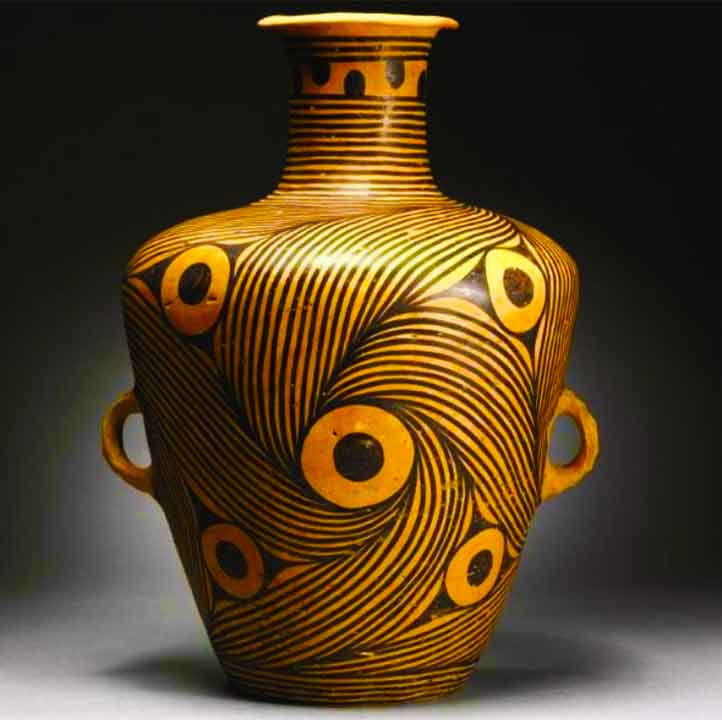
The history of Chinese art dates back to the Neolithic Age. Chinese pottery and rock paintings are examples of Chinese art from the Neolithic Age. In particular, the Yangshou culture, which flourished approximately 7,000 years ago in many settlements such as Hean, Shanxi, Gansu, and the Loess Plateau, boasts a wealth of examples of Chinese pottery. Rock paintings are an important part of Chinese art. In fact, China is one of the countries where we find the most rock art sites in the world. For this reason, there are currently more than 1,000 rock art sites in China. Examples of these include the Helan Mountain rock art in Ningxia, the Altai Mountain rock art in Xinjiang, and the Zuo River rock art in Guangxi.
Chinese painting has evolved and matured over the course of thousands of years, developing from cliff paintings and pottery paintings. As a result of this maturation, we can say that Chinese painting has reached a stage where it can be divided into four distinct genres. The first of these categories is portraits and figure paintings. There are many figure paintings from the Warring States Period; silk paintings from that era found in a tomb in Hunan serve as examples. The second category consists of landscape paintings. It would not be incorrect to say that the Song Dynasty marked the peak of this genre. The third category comprises paintings depicting various birds, rabbits, flowers, and other plants. Depictions of flowers and birds, in particular, date back to very early periods. Examples of this category can be seen on pottery and bronze vessels from the Shang and Zhou Dynasties. The depicted flower figures held different meanings. For example, the quartet of plum blossoms, orchids, bamboo, and chrysanthemums—which painters depicted under the name “The Four Gentlemen of Winter”—symbolizes the pursuit of a virtuous character.
Types of Chinese Painting
The fourth type of Chinese painting consists of drawings depicting buildings and structures created using rulers and calligraphy brushes. Paintings in this category are also known as “pavilion paintings,” “hut paintings,” or “palace paintings.” The fifth type consists of Chinese paintings that do not fit into the categories mentioned above. This category may include depictions of colorful lanterns and amorphous-shaped rocks (such as ancient objects, bronze, and jade). Chinese painting differs from Western painting styles in many ways. One such difference lies in the use of perspective. The linear perspective commonly used in Western painting is replaced in Chinese painting by an indefinite cavalier perspective. Additionally, distinct cultural approaches and aesthetic sensibilities are key factors distinguishing Western painting styles from Chinese painting styles.
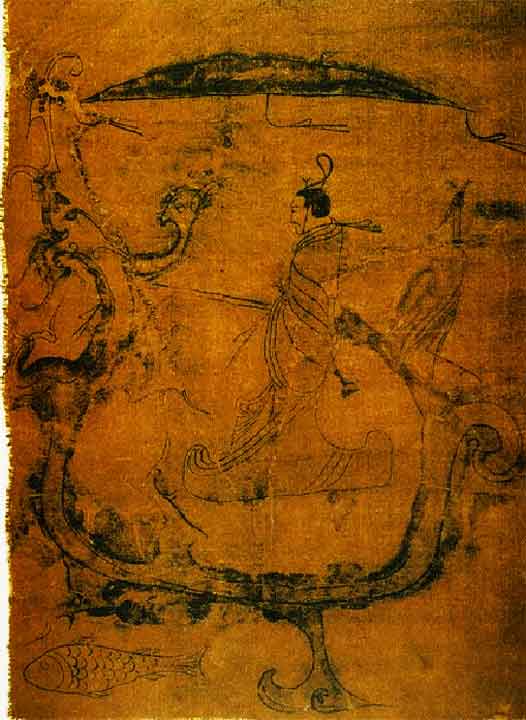
Depictions of figures in Chinese painting do not focus solely on copying their forms; they also strive to capture the spirit of the figure being portrayed. Vitality is particularly emphasized in these depictions. To the best of our current knowledge, the oldest independent examples of Chinese painting are two silk paintings excavated from a Chu tomb in Changsha, Hunan. The depictions of women wearing wide-sleeved, long robes are rendered in a highly elegant manner. The lines used in the depictions are fluid and simple. We mentioned earlier that lines and colors are the most fundamental elements in the depiction of images. The use of lines as a fundamental element dates back much further than the Warring States Period. A significant turning point in the history of Chinese painting is the Wei, Jin, and Northern and Southern Dynasties periods. This is because it is during these periods that we encounter the first group of painters mentioned in historical records of Chinese painting.
Examples of Chinese Painting
One of the silk paintings excavated from the Chu tomb in Hannan is the “Man Riding a Dragon” This Chinese painting depicts an elderly man standing in a sideways pose. The man is riding a boat-shaped dragon and is wearing a caftan. The painting conveys the sensation of the figure’s clothing moving in the wind, which is one of the elements that brings the painting to life. The second painting excavated from the tomb was created with a more artistically mature approach compared to the first. The sense of depth in the figure of the second painting is rendered quite successfully. Additionally, fluid lines were used to create a more robust depiction. This painting holds the distinction of being the first Chinese painting to employ this technique. The period in which these paintings were created coincides with the emergence of Chinese painting theories that were beginning to mature. We possess numerous Chinese paintings from this era, and these works serve as pioneering examples in terms of style.
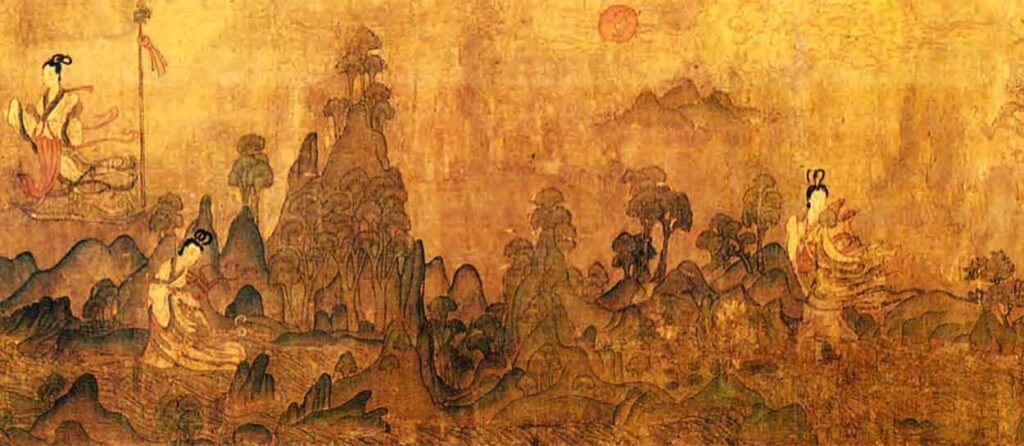
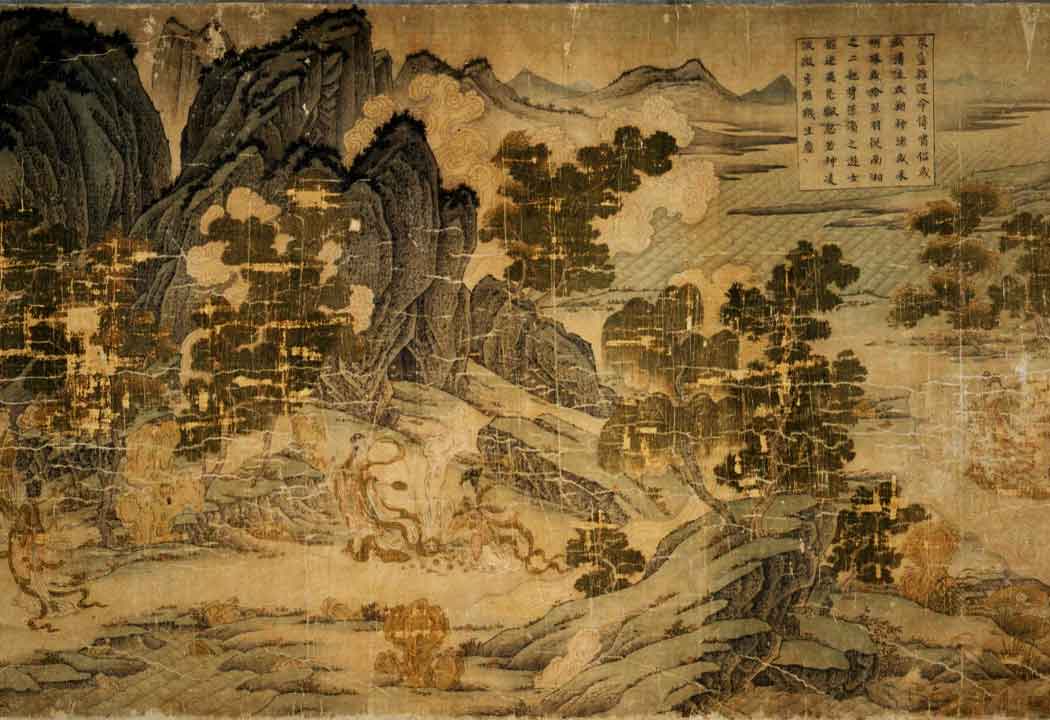
Gu Kaizhi, a painter of the Eastern Jin dynasty, is one of the most accomplished Chinese painters. Gu Kaizhi’s most famous work is titled “Ode to the Goddess of the Luo River.” This work depicts a love story. The painting was primarily inspired by Cao Zhi’s essay of the same name. For this reason, Gu Kaizhi portrays the plot of Cao’s work in the painting. In the painting, Cao Zhi departs the capital to return to his hometown. Along the banks of the Luo River, he encounters the Goddess of the Luo River. The Goddess of the Luo River is depicted in the painting as graceful and enchanting. As one of the most popular examples of Chinese painting from ancient times, the work was created using superior painting techniques and styles.