The fundamental elements that shaped ancient Greek art were the Greeks’ devotion to beauty and the concept of beauty, combined with their careful observation of the world as they turned toward nature and reason. During this same period, Buddhist art was spreading in the East; the intersection of these two cultures gave birth to Greco Buddhist art.
Greek Art and It’s Aesthetic Sensibility
Following the victory over the Persians in 480 B.C., the development of political unity among the small Greek city-states, coupled with an increase in the standard of living, fostered the emergence of freer, happier, and more productive generations. Consequently, Greek art also flourished, giving rise to more creative works. In Ancient Egypt, art was primarily created for the dead and the afterlife. However, when we turn to Ancient Greece, we see that this was not the case. Art served not as a representation for the afterlife, but as a depiction of the path of development—both physical and mental—in this world. For this reason, artists focused on intricate depictions of the environment and aesthetically pleasing figures.
One example of the Greeks’ pursuit of beauty and aesthetics is the depiction of the gods—who were central to their faith—in the form of ideal human bodies. Numerous artistic works, such as paintings and sculptures, were created for religious and institutional purposes. They used artistic depictions of mythological and religious figures to adorn their doorways. Up until this time, artistic works had always been executed without straying from simplicity. However, by this period, artists were striving to capture the most accurate artistic depictions by examining subjects down to the finest detail.
For the first time, such studies were being conducted on the mathematical and geometric structures of forms like the perspective, and artists were attempting to reflect life and the world in forms as close as possible to what they saw. Even from today’s perspective, it is an undeniable fact that the technical knowledge, mastery, and remarkable observational skills of artists from 2,500 years ago were truly extraordinary.
Famous Greek Artists
However, since many of these paintings were created on wood, they have not survived to the present day due to climatic conditions and other factors. It can be said that in Classical Greek art, the names of three individuals in particular stand out, and that they influenced the perspectives of subsequent generations of artists on art even after their deaths.
Myron of Eleutherai (480–440 BCE) gained fame for his realistic sculptures of gods and heroes. However, he became popular primarily for his sculptures of athletes in dynamic poses. Considered one of the greatest sculptors of ancient Greece, Phidias (500–432 BCE) worked on embellishing Athens following the Persian victory. By maintaining official oversight of artistic works, he was commissioned to create some of the city’s most significant sculptures.
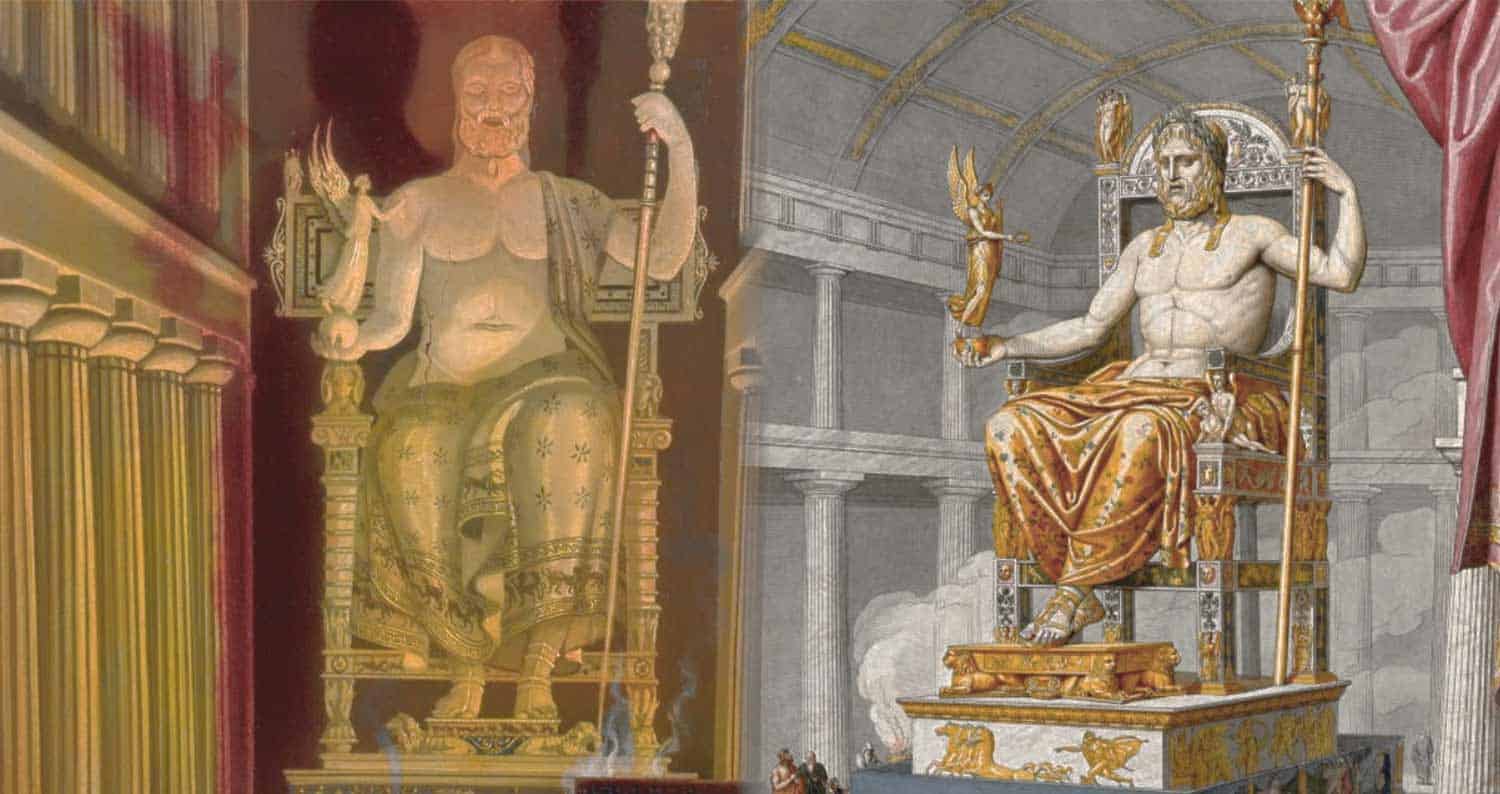
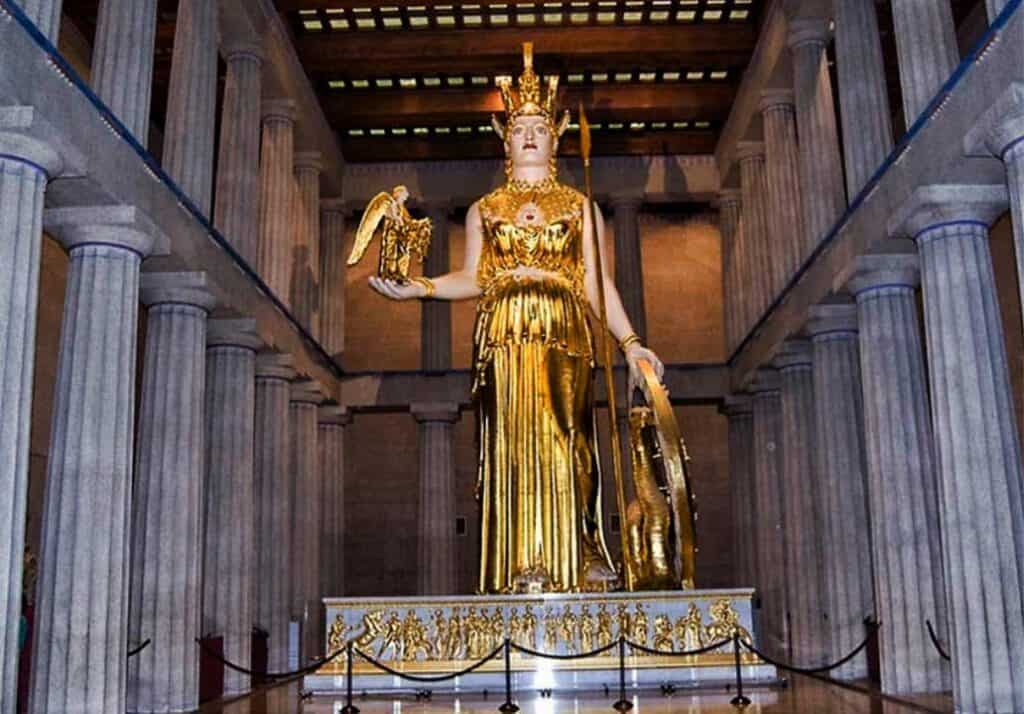
Phidias, who worked in many fields, oversaw the construction of the Parthenon and designed its artistic layout. The Statue of Zeus at Olympia and the two statues of the goddess Athena on the Acropolis are just a few of his artistic works. Moreover, the Statue of Zeus he worked on is today recognized as one of the Seven Wonders of the World. The primary characteristic we can observe in his artistic works is his emphasis on realistic details and fabric textures. We can also mention Polykleitos as a contemporary artist. Later, Renaissance artists followed in the footsteps of Polykleitos’s figures, adopting the distinctive “contrapposto” pose that he first introduced.
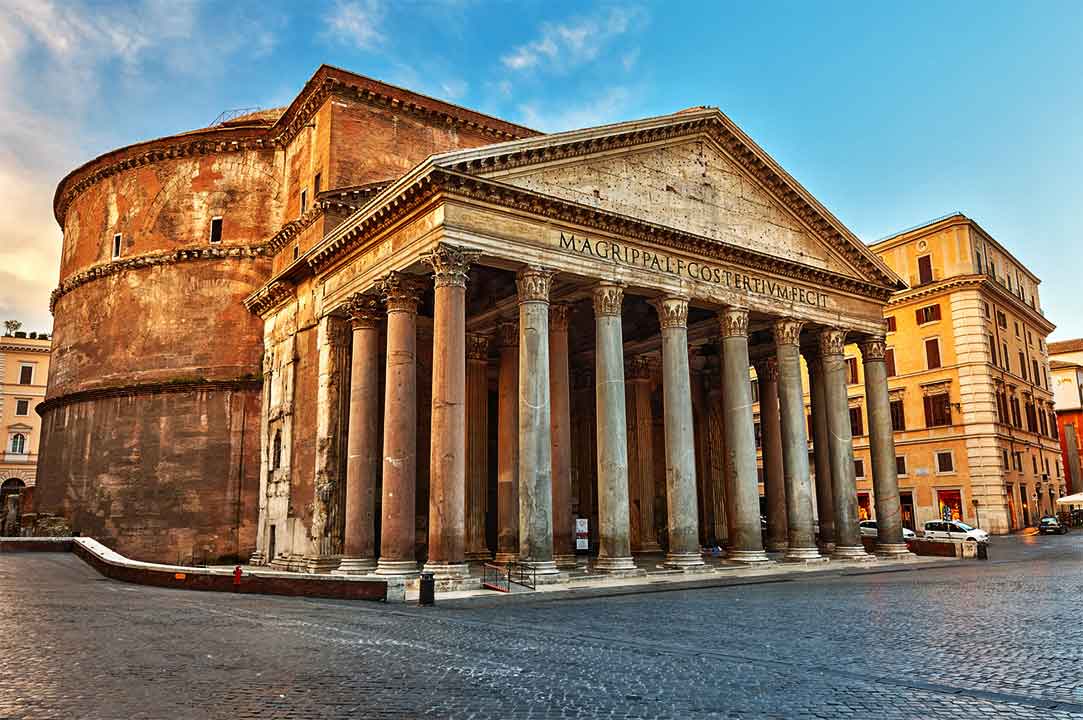
The Golden Ratio, which takes its name from the Greeks, is the harmony of visually pleasing geometric proportions. Centuries later, Leonardo da Vinci named the Golden Ratio “phi” in reference to Phidias. For example, the exterior facades of the Parthenon were designed in harmony with the Golden Ratio we mentioned. We can also observe the same proportions and the artistic design that harmoniously combines these proportions in the statue of Athena. Pottery became an integral part of Greek art.
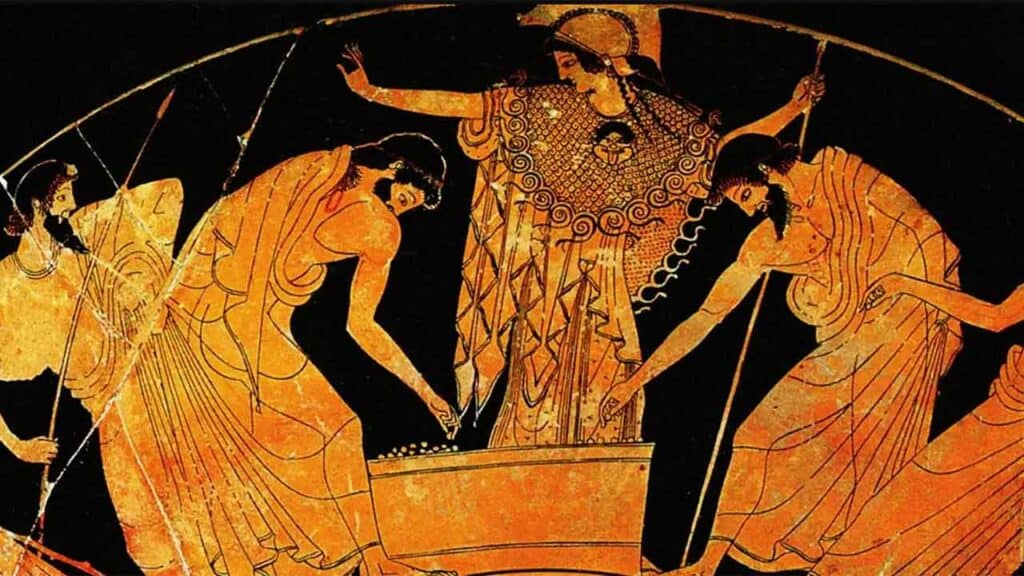
The decorations on vases were meticulously crafted, and their surfaces were smoothed to a flawless finish. In Classical Greece, the artistic content of pottery consisted of harmonious and balanced figures rendered on curved surfaces. Consequently, the pottery of this period also provides insight into the artistic and thematic aspects of the paintings of the same era.
The Art of Calmness
Around 600–500 BCE, some Indian artists created symbolic and iconographic works of art with the aim of spreading the Buddha’s teachings to a wider audience. We see that Buddhist artists drew inspiration from Roman art for many years. As a result of this inspiration, Greco Buddhist art—a branch of Buddhist art—emerged. The primary purpose of Buddhist art is to narrate the story of Gautama and the significant events he experienced during his spiritual development. After the Buddha’s lifetime, Buddhism spread throughout Asia; in the earliest examples of artistic works, we can see that the Buddha was depicted not in human form but in a more symbolic style. These symbols typically included motifs such as the lotus flower and footprints. Buddhist disciples would carefully study these symbolic depictions to better understand Buddhism.
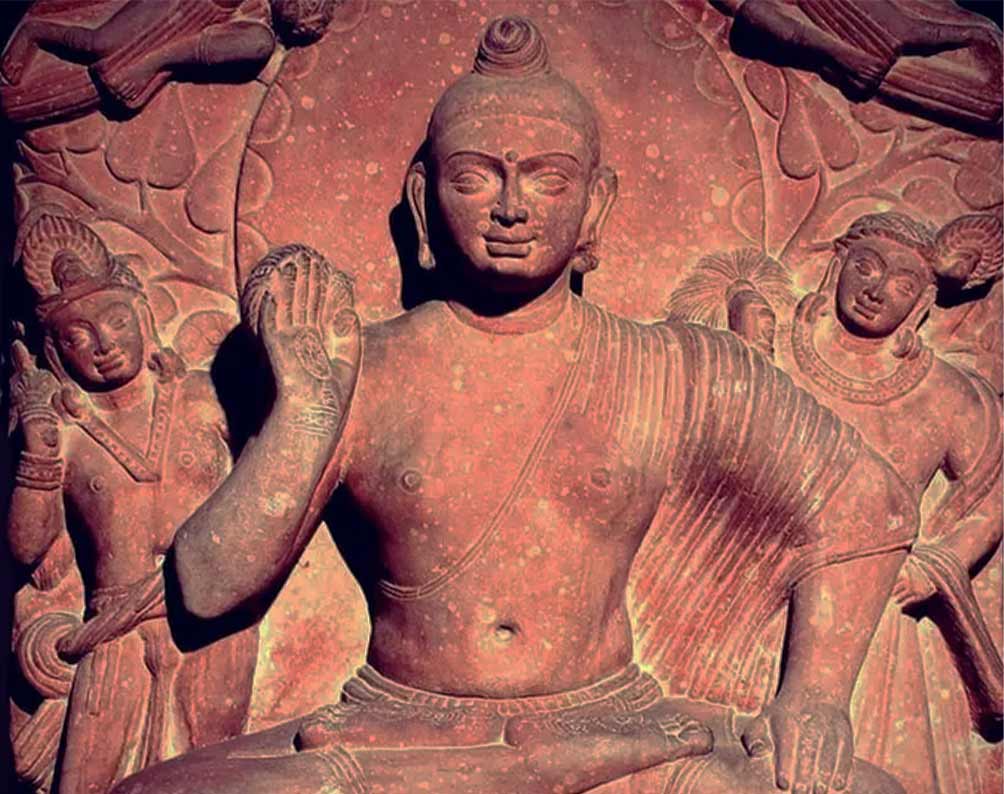
The first work to depict the Buddha in human form is a carved statue from the Gandhara region of India, created around 100–0 CE, that is, in the first century. The realistic, detailed, and aesthetically focused style of Roman and Greek art clearly influenced Buddhist art as well. During this period—specifically in Gandharan art influenced by Greek and Roman culture—the Buddha was depicted in a more realistic style, with curly hair and often adorned with Roman jewelry. Over time, they developed a distinctive artistic style by blending the old symbolic narrative with this new realistic style. This artistic style, unique to the Gandhara region, influenced the sculpture of Mathura, and Greco Buddhist art later spread as far as China and Japan. The symbolic artistic style that dominated the early period of Greco Buddhist art eventually lost its indispensability.
The Purpose of Buddhist Art and The Greco Buddhist Art Synthesis
We mentioned that the purpose of Buddhist art is to facilitate a better understanding and dissemination of the core tenets of Buddhism. However, there is another reason: the practice of artistic activities serves as an aid to meditation. It was expected that believers would reflect on these works of art and their symbolic meanings, thereby striving toward spiritual development. Buddhism underwent significant changes throughout history. This was reflected in art through the depiction of new deities and spiritual beings in addition to the Buddha. “Bodhisattvas” are beings who assist those seeking to attain the Buddha’s level—which we can define as enlightened beings—and who are advancing along the path of wisdom. In the later periods of Greco Buddhist art , depictions of these divine beings also began to be produced.
Another feature we can observe in Greeco Buddhist art is the use of harmonious proportions that emphasize harmony and serenity. Greco Buddhist art and artists always adhered to specific physical proportions. In this way, regardless of whether the depiction was large or small, all images of the Buddha captured the same serene and wise atmosphere. Regarding the meanings of symbols used in Greco Buddhist art : the eyes represent wisdom, the lotus flower represents spiritual development, the swastika represents luck and prosperity, the sun umbrella represents protection, and the Dharma wheel represents the Buddha’s teachings of enlightenment. The colors white, yellow, red, blue, and green used in artistic depictions held special significance. This was because it was believed that these colors contributed to the spiritual development of the soul.
Each color also had its own unique meaning. For example, white symbolized knowledge and learning, green symbolized vitality and movement, and blue symbolized tranquility and introspection. Prehistoric art is of great importance, particularly because it laid the foundations for subsequent artistic periods. Greek art, in particular, had a direct influence on Renaissance art. This influence also extended to Greco Buddhist art . Although the fundamental purpose and methods of Buddhist art remained unchanged, traces of Greek aesthetics can be seen in Greco Buddhist art . For this reason, studying the history of ancient art is essential for understanding later art movements and their origins. There is no need to even debate the importance of art. We believe that art serves as a shield against life’s hardships and sorrows.