Land Art is one of the movements developed in the late 1960s by artists concerned with distancing themselves from the unchecked commercialization they observed in the art world. In their search for new materials, disciplines, and locations in which to create and exhibit their work, many artists produced massive sculptural works using natural materials within the natural environment.
Also known as earth art or environmental art, Land Art’s most distinctive feature is that the artworks are created directly within nature. Developing as part of Conceptual Art in the 1960s and 1970s, Land Artists produced diverse and expressive works using natural materials. Each Land Art artist worked in different ways, without being bound to a single method or approach. Some shaped the earth; others documented and recorded their locations in nature using temporary markers. Still other artists transported stones, soil, branches, and rocks to galleries to create installations, or produced works outdoors using natural materials. Unless created specifically to be exhibited as an installation in a gallery, Land Art works were documented through photographs, maps, and films and were typically presented as part of a story or sequence.
Examples of Land Art and Artists
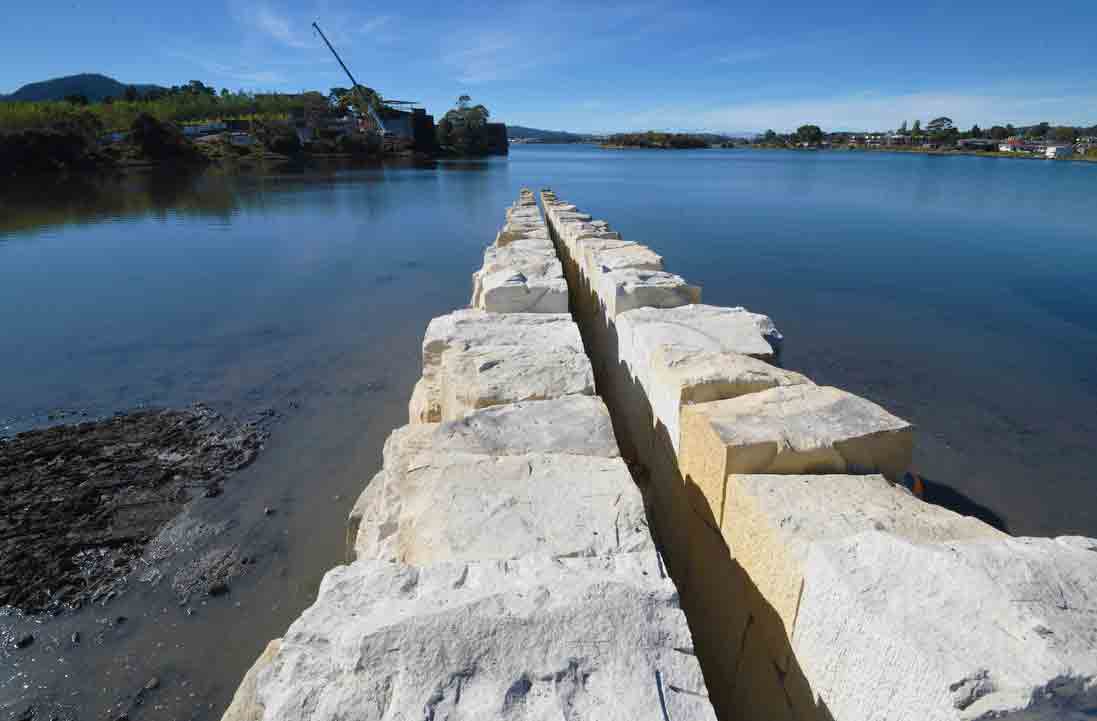
Prominent Land Art artists include Robert Smithson (1938–73), Richard Long (1945), Andy Goldsworthy (1956), Michael Heizer (1944), Walter De Maria (1935), Nancy Holt (1938), and Dennis Oppenheim (1938). The movement began in the United States and later gained popularity primarily in other European countries. Most works, created using natural and local materials, are massive in scale. These monumental works, situated within nature, are typically found in areas remote from urban centers and are left to change and erode naturally over time. Many of the earliest examples of Land Art, created in the deserts of Nevada, New Mexico, Utah, and Arizona, can now be viewed only through video recordings and photographs. These site-specific artworks are generally not accessible to the general public and, because they are exposed to the elements, often deteriorate very quickly.
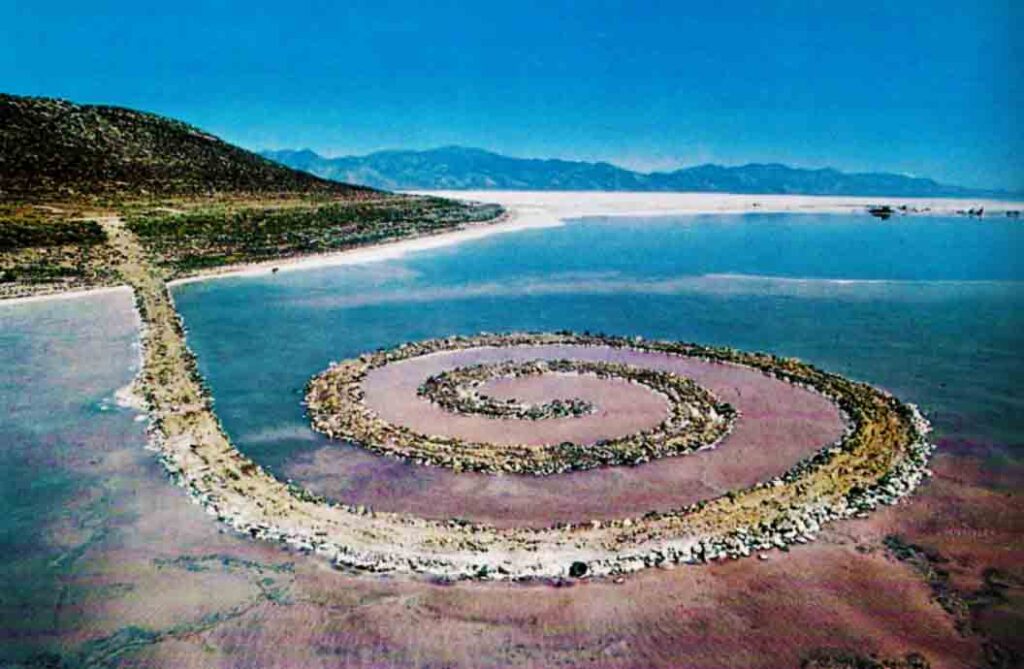
Since they are generally created as one-time installations, permanence is not a consideration—and this is often the intended goal. Land Art artists frequently rebelled against the restrictive and commercial pressures of the art market. Because the works could not be purchased by anyone and exact replicas were impossible to create, they were able to express themselves freely. Most examples of Land Art emerged as a result of environmental concerns. Examining the relationships between people and their natural environments was also one of the primary goals. Like *Spiral Jetty*, much of Land Art has been inspired by natural processes. Like many Land Art artists, Smithson was fascinated by physical processes in nature and the ways nature moves, erodes, reacts, and transforms. Among her other works, Nancy Holt constructed massive structures reminiscent of ancient megalithic monuments like Stonehenge and arranged them in an astronomical order.
Conceptual, Minimalist, and Land Art artist Walter De Maria typically created large-scale works in the American deserts using industrial materials, designed so that changes in the atmosphere and natural light would affect the appearance of his works, thereby evoking reflections on the world and its relationship to the universe. As might be expected, many of his works can only be properly viewed from the air. Christo and Jeanne-Claude, both born in 1935, can be classified as Environmental Artists, Performance Artists, and Conceptual Artists. They advocate the view that the ideas underlying the artworks and the production process are just as important as the resulting artwork itself. By temporarily covering the interiors and surroundings of vast urban or rural areas with extremely long lengths of fabric, they aimed to encourage viewers to reevaluate the structures they saw.
Anti-Industrial Sentiment in the Art World
Smithson died in a plane crash while examining one of his works. Critics objected that examples of Land Art of this kind—which could only be viewed by a wealthy minority with the financial means to do so—contradicted the principle of accessibility to all, which was the very purpose of the movement’s emergence. Most Land Art artists were reacting against what they saw as artificiality, insincerity, and the commercialization of art, as well as the destruction of rural areas due to industrialization. The movement began with the “Earthworks” exhibition, which opened in October 1968 at the Dwan Gallery in New York. The following year, another exhibition titled *Earth Art* opened in New York. Both exhibitions garnered widespread attention, and for several years, sculptures with environmental elements were referred to by the name of the first exhibition.
This movement was positively received by many critics as an offshoot of Minimalism and Conceptual Art. Among those who welcomed it were environmentalists and other groups opposed to urbanization and materialism. Andy Goldsworthy (1956) creates temporary and permanent structures using natural materials—such as twigs, stones, snow, and leaves—found in their natural or urbanized environments, highlighting the character of the area. Through his works—whether large or small, multicolored or monochrome, clear or ambiguous, simple or complex—he aims to draw attention to the dangers of society’s growing detachment from nature.
The works produced by Land Art artists incorporate not only natural materials sourced from the environment but also other artistic elements such as photography, poetry, and text. For example, Richard Long documents his journeys—which involve walking through remote and largely wild regions of the world—through maps, poetry, and photographs. Sometimes he arranges stones on the grass or leaves personal traces behind and photographs them. He typically collects objects he finds along the way—such as rock fragments or tree branches carried by water—and incorporates them into his gallery installations upon his return.