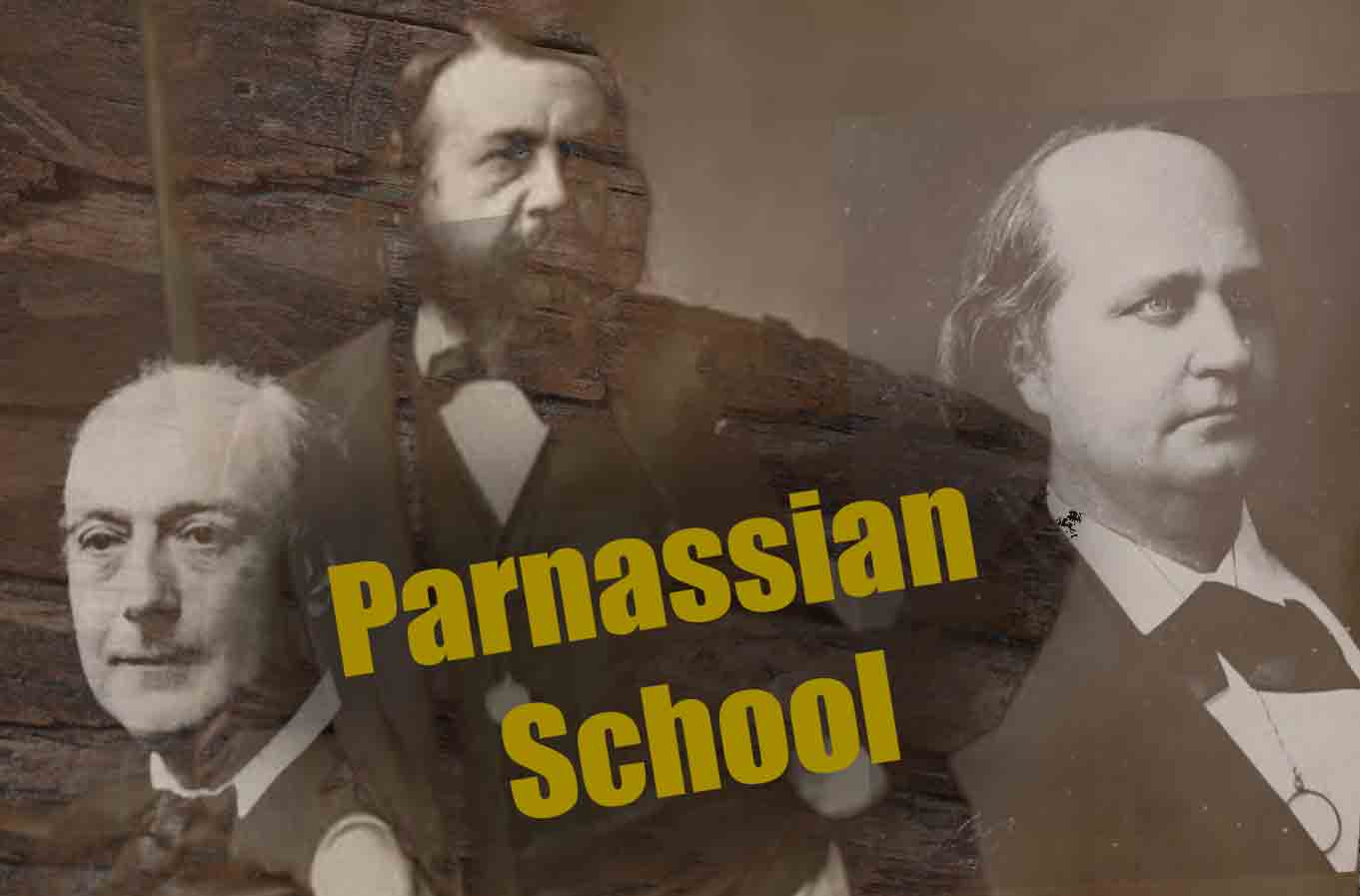
The factors that led to the emergence of Parnassianism, a current that emerged in nineteenth-century France that was basically opposed to the current of romanticism. The developments during the Second Empire Period and the effects of these developments on the Parnassian School.
In the second half of the nineteenth century, up until 1870, Europe was a battleground for external and internal wars, as well as political and social conflicts. After 1870, external wars came to an end. Europe experienced a long period of peace that would last until World War I; taking advantage of this, Western European countries—and France in particular—restructured their social institutions and organizations. The struggle for political power continued, and the bourgeoisie was increasingly tipping the scales in its favor. The nobility, whose wealth was steadily dwindling, intermarried with the bourgeoisie to maintain their comfortable lifestyles. The bourgeoisie, too, were changing classes by purchasing large estates that conferred noble titles. This intermingling also led to a synthesis in the art of poetry, giving rise to the Symbolist movement. However, reaching this synthesis required an intermediate process. The Parnassian School carried out this process. Now, let us examine the development of events, social changes, and the birth of this poetic school in a bit more detail.
Social Changes and the Social Context: 1848 Paris Revolution
The electoral law contained provisions that made it difficult for the bourgeoisie to enter the National Assembly. Only large landowners could run for a seat in the National Assembly, and land was generally monopolized by the nobility. The Parisian nobility rose up to change the electoral law. A group of Republicans led them. Louis Philippe took power. Lamartine was appointed head of the provisional government. The revolution was carried out by the workers, but it was led by bourgeois Republicans. The Socialists were not yet organized. Some delegates arrived carrying red flags.
However, Lamartine sidelined them with his famous speech. It is worth pausing here to consider Lamartine’s character. Lamartine, who saw the future of the people in political democracy, was a wealthy urban aristocrat who owned a vast amount of real estate. He was opposed to a socialist order. He believed in the sanctity of property rights and that property was the sole and greatest social institution; he feared that workers might one day seize power. To prevent this, he considered social reforms necessary, stating that “extremely important matters are carried out by extremely powerful governments.”
When he was unable to unite conservatives and liberals around this idea, he joined the ranks of the anti-leftists in 1841 and became their leader in 1843. Thus, he intended to bring about a revolution among the people, but—since he would be at the very helm of this revolution—he would rein it in, implementing only certain absolutely necessary social reforms without touching the right to property. Indeed, upon taking the helm of the government, his first act was to thwart the socialist revolution. On the other hand, the peasants—who made up the vast majority of the population—remained indifferent to the movement.
Thus, within the government, royalist bourgeoisie and the nobility were replaced by republican bourgeoisie. Elections were held. Along with Lamartine, Victor Hugo from the Paris region was elected to the National Assembly. Alfred de Vigny and Alfred de Musset were not elected. Baudelaire and Léon de Lisle initially took part in the revolution and sympathized with socialism, but later withdrew from active politics. In the presidential election held in December 1848, there were two candidates: Lamartine and Louis Napoleon. Louis Napoleon won the election by an overwhelming majority. Victor Hugo was among those opposed to Lamartine.
The Second French Empire
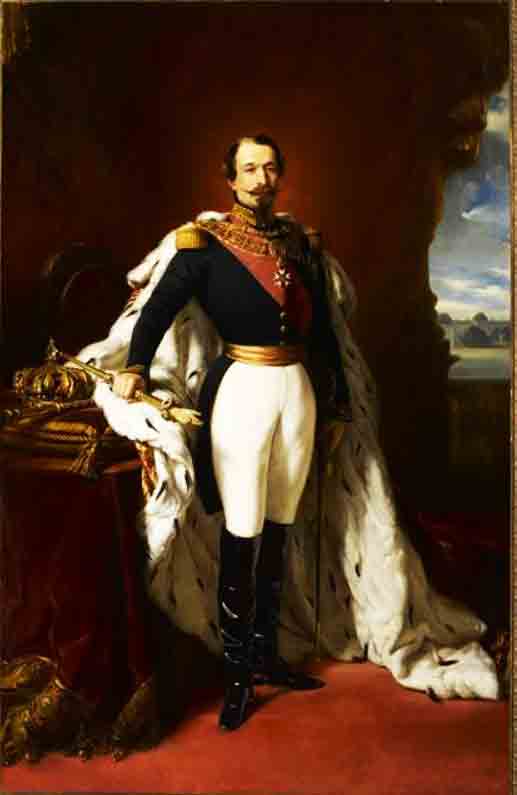
The National Assembly elected in 1849 was composed mostly of monarchists. Napoleon I (Napoleon III) staged a coup d’état in December 1851 to consolidate his power, and a year later (1852) he proclaimed the empire. He had Republicans and his opponents arrested. Hugo, who had initially defended Louis Napoleon, moved toward the left for reasons that were as much personal as they were ideological. In his newspaper L’Événement (The Event), he exposed the intrigues orchestrated by Louis Napoleon. He attempted to incite the Parisians to revolt but failed. He was on the verge of being arrested. He left the country and went to Belgium, where he continued his struggle from abroad. The 1848 Paris Revolution served as an example for other countries. People in several other European nations also rose up.
Although the revolutionaries initially secured certain rights, they later fell prey to reactionary governments that regained their strength because the revolutionaries themselves became divided. The revolutions were followed by counter-revolutions and wars between the great powers. England fought against Russia; France fought against Austria and Prussia; and Prussia fought against Austria. These wars wore down the emperors. They were forced to make some reforms in their countries, to align themselves with the liberals, and to grant certain new rights. France was defeated by Prussia, and Prussia occupied the country. On September 4, 1870, the Third Republic was proclaimed in France. After the Prussians withdrew from Paris, the Parisians rose up once again, and a revolutionary government seized power. The army stationed in Versailles marched on Paris and suppressed the revolution.
At the time the Third Republic was proclaimed, the social, political, and economic situation in Europe and France could be summarized as follows: Birth rates were high, and the population was steadily growing. Peasants made up the vast majority of the population, but as a result of industrialization, there was a constant migration from the countryside to the cities. The number of large cities was increasing, and social interaction and commerce were becoming easier. Inequality before the law had been abolished, but economic inequality persisted. Landless agricultural laborers and day laborers lived in poverty. Industrial workers did not benefit much from technological progress and continued to be exploited. Unions either did not exist or were “yellow,” preventing strikes and steering workers away from political struggle. Workers employed in private homes, meanwhile, were constantly unemployed.
Foreign trade had developed; buying and selling took place on stock exchanges, and credit sales were boosting the volume of trade. A free constitutional law had emerged in Europe. The primary characteristic of these constitutions was that they were based on both monarchy and political freedom. So-called freedoms were granted, but governments could easily restrict or abolish these freedoms under pretexts such as war, rebellion, unrest, or national interests; through special courts and military judges, they halted progressive advances and imprisoned progressives. Women’s rights had not advanced. Women were subject to the absolute dominance of men. The bourgeoisie and the nobility benefited the most from the blessings of industry and increased production. In Eastern Europe, the nobility still constituted the ruling class. In Central Europe, and especially in Western Europe, the bourgeoisie intermingled with the nobility by purchasing large estates that conferred prestige and nobility through marriage.
The Parnassian School’s Views on Art
In poetry, the Parnassian School emerged as a result of the following influences: 1. As the bourgeoisie intermingled with the nobility, bourgeois intellectuals also began to take an interest in the ancient classical movement—which was favored by the nobility—and to seek the origins of poetry in the past. Developments in the fields of science and history were influencing young poets. The rise of materialism and positivism in science distanced them from the personal and led them to seek the impersonal and the objective, while advances in historical studies directed them to look to the past for their subjects and themes. Like any aging movement, Romanticism was beginning to wear thin, and young people were seeking something new. In the French poetic tradition, every movement—and the poets who carried it forward—is led by one or two poets.
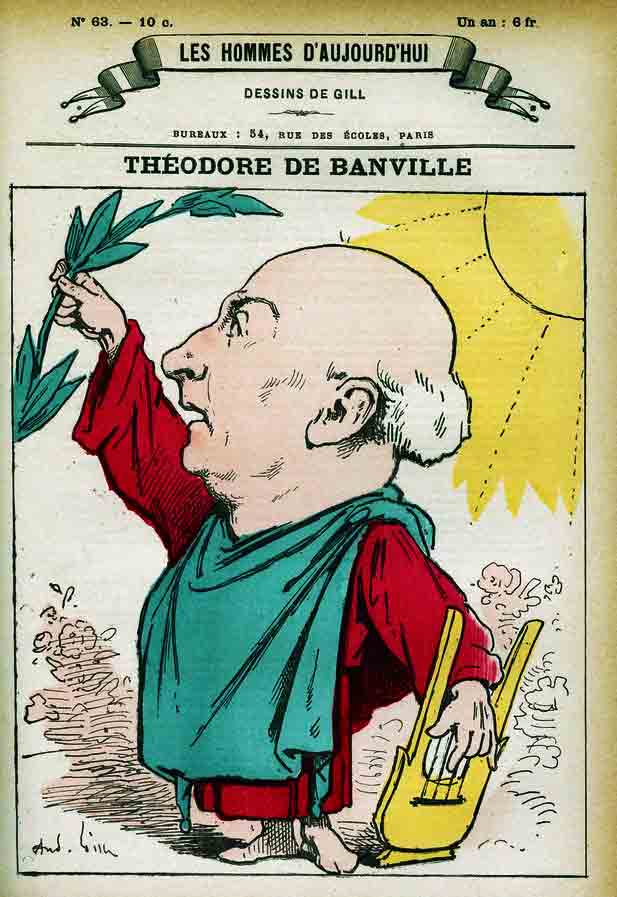
When Hugo fled the country in 1851, Romanticism—and the Parisian poets—were left leaderless. A leader was sought. Sainte-Beuve told Baudelaire, “Gather the poets together.” The poet of *Fleurs du Mal* brushed it off: “I did not come into this world to rule over this or that; besides, I loathe those who cannot govern themselves.” Theodor de Banville was not taken seriously. Musset’s name was discussed, but Baudelaire, Verlaine, and Rimbaud had already closed the book on him. This group of maverick poets, who disliked the dominant Romantic movement of the time, would gather sometimes at Leeonte de Lisle’s home and sometimes at publisher Lemerre’s bookstore—known as “The Attic of Parnassus”—uniting around this shared philosophy.
Let us read Gautier’s understanding of the notion that “art is for art’s sake” in his own words: “By its very nature, art is an endeavor that seeks no benefit. Therefore, one must not expect any useful purpose from art. The artist has but one god: Beauty. Only beauty fulfills the artist’s thoughts; only beauty can soothe the artist’s anxieties. Only beauty is immortal.” Form and technique are essential: The more a work is the product of technical mastery and overcome difficulties, the more beautiful it is. The artist must banish ease (Gautier). They place great emphasis on verse, favoring rhythms, and both high and perfect rhymes. “Rhyme is the very essence of verse” (Banville). In Romanticism, however, as is well known, the ornate language of classical poetry was replaced by a lively, vibrant vernacular—written in a spontaneous voice that reflected personal emotions. Hugo, regarded as the founder of Romantic poetry, substituted a softer, more natural style for rigid formalism.
Personal themes and their endless variations wore down and exhausted the reader’s attention. “We must seek the objective; we must turn toward the impersonal. This does not mean a lack of emotion. Let us now set lyricism aside. Poetry cannot take flight from an individual perspective. You belong to a wise generation. To enter the enlightened path of our time, we must turn to the past; we must come from the past to the present. This is how we can embark on the path of science and positivism. It is no longer a matter of evoking the past through imagery or local color, but rather of reviving—with the help of the latest documentary evidence—ideas, events, the essence of life, the reasons for existence, belief, thought, and behavior, and everything that shaped our ancestral lineages. “Science and art, which have long been separated from one another, must unite, even if they do not merge” (Leconte de Lisle). Yet, as is well known, in Romanticism, the individual’s imagination, fantasy, and sensitivity—the self’s transcendence and personal lyricism—reign supreme.
They pored over history books. They wandered through art studios. They wrote about the gods and demigods of mythology, water nymphs, and the tales of knights’ valor. They devoted lengthy passages to descriptions, painting pictures within their poetry. They crafted their verses with the precision of a jeweler. However, they could not go beyond creating a cold, plastic beauty. Their poems resemble a jewelry box—externally adorned with meticulously crafted precious stones, yet hollow inside. The Parnassian School is not an artistic movement but a transitional phase between Romanticism and Symbolism. Indeed, the four pioneers of Symbolism—a major movement—namely Baudelaire, Verlaine, Rimbaud, and Mallarmé, emerged from among the poets of this school and the Romantic era.