In 1848, seven Englishmen—including young painters, poets, and critics—founded a group dedicated to reviving the Early Renaissance style, predating Raphael and Michelangelo, in the visual arts. Adopting 15th-century Italian art—also known as the Quattrocento—the Pre-Raphaelite Brotherhood produced refined, colorful, and detailed paintings often adorned with symbolic imagery.
Believing that art had strayed from the right path by the end of the 15th century and the beginning of the 16th century—along with Raphael—the group named itself the Pre-Raphaelite Brotherhood. The Brotherhood’s ideas were a reaction against the academic conventions—which they found bland, ostentatious, and soulless—and the continuation of this tradition in art. According to the art academies of the time, the High Renaissance and Mannerism were the pinnacle of artistic achievement, and all artists in training were expected to embrace them and imitate them to the best of their ability. During their training, students spent years copying paintings by High Renaissance masters. The members of the Brotherhood believed that the results produced by the preference for the Academic style—a blend of Neoclassicism and Romanticism—were formulaic and artificial.
In contrast to this artificiality, they strove to restore the beauty and simplicity of the medieval world, the artistic ideals of that era, and especially medieval Italian art, which they believed to be sincere and pure. Although they actually had limited knowledge of the period, they found the art of that era to be simpler and more modest, while viewing Raphael’s works as exaggerated and overly dramatic. By deciding to paint only “true to nature,” they launched a rebellion against academic traditions. Rejecting idealism, they focused on creating realistic images characterized by fine details, complex compositions, and vibrant colors. The Pre-Raphaelite Brotherhood included poet and painter Dante Gabriel Rossetti (1828–82), painter John Everett Millais (1829–96), painter William Holman Hunt (1827–1910), sculptor and painter Thomas Woolner (1825–92), painter James Collinson (1825–81), writer and art critic William Michael Rossetti (1829–1919), and art critic Frederic George Stephens (1828–1907).
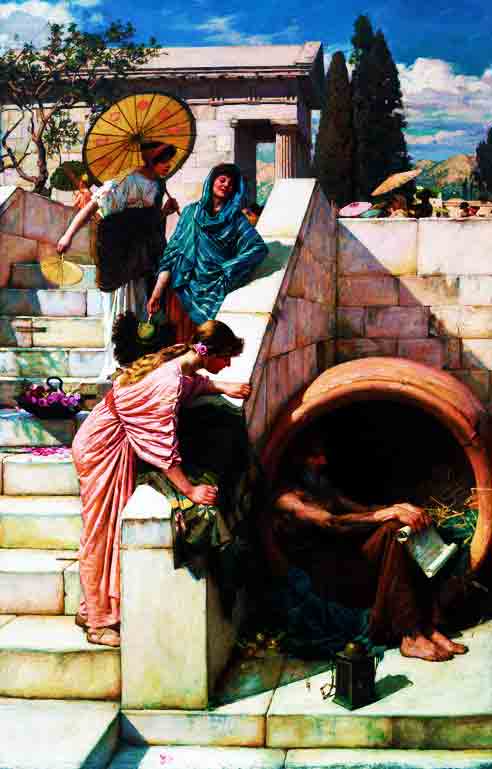
Characteristics of the Pre-Raphaelite Brotherhood Movement
When they founded the Brotherhood in 1848, their ages ranged from 19 to 23. Despite their youth, they all developed a critical stance toward industrialization in England and the narrow-mindedness of the administrators at the head of the academies. Although it may seem strange to us today, with the works they produced—which were sensational for their time—they launched one of the first true avant-garde movements and challenged the world of official art institutions. Rossetti proposed the idea of naming the group a “Brotherhood” and keeping it secret from the members of the Royal Academy of Arts. They signed their paintings with “PRB,” the initials of the Pre-Raphaelite Brotherhood. No one outside the group had any idea what this signature meant. All they knew was that they were facing a secret society that should be viewed with suspicion.
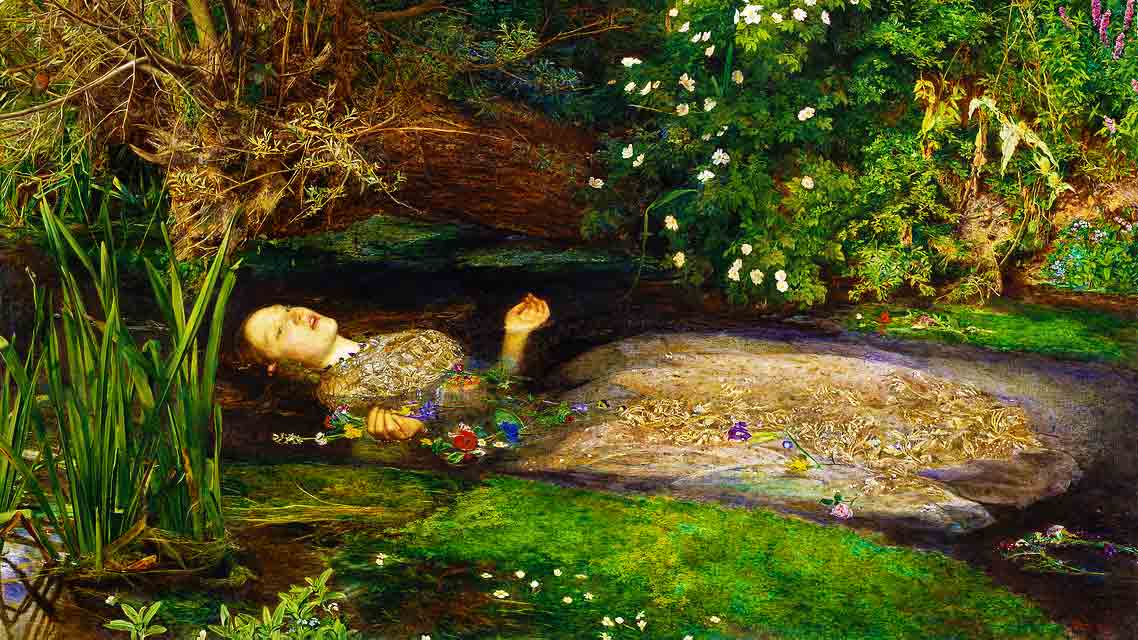
The Pre-Raphaelite Brotherhood painters used a technique inspired by Renaissance frescoes to achieve the brightness they desired in their colors. In fresco painting, paint was applied to wet white plaster. The Pre-Raphaelite Brotherhood painters applied two layers of white primer to their canvases and then began painting before the white primer had dried. As a result, the colors took on a more vivid and jewel-like brilliance than in other 19th-century paintings. The paintings of the Pre-Raphaelite Brotherhood are characterized by an extreme attention to detail, rendered with almost photographic realism. All images are rendered with sharp clarity.
Symbolic and allegorical compositions influenced by figures such as Tennyson, Browning, Keats, and Shakespeare, as well as medieval themes, are frequently seen in this movement. Finding the style of Sir Joshua Reynolds—founder of the Royal Academy of Arts, whom many young artists emulated—superficial and insincere, they refused to follow in his footsteps and nicknamed him “Sir Sloshua” (sloshy: ordinary). On the other hand, they admired the theories of art critic John Ruskin (1819–1900). Ruskin, too, made it clear how much he admired them when they met on one occasion and wrote letters to *The Times* defending the works they had produced. In 1851, he published a pamphlet titled *Pre-Raphaelitism*, which described and praised this movement and its ideas.
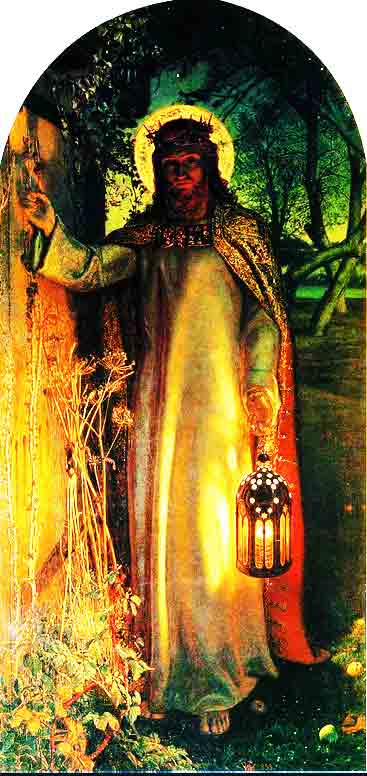
Leading Members of the Group and the Movement
The Pre-Raphaelite Brotherhood was a group that took its artistic goals very seriously. They drafted a manifesto in which they declared their intention to depict serious and important subjects directly and as realistically as possible, using the brightest and most vivid colors available. At the same time, they aimed to reject the traditional methods taught in art academies, which had remained unchanged for decades and were based on rote learning. To spread their ideas, they published a magazine titled *The Germ*. The magazine drew considerable criticism, particularly from Charles Dickens (1812–70). Over the five years the Brotherhood lasted, the differences between the works of Rossetti, Hunt, and Millais became more apparent. While Hunt’s works became more moralistic and Millais’s—which were more easily accepted by the public—adopted a more naturalistic style, Rossetti’s works, influenced by literature, took on an increasingly fantastical and mystical character.
Following harsh criticism of a painting by Millais in 1850, the group members stopped signing their works with “PRB,” and Collinson left the group. Although the group disbanded shortly thereafter, its influence persisted, and numerous artists continued to work toward similar goals, employing similar styles and techniques. Among these artists were Edward Burne-Jones (1833–98), Walter Howard Deverell (1827–54), Ford Madox Brown (1821–93), Arthur Hughes (1832–1915), Simeon Solomon (1840–1905), Henry Wallis (1830–1916), and Charles Allston Collins (1828–73). The works of this new generation of artists are generally classified under the term “the second phase of the Pre-Raphaelite Brotherhood.”