We design spaces and structures not only to meet various needs—such as housing—but also simply to provide aesthetic pleasure. Architecture is a field that benefits us in many ways. The fundamental characteristics of an architectural structure have been debated throughout history, and this is a question with many different answers. In this article, we will examine the role of architecture in Roman art and the characteristics of Roman architecture.
Characteristics of Roman Architecture
Architecture holds great significance in Roman art. One of the most fundamental characteristics of Roman architecture is its focus on function rather than aesthetics. For this reason, Roman architecture is a style that produces structures designed to provide functional benefits rather than visual appeal. In Rome, architectural structures were not only important in terms of function; they also served as tools for the people who commissioned them to demonstrate their power and authority. Due to the Roman Empire’s cosmopolitan structure spanning three continents, Roman architecture developed a unique character through the synthesis of diverse cultures. The Roman Empire successfully integrated various artistic elements drawn from different cultures into a style suited to Rome.
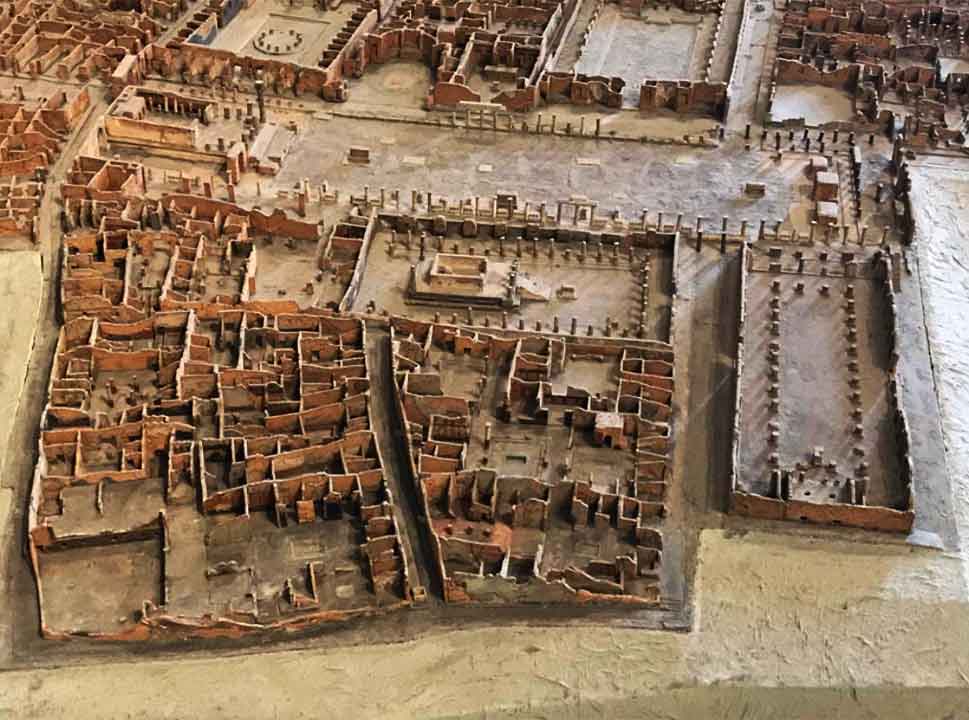
In Roman architecture, structures such as palaces, villas, and multi-story or single-story houses form the core fabric of major cities. It can be said that Roman architects developed arched and domed architectural techniques. For this reason, the importance of load-bearing walls and columns is more prominent in Roman architecture. In Roman architecture, various mortars were used to bond brick and stone textures together and to increase the structure’s strength. They used a mortar called “afrega,” made from sand and gravel, and a powder extracted from mountain slopes known as “puzzolana” to create various mixtures, which they then applied in different structures. Mixtures made with puzzolana were particularly used in the foundations of piers.
The Villanova culture ranks among the primary influences on Roman architecture. Traces of this culture can be seen in various regions of Rome. In addition to the Villanova culture, the Etruscans, Greeks, and Carthaginians also exerted significant influences on Roman architecture at different times and in different regions. Another key feature of Roman architecture is the prioritization of military, political, social, and public structures in Roman cities. Roman cities were designed according to a military camp system; the city was surrounded by walls, and military buildings were situated in the city center. The Roman Empire established streets in new cities that ran along two main avenues and intersected at right angles with the market squares they called forums; however, this architectural planning was used only in new cities.
The Most Important Structures
Until a certain period, permanent theaters were not built in Rome. Instead, they used portable structures made of wood that could be assembled and disassembled. For this reason, the emergence of theaters in Rome where genres such as tragedy, drama, and comedy were performed was rooted in religious reasons. The theaters built around the temples of Dionysus serve as an example of this. The first permanent theater built in Rome was demolished shortly after its construction. The next permanent theater was built in 58 B.C. by M. Aemilius Scaurus. This theater, constructed of wood, had a stage area consisting of three tiers. The first permanent theater built in the city of Rome was constructed by Pompey in the Campus Martius area.
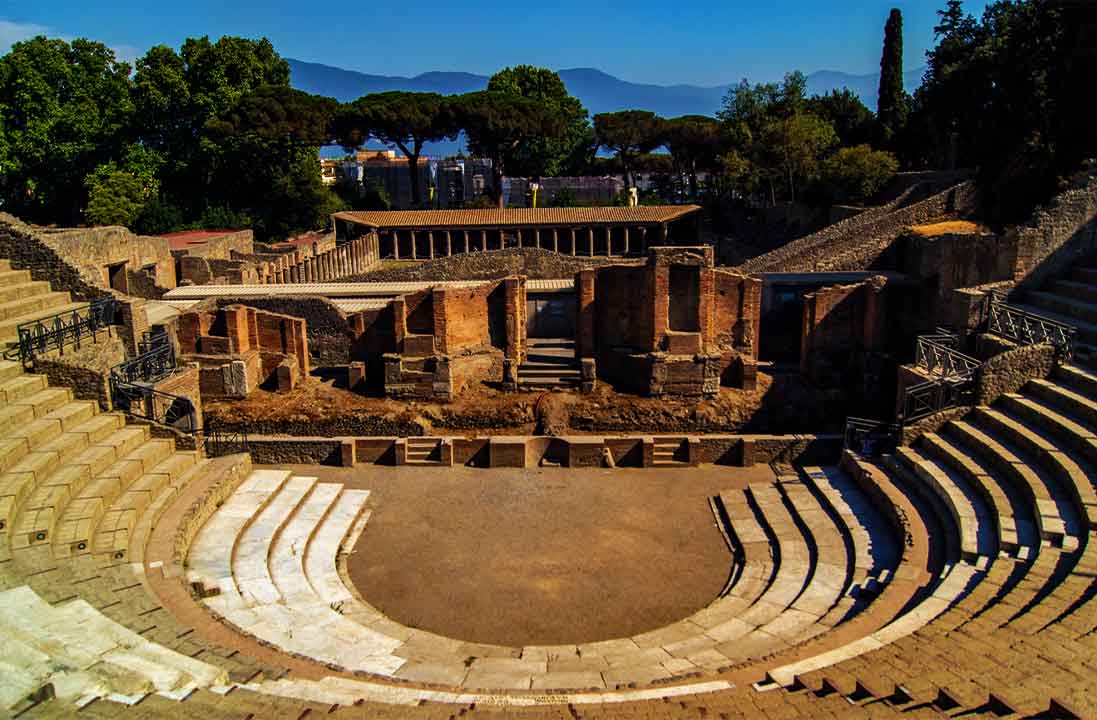
Amphitheaters are among the most significant architectural structures used in Roman cities and unique to Rome. The first amphitheaters in Rome began to appear as early as the 1st century B.C. Amphitheaters are formed by the intersection of two theaters facing each other, and while early examples were constructed using wood, later ones were built with stone. These amphitheaters were generally used for animal and human fights or various competitions. Among the amphitheaters still standing today, the first one was built in Pompeii in 80 B.C. The capacity of this structure was likely much greater than the population of Pompeii at the time, so we can say it had a very large capacity. In Roman architecture, the Colosseum—an amphitheater—is perhaps the most well-known example, not only among amphitheaters but also among other architectural structures.
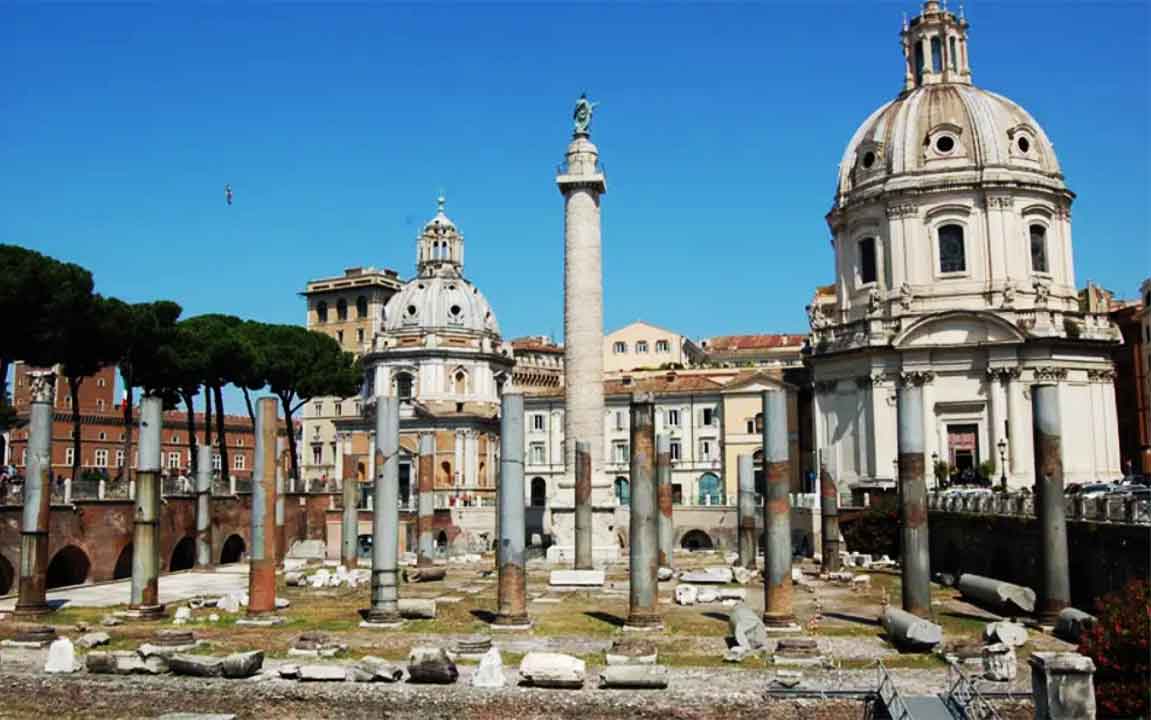
The marketplaces called forums in Rome were the heart of social life for the Roman people. In the developed cities of Rome, they were built openly, consisting of sections that could meet all kinds of public use needs. In Roman architecture, an average forum was designed to be rectangular in shape and enclosed on the outside. An example of an early Roman forum is the Forum Boarium. The Pempeii forum is M.D. 2.it was built in the century. Another well-known example of a forum is the Traianus Forum. The construction of the Traianus forum is historically dated M.D. it is based on the year 98. This forum can be considered the most important and monumental forum among all forums in Roman architecture. Because it corresponds to the proportions mentioned by Vitruvius as the proportions that should be for a forum. In addition, the Traianus forum is designed to be closed to the outside.
The earliest examples of aqueducts can be found to a lesser extent in Mesopotamian civilizations and the Greek peninsula. However, it is generally accepted that the invention and widespread use of aqueducts first occurred in the Roman Empire. Aqueducts were one of the ways to divert water from natural sources during the Roman period and earlier civilizations by transporting it in order to meet the water needs in cities. The Cloaka Maxima water channel is one of the examples of water channels belonging to the Etruscans. The construction of a section of this water channel dates back to the reign of Emperor Augustus. In addition, this water channel brings water from the source to the city taps thanks to underground water pipes.
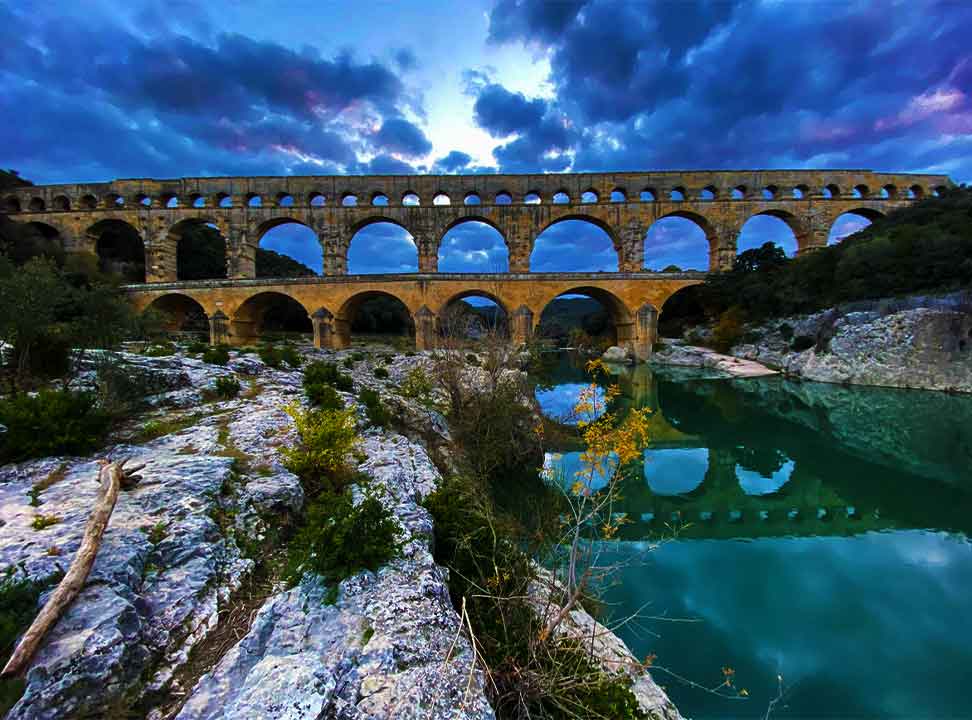
In Rome, this system was called ‘fogar’. The origin of this system essentially stems from a system very similar to the one used by the Persians and the surrounding civilizations. Since water was one of the most important resources for a civilization in ancient times, aqueducts that served to divert water in the Roman Empire were among the architectural structures that were of great importance. The Appia waterway is the M in Roman history.D. it is the first waterway built in the year 312. This waterway was approximately 18 kilometers long. Another example of an aqueduct is the Marcianus aqueduct. The largest aqueduct in Rome is the one located at Pont du Gard, near Nimes.