While the Impressionist and Realist art movements were establishing their distinctive styles, two other emerging artistic movements were also taking shape. Symbolism, which emerged in France, and the Aesthetic Movement, which flourished in England, were art movements that developed independently of academic art. The Aesthetic Movement prioritized form over content, focusing on beauty. Our article on the Aesthetic and Symbolist Movement.
Art for Beauty Alone
The Aesthetic and Symbolist movements share certain similarities. One of these is that both emerged as a reaction against the Realist movement. The Aesthetic movement focused on beauty, a principle not emphasized by Realism. While Realist artists were concerned solely with depicting reality in the most realistic manner, Symbolist artists pursued abstract expressions. Another common point between Symbolist and Aesthetic artists is their rejection of classical views in the canon of art and literature.
They believed that art should not be used as a tool for lofty purposes. Writer and critic Théophile Gautier (1811–1872) argued that writers and artists should also use their intuition and imagination when creating their works. In this way, he became a source of inspiration for Symbolist artists. Thus, the idea of “art for art’s sake” emerged. Symbolist and Aestheticist artists adopted the principle of creating art solely for the sake of art, rather than for religious, political, or noble purposes.
The concept of “art for art’s sake” meant that art was concerned solely with creating beauty and should not engage with political or moral themes. Artists associated with the Symbolist and Aesthetic movements conducted experiments in this direction, seeking to separate art from everyday life and distance it from mundane themes. Gaultier and many other artists of his time harbored a certain admiration for the Romantic movement.
Just as in Romanticism, they wanted to see themes that focused on artistic values rather than moral and social themes. Those involved in the Symbolist and Aesthetic movements despised the rigid and sometimes bigoted social norms. Beauty and aesthetics were indispensable to art. Aestheticism, which was also partly opposed to industrialization, brought with it a radical separation between the artist and society.
Even while studying at Oxford University, the writer Oscar Wilde placed great importance on aestheticism and the aesthetic sensibility; after graduating, he became something of a spokesperson for the aesthetic movement. Oscar Wilde’s passion for aesthetics was reflected in his personality, which is why he was criticized by many. Some even claim that the aesthetic movement came to an end following Wilde’s trial in 1895.
Some of the artists who embraced the Aesthetic Movement include Albert Moore, Burne-Jones, William Morris, and James Abbott McNeill Whistler. The works of these artists, who aimed to create aesthetic environments in every aspect, ironically became a focal point regarding changes in people’s daily and political lives. The Pre-Raphaelite Brotherhood was one of the movements that most influenced the Aesthetic Movement in terms of inspiration.
The Use of Symbols in Harmony: Symbolist Movement
There is no set of principles to which every Symbolist artist strictly adheres. However, in 1886, the poet Jean Moreas published a Symbolist Manifesto that rejected the most explicit principles of Naturalism and Realism. Moreas specifically identified three poets as the pioneers of Symbolist movement: Charles Baudelaire (1821–1867), Stéphane Mallarmé (1842–1898), and Paul Valéry (1871–1945). With his interpretation that thoughts and emotions could be conveyed not only through the meanings of words but also through their sounds and harmonies, Baudelaire had a profound influence on Symbolist artists.
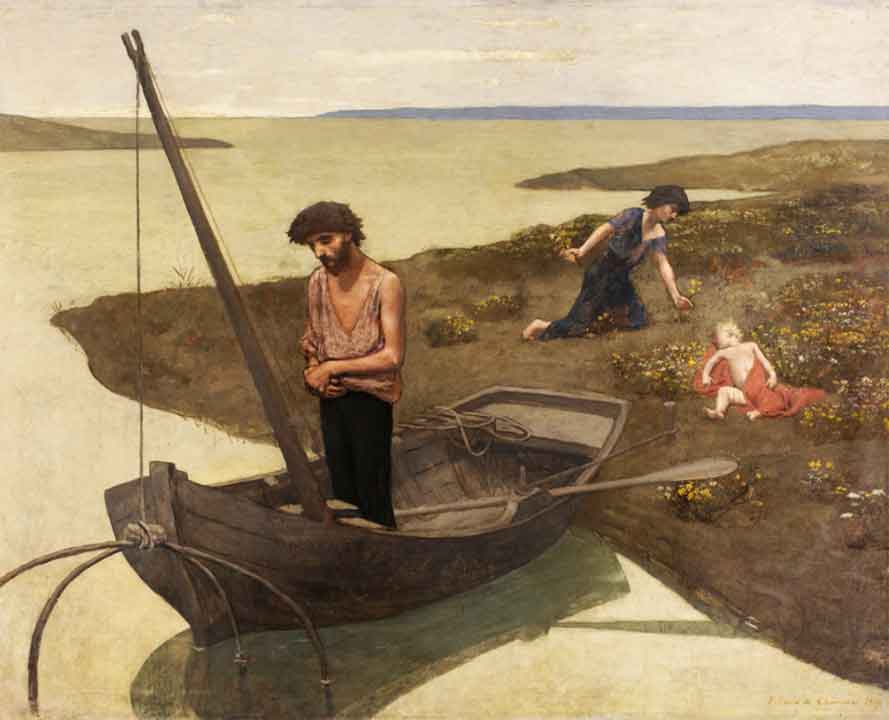
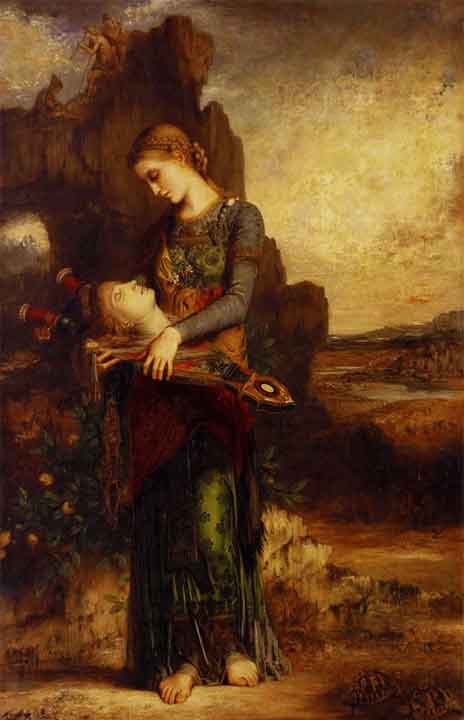
Another significant figure, Paul Gauguin, sought to spread his ideas and the Symbolist movement across Europe in the late 19th century by employing colors, motifs, and other elements of harmony. Believing that European art was becoming increasingly bland, Gauguin used various images and symbols in his paintings. Other important Symbolist artists who incorporated symbols and dreams into their works include Gustave Moreau, Pierre Puvis de Chavannes, and Odilon Redon.
Symbolist movement gradually spread throughout Europe. As this spread continued, more and more publications began writing about topics such as Symbolist ideals. These writings expressed not only an antipathy toward naturalism, impressionism, academicism, realism, and industrialization, but also an enthusiasm for the mystical and evocative imagery used by Symbolist artists in their works. As these publications increased, the influence of Symbolism continued to grow. Symbolist art was practiced by various artists in different countries, combining distinct techniques and approaches.
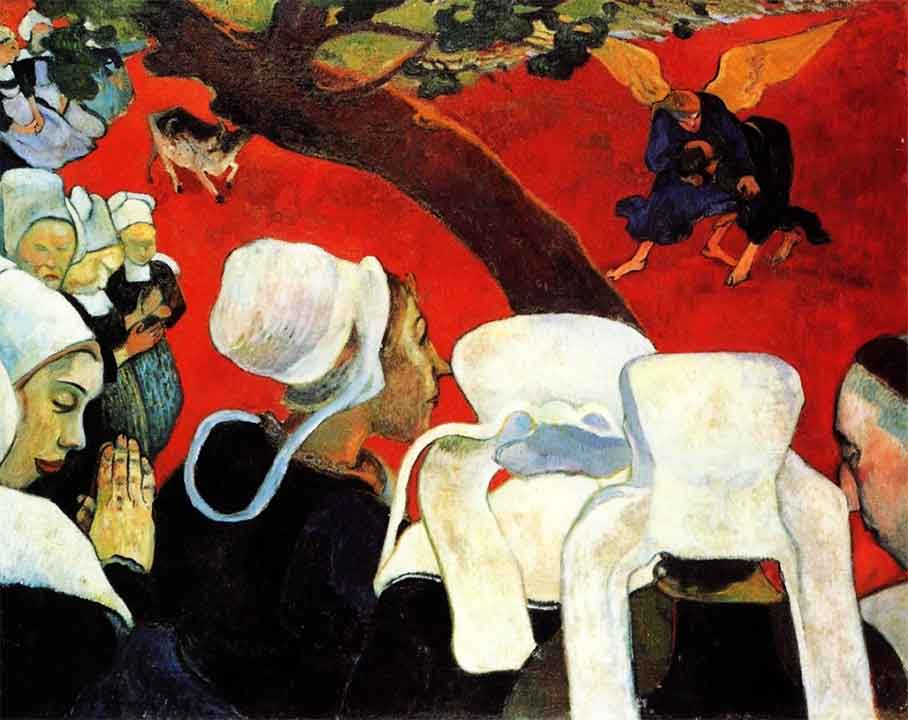
“The Vision After the Sermon” is a work by Paul Gauguin that can be considered the first Symbolist painting. Through the many symbols he employed in this painting, Gauguin established himself as a key figure within the Symbolist movement. The Symbolist movement spread as a trend from France to Russia, England, Italy, Spain, and Northern Europe. Emerging from the artistic concerns of a group of artists, the Symbolist movement quickly became popular throughout Europe.