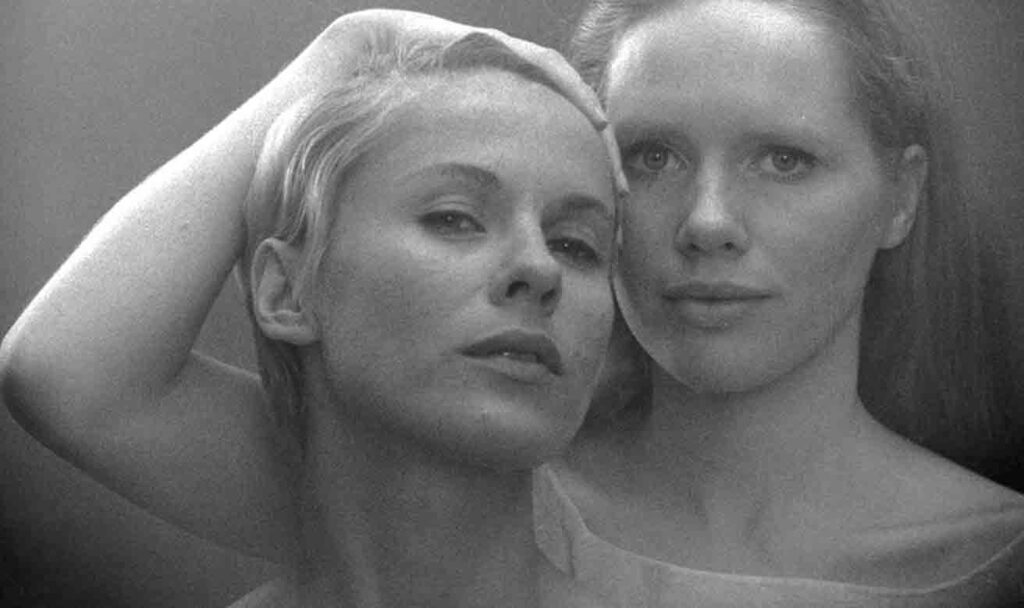
When we speak of the avant-garde, we must consider a very broad spectrum—ranging from the works that are most familiar and recognizable to us to the darkest, most obscure narratives. We must begin the history of the avant-garde in cinema with *Persona*, a film that presents a succession of images of violence and death on screen. *The Seventh Seal*, another film by Ingmar Bergman, the director of *Persona*, is one of the most valuable works of avant-garde cinema.
Yet these kinds of films are often thought of as something like an exotic, bitter coffee gulped down hastily during a roadside stop. In the widely recognized opening scene of *Persona*—a collision sequence evoking mortality and violence—chaotic images spilling beyond the frame and extremely loud sounds assault the ears and eyes. The anti-realist nature of this prelude, which shares many similarities with the works of Stan Brakhage, is evident. As in Bergman’s other films, the care taken here with the theme and the way the form is structured is striking. The opening scene of *Persona* seems to demonstrate how, in the late 1950s and early 1960s, Western cinema set out to re-examine and redefine how film could be used to explore the human experience.
Bergman’s films begin with deep darkness, followed by a light on the screen so bright it is almost blinding. At times, an image of a woman bathing in a river—adapted from an animated film—appears on the screen. Then we might encounter the image of a spider or a skeleton, or blood gushing from the neck of a dead sheep. Similarly, the image of hands—hammered and nailed to a cross, reminiscent of Jesus’ crucifixion—may also appear on the screen afterward. These images, which follow one after another, are thematically related to one another, but this connection is implied rather than explicitly shown. They may seem to appear on the screen at random, yet there is a definite relationship between them. Undoubtedly, there is a high level of intellectual quality here—one that today defines itself through a clear stance such as anti-intellectualism and is characterized by an effort to maintain a distance from intellectualism.
Therefore, in its broadest sense, the avant-garde refers to an artistic orientation that seeks strategies to challenge the viewer’s conformist stance and conventional expectations. It is this sensibility that gives art cinema—which stands out for its most intense and pure narrative styles—its distinctive character. If our film-viewing experience has been shaped by the norms of mass Hollywood cinema—which prioritizes extreme clarity and psychological realism through covert film techniques to the point where we often forget we are watching a structured film—then we can say that avant-garde films are difficult to watch. Thematic orientations are far more defining for avant-garde cinema than the traditional narratives or narrative styles specific to a particular film genre.
Just as the language of mainstream cinema and the narrative style of avant-garde cinema influence one another, avant-garde cinema has also known how to adapt this language to its own conditions. Avant-garde cinema is characterized by significant diversity and breadth; therefore, in this article, we will discuss only the general outlines of avant-garde cinema. On the other hand, it is well known that cinema often glorifies avant-garde lifestyles, or at the very least, presents them as entertaining vignettes. The term “avant-garde cinema” brings to mind adjectives such as eccentric, tailored to a specific niche rather than the masses, non-commercial, and even tolerant and open-hearted. The emphasis on film genres (horror, social drama, etc.) is, in part, a marketing tactic used to attract an audience. However, the “avant-garde” label has no commercial value; in fact, it often elicits resistance among the average viewer.
Examples of Avant-Garde Art
Due to art cinema’s ability to integrate national and global influences, the term “avant-garde” carries as little appeal today as the phrase “box office smash.” Fortunately, mainstream cinema today has drawn clear boundaries between itself and non-mainstream cinema by developing its own unique narrative forms. Upon closer inspection, it is easy to see that the avant-garde shares many common points of reference with mainstream sensibilities. For example, when we look at films like *Star Wars* and *The Matrix*, we can easily notice that they employ visual tricks similar to those used in Soviet-era cinema. Whether feature-length, short, live-action, or animated, a common trait among most avant-garde films is their resistance to the classical logical structure based on cause-and-effect chains and to an overly streamlined narrative structure.
The best way to clarify a term like “avant-garde,” which involves ambiguity and multiple connotations, is to examine it in comparison with other creative approaches—particularly established mainstream cinema, which has a distinct ideological and aesthetic stance. It is well known that the avant-garde and the mainstream have produced fascinating points of intersection. For example, it is known that at one point, Walt Disney and Salvador Dalí collaborated on a short animated film titled *Destino*. The film could not be completed at the time production began. However, Walt Disney Studios later completed the film by adding newly designed elements and screened it at the Museum of Modern Art in New York.
The film progresses through Dalí’s paintings and sketches, such as his “Man Walking in the Desert,” which depicts one of Dalí’s dreams. In fact, the film is the completed version of a short film Dalí worked on in the late 1920s. David Lynch, known for his “Cremaster Cycle”—a body of work focused on the simultaneous exploration of artistic and sexual identity—along with the Quay Brothers, Jan Švankmajer, Guy Maddin, and Matthew Barney, are among the leading filmmakers who have embraced an avant-garde approach (particularly the surrealist style).
Rather than following a narrative logic dictated by realist impulses, these directors are distinguished by their tendency to proceed through the knowledge and laws of dreams. However, dreams remain a realm where fluidity and transition between traditional and avant-garde movements are evident. The dynamic movement and color palette of *Transformers* (Michael Bay, 2007)—one of the most significant and box-office-breaking films of 2007—evokes avant-garde films. Despite its dominance in Western culture, the avant-garde has relentlessly continued its struggle against realism. Examples and inspirations drawn from avant-garde cinema have brought a noticeable breath of fresh air to mainstream cinema, which is moving toward a form of photorealism. The avant-garde philosophy, with its distinct ties to the visual arts, has had noticeable effects on certain types of films.
The best-known example of this is the modern animated film *Neco z Alenky* (Qan Svankınajer, 1987). Andrew Kotting and Guy Maddin, who gained attention with their film *Filthy Earth* (2003), are also notable examples from contemporary cinema. Film scholar David Bordwell states, “The cornerstones of art cinema—with its emphasis on the realistic psychology of characters—are realism and the auteur style.” Consequently, in a film like *Persona* (Ingmar Bergman, 1966), the sense of time and space and other superficial elements do not progress within a traditional logical framework; classical logic seems to have given way here to profound understanding, insight, and emotions governed by their own inherent laws.
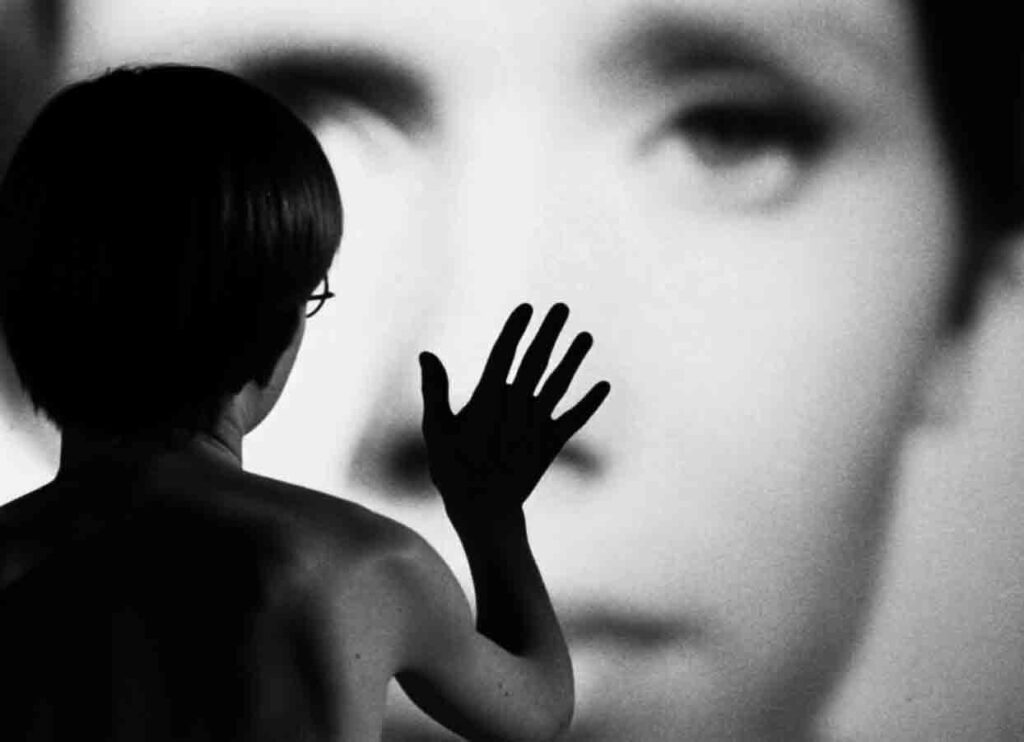
The film’s opening scene reflects the qualities of this approach in a very typical way. The film begins with images reflected from a constantly flickering film projector. The film’s narrator counts backward, and, as mentioned above, unrelated images continue to flow across the screen. The same scene continues for another three minutes, with shots focusing first on the exterior of a building and then on its interior. Images of a young man waking up in a deserted room with very few belongings appear on screen; the man is watching images of a woman on the screen. Rather than following the classical logical structure of a cause-and-effect chain, this scene relies on the viewer’s ability to connect and interpret each image or element in relation to one another. This narrative style was also adopted by some Russian directors in the early 20th century.
Many film experts note that art cinema contains a great deal of uncertainty and ambiguity. Its portrayal of life in all its raw, vivid complexity—without any simplification—makes art cinema far more sincere and authentic when compared to Hollywood’s style, which excessively glorifies certainty and clarity. Although it shares common qualities with mainstream cinema, art cinema is known to be highly prone to transitions, playfulness, and irony in terms of genre and subject matter. It is very easy to notice the similarity between the shower scene in *Psycho* (Alfred Hitchcock, 1962) and the rhythmic flood of images in the opening scene of *Persona*. Although it is difficult to place the avant-garde within a clear-cut category, the films discussed here will provide a framework—albeit a general one—for understanding a cinematic movement that continues to challenge classical narrative norms and the view of film as merely a tool for entertainment.
It can be said that the avant-garde’s persistence in challenging established modes of production and perception has had a sustained and far-reaching impact within the field. Marcel Du Champ, Maya Deren’s *Meshes of the Afternoon* (1943), and Hans Richter’s *Rhythmus* (1921) are among the avant-garde masterpieces that deserve mention in addition to those discussed here. It is well known that Richter’s film *Rhythmus* influenced the work of Norman McLaren; consequently, there may be crossovers and intermingling between the streams in which these films were produced and the riverbeds where certain cinematic movements developed.
Ingmar Bergman’s The Seventh Seal
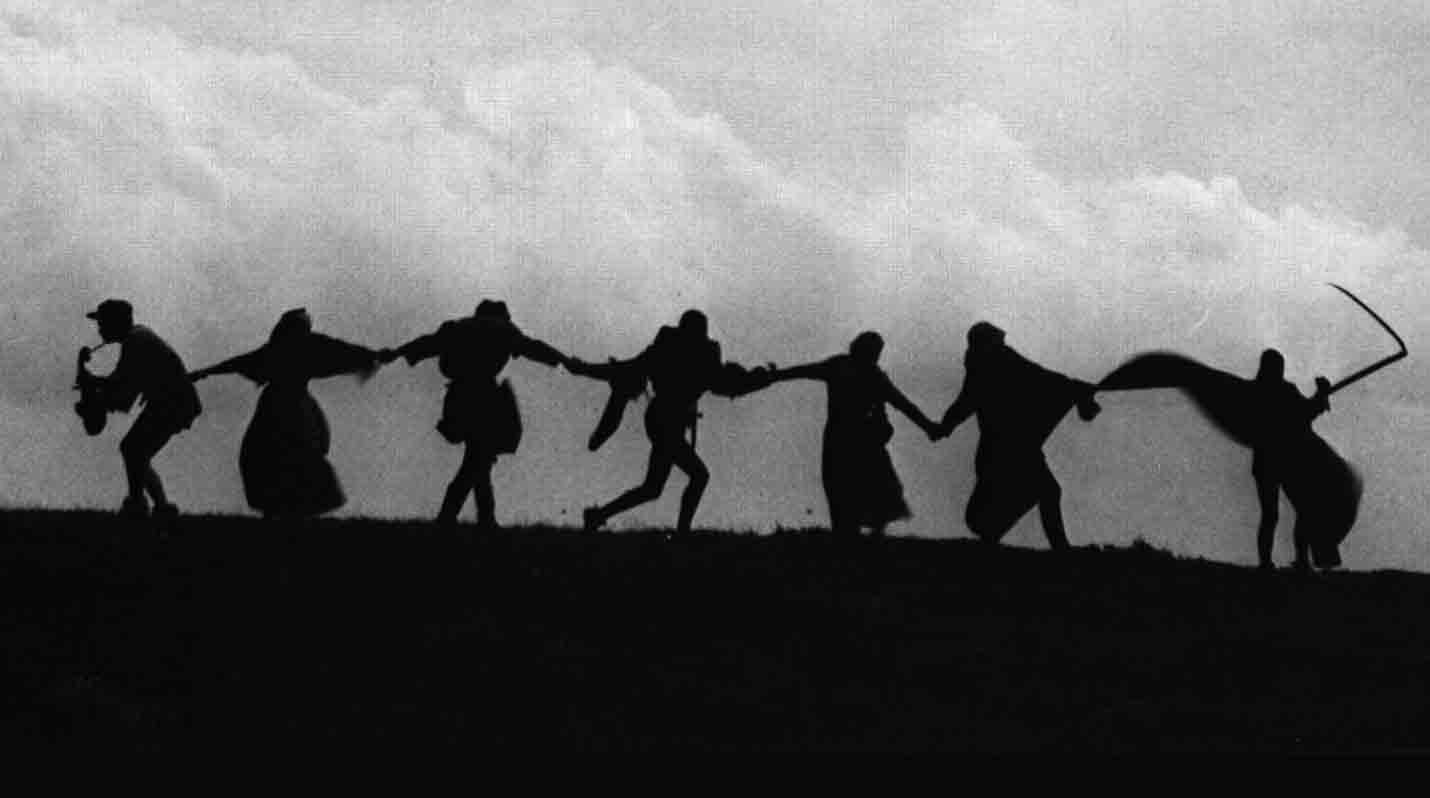
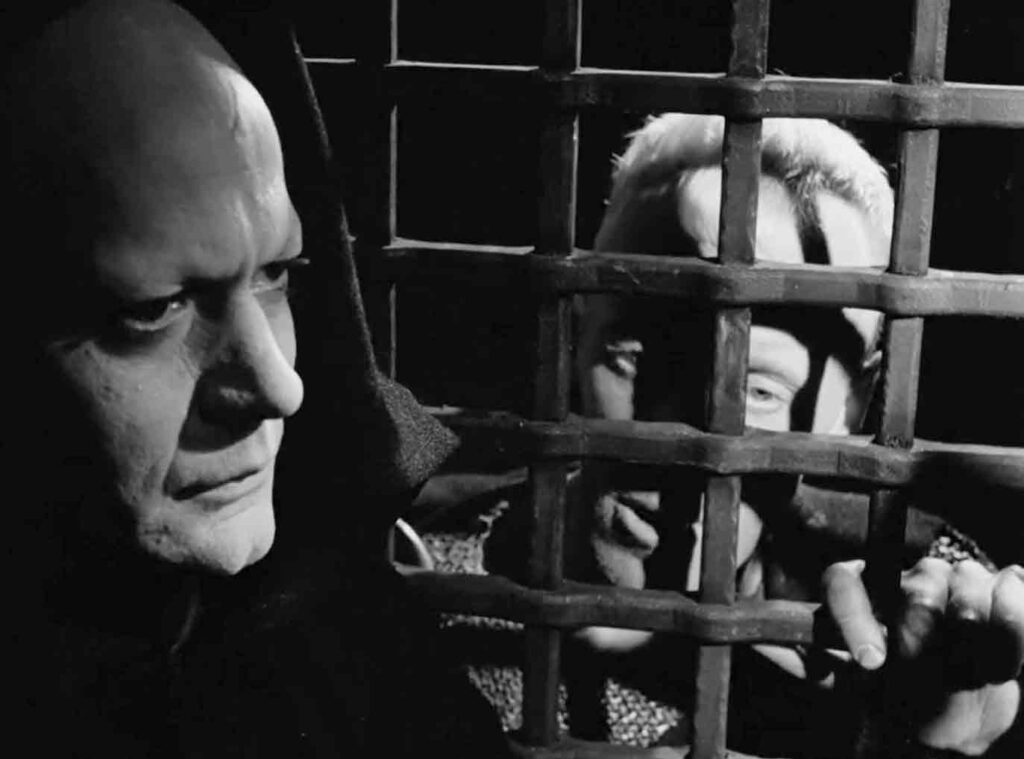
Antonius Block and his vassal Jons have set out to return to their lives on the Swedish coast after participating in the Crusades and fighting for ten years in the Holy Land. Their goal is to reach Block’s manor. While seeking an escape from the harsh and wild world—a respite—they meet and befriend a couple of actors named Jof and Mia. During the same journey, they also meet Plog, a rough-and-tumble iron and steel merchant, and his wife. Throughout the journey, Antonius shares his thoughts on mortality with his traveling companions and speaks of the necessity of confronting death. The film ends with the image of a woman being impaled and burned at the stake on the grounds that she communicated with the devil. In the end, Antonius returns to the home he built from scratch with his own hands and begins living with his new, humble family.
It goes without saying that *The Seventh Seal* is an iconic title in cinema. One could say its literary counterpart is *Oliver Twist*, and its theatrical equivalent is *Hamlet*. Its most distinctive quality, in the words of Italian writer Italo Calvino, is that it conveys what needs to be told without ever explicitly stating it. With its dramatizations centered on fundamental human dilemmas—such as faith and fatalism, fear and hope, spirit and matter—and its cinematic style, *The Seventh Seal* will continue to be regarded as a “classic” in every era. These themes, which are always considered alongside their opposites, have also been brought to life in a highly aesthetic manner in films such as *Antichrist* (Lars von Trier, 2009), *The Exorcist* (William Friedkin, 1972), *The Last Temptation of Christ* (Martin Scorsese, 1988), and *The Devils* (Ken Russell, 1971).
*The Seventh Seal* is a film that crowns Ingmar Bergman’s mastery of visualizing and dramatizing the concepts of God and atheism. If we seek “artistry,” a certain tone of seriousness, and a concern for message in the films we watch, any Bergman film will satisfy all these criteria at once. David Borwell makes some insightful observations on this subject: “In the 1950s and 1960s, the rise to prominence in cinematic culture of producers and directors from the European art-house tradition brought the issue of individual style to the forefront; but as we realized we did not have many tools at our disposal to analyze stylistic differences among directors, the topic lost its former relevance. Bergman has examined the subjects and ideas that captivated him with visible ambition and enthusiasm.
For him, cinema is a means of self-expression rather than merely a form of entertainment. The most distinctive feature of Bergman’s cinema is that it has proven the power of individual cinema. *The Seventh Seal* is, in one respect, inspired by the one-act plays Bergman called *Wood Painting*, which he wrote for acting students in Malmö to perform. His other sources of inspiration are equally fascinating: Carl Orff’s compositions for *Carmina Burana*, Picasso’s painting *Two Acrobats, Two Strippers, and Two Children*… It is also known that he was influenced by religious icons found in churches. The statue of Jesus on the cross is seen at the center of several scenes in the film.
In his book *My Life in Cinema*, Bergman states, “I can say that my curiosity about religion was an intellectual one. This inclination was a way to find a means of unraveling the connection between my consciousness and my intuition and insights.” This statement and these explanations are nothing new to any of us, but they are understandable when one considers that film directors often hesitate to explore a subject in a deep and sincere manner. While commercial concerns exist on one hand, on the other hand, the quality of the writing and content remains a key criterion for both studios and audiences. Today, when we talk about a film, it makes sense to use phrases like “a Steven Spielberg film,” “a Lars von Trier film,” “a Pixar film,” or “a Shane Meadows film.”
Like many directors, Bergman maintained a core group of actors at his disposal. In *The Seventh Seal*, he chose actors he frequently worked with, such as Max von Sydow, Bibi Anderssen, and Gunnar Björnstrand. Bergman, who had written five screenplays, found his focus increasingly shifting toward filmmaking and directing. He was now ready to make a film. He managed to secure a specific budget for the 35-day shoot and the subsequent post-production stages, such as editing and music. The film was shot largely in the studios at Hovs Hallar. This location was used for the film’s opening scene on the beach, the final scene, and the scene shot on the grass beside the horse-drawn carriage to celebrate life.
What truly enriches and gives meaning to Ingmar Bergman’s work is the influence of theater and literature, and his ability to reimagine the inspiration drawn from them on a cinematic foundation. Synthesizing the new world of cinema with the old world of theater presents filmmakers with certain opportunities as well as significant challenges. In an interview with a magazine in 2002—five years before his death, while preparing for the filming of *Saraband* (2003)—Bergman stated: “What worries me is that when the camera is allowed to play a significant role, it will become an end in itself. ” The most striking features of Bergman’s work are a distinct humanism, gravity, and seriousness. He approached technical details with the same seriousness as he did the content.
*The Seventh Seal* is an extremely elegant film that not only presents scenes reminiscent of the frescoes and tapestries of the era but also seamlessly blends tragic and comic elements. This cinematic approach evokes the work of Shakespeare, Greek tragedies, and—from a more recent era—the films of Akira Kurosawa, who directed works such as *Nora inu* (1949), *Shichinin no samurai* (1957), and *Rhapsody in August* (1992). Like *Shichinin no samurai*, *The Seventh Seal* also places a solitary man of action within a social context. Having embarked on a quest to affirm life and existence in the wake of the horrific slaughter and barbarism experienced during the Crusades, Antonius Block engages in various reflections on the place and meaning of fate within the context of the 12th century. Attention is drawn to the potential dangers of religion and its capacity to drive masses to the most irrational massacres.
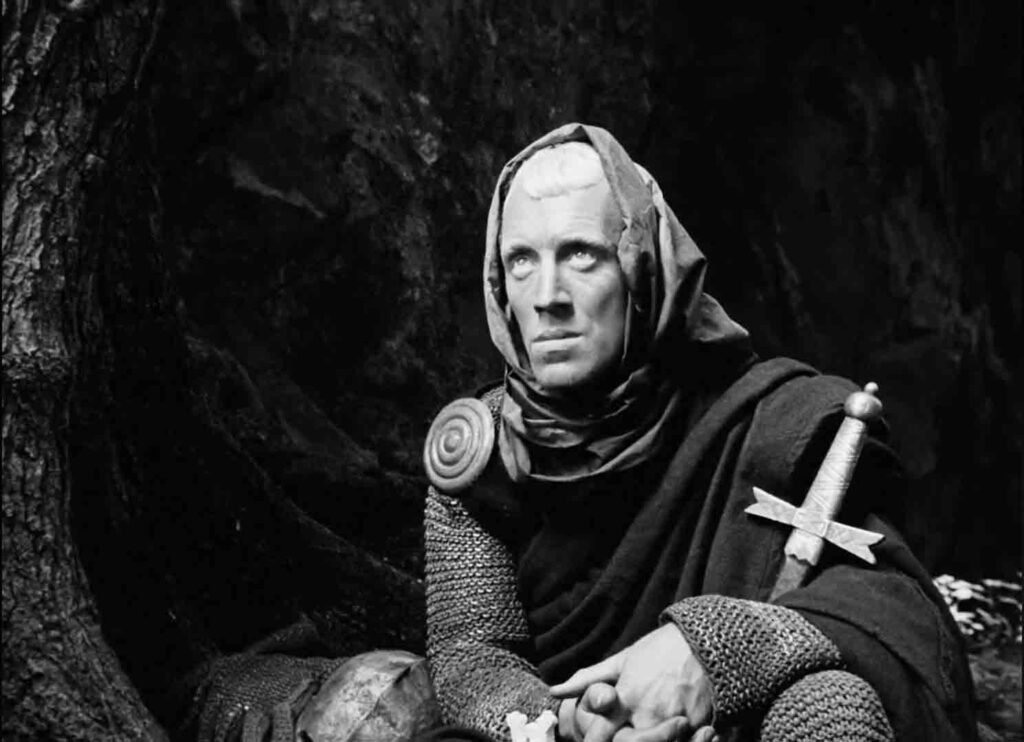
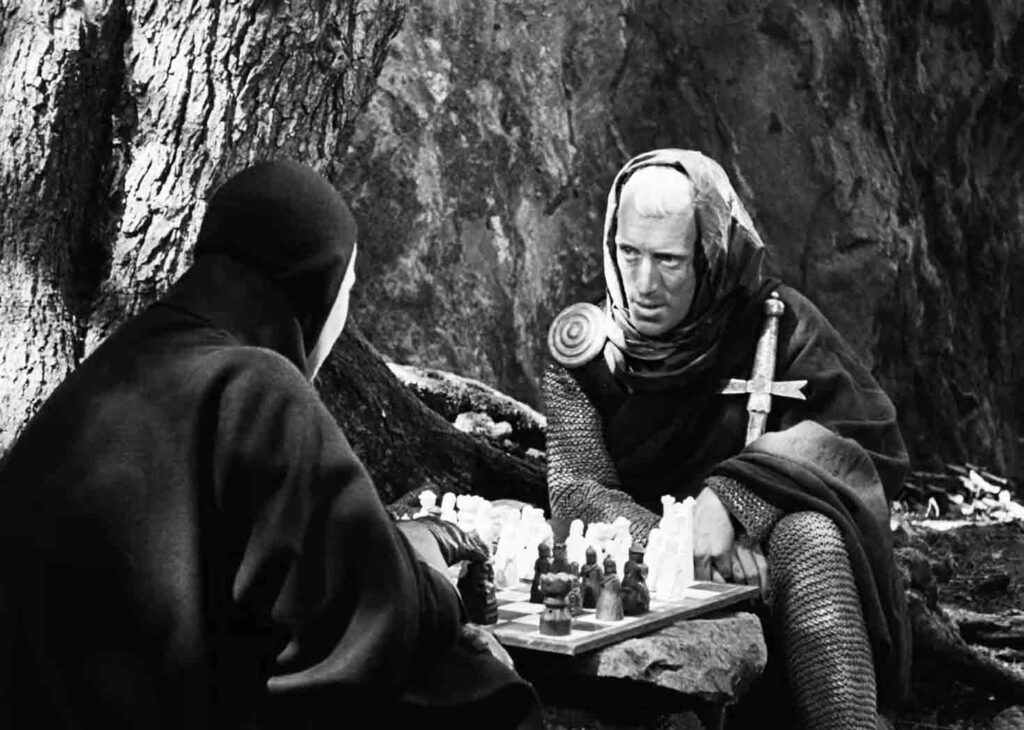
At the end of this process, having lost his sense of identity with life and society, Antonius finds himself utterly alone, like a spirit or a ghost. The scene where he prepares to play chess with Death in the forest best reflects this new, otherworldly image he has taken on. This scene is also highly characteristic of Bergman’s thematic narrative style: Death stands on the right side of the camera’s foreground, while Antonius stands on the left. Furthermore, all the good things—that is, Antonius’s new life—are centered in the background of the frame: Jof, Mia, Jons, and the others are sitting on the grass, laughing, playing, and snacking. Beyond this, Bergman also plays with the faces and shapes in both the background and the foreground.
Elsewhere in the same scene, as Death—with only half his face visible—wanders in the background, Antonius is preparing to confess his sins. Antonius says, “I do not want to submit to fate; I want to understand it.” The burden on Antonius’s shoulders is heavy; he must reconcile his inner chaos with the social order. This film, which dramatizes its themes in a highly realistic manner and provides visuals appropriate to these themes in nearly every scene, is one of cinema’s most honest and sincere works. “I saw my emptiness in the mirror held up to my face. Now I am a spirit, like a living dead.” The entire film is filled with elements reminiscent of Carl Theodor Dreyer’s *La Passion de Jeanne d’Arc*. With this ironic scene set in the forest and the characters portrayed in this tableau, the film takes on a palpable theatricality.
Do we truly live for ourselves, or for society? This is the question posed to the entire audience and to all the characters in the film. Jof is the most benevolent of the characters in the film, a view supported by Bergman in an essay he wrote. According to him, Jof and Mia represent “the sacred and sublime aspects of humanity.” In this sense, the film features characters that are universally recognized and hold a place in the universal consciousness. Ingmar Bergman passed away in August 2007. Those who wrote about him after his death spoke at length about his film career and his achievements. What was the reaction to *The Seventh Seal* when it first premiered? The film’s premiere in Stockholm drew significant attention. It was also through this film that Max von Sydow attained the star status he would maintain for the next fifty years.