In this article, we will examine the concept of national cinema, its development within the film industry, and how Japanese cinema has left its mark on the industry through this genre. Thanks to the influence of great directors like Akira Kurosawa, Japanese cinema continues to exert an influence on Western societies even today.
The rise and fall of national cinemas, their re-emergence, resurgence, merging, and vying for the spotlight are among the enduring thrills of cinema. In the age of home theater, DVDs, and downloading movies from the internet, accessing a broader film culture has never been easier. Film festivals are rapidly increasing, and there is a growing excitement and appetite for niche genres beyond the mainstream film world. The idea of “national” cinema can be thought of as a construct. Film theorist Andrew Higson addresses the topic in his essay “The Concept of National Cinema” as follows: when writing about national cinema, we must think in terms of economy, subject matter, the portrayal of national characters, and how and where films are shown. National cinemas that have expressed themselves powerfully over the centuries include those of Iran, Austria, Germany, Japan, China, Mexico, and India.
The Rise of National Japanese Cinema
We can safely say that Japan is a country where “national” cinema has become a titan. Japanese cinema is an extremely institutionalized and well-organized industry. Japanese cinema has strived to communicate with its audience through much more sophisticated means. As early as the beginning of the 1920s, studio executive Kido Shiro made the following statement: “You can view humanity in two ways: with hope or with sorrow… However, we do not choose the latter. At Shochiku Studios, we choose to view life with warmth and hope. Instilling despair is a great sin. At the heart of cinema lie salvation and peace.” The explicit expression of spirituality and emotions explains the enduring popularity of certain Japanese animations in the West; these animations also contain a wisdom about life that transcends the material and physical.
For two hundred and fifty years, beginning in the sixteenth century, Japan was ruled by the Shogunate. In Japan, with its culture isolated from the rest of the world, creative production and trade have only recently found opportunities for development. Donald Richie, one of the West’s leading experts on Japanese history and culture, notes that there are three distinct stylistic approaches in Japanese cinema: fragmented, cinematic, and pictorial. Kenji Mizoguchi’s films—most notably the highly acclaimed *Saihaku Ichidai Anna* (1952)—are prime examples of the pictorial approach. Yasujiro Ozu, director of *Tokyo Monogatari* (1953), exemplifies the fragmented style with his sequences—often cut between close-ups and medium shots—filmed using a fixed camera in rural settings.
Akira Kurosawa, whose approach is evident in the story told in *Seven Samurai* (1954) and who predominantly employs an extremely detailed and kinetic style, fully embodies the calligraphic approach. Again, in his articles, Richie states, “Japanese directors draw inspiration from local literary sources, adaptations of theatrical classics rooted in the Western narrative tradition, and established films—particularly those of American cinema—in terms of structure and style.” One of the elements that shapes the fabric of Japanese cinema is the relationship between the traditional and the modern—and even the technological and scientific dimensions of this relationship. Films such as *Rashomon* (1950) and *Seven Samurai* (1956) are a celebration of the samurai of the feudal era.
Films such as *Yukinojō Henge* (1963) and *Ringu* (1998), on the other hand, focus on themes of reckoning and revenge. Films like *Godzilla* (1954) and *Kokaku Ki Dōtai* (1995) also explore the Japanese nation’s fears regarding technology on a fantastical, science-fiction level. The Japanese New Wave cinema, which emerged in the late 1960s and gained attention with films like *Empire of Passion* (1976), developed in contrast to traditional Japanese cinema—represented by Akira Kurosawa—and with the intention of responding to it. Yasujiro Ozu—whom we referenced in the section on German cinema focused on *The Sky Over Berlin*, and who had previously specialized in studio management while making films centered on the internal dynamics of family life and the pressures experienced within it—continued his work along a very different path from Kurosawa, despite being his contemporary.
Considered Ozu’s masterpiece—and a film we know owes much to *Make Way For Tomorrow* (1937)—*Tokyo Story* (1953) focuses on the fears experienced by the post-World War II generation and their parents. Like *Fireworks* (1997), one of the more recent examples, this film also reflects the dynamics of relationships within a Japanese family. Surprisingly, Ozu’s influence can be seen in Wim Wenders’ modern drama *Wings of Desire*. National cinemas are rarely confined to their own geographical boundaries; many quickly blend with and assimilate into other cinematic contexts.
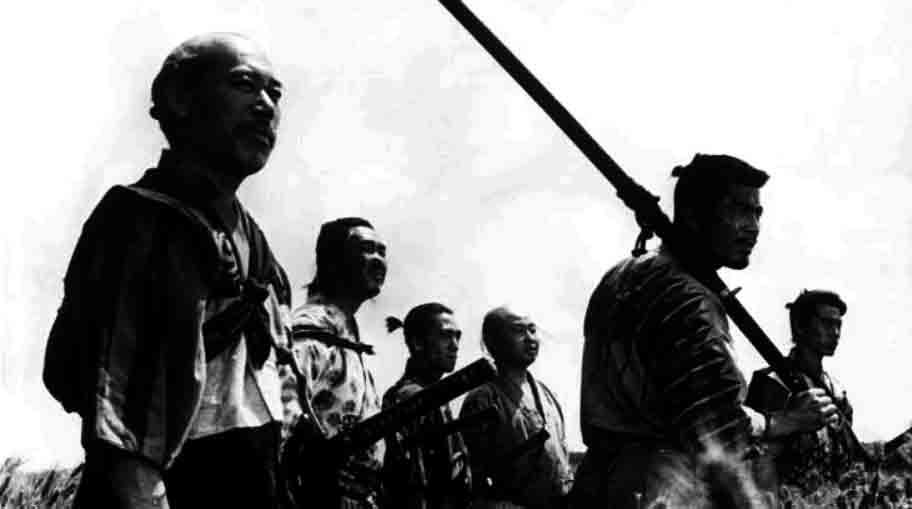
Akira Kurosawa’s Masterpiece: Shichinin no Samurai (1957)
A poor farming village is constantly harassed by bandit raids. The desperate villagers discuss among themselves what to do; the village’s elderly sage, whom everyone turns to for advice, says they need the protection of a samurai. Some of the villagers strike a deal with seven samurai who will defend the village in exchange for daily meals. The samurai gradually begin to integrate into the village’s daily life and culture. They have begun training the village men to defend against new bandit attacks. Among them is Kikuchiyo, a student of the famous samurai Kambei. He is an extremely “cool-headed” and charismatic leader, and the most passionate and rebellious member of the entire group of samurai. Yet Kikuchiyo is involved in a romantic relationship with the village’s most beautiful girl—a situation that completely violates the fundamental rules of the samurai code. The bandits, of course, return to plunder the village with unstoppable force. The samurai and villagers find themselves in a grueling battle to defend the village under a torrential downpour.
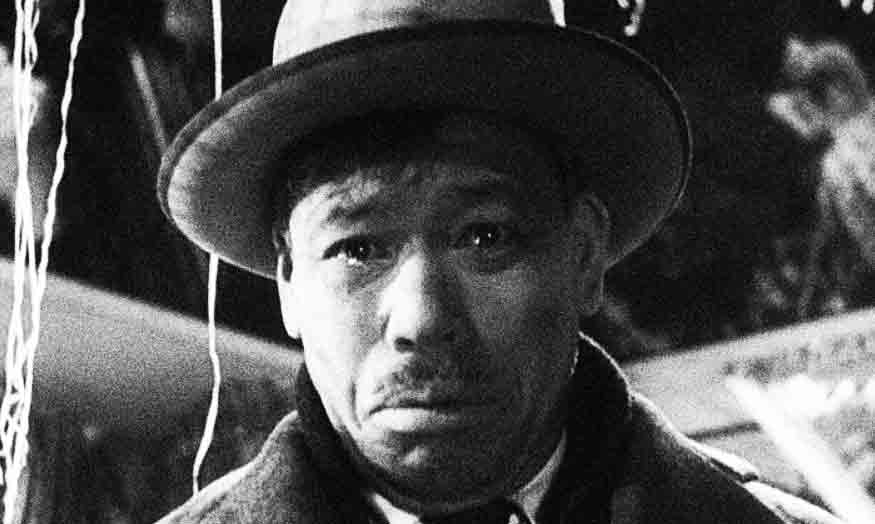
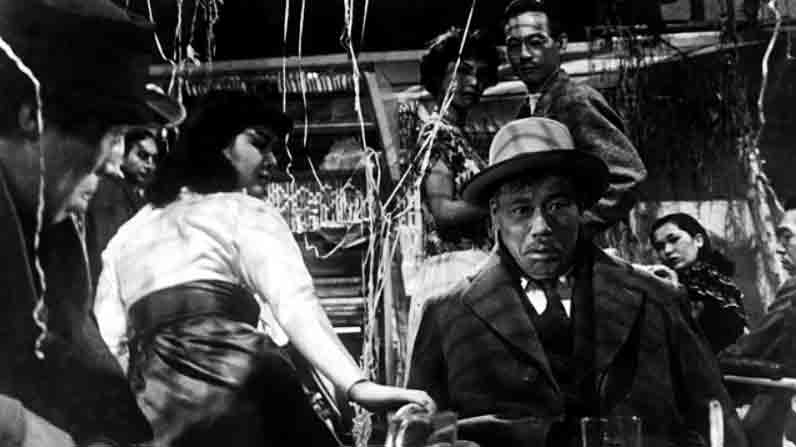
Film expert Philip Kemp has made the following observations about the film: “*Shichinin no samurai* and Kurosawa have lifted the veil on the myths about samurai that have been believed until today.” The film captures the spirit of the era very well and is one of Kurosawa’s best-known works. Other films that reflect the Cidaigeki style (a film genre set in Japan’s Edo period, 1603–1868; the term literally means “period film”) include *Yojinbo* (1961) and *Ran* (1985). In addition, he directed films with a more contemporary feel, such as *Ikiru* (1952) and *Rhapsody in August* (1991). In fact, Kurosawa made *Seven Samurai* largely out of a desire to create an entertaining film.
Furthermore, driven by a desire to engage with Western directors like the American filmmaker John Ford, he also tended to dramatize the established values of traditional Japanese society. Nevertheless, it would be inaccurate to say that Kurosawa’s entire artistic concern was limited to portraying the era when samurai were influential in Japanese society through an American narrative structure. For him, understanding Van Gogh’s approach to composition (which is clearly evident in Kurosawa’s film *Dreams* [1990]), as well as the works of Shakespeare and certain Russian writers, was just as important as understanding established cinematic style. For Kurosawa, this film served as a vehicle for illustrating the samurai’s value system and the shared sentiment that governed society. Speaking in terms of the scale of Japanese cinema at the time, Kurosawa did not allocate a particularly modest budget for *Seven Samurai*.
To finance this film and his other projects, he was often forced to seek funding from Russia, North America, and Europe. Due to these financial difficulties, he was forced to produce films intermittently from the 1970s through the 1990s. Nevertheless, the financing of *Seven Samurai* was not particularly difficult, and no expense was spared at any stage of the film’s production. In the Japanese sensibility, emotion takes precedence over reality. As a result, backgrounds are constructed in a much more expressive style to better reflect the inner world and psychological state. At times, setting aside the tendency to portray everyday life without exaggeration, he has integrated a form of realism—rooted in visual aesthetics and interwoven with moments of action—into his own distinctive style.
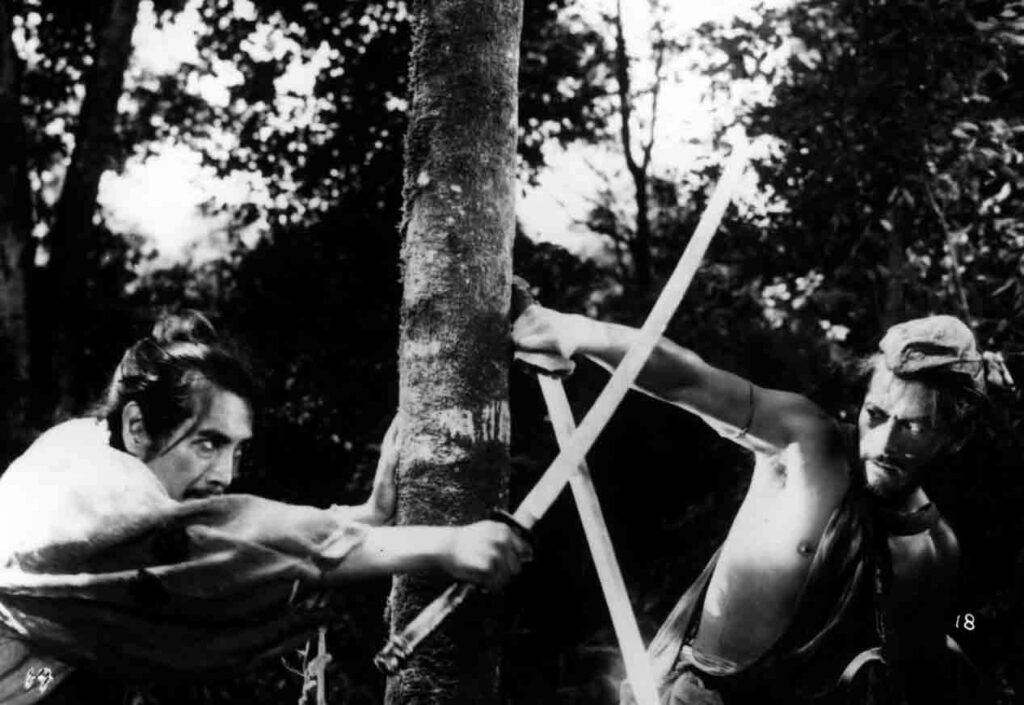
As David Bordwell so aptly observes, certain sequences exemplify a cinematographic approach that reflects physical energy and a kind of kinetics. For example, when the samurai are running, the camera focuses separately on each one’s movement. When one shot ends, it cuts to capture the movement of the next. Close-ups of faces contrast with wide panoramic landscape shots and the film’s atmosphere—in which, under a torrential downpour, only the sounds of horses and rain are heard (with no action music present). The film primarily explores the relationship between the individual and society and the importance of the struggle against tyranny. In this sense, it can be linked to the works of Eisenstein (for example, *Battleship Potemkin*).
Kurosawa’s camera is mostly stationary; the dialogues give the viewer the sense that there is a state of order or disorder beyond human control. The dialogues also evoke Shakespeare’s plays or Greek tragedies. Right at the beginning of the film, immediately after the bandits’ raid, one of the villagers says: “The gods want us to die… and the rulers are doing nothing to protect us.” Another villager comments, “It’s as if we were born into this world to suffer; as if this were our fate.” With the samurai’s arrival in the village, the villagers have regained their sense of self-worth; Kambei, the eldest and leader of the samurai, embodies the virtue of protecting the weak.
His first striking action is to swiftly cut off the topknot on his head to conceal his membership in the samurai class. In this way, he is able to present himself as a priest striving to save a baby’s life. The film, which stands out for its classical drama and a certain sense of authenticity, underscores the idea that none of us is great or exalted. The samurai named Mifune constantly reminds us that he does not belong to the upper class—that he, too, is the son of a farmer. Just as Takashi Shimura’s performance lends Kambei a sense of peace and dignity, Mifune’s performance is equally captivating.
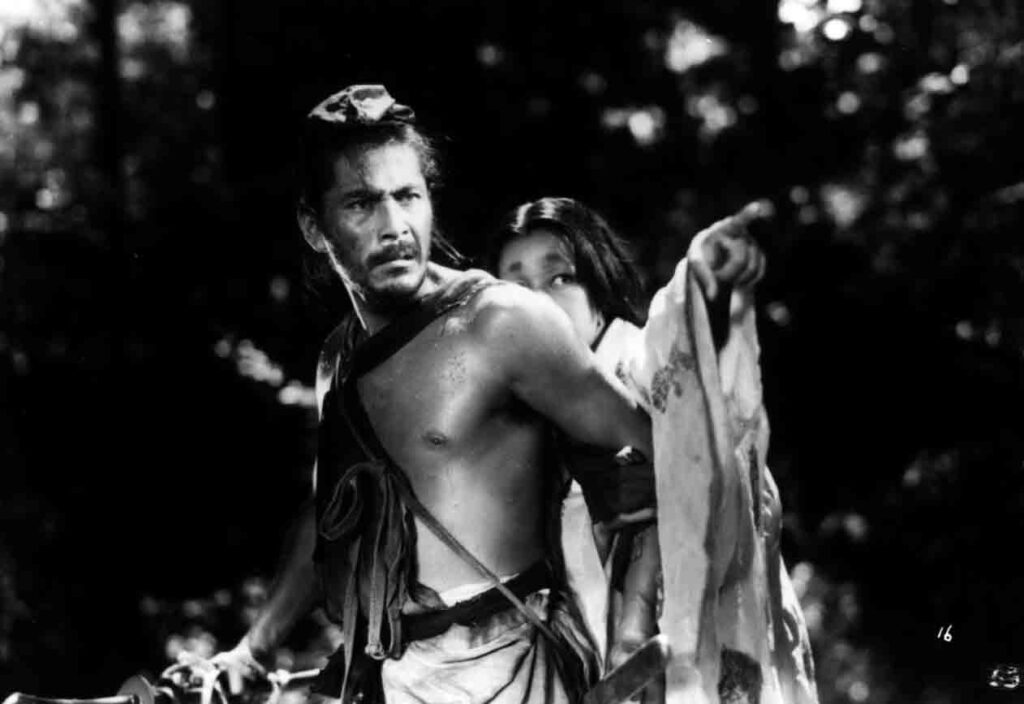
*Seven Samurai* and Kurosawa helped foster the growing trend, beginning in the late 1950s and early 1960s, of taking cinema seriously as an art form. Thanks to directors such as Bergman, Fellini, Godard, Truffaut, and Ray, cinema today is beginning to be perceived not only as a consolation to lighten the world’s burdens but also as a means of engaging with the world. The films of these directors have been viewed not only as embodiments of diverse aesthetic approaches but also as meaningful examples reflecting the distinct characteristics of their respective national cinemas. In a critical essay, the following observations were made about the film: “Because it has an extremely clear narrative structure, the film moves at a much faster pace than usual. The action scenes in this film, which features well-defined characters, also unfold with thrilling momentum. No director can capture movement as well as Kurosawa.” Another article includes the following statement: “Kurosawa’s famous film can be considered the most significant achievement of Japanese cinema; it is an epic tale reflecting the cultural erosion that emerged with the rise of Japanese militarism in the sixteenth century.”