Long before the advancements in editing techniques, Soviet cinema had already turned to producing melodramas centered on action and plot. However, as is well known, those working on the editing and post-production stages were concerned solely with the technical aspects of editing. We will examine the Soviet approach to editing in cinema and *Battleship Potemkin*, one of the leading examples of Soviet montage.
The Soviet Montage Approach in Cinema
The economic crisis Russia faced following the end of World War I in 1918 prevented filmmakers from shooting long, detailed takes; however, directors chose to turn these limited resources into an advantage. “Soviet Montage” is actually a term used to describe the ideological and formal dynamics of a specific cinematic approach during the years 1924–1930. During this period, the Russian government strictly controlled film production through the Education Commission and kept the film stock allocated to each director within certain limits. On the other hand, this limitation eventually turned into an advantage, as if to confirm the saying, “Necessity is the mother of invention.” The effort to make the best use of the limited resources at hand paved the way for the development of a new form of visual creativity.
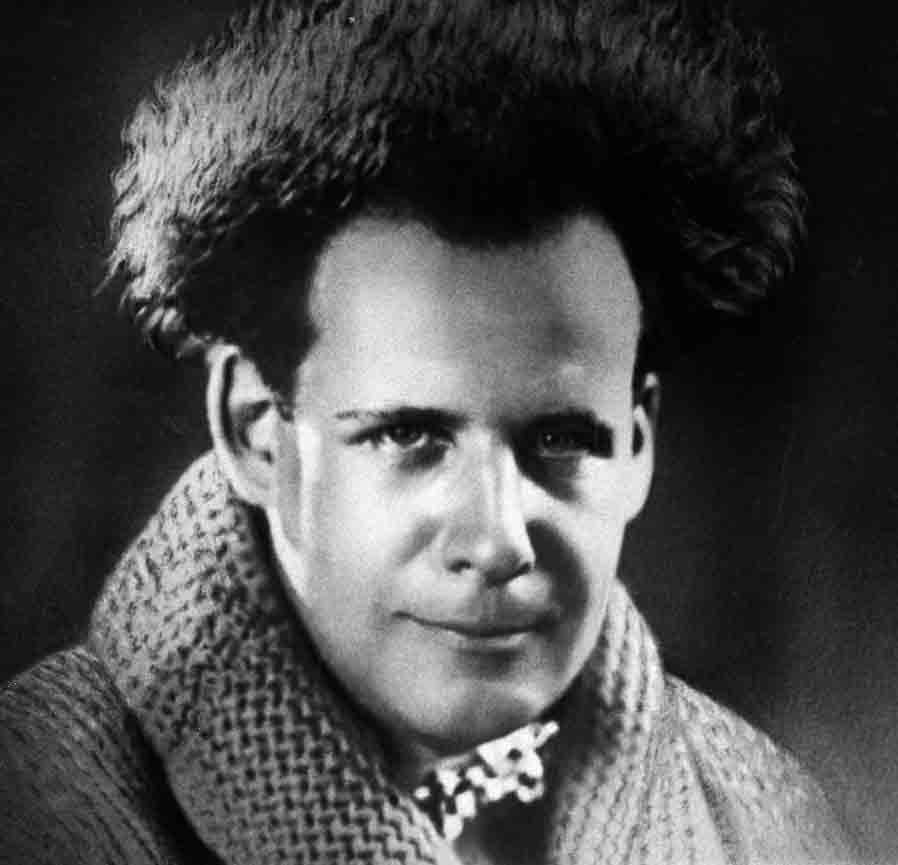
During this period, while Dziga Vertov was working to compile footage from archives and various sources for a documentary about the 1917 Russian Revolution, Lev Kuleshov learned every stage of editing and montage while working as a lecturer at the State Film School in Moscow. Sergei Eisenstein, perhaps the name most closely associated with Soviet montage, worked on a propaganda train in the early 1920s, supporting the troops fighting in the Civil War. During the same years, Eisenstein also began working at the Proletkult Theater in Moscow. In 1924, following the screening of Lev Kuleshov’s famous film *The Extraordinary Adventures of Mr. Vesta in the Land of the Bolsheviks* at the State Film School, the star of Soviet Montage began to rise.
Although the Montage movement emerged during this period, it did not truly take hold until the early 1930s. It could be said that this was made possible in part by the Russian government’s demand for socially realist films. While Pudovkin tended to create clearer and more structured sequences in his editing, Eisenstein favored incorporating elements of disorder and chaos to a certain extent (often to the point where there is no clear subject). He believed this would leave a stronger impression on the audience. In Eisenstein’s artistic vision, there is little room for typical or extremely individualized characters; instead, he operates within a comprehensive and relational conceptual framework. He believed this would allow him to reflect society as if it were a typical, caricatured character. Although montage offers the potential to create explosive and vivid expressions, the authorities of the time believed it remained quite abstract and had an alienating effect on the general audience. In their view, montage was too elitist and esoteric.
Although Sergei Eisenstein was long regarded as the most important figure in the montage movement, his works have recently faced strong criticism and he has lost some of his standing. In his writings, V.F. Perkins noted that he found montage too loud and crude. In his view, such heavy-handed intervention deprives film of the subtlety and intelligence that make cinema an art form. Eisenstein was actually a director with an engineering background who had not received any formal art education. This explains the nature of his work. Having initially served in the Red Army, Eisenstein later worked at the Proletkult Workers’ Theater Company. The rapid success of *Strike* (1924), *Battleship Potemkin* (1926), and *October* (1927) in reaching a massive audience in a short time suddenly propelled montage into the spotlight. In 1925, Eisenstein traveled to Hollywood to begin work on a feature-length film adaptation of *An American Tragedy*, a story written by Dreiser, but he was unable to complete the project.
When Eisenstein returned to Russia in 1937, he was unable to regain his former mastery over the new dynamics of Russian society and culture. *Strike* (1924) tells the story of factory workers’ struggle against their employers and a subsequent uprising. Here, too, montage was used as a tool to convey difficult and hard-hitting political ideas in a very powerful way. In one scene of the film, images of the murdered workers are intercut with the image of a slaughtered bull. Soviet montage is a major influence that has inspired modern films. One of the most tense scenes in *The Untouchables* (1987)—in which a baby carriage rolls down a flight of stairs—evokes a well-known sequence from *Battleship Potemkin*. With its fluid momentum, montage seems to have found its counterpart in contemporary cinema within action films and movie trailers.
Sergei Eisenstein’s Masterpiece: Battleship Potemkin
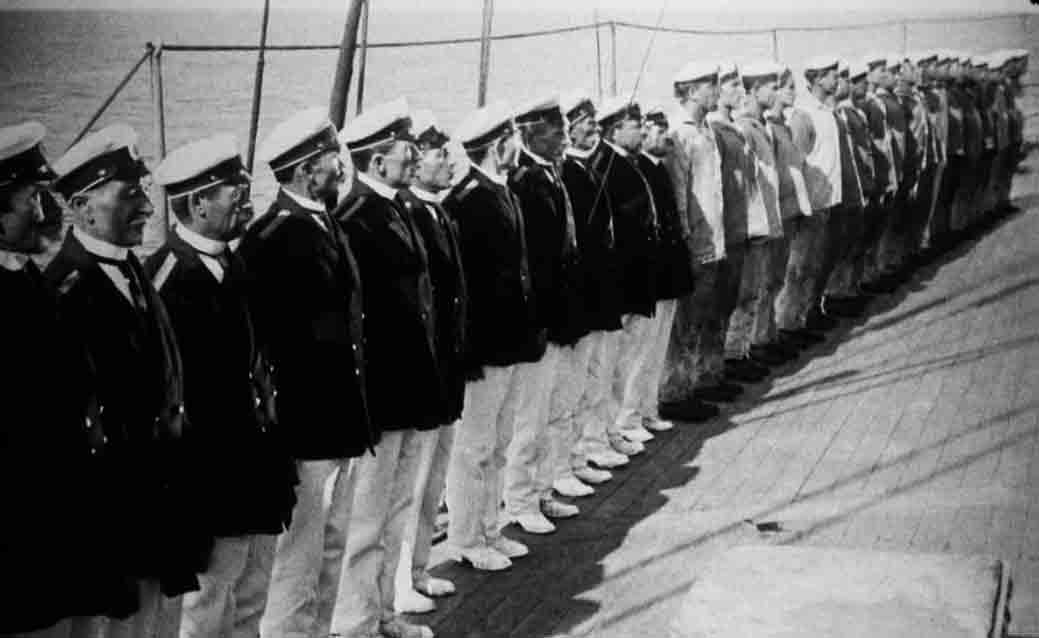
The battleship Potemkin is sailing at sea. The ship’s crew, finding their conditions unbearable, mutinies. The ship’s officers are reluctant to allow the sailors to voice their dissatisfaction and confine the mutineers to a room at gunpoint. Eventually, the mutineers gain the upper hand, and news of the mutiny spreads throughout the Port of Odessa. One of the soldiers leading the mutiny is shot and killed. His body drifts out to sea and washes ashore on the coast of Odessa. The people of Odessa turn the fallen soldier into a heroic figure and begin to mourn at the spot where his body washed ashore. The uprising spreads in waves, infecting the local population as well, and people crowd into boats and rush toward the ship. The Tsar’s soldiers kill many of these people. The soldiers and captains remaining on the ship set sail for the open sea after suppressing the uprising.
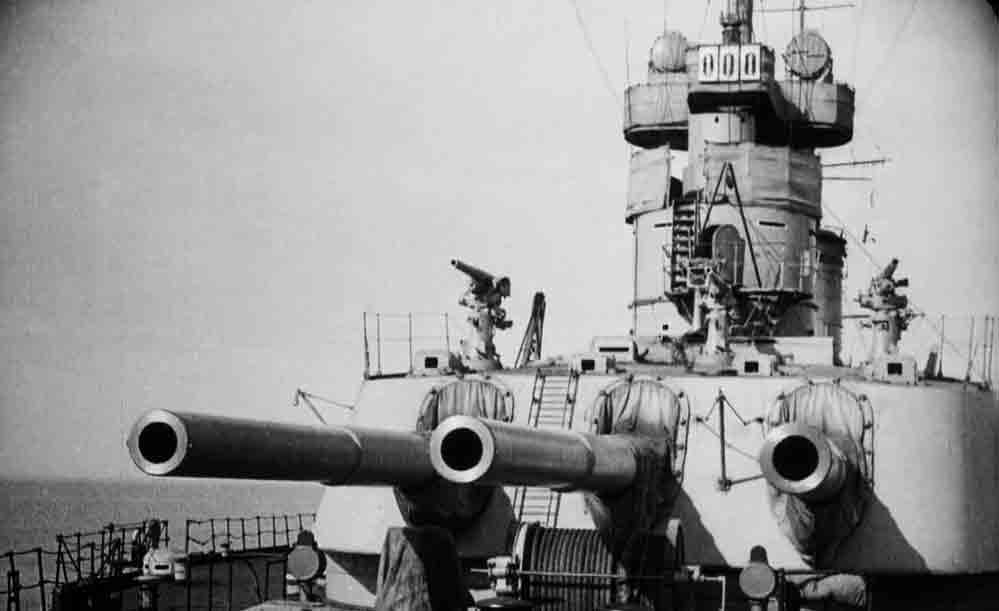
Sergei Eisenstein viewed cinema as a tool for mobilizing people. His overarching goal was to depict—and even mythologize—the people committed to the Russian Revolution and the events that paved the way for it. *Battleship Potemkin* culminates in and dramatizes the failed 1905 uprising through the lens of the Potemkin incident. Analyzing the filmmaking process provides an opportunity to evaluate the production process on a large scale. Two identical ships were used for this film. The first is a ship named The Twelve Apostles, which closely resembles the original model of the Potemkin. The second is a ship named Komintern, which was used for scenes and sequences featuring large crowds on board. The climactic scenes depicting the Potemkin’s escape—such as those where other ships advance toward the Potemkin—were shot using footage from archives containing images of non-Russian naval vessels. To depict the Cossacks’ massacre of Russian workers, Eisenstein relocated the film to the Odessa Steps, where the event did not actually take place.
To film on the Steps and infuse the moment with a sense of energy and scale, Eisenstein used a baby carriage that moved step by step up the entire staircase. Aesthetically, Eisenstein’s shot was significant because a moving camera had never been used in this way in Russian cinema before, and several cameras were operating simultaneously during this politically charged action scene. The film received the acclaim it deserved thanks to the Odessa Steps scene, but ironically, Eisenstein had not specified this location in the original screenplay. On the contrary, he decided to use that location while he was in Odessa. In an essay about this sequence, Eisenstein wrote: “I think the natural environment, the conditions, the composition at the moment of filming, and the materials used in the film during the editing process itself—all together—can sometimes be more authentic than the writer and director.”
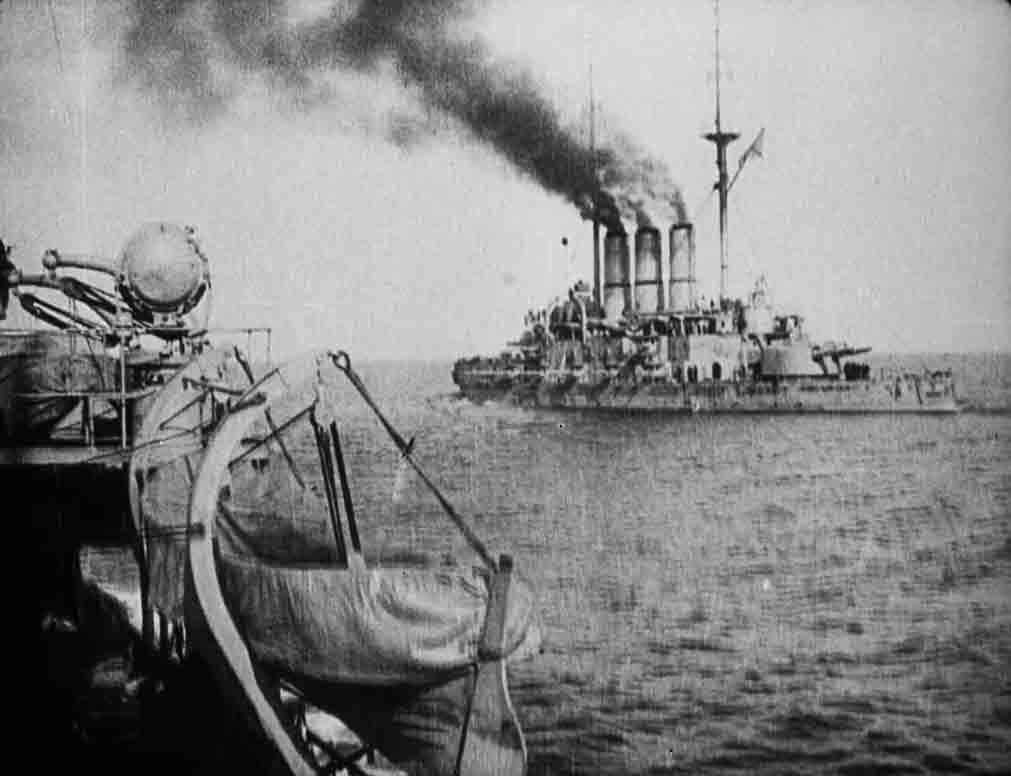
The film possesses the quality of a symphonic poem, serving almost as a tableau depicting the idea of rebellion against oppression. There isn’t a single character who speaks in an overly individualistic tone. Instead, the film presents the masses. In this way, the film is conveyed as a representational image, a visual song, and variations on a theme. *Battleship Potemkin* is both a war film and a political film. Throughout the film, superimposed shots dominate, arranged to create movement, kinetic energy, and emotion, and to establish meaningful connections. The film is both documentary and fiction at the same time, and the images of the ship’s chaplain convey the sense that he possesses a divine power. Although its structure is not difficult to understand in terms of its effects or intent, it captivates the viewer. The images of the masses are the most important element in terms of the film’s visual content and, consequently, its meaning.
Numerous articles and critical essays have been written about this film, particularly outside the country where it was produced. However, public screenings of the film in England and France were not possible until many years later. The famous Russian poet Vladimir Mayakovsky, after attending the film’s premiere on December 2, 1925, stated that the film should be seen by as many people as possible in as many countries as possible. David O. Selznick, a producer known for such significant films as *Gone with the Wind*, wrote the following after seeing the film: “Just as a group of artists might study a Rubens or a Raphael, that is how I watched this film… without a doubt, this is the most magnificent cinematic masterpiece ever created