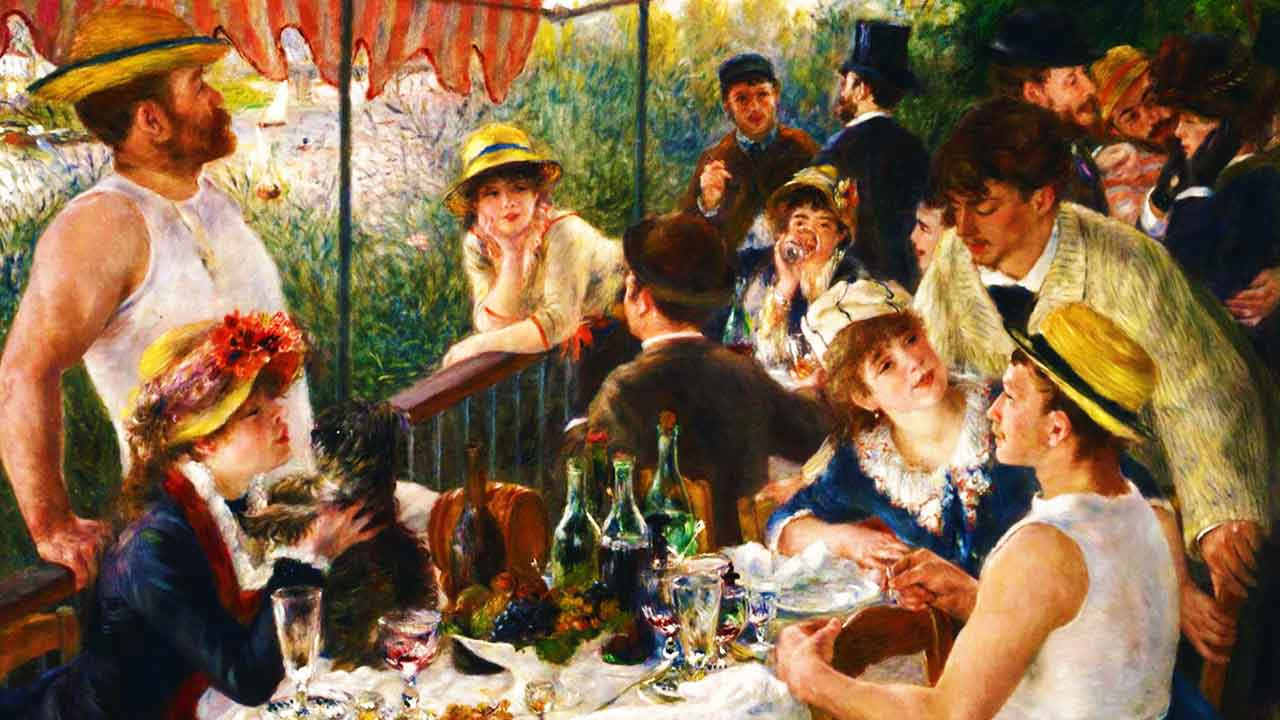
Pierre Auguste Renoir, one of the most prominent figures in modern art, was a pioneer of the Impressionist movement, and his long artistic career spanned approximately sixty years. Although his artistic style underwent changes during this long period, the fundamental principles of his artistic philosophy remained unchanged. Renoir was also one of the most prolific artists.
Renoir uses vibrant colors in his works and creates luminous images. His works appear to be spontaneous, and their emotional aspect predominates. One reason he is able to achieve this is his careful use of vivid colors. However, during his lifetime, he was heavily criticized for this artistic style. Critics have faulted his works for lacking depth of meaning and having shallow content. With his artistic philosophy rooted in an emotional and idealistic nature, Renoir became one of the most enduring artistic figures of the 1800s and 1900s and succeeded in establishing himself among the leading names of the Impressionist movement. Renoir lived during France’s Second Empire; as a result, he witnessed the rule of Napoleon III and the technological advancements of the 19th century. Since Paris was undergoing a period of renewal at that time, it became a gathering place for many artists and thinkers.
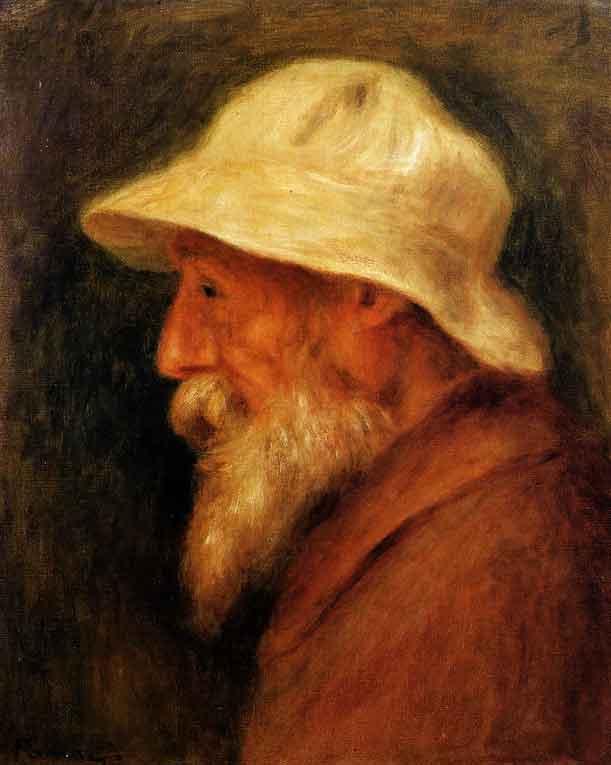
The Life of Renoir
Like many great artists, Renoir did not receive much attention from art circles in his early years, but as time went on, he began to gain recognition. Even at a very young age, Renoir possessed the qualities expected of a great artist. Among these qualities were his mastery of color and his ability to paint in various artistic styles. Renoir was born on February 25, 1841, in France, during the reign of King Louis-Philippe. This monarchy did not last long and was overthrown within a few years. This was a period when the flames of revolution were burning fiercely and spreading rapidly across Europe. France was one of the countries where this flame burned brightest. Born in the Limoges region—famous for its porcelain—Renoir’s father, Leonard, was a tailor, and his mother’s name was Marguerit.
Due to financial difficulties, Renoir moved to Paris with his family at a young age. There, he discovered he had a beautiful voice and took lessons at the public school he attended from teachers who would go on to become popular composers; however, when he turned 13, he chose to pursue a career in painting rather than music. At that time, training as a craftsman was a more advantageous path for a young man like Renoir to secure a steady income in the future. For this reason, his family sent him to work as an apprentice at a porcelain factory when he was thirteen. During his lunch breaks, he would frequently visit the Louvre to study the paintings of the great masters. The mechanization that came with the Industrial Revolution had a profound impact on the working class. Renoir and his family were among those who felt this impact. Renoir’s life changed as the porcelain craft was also taken over by machines. However, he continued his career by doing similar work related to painting in various places.
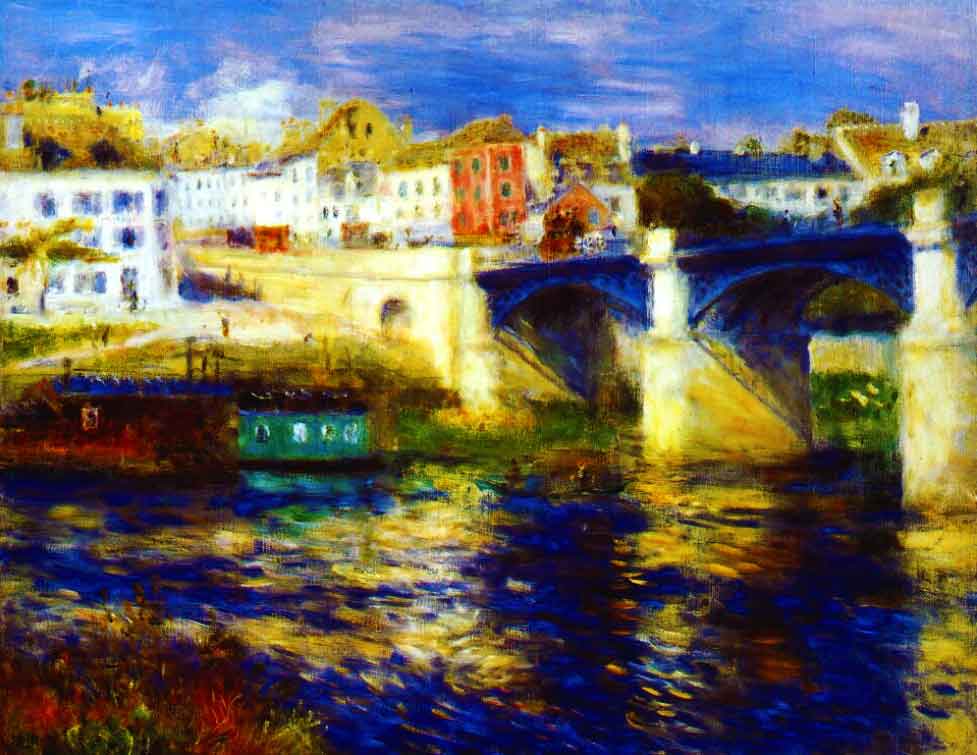
When Renoir reached his twenties (the 1860s), he began working as a copyist at the Louvre, like many young artists. During this time, he also earned money by taking on smaller but artistic commissions. After saving money for a while, he joined Charles Gleyre’s studio in 1861 to pursue an academic art education. In 1862, Renoir took the entrance exam for the Académie des Beaux-Arts, was accepted, and began attending classes. There, Renoir demonstrated particular talent in drawing; he was very meticulous and hardworking. The Salon was an excellent opportunity for Parisian artists to showcase their work and reach a wide audience; this exhibition was originally organized for final-year students of the Académie des Beaux-Arts. It later became open to everyone. There were so many paintings rejected by the Salon juries that Napoleon III ordered the opening of another exhibition, the Salon des Refusés, specifically for these rejected works.
Because his style was not accepted by the Salon juries, Renoir exhibited his paintings at the Salon des Refusés. Like his fellow painters of the time, he was an advocate of modernization in the art of painting. However, he had not yet given up on his goal of exhibiting his paintings at the Salon. About a year after the Salon des Refusés was established, he submitted a painting to the Salon once again and was accepted, but it did not receive the attention he had hoped for. At that time, compulsory military service was in effect in France. For this reason, Renoir was required to serve in the military for a period of time to complete his military training. His military service ended in 1864. Renoir’s favorite innovative artists were Gustave Courbet and Delacroix. For him, these two artists represented a break from tradition—that is, from classicism.
Renoir joined Bazille’s studio in 1866 and continued to work in Paris. In 1871, when the Prussian Empire declared war on France, Renoir’s life changed; he was drafted and assigned to a cavalry unit. After the war, Renoir suffered from dysentery and a nervous breakdown. When he finally returned to Paris, Renoir left the city shortly thereafter to join his family in Louveciennes. During this period, the art dealer Durand-Ruel began taking an interest in Renoir. Thanks to Durand-Ruel, Renoir was able to sell his paintings and gain a modicum of recognition. This allowed him to alleviate his financial difficulties, at least to some extent. Renoir would begin by covering the canvas with subtle brushstrokes of color that hinted at the theme he would explore in his paintings. He would then create images with soft brushstrokes, making them more distinct by increasing the proportion of turpentine. In his avant-garde style, Renoir maintained harmony and balance in his paintings without completely abandoning classical elements.
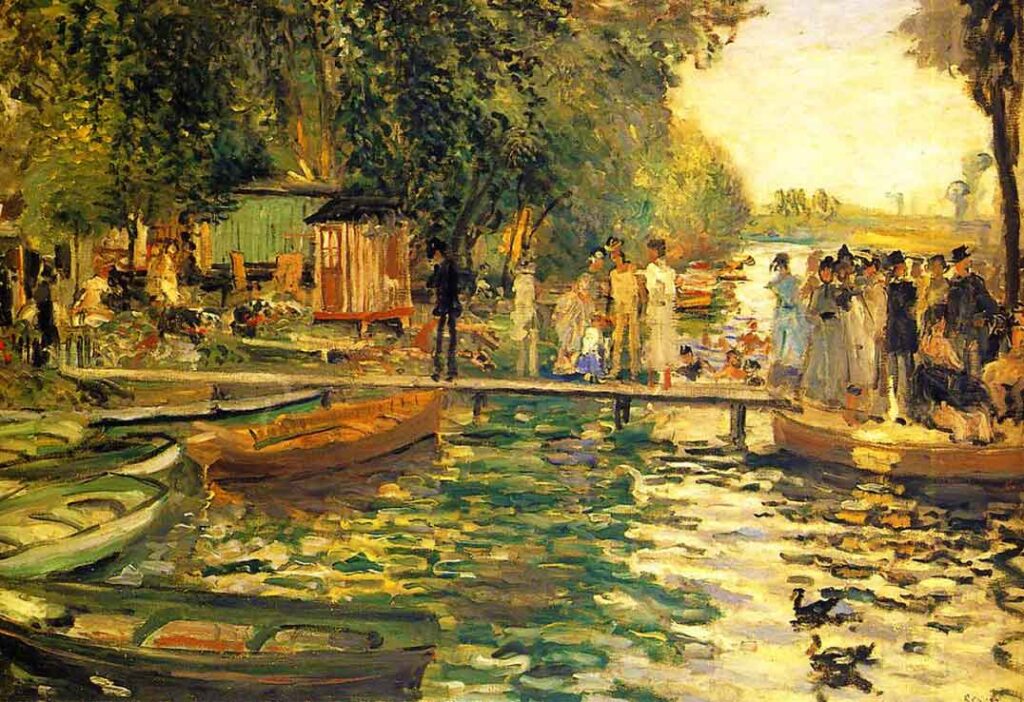
The Development of Impressionism and Renoir’s Disease
Renoir and his artist friends who thought in the same way as him could not gain acceptance for a long time. However, for Renoir, this situation began to change from the 1870s onwards. In particular, his contacts with the art collector Marguerite Charpentier allowed him to receive job offers from many wealthy art lovers and make a circle of friends. The portrait commissions he received during this period provided him with a significant source of income in the years to come. During these years, many innovative artists such as Renoir, Monet, Manet, Degas and Pissarro were trying to develop the impressionism movement and making efforts to be accepted by people. starting in 1877, Renoir decided to concentrate on receiving orders from wealthy art-loving Parisians and presenting his paintings to the Salon instead of dealing with critics who criticized his art.
At the same time, impressionist exhibitions were being held, and impressionism was beginning to gain popularity as a movement. However, sometimes disagreements could also arise within the group. For example, the artists could not agree on the name of the Fourth Impressionist Exhibition to be held in 1880, and names such as Sisley and Monet, along with Renoir, refused to participate in the exhibition. In the summer of 1881, Renoir left his country and went on a trip to Italy. Here, he had the opportunity to study the works of great master artists like Raphael. When he returned to France, he contracted pneumonia. Renoir, who loved music from an early age, was an admirer of the composer Wagner. After his trip to Italy, he began to develop an even more original and distinctive style by building upon his Impressionist approach. They began using smoother brush strokes and distinct forms. But because they didn’t like the changes in his style, his buyers started not buying pictures from him anymore. This brought with it financial problems.
The Impressionist exhibition held in America in 1886 was much more successful and received high praise. Unlike the French people, Americans were more open-minded towards innovative movements in art. A year later, Renoir’s paintings were exhibited in New York again. Renoir was hopeful about the American market, and this situation continued for the next two years. At a time when she was gradually overcoming her period of complete withdrawal and beginning to feel better, the symptoms of rheumatoid arthritis began to manifest. Renoir wrote in his letters that he could not sleep or eat due to the illness, which first manifested itself as facial paralysis in 1888. towards 1889, Renoir was continuing to make changes to his style. He was feeling better, and his receivers had multiplied. Additionally, his health was also in better condition. In 1890, he married Aline Charigot, who was also a model at the time.
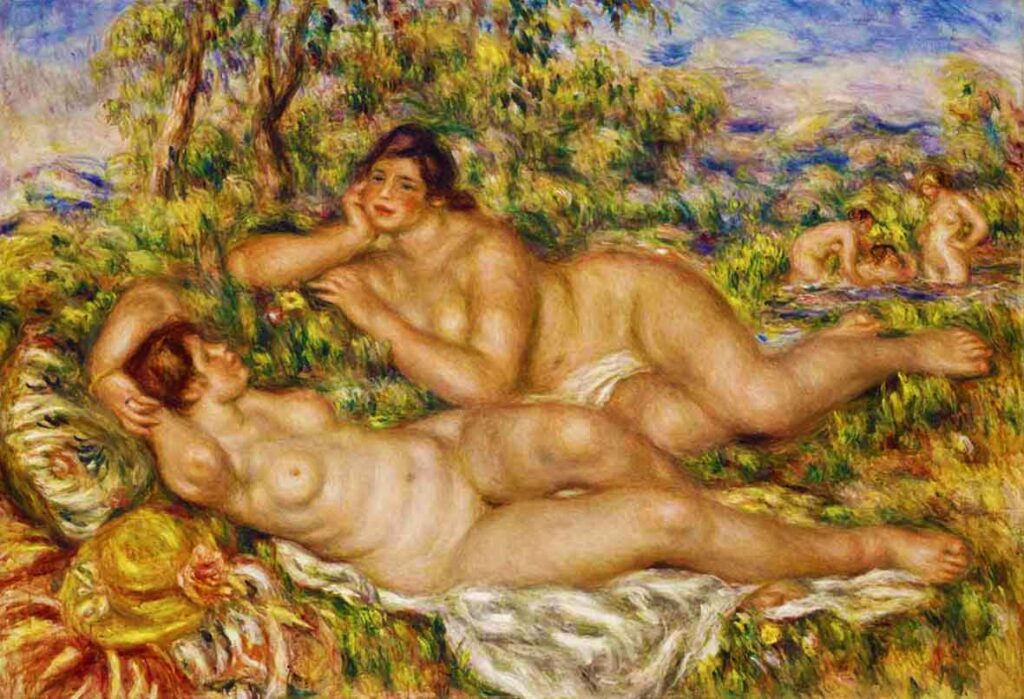
In 1891, Renoir, whose sales were improving, was hopeful that he could provide for his son and wife. Her financial worries had now diminished, and while she was trying to slow the progression of her illness, she was also spending time with her friends. In 1897, Impressionist works began to truly gain recognition and arouse intense interest in Europe. For this reason, impressionist artists were also increasing their wealth. Especially with Renoir and Monet, he was making many sales at high prices. twenty.the popularity of the impressionists was growing rapidly during the century. They were opening exhibitions in major cities such as Munich, London, Vienna. Many Impressionist painters had the opportunity to exhibit their works at the Exposition Universelle. In 1905, many avant-garde and modern styles began to emerge. For this reason, Renoir’s artistic style no longer seemed so unconventional; in fact, it appeared traditional. Renoir was no longer excluded and was getting a lot of attention, but financially he was very comfortable. However, his illness did not let him go.
Renoir moved to Les Collettes and began living there. By then, he had achieved considerable success and made substantial profits. This marked the end of his life of poverty. During this time, he also began to focus more on sculpture. In August 1919, while his painting *Madame Charpentier* was on display at the Louvre, he was honored as a guest of honor. After returning to Cagnes following this visit, he caught a cold while painting outdoors, and the cold soon developed into pneumonia. On the third day of December of that same year, Renoir passed away at the age of seventy-eight.