Regardless of their philosophical leanings or interests, film viewers embark on a direct journey to reinterpret the world through the films they watch. In this article, we will examine the influence of the Realism movement on the art of cinema and the forms of expression within this movement, as well as a few unforgettable movies produced in line with this movement.
The Place of the Realism Movement in the Art of Cinema
Playwright Eugene Ionesco makes the following observation regarding the approach to reality: “There are countless facets of reality and just as many paths that make it possible to reach it; choose the ones you believe are most suitable for yourself.” Ionesco’s judgment aligns clearly with our perspective, which advocates for the richness and diversity of storytelling styles offered by cinema. Among the countless cinematic movements currently in influence, realism—as one of the dominant aesthetic forms that has served as a cornerstone of Western-origin narrative from the visual arts to literature—has been one of the primary means of emphasizing meaning and one of the countless styles for conveying a particular perspective or presenting any given subject.
It still holds a central position and shapes the expressive approaches in mainstream cinema. Even fantastical films that push the boundaries—such as the adaptation of Tolkien’s novel *The Lord of the Rings*—are presented within a realistic visual framework. Historically, the shift toward realism occurred in the nineteenth century, when people left their rural communities in droves to find work in cities, and these and similar structural and social changes led to the Industrial Revolution. If we were to compile a “list” of realism-centered films, we would need to include specific examples such as Italian neorealism, British everyday-life realism, or poetic realism. What all these examples have in common is that they embody, to a certain extent, the qualities that constitute the conceptual components of realism, both conceptually and practically.
Another common point among all these movements and films that we find worthy of examination is that they have also left their mark in fields outside of cinema, such as painting, politics, and literature. Meanwhile, we must keep in mind that realism can manifest itself in very different cinematic forms, such as social realism, neo-realism, and documentary realism. This highlights just how diverse this cinematic approach has become over time. André Bazin, one of the founders of the film journal *Cahiers du Journal* and, in his own words, someone who sought to decipher the “DNA” of what is called film, is one of the most important thinkers in the field of cinema. His two-volume work *What Is Cinema?* is not only a seminal work on film literature but also offers significant insights into what cinema truly is.
The following quotes from the same book contain very clear observations regarding the practical application and reflections of realism: “Understanding what the camera shows is closely related to knowing what it leaves out and why.” According to him, filmmaking is an act of “creating an idealized world clothed in the guise of reality.” According to Bazin, Soviet Montage constructs narrative authenticity through the image. To such an extent that the manipulation inherent in the nature of cinema is taken here to the very limit of artificiality and the potential power of illusion that cinema carries. In direct contrast to this are directors like Jean Renoir, who construct authenticity through reality. Renoir strives to capture real locations and performances in real moments in order to minimize the mediating relationship between perception and the image. The goal here is to achieve a kind of psychological realism.
We watch characters in films who laugh, cry, or get angry, and we try to understand them. According to Bazin, the purpose of fiction is not so much to show an event in its true sense or to reconstruct it in that manner, but rather to draw attention to what that event can evoke to a certain extent. Consequently, our sense of reality will be directly related to our search for truth and authenticity. Andre Bazin also notes that the images created in the current age of digital cinema are closer in structure to illustrations and paintings than to photography. Undoubtedly, Bazin has shifted his intellectual focus toward this field, particularly in recent years. His thoughts on this subject are insightful, argumentative, critical, and provocative. In conclusion, according to Bazin, understanding cinematic realism requires a profound intellectual process. Through the films we will discuss shortly, we will also highlight the prominent qualities of this realist sensibility.
A Comprehensive Review of the Movie “The Rules of the Game (1939)”
It is significant that the film *La Règle du Jeu* (The Rules of the Game) is attributed to Bazin. Stanley Cavell points out that many important thinkers in this field—such as Bazin and others (Sarris, Farber, Wilson, Perez, Staiger, Thumim)—have not received the minimum respect they deserve in the field of film criticism. To gain a deeper understanding of the perception of reality in films, it may be helpful to examine the discussions in the field of art titled “Realism and Art.” At this point, we must turn to the keen observational skills of art historian E. H. Gombrich. This scholar’s brilliant analyses and research can be directly applied to cinema and the analysis of the realist process in films.
According to Gombrich, realism is “the refusal to compromise authenticity and sincerity in art in the face of treacherous and skillful manipulation built upon traditional clichés.” It can easily be said that this observation holds true for the films *Kerkenez* (1969) and *Roma, città aperta* (*Rome, Open City*, 1946). Defining reality is one of the most deeply rooted, fundamental human quests. Furthermore, the concept of cinematic realism is directly linked to Bazin’s efforts to untangle the entrenched intellectual knot in this field. The distinctions he introduced on this subject still seem to hold true. When we speak of cinematic realism, we should think of the visual and auditory representation of the reality of what is shown or described, as well as the reality of the inner lives of the characters portrayed.
Examples of the Realism Movement in Painting
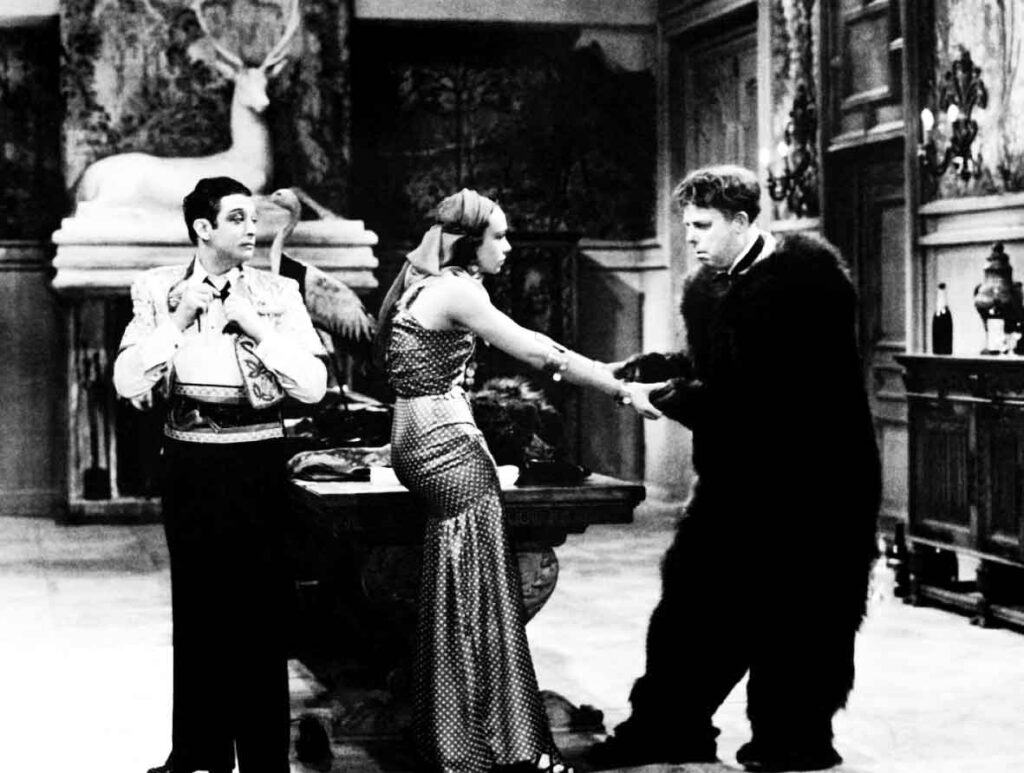
The film’s story begins in Paris in 1939. Our hero, André Jurieu, flight number thirty-something, has successfully completed his only transatlantic flight, a twenty-three-hour journey. Although the woman he loves did not come to meet him at the airport, Octave, one of his most loyal friends, is there. Robert Chesnaye and his wife Christine are nationally recognized figures in Parisian high society. Christine is the woman Andre loves, and Andre is certain that she will greet him at the airport like a hero upon his return from the flight. Robert has organized an evening at his château to which all his friends from high society are invited. His close friends Andre and Octave are also present at this gathering.
The weekend gathering has begun. Suddenly, a romantic love triangle—containing both tragedy and comedy—begins to unfold within this group of friends. Octave is at the center of all these tangled relationships. Meanwhile, he is flirting with Chesnaye’s maid, whom Chesnaye employs illegally. Andre, who has made the country house his home, finally confesses his love for Christine, hoping to start a new life with her. Chesnaye faces this icy surprise—the revelation of Andre and Christine’s relationship—with great composure. The film’s tension reaches its peak when Christine tells Octave that she is the one he truly loves. Schumacher then makes the mistake of mistaking Christine for his wife, Lisette, and believes his wife is cheating on him with Octave. As the pains, risks, and beauties inherent in the nature of love are revealed, one tragedy follows another.
Although Renoir’s films appear on virtually every list of “the best films of the century” and similar compilations, the director’s name is virtually unknown to today’s film enthusiasts. What suggests that Renoir’s cinema contains certain dark elements is, once again, the fact that his films are marketed today under the label of “art cinema.” Despite all this, Renoir’s films still possess a powerful impact on the masses and the capacity to evoke deep emotions. Furthermore, his films draw inspiration not only from cinema but also from humanist movements in literature. The characters in his films embody the richness and complexity we are accustomed to seeing in “classic” works by authors such as Jane Austen or Thomas Hardy.
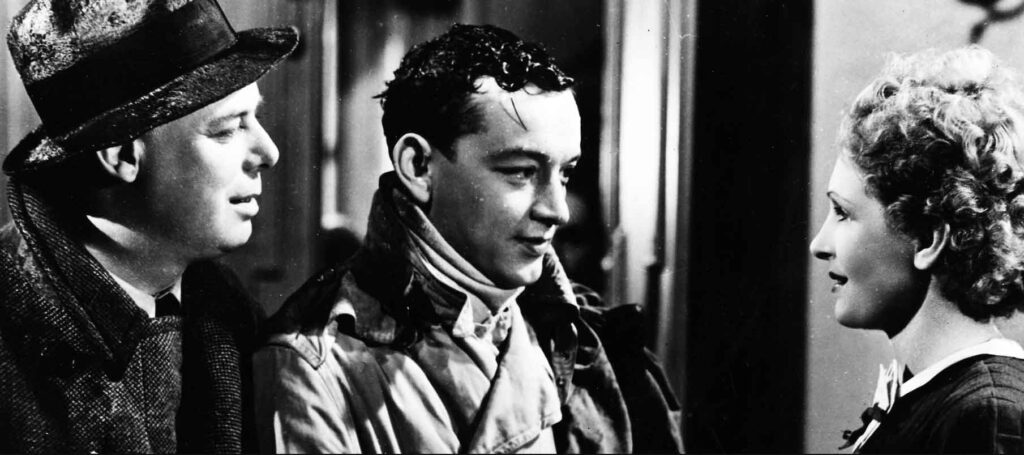
The fact that the film *The Rules of the Game* begins with quotations from Beaumarchais serves as evidence of its kinship with classical literary works. Another source of inspiration for the film is the theater. The comedy, cross-dressing, and romantic conflicts in the film are reminiscent of *A Midsummer Night’s Dream*. Like his literary counterparts, Renoir is an artist who has successfully used the medium of storytelling to reveal the subtleties, difficulties, triumphs, and follies inherent in human interaction. He has succeeded in revealing how we relate to people—from our closest loved ones to those we fall in love with—or how we become estranged from all these relationships. These characteristics of Renoir’s films offer us serious insight into how realism can come to life on the silver screen.
Narrative cinema has always operated through a specific chain of cause and effect, strongly tied to the audience’s expectations regarding a particular film genre (horror, Westerns, science fiction, romance, tragedy, and comedy…). Renoir’s cinema, however, focuses on defining the chain of cause and effect inherent in human choices with the meticulousness of a scientist. In fact, we can easily say that he is the cinematic counterpart of writers such as Charles Dickens, Willa Cather, George Eliot, Leo Tolstoy, and Mark Twain. Renoir describes his approach to filmmaking with these words: “The idea of building my film from small but solid bricks strikes me as far more interesting. The only problem here is that, due to my obsession, this habit sometimes works against me. To put it more plainly, my meticulous style can go so far as to make me forget the importance of the overall narrative flow. If there is one principle to which I am obsessively attached, it is that the story does not hold a very significant place within reality.”
Renoir’s films are notable for depicting the interactions of different social groups, along with all their differences and commonalities. His primary aim is to explore the dynamics between social life and the individual through human emotions such as despair, joy, attraction, and trauma, and in this way, to arrive at the truth of these emotions. In terms of visual style, the film employs a deep focus technique that aligns with the direct perception of the physical world around us through our five senses. Furthermore, advancements in photojournalism and lighting technology are reflected in the film in many ways. The anti-war message in the film, which paints a picture of a world spiraling out of control, is very clear. The French government banned the film on the grounds that it discredited the state and the nation. American writer Cameron Crowe wrote the following about *La Règle du Jeu*: “(Octave) is a character who feels his pain in his heart in every scene of the film and infects the audience with this pain as well.” In fact, Renoir’s film serves as a precursor to Crowe’s *Elizabeth Town* (2005).
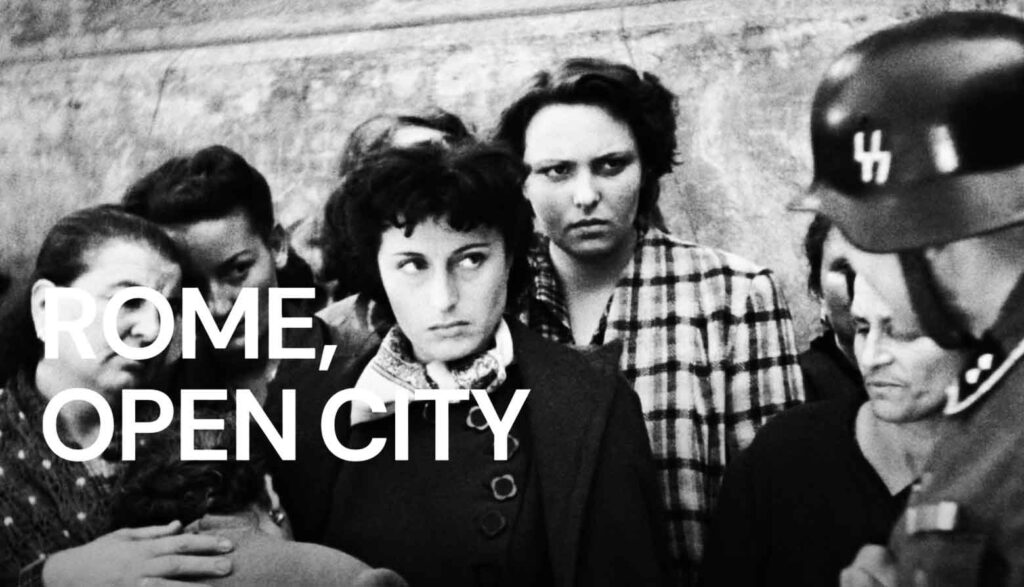
Examples of the Italian Neorealist Movement: Rome, Open City (1945)
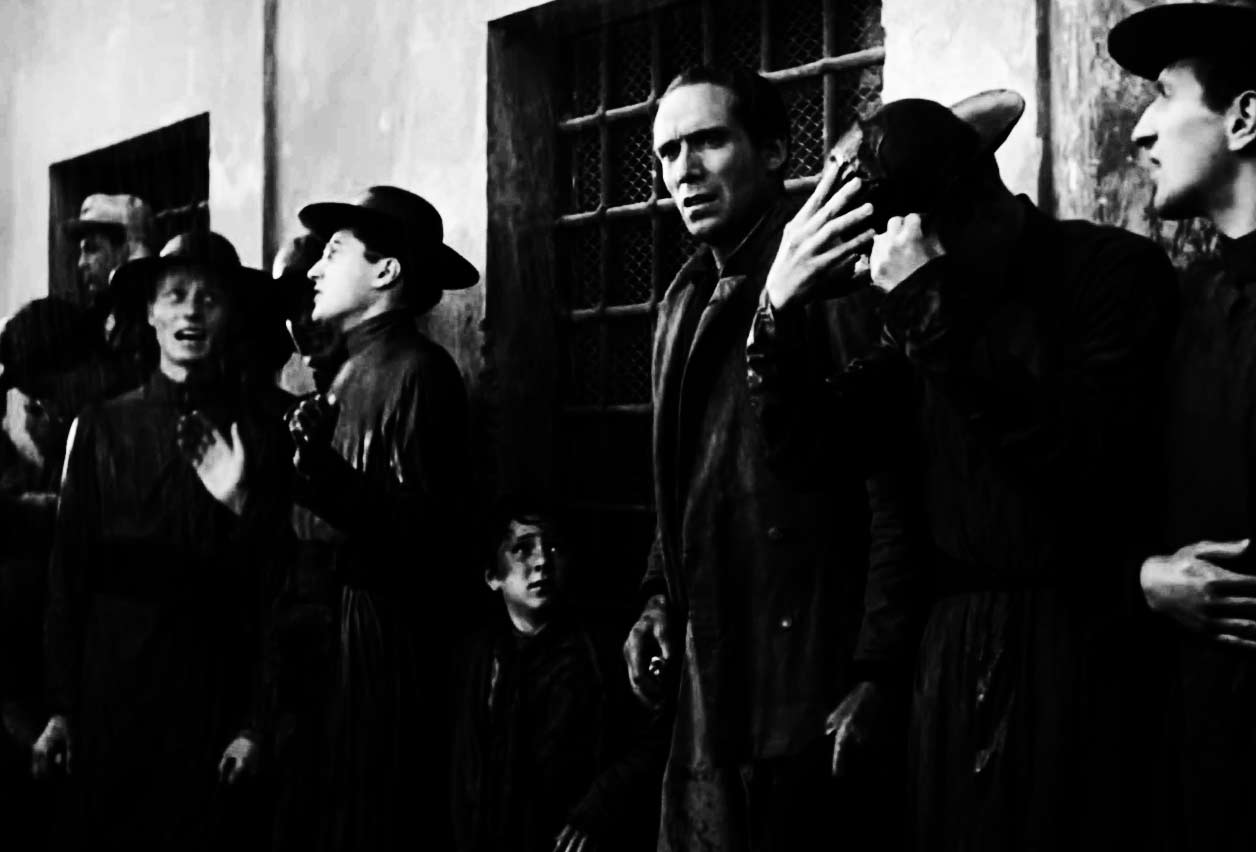
The film is set in 1944. A battalion of Nazi officers is on the trail of Giorgio Manfredi, the leader of the anti-fascist resistance in Rome. Consequently, the film consists of many intertwining subplots. At the beginning of the film, we meet Pina and her son Marcello. Pina, whose father has died, is on the verge of marrying Francesco, who is also a member of the resistance. It is precisely during this time that Pina’s path crosses with Giorgio’s. In another neighborhood of the city, Father Don Pietro is running a fundraising campaign to support the resistance forces. Marcello, meanwhile, is a militant resistance fighter; he and his friends are fighting the occupying forces by erecting barricades in some of the city’s streets. The resistance fighters call each other “comrades.” Giorgio and Don Pietro are captured by the Nazis shortly thereafter.
When the Nazis raid an apartment building serving as a resistance base, Francesco flees to avoid capture; Pina, who is dragged along behind him, is shot and killed by a Nazi soldier. Giorgio is subjected to severe torture in prison; Don Pietro is shot and killed in front of his young followers. According to Neorealist director Vittorio De Sica, the primary driving force behind the Neorealist movement (a topic that is also controversial, as some argue that Neorealism was not a fully-fledged artistic movement) is to reflect reality “through the mirror of poetry.” This characteristic is seen in a very typical way in films such as *The Bicycle Thief* (1948), *Miracle in Milan* (1951), and *Umberto D* (1952). Sica’s first film was *Rose Scarlette* (*Two Dozen Red Roses*). His use of real locations and non-professional actors established him as one of the pioneering directors of the emerging Neorealist movement at that time.
The film *Lostra* (Shoeshine), which he directed in 1946, was written by Cesare Zavattini, one of the most important theorists of Neorealism. It should also be noted that the influence of French directors such as Jean Renoir, Marcel Carné, and René Clair, as well as the examples drawn from their work, paved the way for the emergence of this movement. In fact, while “Neorealism” was initially a term used in reference to French films made in the early 1930s, it has since evolved into a term used to describe post-World War II Italian cinema. This characteristic is seen in a very typical way in films such as *The Bicycle Thief* (1948), *The Miracle of Milan* (1951), and *Umberto D* (1952).
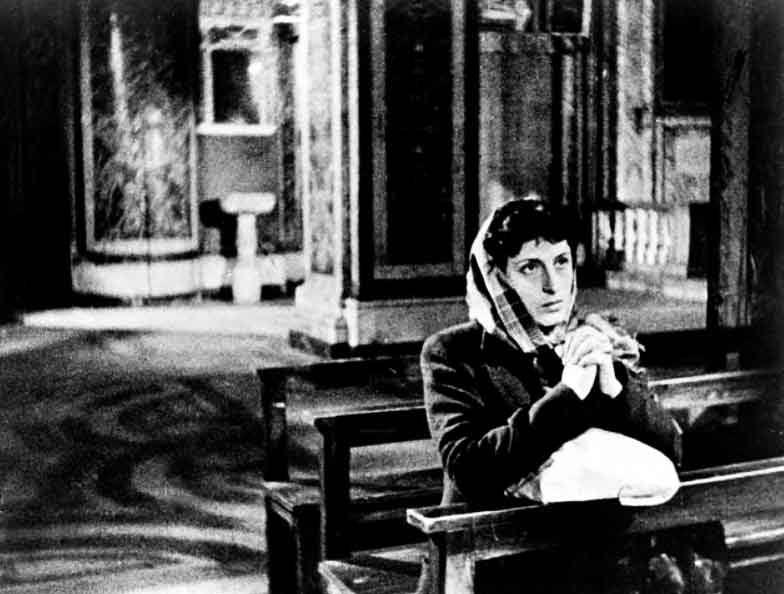
Sica’s first film was *Rose Scarlette* (*Two Dozen Red Roses*, 1940), and his use of real locations and non-professional actors made him one of the pioneering directors of the emerging neorealist movement at that time. His 1946 film *Children of the Street* was written by Cesare Zavattini, one of the most important theorists of neorealism. It should also be noted that the influence of French directors such as Jean Renoir, Marcel Carné, and René Clair—and the examples drawn from their work—laid the groundwork for the emergence of this movement. In fact, while “neorealism” was originally a term referring to French films made in the early 1930s, it has since evolved into a term used to describe post-World War II Italian cinema.
Zavattini commented that “the primary aim of directors using the neorealist style was to create poignant moments or scenes of truth concerning fundamental social realities such as social inequalities, unemployment, and impoverishment.” It is widely believed that, like Japanese cinema, neorealist cinema also serves as a form of spiritual awakening within a culture. Films can serve as a means of entertainment or escape, but they can also be a vehicle for self-reflection or enlightenment. Films by Kiarostami or Tony Gatliff, as well as Kieslowski’s *The Decalogue*, are examples that fit Zavattini’s definition perfectly. In summary, Italian neorealism developed as a reaction to the bourgeois cinematic tradition—which was known for “soap-opera-style melodramas” that often had no connection to what we call “real life” and was particularly influential before World War II.
Like many other film movements, Italian Neorealism developed within a context and tradition characterized by a desire to challenge and radically transform the very structures it sought to reject. Italian cinema seized the opportunity to renew, revitalize, and reevaluate itself in the darkness of World War II, which was thought to be unknown. Similar to British-origin realist approaches, this movement sought to reflect the genuinely and typically challenging aspects of impoverished lives—deprived of even the slightest comfort or opportunity—with a documentary-like authenticity. These directors, who acted with the enthusiasm of journalists, are of course very familiar to today’s audience, but within the context of that era, this approach was perceived as a surprising and appealing aesthetic style.
Our sense of visual reality is, of course, constantly changing. Consequently, what was considered realistic 60 years ago may not be understood as such today. In short, Neorealism is concerned with a realistic approach to a specific subject and a commitment to that subject’s social content, “political context, and historical relevance.” One of the main reasons for the use of real locations—which lends a very distinctive aesthetic to the films of the New Realists—is the constant bombing of Cinecittà, Italy’s largest film studio (where Martin Scorsese filmed *Gangs of New York* in 2000). What ensures the films’ relevance to their era is, once again, the flow of time mirroring reality—and thus the progression of events at a reasonable and authentic pace that reflects “real life.”
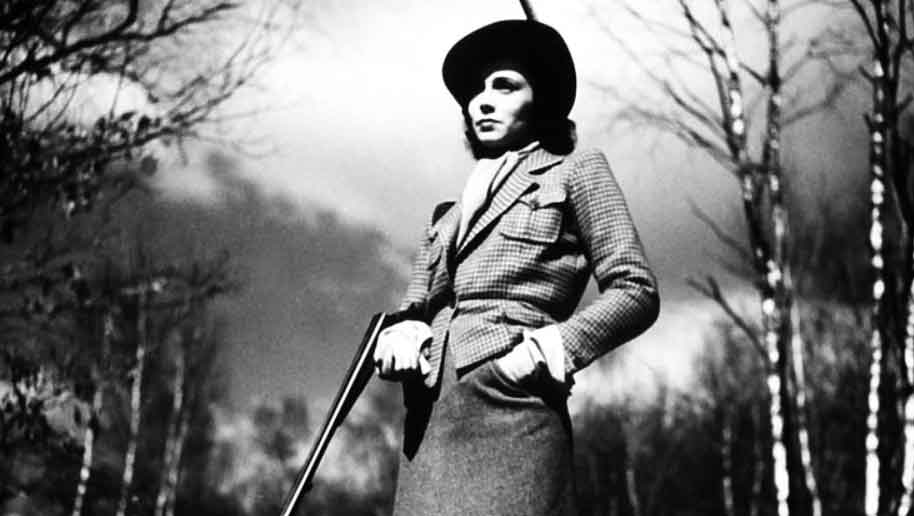
Interestingly, many of these realistic approaches we’ve discussed have now been incorporated into the popular Hollywood style that is familiar to all of us today. In fact, popular cinema has established its own legitimate and well-established worldview. This worldview must be understood with a seriousness that goes beyond stories of personal fulfillment, success, and happiness. First and foremost, the absoluteness of desire and the necessity of its fulfillment are presented as the most universal human condition. The screenplay for *Roma, Open City* was written between September and December 1944. The assistant screenwriter was Federico Fellini, who would later become one of the most important directors of postwar Italian neorealism with films such as *La Dolce Vita* (1960), *8½* (1959), and *Satyricon* (1969). It was also Fellini who suggested Aldo Fabrizi for the role of Don Pietro.
The power of his films stems from his ability to closely observe current events, to recreate them, or to depict them realistically. Parts of this film’s screenplay were written based on actual events. For example, the arrest and murder of two priests during a Nazi raid in Rome is a real-life event. The film *Open City*, directed by Roman, was shot in early 1945, immediately after the end of the war. In fact, at the time the film was released, the Allied occupation of Northern Italy was still ongoing. Since the aim was to heal the Italian society, which had just emerged from the war, through mourning and tears, an expressive narrative style was chosen to represent and reimagine the trauma of war.
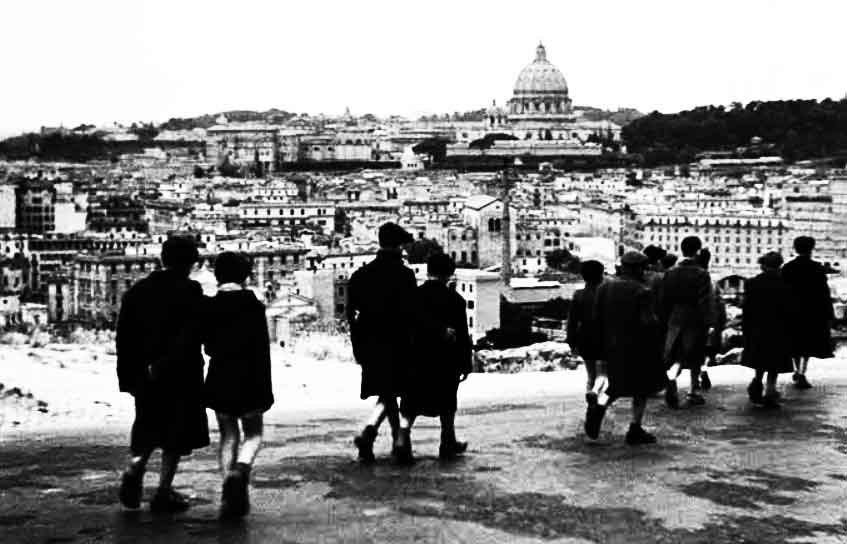
Indeed, perhaps the film’s most “heart-wrenching” scene is the one in which the weary Pina and her fiancé Francesco discuss on a staircase how they will cope with the trauma; both are calm, their facial expressions frozen. At one point in the scene, Francesco says in an extremely calm manner: “We don’t need to be afraid because we’re on the right path.” The fact that the film was shot on location—that is, using real locations and settings—amid Rome’s bombed-out streets and ruined buildings has enhanced its dramatic realism. The film owes its authenticity and the powerful sense of mourning it evokes to this. In a sense, the film lays the anti-fascist movement bare; in doing so, it shows that not every Nazi soldier is as monstrous as the major, who embodies the inhumanity of fascism in his own person.
In one scene, a drunken Nazi practically shouts out that what the soldiers are doing is a deeply immoral act. The major tries to silence the captain, who is exposing the absurdity of the situation. This act of humanizing the enemy is reminiscent of Jean Renoir’s *La Grande Illusion*. This same humanistic and nuanced perspective reappears years later in Brian De Palma’s war film *Casualties of War* (1989). Don Pietro’s final words seem to sum up everything we have been trying to convey: “Dying heroically is not that difficult. The hard part is living heroically.” The premiere of *Rome, Open City* took place on September 24, 1945.
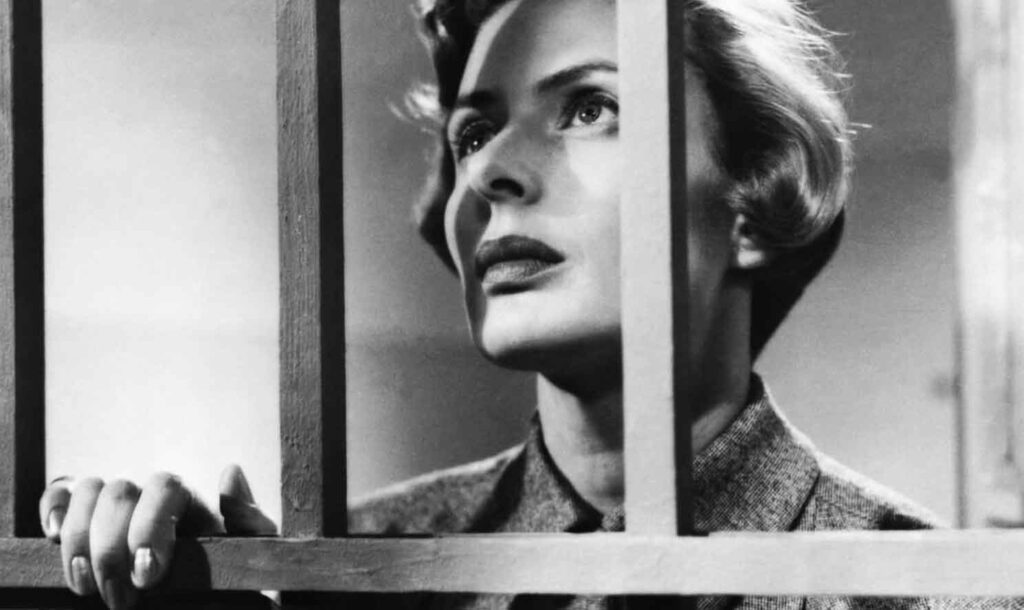
Rosselli’s initial impression was that the film could have been received more favorably by the press. Nevertheless, this critical reception did not prevent the film from becoming the most acclaimed Italian film of that year. Furthermore, the film influenced the portrayal of the Holocaust in Spielberg’s *Schindler’s List* (1993). Regarded by most critics as a masterpiece, the film has secured its place among the classics. Undoubtedly, what earned it this status—much like other memorable war films—is its dramatization of the war not through intense combat but through the damage it inflicted on everyday life.