The Assyrian Empire was one of the most influential civilizations in the ancient world, reigning from the 2400s BCE to the 600s BCE. The Assyrians continually expanded the boundaries of their civilization and left a great legacy to humanity through their military and cultural contributions.
The History of the Assyrian People
The Assyrian Empire achieved its main rise to power between 2400 and 2300 BCE with the strengthening of the Assyrian city-state. They gradually expanded their territory through wars with neighboring states. The Assyrians were known for the discipline of their armies and their military strategies. Their walled capital, Nineveh, became famous for its libraries and works of art. The oldest written documents from the Mesopotamian region were found in this capital. The primary source of the Assyrian Empire’s power was its possession of rich natural resources and control over trade routes. The empire was situated along Mesopotamia’s major trade routes, which enabled it to achieve great economic power. Silk, spices, precious stones, and other luxury goods were traded through a vast network extending from Assyrian territories all the way to Europe.
The Assyrian Empire also achieved great successes in architecture and art. Sculptures, reliefs, and palaces were elegant works that reflected the empire’s prosperity and power. Furthermore, their written culture was highly developed, and they recorded various texts on clay tablets. These texts represented a vast body of knowledge on subjects such as history, law, astrology, and science. The origins of the Assyrian Empire trace back to the city of Assur, located in northern Mesopotamia. The Kingdom of Assyria was founded in the 24th century B.C. and gradually expanded by conquering surrounding regions. By the 9th century B.C., Assyria had become a powerful empire. During this period, the capital of the Assyrian Empire was moved to Nineveh, and impressive structures were built.
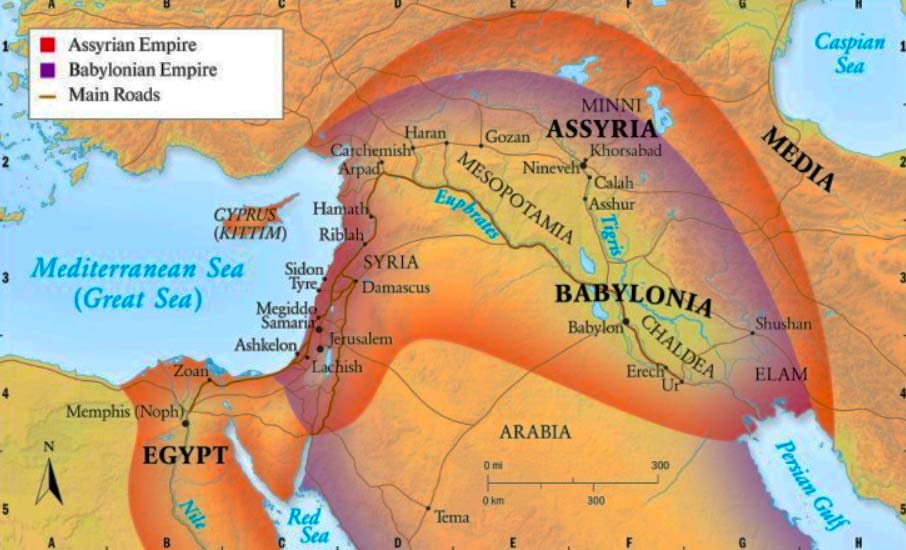
The Assyrian Empire’s golden age occurred in the 8th and 7th centuries B.C.E. During this period, the Assyrian Empire expanded its dominance across the Middle East and became a major military power. The empire’s borders spanned a vast territory stretching from Anatolia to Egypt. The power of the Assyrian state grew significantly thanks to its formidable army and strategic administration. However, the rise of the Assyrian people also marked the beginning of its downfall. The empire’s expansion led to administrative difficulties and internal unrest. Furthermore, the emergence of other powers and advances in military technology posed a threat to Assyria. By the late 7th century B.C., the Assyrians began to weaken and were eventually overthrown by the Medes and Babylonians in 612 B.C. The history of the Assyrian Empire
Ashurbanipal the Great was a powerful ruler who brought the Assyrian Empire to its zenith in the 7th century B.C. He is known as the first Assyrian king to have known the Akkadian language and placed great importance on the preservation of written sources. By establishing a vast library, he collected important works of world literature and thereby passed on Assyrian culture to future generations. He was also famous for his military prowess. He conquered Sumerian and Babylonian cities, expanded his empire, and secured its borders. Another important Assyrian emperor was Tiglath-Pileser III. This leader, who reigned in the 8th century B.C., ensured that the empire reached its greatest extent. He reorganized and modernized the Assyrian army. He was a skilled military strategist and tactician. By launching impressive military campaigns, he conquered neighboring regions and increased tax revenues. He also had the city of Nineveh, the empire’s capital, restored and contributed to its growth.
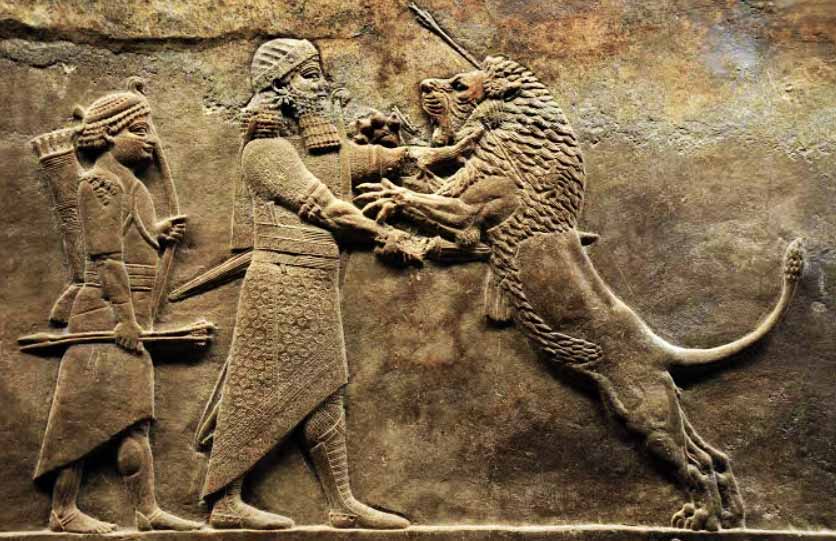
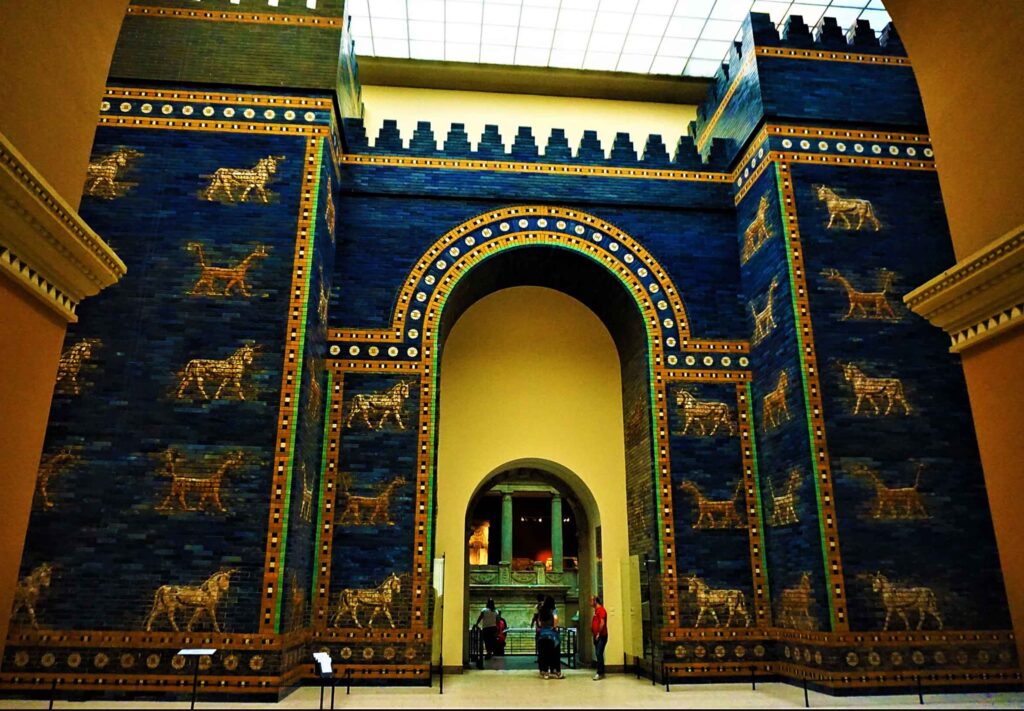
Nineveh was also the religious center of the Assyrian Empire. The city contained many temples and sacred sites. One of the most famous temples was the Ishtar Gate, dedicated to the gods Ashur and Ishtar. This gate was adorned with towering statues of bulls and lions and greeted visitors with a captivating atmosphere. Sculptures were a key element of Assyrian art. Typically carved from stone, these sculptures depicted Assyrian gods and kings. Human figures were portrayed realistically, with body contours and facial expressions rendered in great detail. The statues were used not only for religious purposes but also to emphasize the power and authority of the rulers. Reliefs also held an important place in Assyrian art. These reliefs were high-relief decorations carved or stamped onto walls.
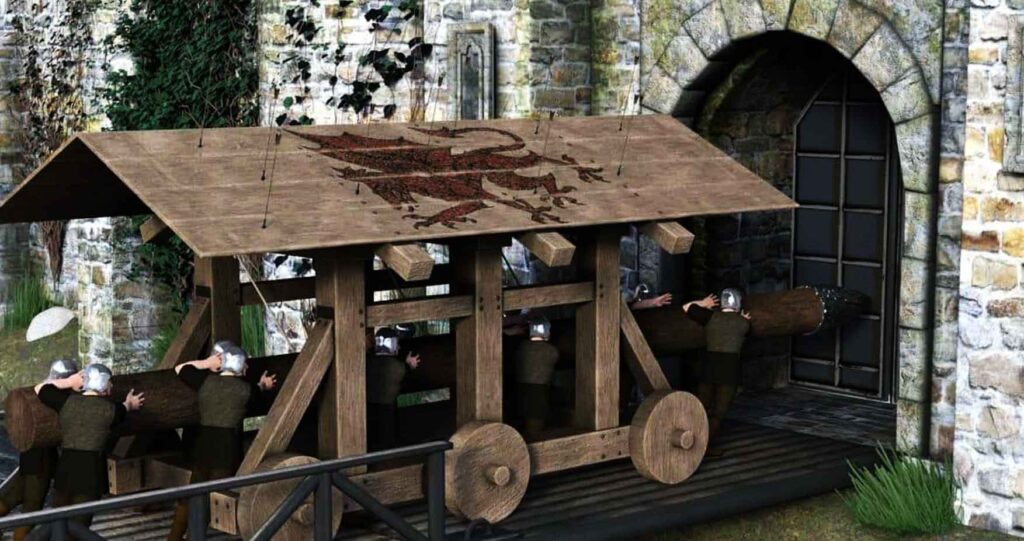
They could depict a variety of subjects, such as battle scenes, ritual ceremonies, and mythological stories. While detailed figures and dynamic compositions were used in the reliefs, the dramatic portrayal of events was also crucial. The Assyrian Empire was a civilization renowned throughout history for its prowess on the battlefield. One of the most important factors behind this success was the innovative war machines the Assyrians employed in their siege and warfare techniques. In the early periods of human history, the Assyrian Empire used various creative strategies to capture enemy fortresses. One of the most important Assyrian war machines was undoubtedly a device known as the “kar battering ram,” which enhanced the force of an attack. This weapon was used to demolish the walls of a fortress. A heavy instrument, the kar battering ram increased the force of the attack by pressing against the fortress’s gate or walls, thereby weakening the enemy’s defenses.
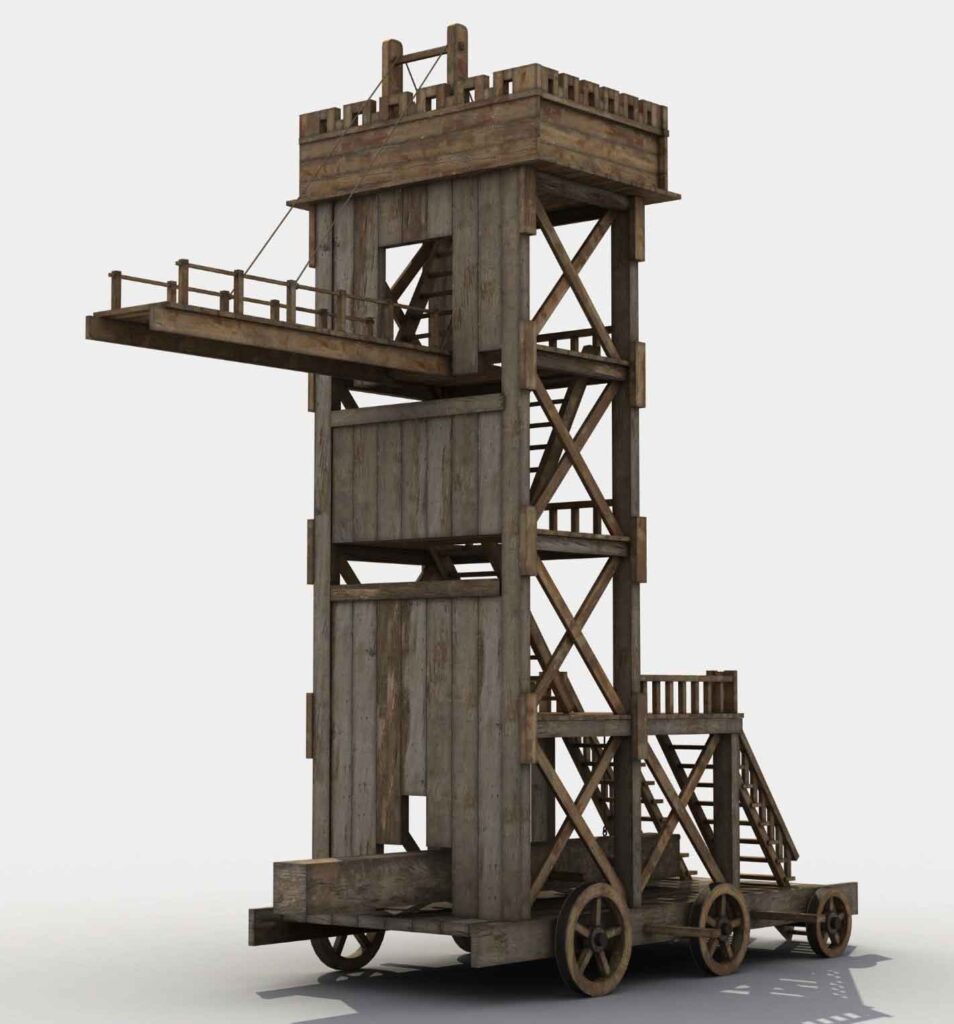
The Assyrian Empire also developed a war machine called the “siege tower,” a massive wooden structure. This tower protected soldiers as they approached enemy fortresses and, thanks to its height advantage, helped them scale the fortress walls. Archers stationed on the upper levels of the siege tower could effectively attack enemy soldiers. In addition, the Assyrians developed siege techniques using various war machines and strategies. For example, they could flood enemy fortresses by constructing water channels or force them to endure starvation. They also employed specialized warriors called “sappers” to dig tunnels into fortresses and launch attacks from within.
Religion and Trade in the Assyrian Empire
The Assyrian Empire adhered to a polytheistic religious system. According to them, everything—from natural phenomena and crop yields to military victories and diseases—was under the influence of different gods. Their central deity was Assur, the protector of the city of Assur and the ruler of the Assyrian Empire. Additionally, other gods such as Enlil, Inanna, and Nergal played significant roles. These gods, each possessing distinct characteristics and powers, intervened in people’s lives. The Assyrian state had a rich culture of worship, with temples dedicated to the gods. Temples were sacred spaces where the gods resided and were typically located in the empire’s major cities. They were notable for their magnificent architecture and provided believers with a place to perform their rituals. People would pray there, offer sacrifices, and participate in religious ceremonies conducted by priests.
Rituals were a central element of the Assyrian people’s religion. These rituals were seen as a way of demonstrating devotion to the gods. For example, a ceremony offered to the god of agriculture during the harvest season was performed to pray for a bountiful harvest. Other rituals included prayers at sunrise, ceremonies for healing the sick, and rituals performed before battle to seek the god’s assistance. The culture and religions of the Assyrian Empire played a major role in daily life within the empire. Filled with reverence for its gods, the Assyrian Empire strengthened its bonds through rituals in its temples and fostered social unity centered around its belief systems. These religions were fundamental elements that influenced the development and success of the Assyrian Empire.
The Assyrian Empire ruled over a vast territory. Located at the confluence of the great rivers Tigris and Euphrates, Assyria became a crossroads of various trade routes thanks to its strategic location. Serving as a bridge between the East and the West, Assyria facilitated the flow of valuable goods such as spices, precious stones, and luxury items. Agriculture, the source of Assyria’s wealth, experienced significant growth during this period. Agricultural products played a major role in domestic trade. Since Assyrian lands possessed fertile plains, grains, fruits, and vegetables were grown in abundance. These products were used not only to meet the needs of the Assyrian people but also for trade.
The Assyrian Empire had a unique economic system. State-run enterprises, controlled by a central administration, regulated trade and oversaw taxation. Commercial activities were generally conducted under state control, and taxes related to trade were collected. In Mesopotamia, Assyria built trade centers called “karum,” meaning “marketplace.” These karums were places where merchants from different nations gathered and exchanged goods. In these bustling markets, various languages were spoken, and cultural interactions took place. Assyrian markets were hubs of intense domestic and foreign trade.
The Culture of Impalement
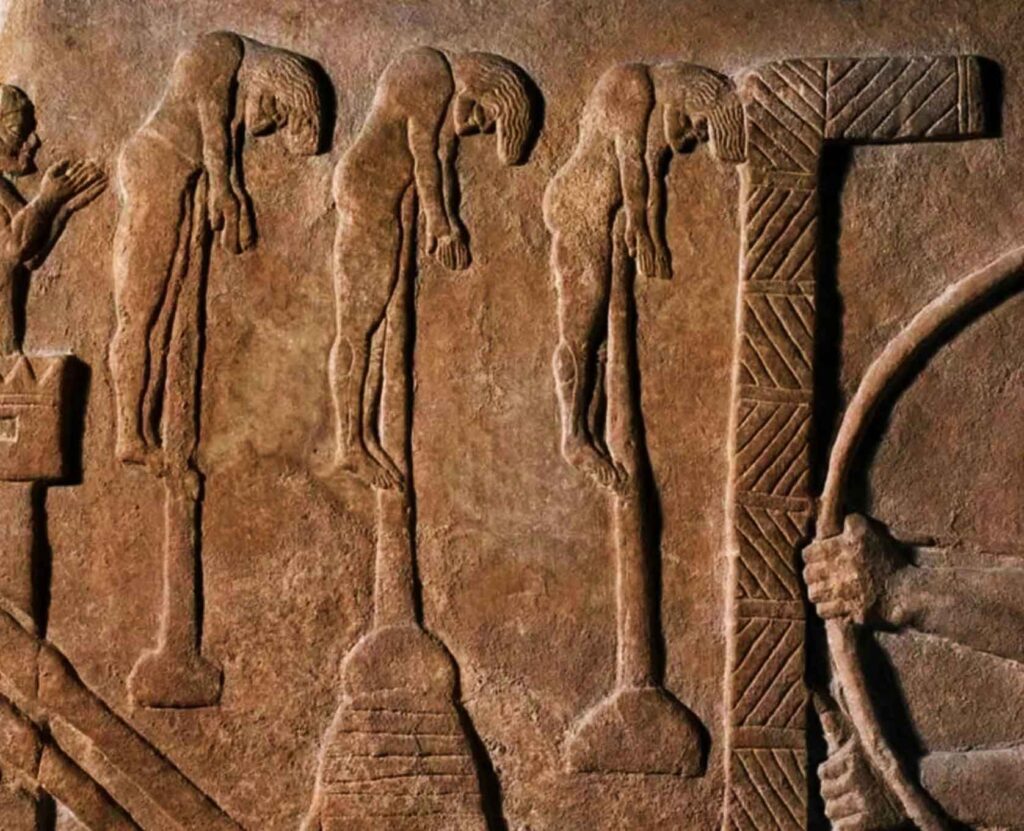
The Assyrian Empire was among the first to use impalement extensively as a method of punishment and psychological warfare. Impalement involves forcing a sharpened stake or pole through a victim’s body and typically leaving them to die a slow and painful death. The stake was usually driven into the lower part of the body and emerged near the neck or head. This was not merely a method of execution but also a psychological tool designed to instill fear and break the spirit of those who might consider rebelling against Assyrian rule. The Assyrian Empire made no distinctions regarding impalement. Soldiers, civilians, and even entire towns could face this horrific fate if they opposed the empire. In one instance, Ashurnasirpal II famously impaled the rebels of Suru, a city on the Euphrates River, after they resisted Assyrian rule.
The Persians also used impalement, particularly during the reign of Darius I (550–486 BCE). Known for consolidating and expanding the Persian Empire, Darius employed impalement to deal with political opposition and rebellions within his vast empire. A famous account of Persian impalement comes from Herodotus’ *Histories*, which reports that Darius had 3,000 Babylonians impaled following a rebellion against his rule. This large-scale execution was yet another example of how the practice was used to suppress uprisings and maintain control over subject peoples. The Assyrians codified the rules they enforced to maintain social order and, from time to time, issued decrees from the palace to remind the people of these rules . In this context, particularly noteworthy approaches regarding women can be observed. In social life, a woman was under the supervision of her father before marriage and her husband afterward.
If a woman’s husband was taken prisoner in battle, she was required to wait for him until he returned. If she remarried and her husband subsequently returned, she was obligated to return to her former husband. Punishments for women in Assyria were quite severe. The punishment for a woman committing theft was for her husband to cut off her ears. Married women could go out into the streets only with their heads covered. Unmarried women, prostitutes, and slaves, however, were not allowed to cover their heads; if they did, they would be beaten. Women in the palace were subject to much stricter and harsher rules than other women. If a palace woman encountered another man without a man by her side, she would be killed along with the man she encountered. Although women in Assyrian culture faced far greater oppression than men, it is very important to evaluate this context in light of the conditions of the time and the world of that era, rather than applying anachronistic judgments.