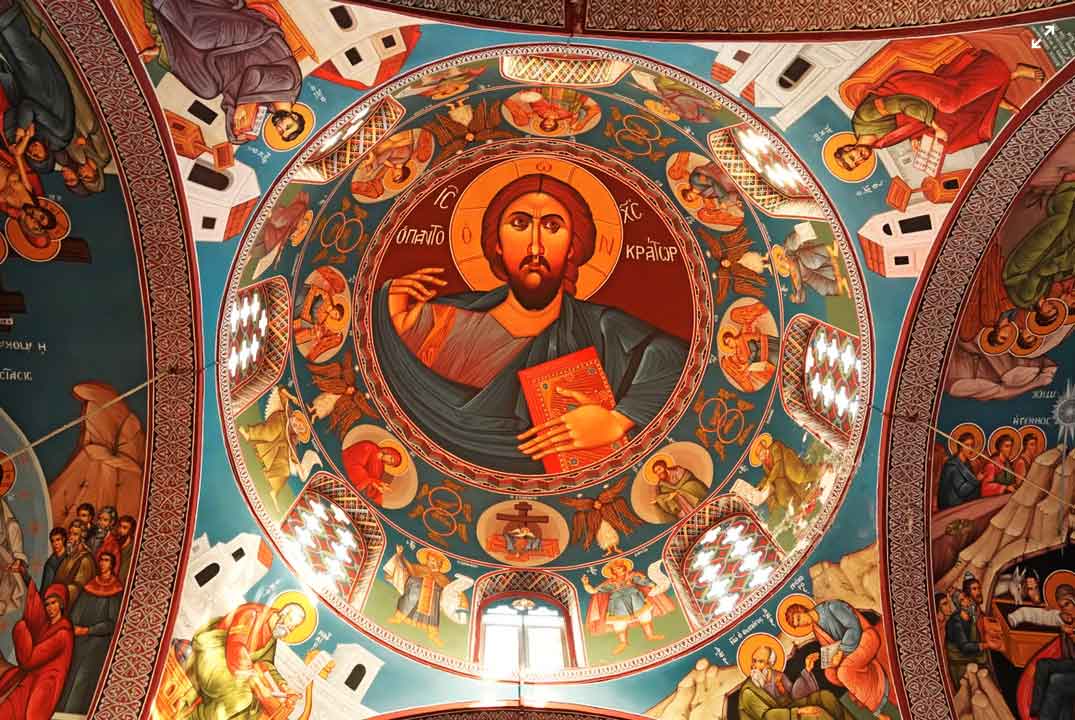
The Prophet Jesus fulfilled the mission entrusted to him and passed away, just like the other prophets. In this article, we shall examine the situation of the apostles after the Prophet Jesus, Rome’s conversion to Christianity, and the ecumenical councils.
Jewish Communities Formed After Jesus
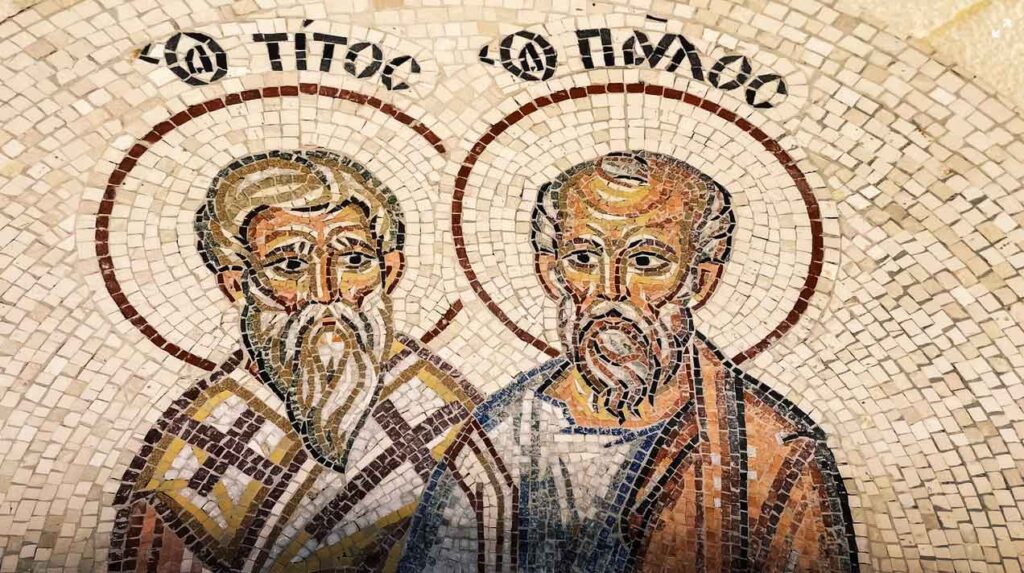
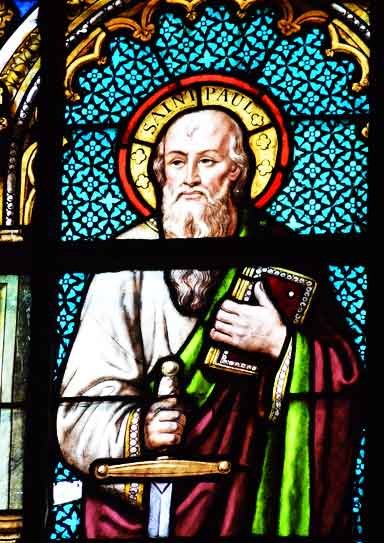
The Community of the Apostles and the Era of Paul (Saul) of Tarsus: Stephen, who sought to explain the righteousness and truth of the Prophet Jesus to the Jewish communities after his passing, was stoned to death before the Jewish Council, the Sanhedrin, and went down in history as the “first martyr.” The group consisting of Prophet Jesus’s followers—which we might call the Community of the Apostles—sought to keep the teachings alive through underground activities due to the pressure they faced. The community’s first leader was James, who was also Jesus’s brother (or stepbrother). At this point in history, a man named Paul—born in Tarsus and thus a Roman citizen, belonging to a Pharisaic Jewish family, and fluent in Hebrew, Aramaic, Greek, and Latin—enters the scene. Although he had never seen Jesus in person and was not an apostle, he engaged in debates with the Community of the Apostles, driven by significant differences in opinion.
At the request of the Apostle Barnabas, he participated in the activities of the community of the Apostles, but eventually severed his ties with the community. From 36 until his death in 65–68, he devoted all his energy to expounding the theology and doctrine he had developed himself, spreading his ideas throughout many parts of the Roman Empire during his life, which lasted roughly 30 years. According to what Paul of Tarsus recounts in his letters, “He set out with authority from the High Priest in Jerusalem to arrest the followers of Jesus in Damascus. While on the road, he experienced a vision in which he encountered Jesus’ warnings. As a result of this vision, he was struck blind, and he was instructed to go to Damascus to meet someone who was teaching Jesus’ message. He traveled to Damascus for three days, blind and without eating, and his sight was restored. He states that he then realized he had been chosen to be baptized, to serve as a prophet and apostle of Jesus, and to spread this message to all nations.”
Armed with this conviction, he returned to Jerusalem and explained the situation to the Apostles, who raised objections. In particular, two ideas Paul asserted would lead to a rupture in ties: “Jesus is the SON of God (the Father); He is a part of Him, and therefore the Eucharist (wine—His blood; bread—His body) embodies reality,” and “Moses’s law has now been abolished; a new law has come.” In Jewish terminology, the concept of “son”—which had been used for centuries to express devotion to God and was written with lowercase letters—began to be referred to with uppercase letters. Consequently, statements such as “The Son of God, the Lord Jesus, made me a prophet” were rejected by the Apostles. The second idea, concerning the law, is shaped around the requirements that non-Jews must fulfill when joining the new movement.
Paul observed the elements of the Law that the Apostles had made mandatory—such as “circumcision, the Sabbath, a 25-hour fast, and abstaining from pork”—which the children of Hellenistic culture could not accept, and he argued that the Law of Moses did not apply to foreigners. “Believe in Jesus, do not offer sacrifices to idols, do not marry close relatives, and do not commit adultery”—he said this was sufficient. In light of the subsequent debates and developments along these lines, we can summarize Paul’s thoughts as follows: “God believes in and loves humanity; all He expects is sincere faith in Him and His Son. That is why, to atone for original sin (Peçe Orijinale; sinful by birth), He had His Son crucified and shed His blood. For the salvation of those who believe in Him, He rose from the dead three days later and abolished all the laws, establishing a single path. Baptism is the gateway to this; this is the path to eternal salvation.”
This theology and doctrine developed by Paul established a foundation for him through the letters he sent and the journeys he undertook throughout the Roman Empire. Despite being pursued by Jewish communities, the Apostles, and the Roman bureaucracy, Paul continued to strive to spread his teachings until the end of his life. According to historical accounts, upon his final return to Jerusalem, he was arrested by the authorities and taken to Rome to stand trial, invoking his status as a Roman citizen—a right he held by virtue of being born in Tarsus. It is believed that he was executed there following his trial. He also did not take seriously the Apostles’ objections regarding the importance of works. “A person will be saved by believing in their heart and confessing with their mouth” (Romans 10:10), he said.
The key point here is that Paul established the fundamental framework of Christianity; however, he neither founded Christianity single-handedly nor foresaw the hundreds of debates and changes that would follow. Under the influence of Hellenistic Rome, the teachings of Paul of Tarsus were taken to extremes he himself could never have imagined, undergoing changes amounting to nearly 60–70 percent. The “crossless” church believed to have been founded by the Apostle Peter (Saint Pierre) in Antioch is significant in that it illustrates just one of the changes that would occur. To avoid confusion regarding the term “Christianity,” it is helpful to refer to the teachings of Paul and his followers as “Paulianism” during the period leading up to the empire’s intervention in this matter. This is because the term “Christianity” would emerge only as a result of the interaction of many other variations within this movement and would later be formalized by the state.
Roman Pagan Beliefs and the Influence of Mithraism
In summary, ancient Roman religion—which, according to tradition, began around 750 BCE, the year Rome was believed to have been founded—expanded its sphere of influence while incorporating many similarities from Etruscan, Indo-European, and especially Greek religious traditions. The triad of major deities (Capitolium) is particularly significant. While Jupiter (or Janus), the ruler of the universe, was the supreme god, Mars, the god of war, and Quirinus, who completed the triad, were also prominent. Under Etruscan influence, this triad took the form of Jupiter, Juno, and Minerva. The Romans also inherited the Hellenic-Greek culture upon which Alexander the Great—who would establish a vast empire in a short time during the 300s BCE—had built his legacy. The deities found in Greek culture—such as “Zeus, Poseidon, Ares,” etc.—were renamed “Jupiter, Neptune, Mars,” and so on; thus, Rome’s major gods were equated with those of the Greeks—that is, while the descriptions remained the same, the names differed.
Roman authorities tried to prevent this by imposing restrictions as part of an emergency action plan, but they were unsuccessful. In the late 1st century BCE, the famous Roman leader Julius Caesar was deified after his death. Other great emperors (not every emperor could claim this title) and great commanders, who were regarded as the “Son of God” (Divi Filius) during their lifetimes, took care to continue this practice until the end of the 2nd century AD. The development of Anatolian Mithraism, which progressed in parallel with the spread of Paulinism in the first centuries AD, is also significant in the context of our topic. We discussed Mithraism in a previous lesson. The influence of Mithraism developed in the vicinity of India, and its journey continued to Iran via the Aryans. There, through the evolution it underwent within Zoroastrianism, it made its way to Anatolia via Babylon. In Babylon, it encountered the Chaldean teachings and, upon moving northward, came into contact with the Harran Cult associated with the Chaldeans; as it advanced westward, it continued to undergo transformation and assimilation through its encounter with the worship of Cybele and Attis.
In the 300s BCE, with Alexander the Great’s conquest of Anatolia, it also came into contact with Hellenistic culture. Throughout these processes, it remained a significant cult until the arrival of the Romans in the region. Beliefs born from the cultural fusions of the West and the East converged, particularly centered around Tarsus and Antioch. The Western sun god Sol (or Helios) encountered the Eastern sun god Mithra. Mithra, who emerged as the dominant figure and assimilated the other into his own character, became the sole sun god in Anatolia. Mithra is now chaste, powerful, sacred, fruitful, bountiful, and invincible. Although this topic is complex in itself, the key point we must keep in mind is this: Different cultures borrow from and give to one another; through interaction, identities shift, and the encounter of civilizations—through migrations, trade, bilateral relations, conquests, and so on—has transformed cultures and religions.
With all this activity taking place in Anatolia, it is, of course, inconceivable that philosophy would not have played a role. The city of Tarsus, a major center, was also the hub for leading Stoics such as Zeno, Cleanthes, and Chrysippus. “Their core philosophy is pantheism—that is, God is not separate from the ‘things’ He created, from the universe. Everything that exists comes from God, returns to Him, and carries a part of Him. Humans must govern themselves through the use of their will and live in harmony with nature.” As a result of incorporating the philosophical aspects of Stoicism, Mithraism would win over the heart of the Roman bureaucracy. Pythagoreanism was assimilated by Mithraism during that period. By adopting the Eleusinian Mysteries and the secret rites and gatherings of the Pythagoreans that it encountered in the West, Mithraism eventually developed a mystical branch (the Mithraic Mysteries). Mithraism, whose influence extended to regions such as Pontus, Cappadocia, Armenia, Commagene, Pergamon, and Antioch, led the kings of the era to adopt the titles Mithradates or Mithrdad.
Adopted by Roman soldiers in the first century CE, the doctrine spread rapidly, and by the 2nd and 3rd centuries, even Roman emperors were seen converting to it. During this period, it experienced tremendous growth, expanding its influence from the Indus River in the East to the island of Britain in the West. Following the adoption of Anatolian Mithraism by Roman emperors such as Commodus (180–192) and Caracalla (211–217), in the 270s, Emperor Aurelian would declare Anatolian Mithraism the official religion of the Roman Empire under the title Sol Invictus—the Unconquered/Invincible Sun (Deus Sol Invictus Mithras; Mithras, the Unconquered Sun God).
Some influences of Mithraism on “Institutional Christianity”: In Mithraism, the sacrificed animal is sacred because it is offered to the god. The blood of the sacrifice is poured into a “cup,” and anyone who drinks a drop of that blood or eats its flesh attains divine sanctity. The birthday of many gods—including Mithra, Attis, Horus, and others—is December 25. From the Sumerians (Dumuzzi) to the Akkadians, from Babylon to Egypt and the Phoenicians, this date holds significant meaning in many cultures as a symbol of “the days beginning to lengthen—that is, the resurrection of the Sun—and the beginning of fertility.” The belief in resurrection after death and ascension to heaven, along with the egg-painting festival, is a ritual of Anatolian Mithraism. It is a spring festival that also represents the resurrection of Attis (Hıdırellez). The sacred pine tree is decorated during the annual ceremonies honoring Attis. In Mithraism, the “cross” shape is a symbol found in the vast majority of ancient cultures, representing the four sacred elements (Fire, Air, Water, Earth). In Mithraism, the “sacred evening meal”—the “Mizt meal,” prepared by family members gathering together—is an important ritual practice.
Mithra—that is, the Sun’s helper—is represented by the 12 zodiac signs. The sacred day of Mithraism is Sun Day, or Sunday. Mithra will descend from the heavens to destroy the evils that plague the world. In Mithraism, the high priest is called “Papa,” and other clergy are called “Father.” Mithra is symbolized by a crown radiating light. The Sun God is depicted in a chariot drawn by four horses. With Constantine’s intervention, institutional Christianity would emerge, and as the churches grew in power, the theological debates within them would become somewhat more complex. Through the doctrine of Sol Invictus, the people living in Roman territories—philosophers, theosophists, and even emperors—took a step toward “a monotheism associated with the sun.”
While Emperor Aurelian recognized Sol Invictus as the supreme deity, Constantine accepted the sun as the most perfect symbol of God, paving the way for his adoption of Christianity. (34) Looking back from today’s perspective, the influence of Anatolian Mithraism—which “established a clear distinction between the Supreme God and the gods with lowercase names”—facilitated a transition that also made it easier for society to integrate into Christianity. Let us conclude with the words of Ernest Renan: “If the path of Christianity, then in its formative stage, had been cut short by any fatal illness, the world would likely have become Mithraic.”
The Situation of the Apostles, Their Actions, and the Influence of Paul / The Ebonites
The persecutions that began under Emperor Nero’s orders continued as the pagan Roman bureaucracy adopted a harsh stance against Paulinism and its followers. In the eyes of the Roman upper class, Paulinism was perceived as “a sub-sect that emerged within Judaism and was followed by the uneducated lower classes, or a belief system (superstitio) of Eastern origin filled with superstitions and myths.” The fact that the Paulinians were forced to conduct their activities underground, at night, and out of public view amid this climate of oppression, combined with the Jewish revolt that broke out shortly after Nero’s death—which was brutally suppressed by General Titus in A.D. 70—and the revolts of 115 and 135, appears to have led to their being perceived as an “enemy of the state and a conspiratorial organization.” Since they were not authorized by the Romans—that is, they were considered an “illicit religion” (religio illicita)—the pressure on them would be particularly felt during the 2nd and 3rd centuries.
By the 100s, Pauline organizations had expanded their missionary activities to many parts of the Roman Empire, particularly in Anatolia. Of course, as these developments unfolded, Paul’s ideas did not spread in a homogeneous manner; his theology and doctrine interacted with and adapted to the cultural, religious, and perceptual backgrounds of various human communities as they spread. Generally speaking, we can distinguish three types: Syriac Paulinism in the Antioch-Urfa region, Greek Paulinism in regions such as Greece, Ionia, Smyrna, Ephesus, and Troy, and Latin Paulinism in Italy, Rome, and Carthage. The author of the earliest hymns, Bardazian of Urfa (Ephrem), and Tatianus of Urfa were among the early Church Fathers emerging from the Syriac region, while Meliton of Sardis and Marcion of Sinope were some of the prominent figures of the early Greek region, and Tertullian of Carthage was one of the key figures of early Latin Paulinism.
Unpopular among the Jews—a sentiment further cemented by the fact that neither the Paulinian nor the Hasidic groups participated in the Jewish uprisings that occurred both during the years 66–70 (the Great Revolt) and 132–135 (the Bar Kokhba revolt), responded to the Jews’ statement that “the Expected Messiah has not yet come” by asserting that “the Messiah has come, fulfilled his mission, and departed”—even though the two groups had different approaches to this claim. The Paulinians’ “opposition to Jewish jurisprudence, the Sharia, and the sacred law” heightened tensions between both the Hasidim and the Jewish communities that did not embrace the Hasidim. Nevertheless, they were viewed by the ruling Roman authorities as Jewish communities that could not reach a common sociological consensus. As we recall, following Titus’s destruction of Jerusalem, a large portion of the surviving Jews had either fled to neighboring states or been exiled by the Romans.
The brutal suppression by the Romans of the revolt led by Bar Kokhba, which broke out among the Jews who remained in the region between 132 and 135, marked the beginning of the Jewish diaspora and severed their political unity. At this stage in history, the disputes between the Paulinians and the Hasidim—which would continue to grow and have an impact lasting for centuries—would be seen as the cause of internal conflicts. Consequently, in addition to numerous theological disputes, the Pauline groups would direct their energies against one another in order to definitively separate from the Apostolic group, which continued the Jewish tradition. If one were to single out just one of the groups opposing Paulinism in the first centuries, it would be the Ebionites. The term means “poor people” in Aramaic. Although it is said that there is insufficient evidence of historical ties between them, they are considered to be the ones who preserved the views of the first Apostolic group.
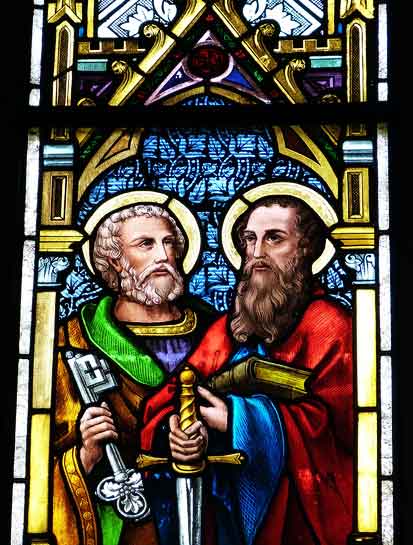
Their fundamental beliefs are as follows: “Jesus is a fully human being, and the One True God chose him as a prophet—like Moses—because he was a righteous man. Jesus’s mother, the Virgin Mary, is a pure servant devoted to God. (While some Ebionites claim, “Joseph the Carpenter is Jesus’s biological father because he married the Virgin Mary,” others maintain that Jesus was born of a virgin), Jesus is not eternal; to claim otherwise is blasphemy. Jesus was chosen precisely because he was a true human being. “Paul is not even an apostle; the theology and doctrine he put forward based on his own fabricated hallucinations are false, and he has lied.” They believe in only a single Gospel—the Hebrew (or Aramaic) Gospel they claim was written by the Apostle Matthew. Although it has been said that they had their own Ebionite Gospel, it has not survived to the present day. They reject Paul’s letters as heretical, show respect for the temple in Jerusalem, practice circumcision, and adhere to the Law and Jewish jurisprudence.
Because of these and similar views, they were labeled “heretics and deviants” by early Paulinians. Since no information from their own sources has survived to the present day, we have learned of the views mentioned above from the refutations of Pauline writers. By the 100s CE, although generalizations were made under certain headings in regions such as Anatolia, Mesopotamia, Egypt, and Phoenicia, there was no single faith or group; rather, there were many groups and schools of thought. Depending on the understanding of the region in which they were located, various schools and groups emerged, such as the Paulinians, the Apostolics, those who accepted Jesus while remaining of the house of Israel, those who rejected Pauline theology and divinity but accepted Jesus, the Law, and certain rules of Islamic jurisprudence, and those who blended these with Gnostic influences derived from ancient teachings, among others.
While the Pauline tradition was shaped by thinkers such as Clement of Alexandria, Tertullian of Carthage, and Origen, another strand—known as Dynamic Monarchianism—asserted that “Jesus was not an incarnation of God, but rather a human being who derived his divine power from the One God.” Paul of Samsat, who is believed to have lived between 200 and 275 and served for a time as Bishop of Antioch, acted as the spokesperson for this strand, repeatedly emphasizing—just as Theodotus and Artemon had done before him—that “Jesus was a virtuous and superior human being who received revelation from the One God.” During a period of political strife between Rome and Queen Zenobia of Palmyra, who held Antioch under her control, he was excommunicated for his views and also removed from office on charges of espionage; he continued his activities with his own congregation.
Following in the footsteps of figures such as Theodotus, Artemon, Lucian of Samsat, Beryllus of Bostra, and Paul of Samsat—who had all delivered speeches—Arius would emerge to oppose the Pauline groups and make a far greater impact throughout the Roman world. Before entering the 4th century, when the main Christian denomination would be institutionalized by the empire, “Sol Invictus”—which had begun to gain favor within the Roman bureaucracy, had entered these lands in an earlier period, and continued to develop in parallel with Paulinism over time—was officially adopted as the state religion by the Roman Emperor It is time to examine the “Sol Invictus” movement, which was adopted as the state’s official religion by Emperor Aurelian in 270.
Rome’s Adoption of Christianity and the Consuls
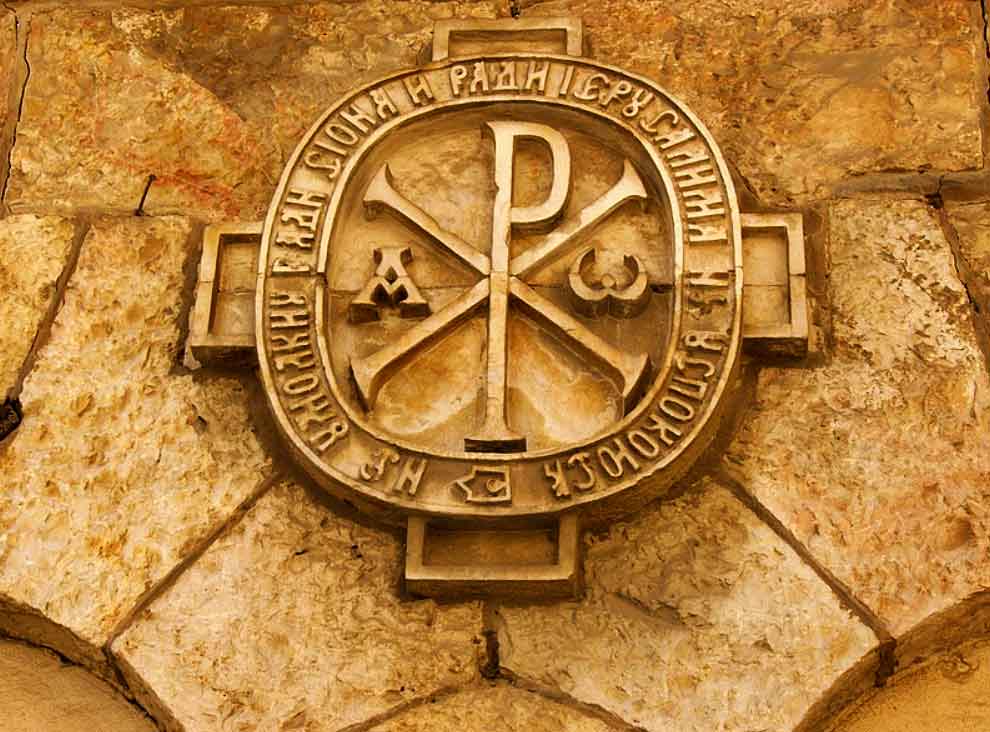
By the 300s, the Roman Empire was going through a turbulent period. During this era of tripartite rule, Constantine first clashed with his Roman rival, Maxentius, at the site of the Red Rocks near Rome. According to legend, during the battle, a cross appeared in the sky bearing the inscription “By this sign you will conquer” (In hoc signo vinces), and Constantine decisively defeated his rival in 312. From then on, the banner known as the “Labarum” (a combination of the first two letters of the Greek word for Christ, X and P) would become a symbol of Constantine’s future. The emergence of such legends was an early indication that the emperor, who had embraced Paulinism, was using it as a tool for motivation. Subsequently, in 324, during the Battle of Uskudar, he dealt the final blow to his other rival—and his sister’s husband—Licinius, thereby succeeding in unifying the empire under a single center. Through moves such as defeating his rivals by the sword and eliminating the multi-headed system of rule, granting religious freedom to minorities via the Edict of Milan, and embracing Paulinism—which was beginning to take root among the masses—he would ensure the survival of his empire for roughly another thousand years.
Against this political backdrop, the Arian controversy, which was beginning to develop in Syria and Eastern Anatolia, was brought to the emperor’s attention by Pauline bishops. It appears that Constantine, initially unfamiliar with the substance of the debate, perceived it as a philosophical dispute and, to put it bluntly, told them, “Resolve this among yourselves in a manner befitting philosophy.” However, Athanasius, the assistant to Patriarch Alexander of Alexandria—who had spent his life writing refutations against Arius—brought the matter back before the emperor with the plea, “The faith is slipping away; we must convene a council.” Constantine, having recovered from the exhaustion of the Battle of Üsküdar, which he had won, convened the First Ecumenical Council in 325 to seize the “opportunity to establish an institutional imperial religion capable of guiding the people.” The emperor, who had begun construction work to transform the town of Byzantium into the new capital—Neo Roma—held the council in Nicaea (Iznik), where he was residing at his summer palace during this process.
Who was Arius the Priest
Let us briefly describe Arius, who was born in Libya: Born and raised in the 260s, a period when the Roman Empire was imposing restrictions on the religious movements of minority groups, Arius first served as a preacher in the region of Libya and later at the Church of Alexandria. However, following a dispute regarding apostates, he was excommunicated from the Church of Alexandria. Arius, who is said to have been influenced by the ideas of Lucian, the former Bishop of Antioch, traveled to Izmit during this period. There, he wrote works expressing his views against Paulinianism, drawing widespread attention to himself.
His fundamental views are based primarily on the idea that “God is one, absolute, the Creator, of incomparable majesty, unique, the only one, and unlike anything else.” He opposed the views of the Paulinians regarding the fact that “although Jesus was a virtuous person, he was a created human being,” and that “Jesus cannot be identified with the essence of God, and the manifestation of God’s Word and wisdom in Jesus should not be misunderstood.” As a result of these ideas gaining followers, the Council of Nicaea was convened and, by a large majority, condemned Arius’s teachings. Two bishops, Secundus and Theonas, refused to sign the decree; Eusebius, the Bishop of Nicaea—who outwardly supported the decision but opposed Arius’s punishment—and, consequently, Arius himself were exiled. After Arius declared in a letter from Libya to Constantine that he would establish an independent church, the emperor announced that anyone carrying Arius’s ideas or letters would be put to death.
Due to the influence of his staunch opponent, Athanasius, in Alexandria, Arius could not return there either. Despite all these crises, Arius’s friend, Eusebius, the Bishop of Nicaea, was reinstated to his former position. Perhaps buoyed by the morale from the official opening of Nova Roma (Constantinople-Istanbul)—which would become Constantine’s permanent residence—on May 11, 330, Eusebius accepted Arius’s request for asylum. Arius, an elderly man of moral character who is believed to have led an ascetic life, did not live long after his arrival and died (or was killed) there. Yet his influence would be felt for many centuries to come. Centuries later, the famous English physicist Isaac Newton would characterize true Christianity as Arianism, and even John of Damascus (Ioannes Damascenes), who lived in the 8th century, would claim that “the Islamic religion was learned from an Arian priest.”
Returning to the imperial family, the pilgrimage to Jerusalem undertaken by Helena, the mother of Emperor Constantine, as a devout Christian would later become a tradition. Legends would follow that Helena discovered the cross on which Jesus was crucified in Jerusalem, along with the three nails, and it would be said that she gifted fragments of this cross to the churches in Rome, Constantinople, and Jerusalem. It has also been claimed that Emperor Constantine had the Church of the Holy Sepulcher in Jerusalem built in light of these developments. Because of these accounts, the emperor’s mother would later be canonized as a saint. Constantine also had his wife—a supporter of the old Roman religion—and one of his sons executed due to a conspiracy involving some Roman officials.
The Nicene (Nicaea) Creed, adopted at the Council of Nicaea in 325 and later amended, was formulated in opposition to the teachings of Arius; it declared “the unity of essence between the Father and the Son (Homoousion to Patri)”—that is, that the Son is exactly like the Father, meaning that Jesus is fully divine. (39) However, the debates would not end. As we will see in the section on God, the Nicene Creed (Statement of Faith) was, of course, not a religious debate for Constantine, but rather focused on “which view would foster a broader-based unity.” (40) Following the establishment of Constantinople as the capital, the Church of Constantinople would join the previously recognized churches of Rome, Alexandria, Antioch, and Jerusalem as the fifth major church. After the death of Emperor Constantine in 337, the empire was divided among his three sons. The senior emperor of the new era, his older brother Constantine II, declared war on his brother Constans and was defeated. Consequently, Constans—under the influence of the Church of Rome, which adhered to the Council of Nicaea—came to control two-thirds of the empire and began to interfere in the affairs of his brother Constantius.
Constantius, realizing that the Nicene Creeds had not been well received in the eastern territories under his control and that Arius’s ideas were gaining wider acceptance, came to support Arianism. Who knows—perhaps this choice is what caused him to be overlooked by historians, despite his reign lasting nearly a quarter of a century. He appointed Eusebius—the Bishop of Nicaea and a friend of Arius—to the Church of Constantinople, while also seeking to enhance the importance of the capital’s church. Eusebius began to undermine the supporters of the Nicene Creed—most notably Athanasius—who had condemned Arius. Constantius’s adoption of Arianism, coupled with the politicization of Arianism, proved irresistible to the alluring influence of power. Constans, who controlled two-thirds of the empire and supported those loyal to the Nicene decrees, was deposed in 350 by his general, Magnentius.
In response, Constantius launched a campaign to the west in 351, avenging his brother’s death and uniting the empire under a single rule. The statement that best captures the religious backdrop of the era comes from Jerome, who would later translate the Old and New Testaments into Latin: “The whole world has become Arian!” Although Arianism exerted influence over the churches with the support of the state until Emperor Theodosius ascended the throne in 379, it failed to reach a consensus on a definitive creed. While on the subject, let us add that the adoption of Arian Christianity by the Goths, Vandals, and Visigoths was influenced by factors such as the Arian missionaries sent by Emperor Constantius and Emperor Valens’s subsequent decision to allow the Goths—who were fleeing the Hun invasions—to seek asylum in Roman territories on the condition that they convert to Christianity. It is even said that an Arian bishop named Ulfilas was sent to the region and translated the Gospel into the Gothic language.
Emperor Theodosius and the Councils
Creed was updated in accordance with the theological ideas of the group known as the Cappadocian Fathers. The emperor not only declared Christianity the official religion of the state but also formalized the Nicene Decrees—which were influenced by Paulinism—by updating them; he banned ancient movements such as Anatolian Mithraism; and he issued orders to eradicate ideas that caused internal strife, such as Arianism. (41) We have attempted to summarize the historical events that have taken place up to this point, focusing on the key points we consider significant. Now, let us examine the developments that emerged at the eight Ecumenical Councils, beginning with the Ecumenical Council of 325, which would establish the rules and principles of Christianity. It should be noted that, in addition to these universal gatherings, dozens or even hundreds of regional and local councils were also convened.
First Ecumenical Council of Nicaea; 325: Held under the supervision of Emperor Constantine and presided over by Eustathius of Antioch, the council convened to discuss “the status of those who had renounced their faith under persecution,” “the date of the Easter feast,” and, most importantly, “the nature and status of Jesus.” It constitutes the first international and official acceptance of the Christian creed. The decisions, which would come to be known as the Nicene Creed, are significant in that they form the foundation of the modern Christian creed. The proposal put forward by the group led by Athanasius of Alexandria—that “Jesus is of the same essence as God,” expressed as “Homo Ousios to Patri” (the unity of essences)—was accepted. It was declared that “Jesus is uncreated and the only-begotten Son,” “the heavens and the earth were created through Jesus,” “He took on flesh and came into the world in human form, suffered, died, and rose from the dead on the third day before ascending into heaven.” The definition of the Holy Spirit was vague, as it was stated only as “we believe,” and this would be clarified at later councils. Arius’s ideas were also branded as heretical.
The Second Ecumenical Council of Constantinople (381): Convened under the supervision of Emperor Theodosius, this council fully upheld the unity of the essences as stated in the Nicene Creed. Those who did not believe in the Nicene Creed were not invited to the council, which was convened under the leadership of Gregory of Nazianzus. The work of the Cappadocian Fathers—Basil, Gregory of Nyssa, and Gregory of Nazianzus, who presided over the Second Council—which continued after the Council of Nicaea and was particularly prominent in resolving theological issues, formed the foundation of these ideas. The names of the Virgin Mary and Pontius Pilate begin to appear in the creed. The most significant addition to the decisions of the Council of Nicaea was the definition of the Holy Spirit as being of equal status with God the Father and Jesus the Son. By elaborating on the definition of the Holy Spirit proceeding from the Father, it was also accepted that the Holy Spirit spoke through the prophets. Belief in “one, holy, Catholic, and apostolic Church” is affirmed, and the “importance of baptism” is emphasized.
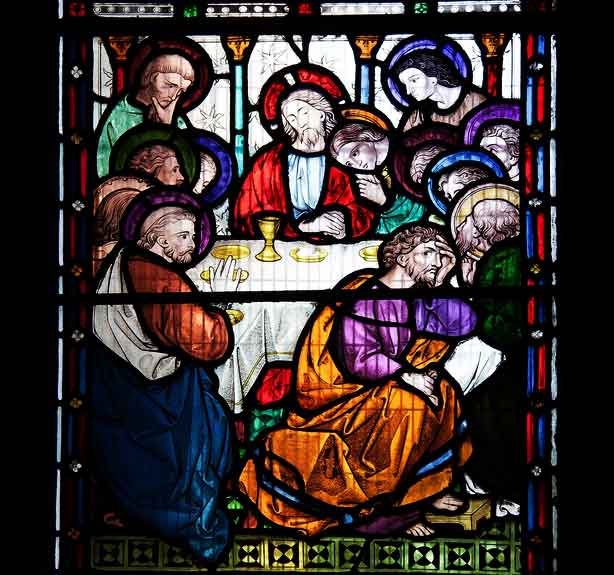
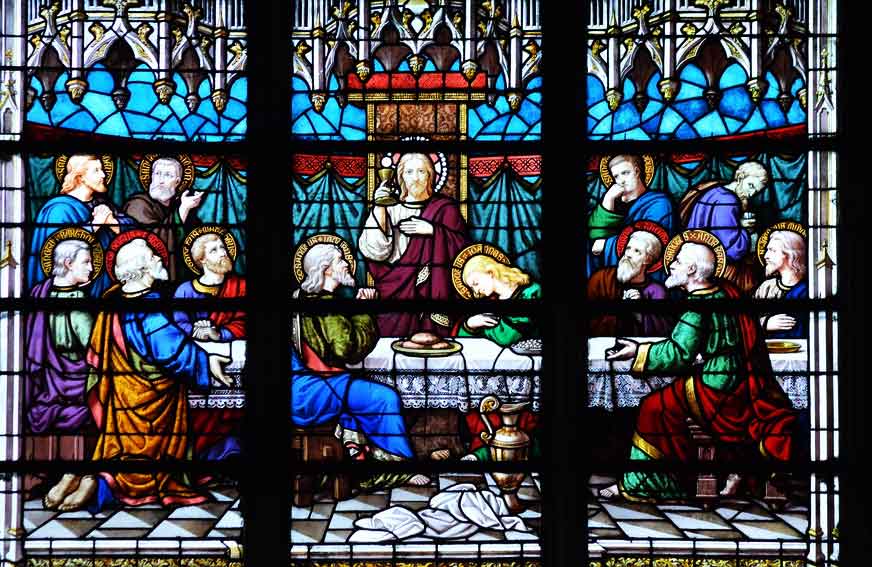
Our Article on Famous Paintings of “The Last Supper”
Let us not forget that the term “Catholic” used here refers to “universality” and that the term “Apostles” includes Saint Paul of Tarsus and those believed to be associated with him. Following the council, decisions were made requiring the surrender to the church of all written documents containing heretical views outside the definition of the Orthodox Church (including the inclusion of Arianism) and defining the Church of Constantinople as the second-largest church after the Church of Rome, following its rapid rise. It should be noted that the term “Orthodox” used here was employed in the sense of “correct faith” at that time. Shortly after this council, at the regional councils of Hippo in 393 and Carthage in 397, influenced by the renowned St. Augustine, the Nicene Creed’s doctrine of the Trinity took its final form: “The Holy Spirit proceeds from both the Father and the Son.”
The Third Ecumenical Council of Ephesus (Ephesos); 431: By imperial decree. Convened by order of Theodosius II, this Ecumenical Council was a political maneuver by the Church of Alexandria—which could not tolerate the Church of Constantinople, having been granted the title of “second-greatest church,” viewing itself as the greatest church of the East—to hide its political priorities behind doctrinal disputes. Nestorius, the former Bishop of Antioch who was appointed head of the Church of Constantinople, defended the term “Christ-bearer” (Christotokos) and “God-bearer” (Theotokos)—which referred to the Virgin Mary in relation to the nature of Jesus—amidst the debates that arose over these terms, arguing that “Jesus was created as a normal human being in the womb of the Virgin Mary, was born as a normal human being, grew up, and then attained divinity through the Holy Spirit.”
On the other hand, Cyril, Bishop of Alexandria, vehemently opposed this view, deeming it unacceptable because it undermined Jesus’s eternal nature. Believing that Jesus’s divinity had neither beginning nor end, they fiercely defended the term “God-bearer” (Theotokos) for the Virgin Mary. The city of Ephesus, where the council was held, was deeply devoted to the “God-bearer” Virgin Mary, which highlighted the difficult circumstances Nestorius faced; ultimately, however, Cyril, the Patriarch of Alexandria, excommunicated Nestorius and his ideas. A delegation from Antioch that arrived later in the region also excommunicated Cyril and the majority, but this was not considered valid.
The fact that both sides accused each other of being Arians is also noted in history as an interesting incident. Following the council, the creed was reaffirmed by the majority; it was accepted that Jesus possessed a single nature and that the Virgin Mary was indeed the “Mother of God.” The question of Jesus’s nature, however, would spark the Monophysite-Duo-Physite debates. The Nestorians, followers of Bishop Nestorius, spread as far as Persia, India, and China after being expelled from the territories of the Roman Empire. They later found supporters in the regions of Arabia, Syria, and Palestine, where they settled.
The Fourth Ecumenical Council of Chalcedon (Khalkedon); 451: Convened under the supervision of Emperor Marcianus, this council became the largest gathering of its kind up to that time in terms of attendance. After the Council of Ephesus, in an effort to restore unity among the churches, Cyril, Patriarch of Alexandria, wrote a letter to the Patriarch of Antioch stating that it was impossible to separate Jesus into “human and divine,” but that the formula “one Jesus with two natures” could provide a compromise. Following Cyril’s death, Theodoretus, who belonged to the Antiochian tradition, and Ibas of Edessa brought the “Christ of two natures” (Dio-physite) doctrine to the forefront. The opposing view, Monophysitism, held that “in the person of Christ, whose human nature has been transformed, the divine nature is one.”
The Council issued the following decision in an effort to find a middle ground: “In divinity, of the same essence as the Father; in humanity, apart from sin, of the same essence as human beings. He was begotten of the Father before the ages and was born of Mary (the Mother of God) for our salvation. Unchangeable, indivisible—both human and divine.” The “Diophite” view, which was also supported by the Roman Church, was proclaimed in a form aligned with Cyril’s view, but the debates would not end. In addition to the decision characterized as a continuation of the Nicene Creed as its main pillar, it was declared that “Christ possesses two natures that are inseparable, indistinguishable, and indivisible” (Diophysitism). Along with this decision, which would spark major debates in the Eastern Churches, the jurisdiction of the Church of Constantinople was also expanded.
The Fifth Ecumenical Council of Constantinople (553): Convened in response to Emperor Justinian—who had commissioned the reconstruction of the Church of Hagia Sophia (Divine Wisdom)—condemning the statements written by the Nestorians against Cyril. As a result of the council—in which no Western representatives participated—a statement of censure against the Patriarch of Rome issued by the Emperor was adopted. The decisions made by the Council of Kadıköy regarding the nature of Christ were reaffirmed. The most significant outcome was the assertion of the independence of the Eastern Church of Constantinople from the Church of Rome.
The Third Ecumenical Council of Constantinople; 680: Emperor Constantine IV issued a statement in favor of the Monophysites in the Monophysite-Dyophysite debates, which had long been a source of contention in the Christian world and were gaining traction in the Eastern Churches. As a result of the council, the Dyophysite doctrine was accepted, stating that “the human and divine natures present in Christ are not opposed to one another, but the human nature remains subject to the divine nature.” Thus, the Monophysite doctrine, which had long dominated the agenda, was condemned, even though it continued to be practiced by minorities. The fact that a rebuttal was also issued to the emperor is significant in light of the developments of the era.
The Seventh Ecumenical Council of Nicaea (Nikaia); 787: In 691, the Council of Constantinople, held at the local level, issued a decree permitting the placement of “figures of the crucified Jesus” in churches. The greatest controversies of the 8th century, in particular, revolved around iconoclasm (the rejection of images). An edict issued by Emperor Leo III in 754 banned the use of images and paintings, but the Western Church did not recognize this decision. Following the death of Emperor Constantine V, who had sought to find common ground between the state and the Western Church by issuing decrees allowing images and paintings related to the world to replace sacred images and paintings, his successor’s wife, Queen Irene, declared “freedom of conscience.” During this period of similar tensions, the Second Council of Nicaea convened and legitimized iconography. It was declared that this was done out of reverence, and a decision was made to permit depictions of Jesus, the Virgin Mary, angels, and saints.
The Eighth Ecumenical Council of Constantinople (Istanbul); 869: Following the Second Council of Nicaea, ideas circulating in Western Europe—that “allowing images in communities newly emerged from paganism would lead to adverse consequences”—temporarily influenced the Roman Church, which had previously considered permitting images. At the regional Council of Frankfurt, convened in 794, different actors were now present. Led by Frankish King Charles, this council was attended by Roman, Germanic, English, Lombard, and Frankish bishops. Through a counter-decree, the decisions of the Second Council of Nicaea were rejected, and all forms of worship involving images and portraits were prohibited. In 800, when Pope Leo III crowned Frankish King Charlemagne as Emperor of the West, this event would trigger new developments, such as “the transition of the liturgical language from Greek to Latin.” Against this backdrop, the council—which we might call “the last joint ecumenical assembly”—convicted the “iconoclasts.”
As for its significance for the Roman Church: following the acceptance of the “Donation of Constantine” (Donatio Constantini)—which Pope Stephen II had sought recognition for from the Frankish King Pepin the Short in 755—the Pope declared his office the highest Christian authority under the title “Pope” after the Fourth Council of Constantinople. He would claim that the title of Pontifex Maximus (Highest Representative of God)—which Emperor Constantine held and which had been passed down to subsequent emperors—had been transferred to him, “as this will also demonstrates.” He received the will and, as the former Patriarch of Rome, Silvestro (d. December 31, 335)—who is said to have baptized Emperor Constantine (d. May 22, 337) on his deathbed—although he had died two years before Constantine—the Roman Church, which was hierarchically superior to the other churches, would now be the sole authority, and its patriarch would become the “Pope” in the full sense of the term.
As a result of the decisions made at all these councils and the heated events that accompanied them, a definitive schism occurred between the West and the East in 1054. The “language disputes” would also be affected by these tensions. Although the Eastern Roman emperors were of Latin origin, they adopted Greek as their primary language and established the liturgical language of the Church of Constantinople in Greek. The Codex Sinaiticus and the Codex Vaticanus, the oldest surviving Gospel manuscripts, were written in Greek dating back to the 350s. Even the term “Christianity” is derived from the Greek word “Christos,” meaning “Messiah.” In contrast, the Western Roman Church, with the support of King Charlemagne, would replace Greek—the language of the faith—with Latin and continue to do so.
The term “Latin Church,” used until the 1600s (the origin of the name “Latin America” for South America), would later, interestingly, be referred to by the Greek term “Catholic” (katholike), meaning “universal” (Latin: Universalis). (43) Although the term “Orthodoxy,” used for the Eastern Churches, had long been used to mean “those of the true faith,” it would enter the literature as a denominational designation. It would not be possible to fully understand the verses in the Qur’an that refer to Christians. To give an example: The term “sıbgatullah” (the color of Allah) found in the Quran serves as a rebuttal to the belief that “whoever is baptized in a church—that is, dyed with the color of Jesus—will be saved from their sins.” Moreover, given the historical context, you can probably guess why the water used in baptism—a ritual of great importance to Christians—is yellow.