Even today, Japanese mythology involves many controversial topics. Therefore, it is necessary to study this subject carefully using a variety of sources. In this article, we have examined the sociological foundations upon which both traditional and modern Japanese religion are built. Understanding these foundations will help us make sense of the elements found in Japanese mythology.
The term “Japanese mythology” is misleading for two reasons. The first reason is that the Japanese do not have a single, consistent mythology; in fact, they have quite a number of mythologies. There are many different mythological traditions—some written down, others in the form of stories passed down orally from person to person—which experts often dismiss as “folk traditions” rather than “proper” mythologies. The mythologies of small villages and minority groups on the Japanese islands—such as the Ainu and the Ryukyuan people—are sometimes not considered “appropriate” for the Japanese or “appropriate” for mythology. Second, even the written “canonical” Japanese mythology—whatever that may mean—is largely a synthesis of myths originating from China and India, or even from other traditions in the region, as well as those of local origin.
To complicate matters further, the term “myth” can be confusing. In relation to the purpose of this book, myths contain two elements. One is the narrative aspect. Myths almost always contain stories with a supernatural element (such as the intervention of powerful, autonomous beings). These stories can be long epics or short anecdotes. It is difficult to distinguish myths from legends, ghost stories, and fairy tales here. Nevertheless, myths possess a second component: they generally contain an intellectual element that provides a framework for people’s lives. The “people” in question can be individuals as well as an entire culture. Myths are a way for people to explain who they are and why they do what they do.
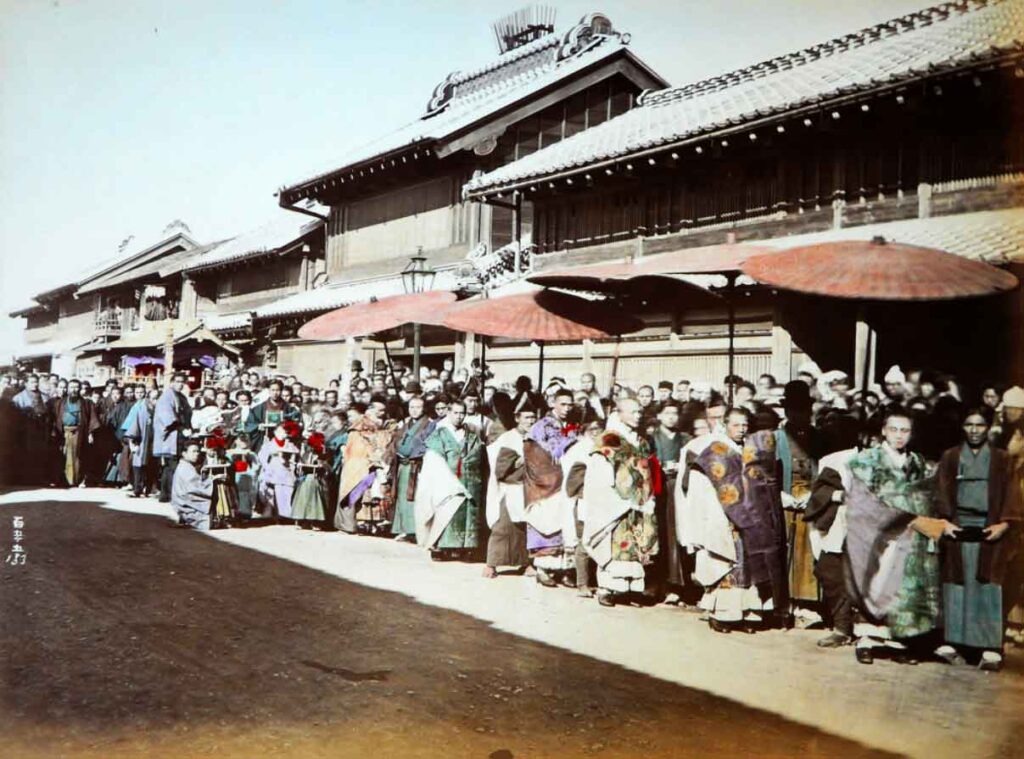
In the context of Japanese culture, regionalism has always coexisted in a complex relationship with “Japanism.” It can be said that the local community—the buraku (village) and the ie (household)—is where personal interest is most focused and where the greatest emotional investment is made. With the exception of those in power, most people were less concerned with the broader collective—the nation or the han (feudal domain). As a direct result of this dichotomy, the central government (when in power and able to do so) expended considerable effort to “nationalize” local myths in the name of creating and strengthening a nation, rather than bringing separate communities together. In such a mixture, it is not surprising to see the same deity playing many different roles, possessing many different identities and names, or to see different deities consolidated into a single deity and different myths “merged” into a single myth that served the interests of the ruling powers.
External Influences on Japanese Myths
Japanese traditions, including myths, have been influenced by a number of external sources. Two of these are the traditions of literate cultures and are therefore very well documented; tracing their origins is relatively easier. Both India and China have contributed to Japanese myths—largely through Buddhism—and have significantly enriched them. At the same time, there are two other traditions that are not as well documented and are much more scattered: Ainu mythology, which is the crystallization and interpretation of traditions found in many neighboring cultures, such as the Okhotsk and Tungus cultures in northern and northeastern Japan. Furthermore, it is possible to find similarities between Japanese myths and the Proto-Polynesian cultures found in the island chains extending southward from Japan—including, among others, the cultures of the Ryukyu Islands, Taiwan, and the Philippines, where these myths are interpreted in many different ways—such as the myth of the creators of the earth and the union of the brother-sister deities Izanagi and Izanami.
Chinese Sources: One of the greatest influences on Japanese mythology has been the mythology of neighboring China. Chinese mythology, too, consists of a blend of two traditions. One was the local tradition of gods (shin), organized into a grand hierarchy of celestial officials, princes, and generals, governed either by the Supreme Jade Emperor or by the Celestial Emperor, who ruled the heavens with virtue and generosity—just as an earthly Chinese emperor was expected to govern the world. Some of the local deities and saints—historical figures whose virtues influenced their peers and whose existence was attested—had been assimilated into this pantheon, largely in the form of celestial officers. Another tradition was Buddhism, which represented a synthesis of Hindu traditions. Buddhism introduced new deities, concepts, sages, and saints to China, and they, too, assumed the form of a celestial bureaucracy that coexisted with or was defined by local mythology.
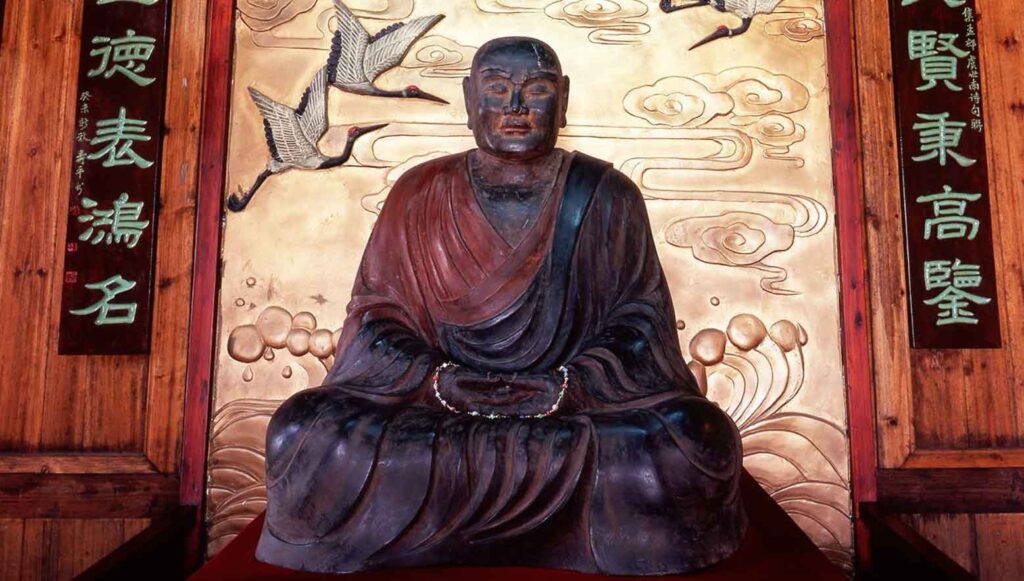
As with all mythologies, the concepts of China’s mythical world were based on people’s perceptions and understanding of the social world around them. One of the primary social characteristics of the traditional Chinese world was the imperial system of government. However exalted the emperor might be, he was expected to govern the country virtuously, and in principle, he was the head of a bureaucracy in which officials attained their positions through merit. Officially, a rigorous (and difficult!) examination system was open to all men, giving everyone in the country the chance to become a government official. Even the son of the humblest farmer could, in theory, become the empire’s prime minister. For this reason, Chinese mythology portrays official duties as part of the bureaucracy of the celestial government. This bureaucracy, just like the imperial government of the material world, is divided into departments and offices.
Because of its adherence to certain aspects of Confucian ethics, Japan never developed a meritocratic examination system. Clans, family ties, and relationships with the ruler were far more important. Furthermore, although the border regions of the Japanese state always offered deep loyalty to the emperor, they were primarily bound by oaths of allegiance to their own clans and, secondarily, to their feudal lords. The mythological differences between the two socio-political systems are reflections of these realities. When Japan borrowed mythological elements from China (for example, Ch’ung-chuan’s transformation into the Shoki demon rulers), the rationale for deifying these figures disappeared, because no corresponding bureaucratic system existed in Japan. As a result, mythological elements in Japan took on varying degrees of importance and even assumed roles different from their Chinese originals.
Indian Sources and Buddhism: India possessed a developed literary culture long before Japan’s emergence as a nation. Indian Buddhism is based on and adapted from the mythological tradition of early Hinduism. Indian mythology contains references to a pantheon of powerful and well-defined deities. Most of Hinduism’s principal deities—the Creator Brahma, the Preserver Vishnu, Shiva, the Destroyer, Indra, and even many demons—have been utilized as Buddhist figures: they rank below the Buddhas but are nonetheless powerful and worthy of respect. These figures and deities, introduced to Japan via China, found their place in Japanese mythology under Japanese names and with characteristics unique to the Japanese; however, they clearly stem from the rich Hindu and Indian traditions. Here, too, social differences between India and Japan—such as the absence of a caste system in Japan—meant that the deities that were transmitted assumed different statuses than they held in their homelands; the myths describing them would also reflect these differences.
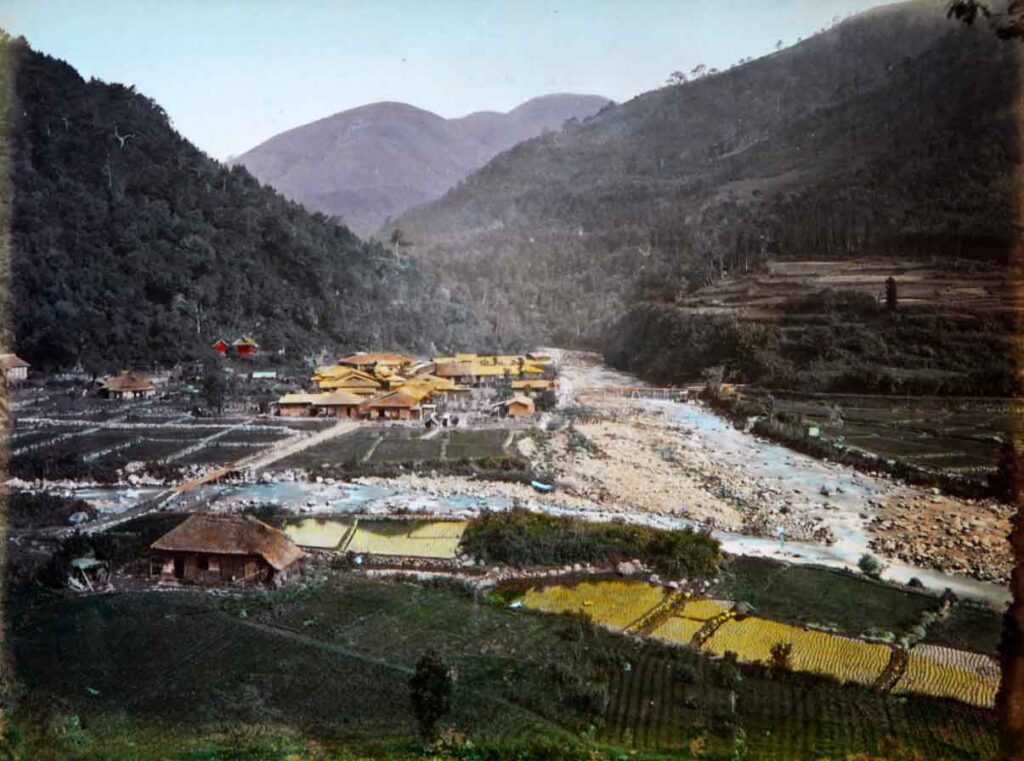
Japanese Myth: One of the primary myths attributed to the Japanese is the Japanese myth. According to this view, the Japanese nation is a unique people, culturally distinct, mysterious, and homo genus due to its special position in the world. This, of course, is part of the great tradition and has been transmitted to us through written documents; the Kojiki and Nihonshoki texts, which we will discuss later, are two examples of this. The great tradition of Japanese mythology remains very much alive in modern Japan. Most Japanese still affirm the following: The Japanese language is unique and shares only minor similarities with other languages. Japanese culture—and especially the Japanese way of thinking—is incomprehensible to outsiders, as it is based largely on unspoken, felt emotions shared among the Japanese people. The course of Japan’s cultural development has largely been independent of developments elsewhere in the world.
A significant portion of the Japanese population would also agree that the complexity of Japanese physical characteristics is both distinct and unique. Consequently, over the past fifty years in Japan, books have been published that explain Japanese uniqueness through so-called unique intestinal length, hair color, blood type, or physical brain structure. Ironically, none of these views are correct. The reason these views are still taken seriously is that the elite class—government officials, academics, religious figures, even people from the entertainment world, and foreign journalists—frequently repeat these mystical details as if they were facts. These views are true to a certain extent; however, one must add countless other qualities to them. As for our goal of understanding Japanese mythology, these views stem from the many detailed “narrative myths” we will examine here, and they continue to exist in this form. To examine these narrative myths, we must first turn to certain characteristics of Japanese society that gave rise to Japanese mythology.
Geography and Topography of Japan
Japan is a vast archipelago stretching along the eastern coast of Asia, spanning numerous seas from the tropics to the Arctic. This archipelago consists of four main islands, in addition to countless smaller ones: Honshu, the largest and most densely populated; Kyushu; Shikoku; and Hokkaido, which was “Japanized” in the recent past. The islands are of volcanic origin, and active volcanoes still erupt from time to time. Mountain ranges cut across the country, isolating some communities, and these mountains have always been the site of mythical activity. The soil is, on the whole, quite fertile, and both the ancient Japanese and their modern descendants rightly view the country as a source of abundance and prosperity; despite historical famines and barren rocky areas, this is generally true. The topography, however, is not actually that generous. A Japanese proverb, “Kowai mono yotsu: jishin, kaji, kaminari, oyaji” (There are four frightening things: earthquakes, fire, thunder, and father), illustrates the idea that nature is as frightening as it is generous—and, of course, that the pater familias is the dominant figure in everyone’s life.
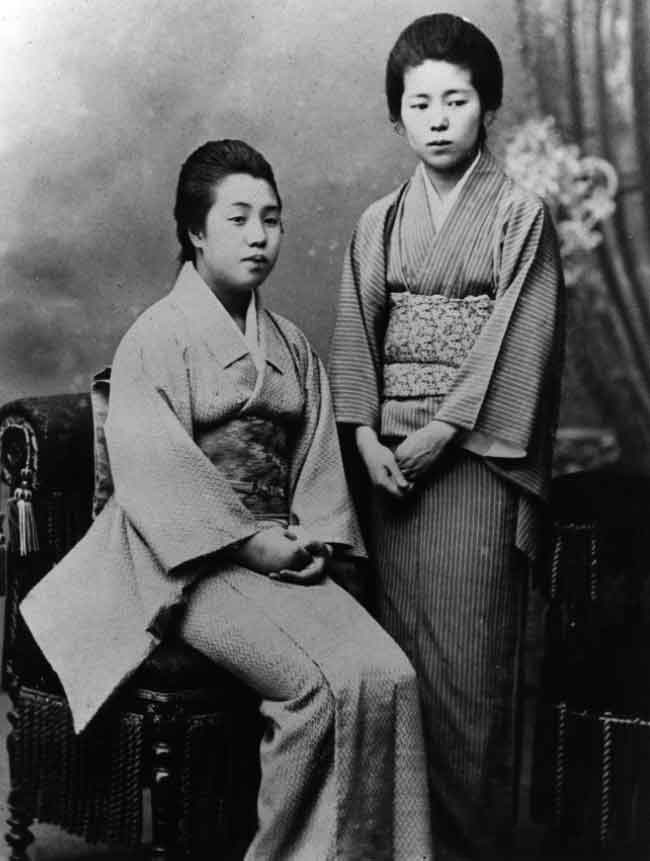
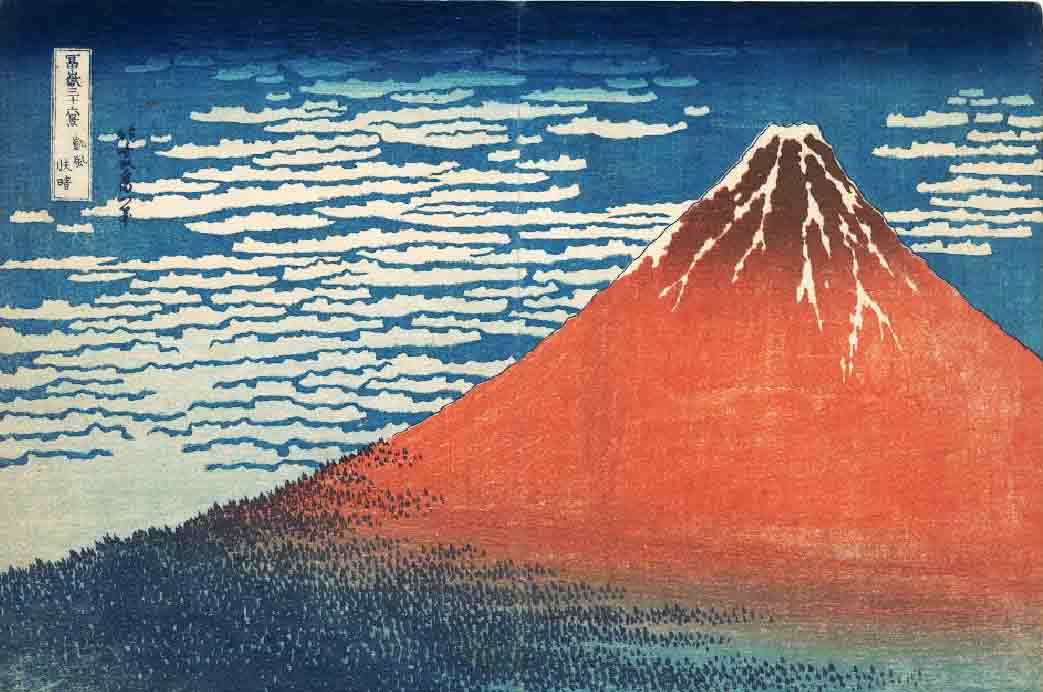
From a social and economic perspective, Japan’s most important geographical features are its fertile plains and river valleys, which provide an abundance of grain for food production; from a cultural perspective, however, its most significant locations are its mountains. The most famous of these mountains is Mount Fuji, with its nearly perfect, snow-capped peak visible from Tokyo—100 kilometers away—when air pollution and weather conditions permit. This and many other mountains are associated with mythical events and entities; mountain deities also feature prominently in rituals and myths.
A likely reason for this is that, although mountains are inaccessible and difficult to reach, they are visible from the vicinity of densely populated urban centers. From a traditional perspective, another geographical feature of both cultural and mythological importance is the sea. As islanders whose livelihoods and transportation routes are frequently tied to the sea, the Japanese have, unsurprisingly, placed the sea at the center of their beliefs, practices, and arts. The Seto Inland Sea, situated between the islands of Kyushu, Honshu, and Shikoku, is particularly significant, as many events in the national creation myth take place along its shores, on its islands, and in its numerous coves.
Since the Japanese islands are close enough to the Asian mainland, they can be reached via four land bridges; this means traveling from one landmass to another through relatively narrow waterways. From the very tips of the Kyushu and Honshu islands, the Korean Peninsula can be reached in twenty-four hours by a modern ship. To the south, Kyushu gradually narrows into a series of peninsulas resembling fingers; from these, one can reach Taiwan via the Ryukyu Islands chain and Southeast Asia via the Philippines. To the north, a chain of islands visible from the northern tip of Hokkaido extends to the Asian mainland via Sakhalin Island and Kamchatka; another arc formed by the islands at the eastern corner of Hokkaido stretches as far as the Kuril Islands and the Arctic Ocean. These island bridges served as highways for the prehistoric Japanese inhabitants who migrated to the islands. One of these bridges—the one providing access to Korea—has been particularly significant throughout history in terms of cultural influence. Consequently, it has also had a profound impact on mythology.
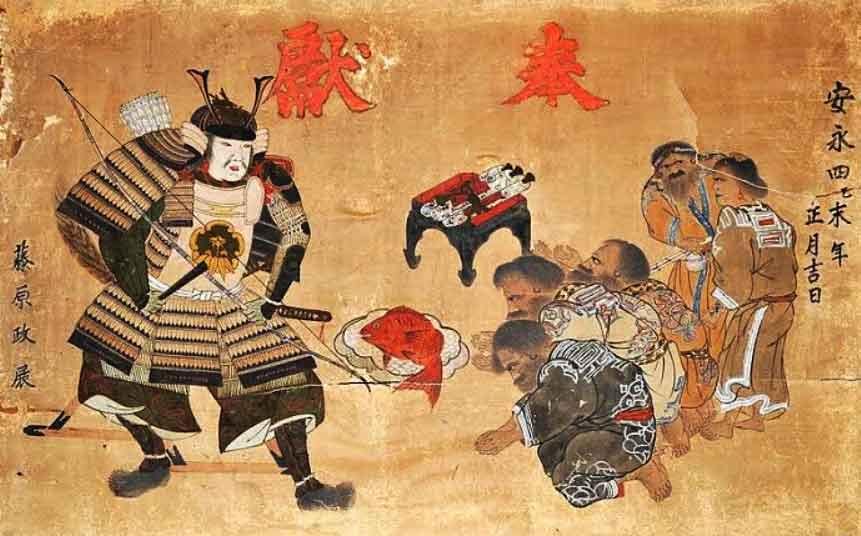
Along with the mountains and the Seto Inland Sea, one of the most important regions for Japanese mythology is the Yamato Plain (around modern-day Nara) and the surrounding mountains and valleys. This is a lush, verdant area stretching from the mountains on all sides to the generally tranquil inland sea. To the southeast lie the wild, forested mountains of Kumano and the Kii Peninsula. To the south, beyond the high mountain ranges, lies Japan’s largest lake. Named Lake Biwa because of its resemblance to a Japanese lute, the shores of this lake and the surrounding valleys have served as a source of stories and traditional lore for centuries. To the north and northeast, other mountain ranges are bisected by valleys. Both the forested mountains and the cultivated valleys provide a fitting backdrop for many of the country’s myths.
Hokkaido, the northernmost island, is somewhat different from the other three islands. The most striking difference is that this island was the last to be settled by the Japanese people. Until the nineteenth century, bears and deer roamed the island’s forests, and its rivers were teeming with salmon. Furthermore, because it was covered in subarctic forests teeming with pine trees and other conifers, it was a much colder island. It was home not only to massive brown bears—relatives of the American grizzly—but also to giant owls and sea eagles, and it was not particularly suitable for rice farming. Unsurprisingly, the Ainu inhabitants of the island made their living through hunting and gathering.
In contrast to the boreal island in the north, the southern islands scattered like pearls between Kyushu and Taiwan are tropical by nature. In the Ryukyu Islands—now Okinawa Prefecture—pineapples and sugarcane grow, just as they do on other tropical islands. In the past, however, the inhabitants of these islands primarily made their living through fishing and rice farming, and trying to subsist under such limited environmental conditions led to poverty and famine. Although the islands are beautiful, they can barely provide enough food for a large population. The Ryukyu culture, which speaks a distinct language (Qaponca, which resembles Provesal only as much as Provesal resembles French), developed in a form distinct from Japanese culture; however, unification with the Japanese state has blurred this distinction.
Cultural Distribution of the Japanese Population
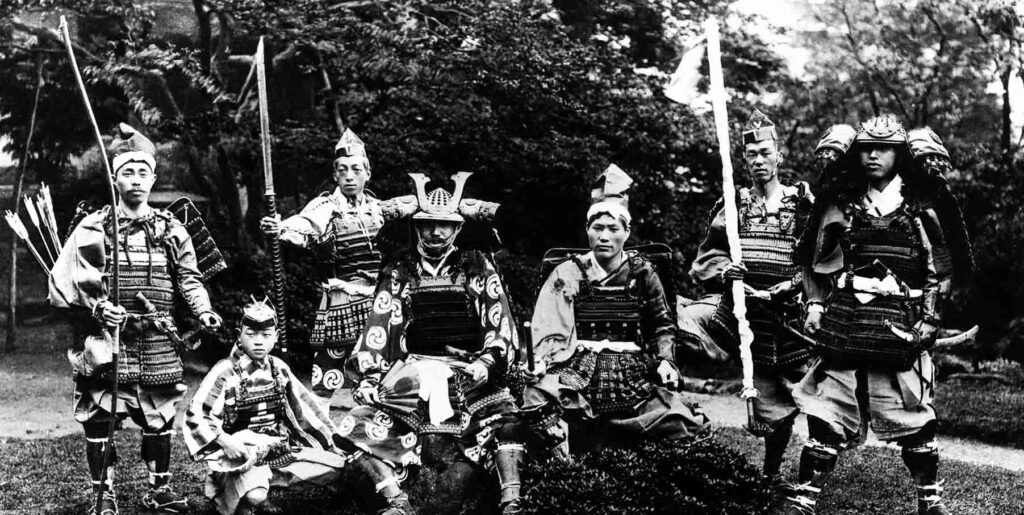
The Japanese population is likely a fusion of peoples who used all four land bridges (the Kurils, Sakhalin, Kyushu-Korea, and the Ryukyus) to reach these fertile shores. There is some evidence of linguistic, cultural, and genetic ties with the peoples to the east—Koreans, Manchus, and Chinese—those to the south—the first Polynesians who arrived in prehistoric times and whose lineage likely traces back to the Kumaso of Japanese mythology—and those to the north—the Emishi and Ezo indigenous peoples, who were the ancestors of both the Japanese and the Ainu. The perceived homogeneity of the Japanese was the result of the political expansion of a single central region—Yamato—which, for political reasons (much like the current Japanese government, which remains reluctant even today), was unwilling to acknowledge its internal diversity. “Strange” and “foreign” groups were assimilated into Yamata’s social structures and forced to conform politically, socially, and culturally to the Yamata region. Groups that did not conform—such as hunter-gatherer migrant groups, artisans, and the Ainu—were either marginalized or eliminated.
Rice cultivation holds great cultural and mythological significance. It also has a profound impact on the population of the Japanese islands (and, of course, elsewhere). In short, rice cultivation allows for greater population growth than most other grains. This meant that, despite occasional famines, the Japanese islands were capable of sustaining their large populations. Japanese society originated from small local groups that relied heavily on collective strength for survival. Land in river valleys is limited, rice requires careful irrigation management, and horizons are constrained both emotionally and economically. These local groups are often isolated within their own river valleys. Outcasts or outsiders are classified as either hinnin (outcast vagrants) or wandering deities (marebito). In both cases, powerful and dangerous wandering outcasts play a prominent role in the Japanese worldview.
The fact that agriculture could be practiced quite successfully in river valleys also had an important political consequence. Surplus production generated by primary producers—that is, farmers—could be transformed into cultural artifacts, which in turn led to the emergence of privileged, non-producing classes. As a result, many versions of social history could coexist simultaneously: one centered on the peasants working the land, another on the urban dwellers who emerged thanks to the farmers’ surplus production, and yet another on the ruling classes who enjoyed the surplus produced by farmers and townspeople alike. The resulting mythologies often served as part of the glue that held the entire system together, creating a single national identity. For example, the presence of a single god of prosperity—Inari—in much of Japan made a certain national unity possible. Many other myths also reflect the realities of the Japanese population: hunger, rebellion, urban life, and many other themes are reflected in these myths.