In the first article on the history of Judaism, we discussed the historical process and chronological events. In the second article, we touched on the Jewish understanding of God and religion. In this final section, we will examine Jewish religious rituals, denominations, and the values they uphold.
Different Interpretations of Judaism
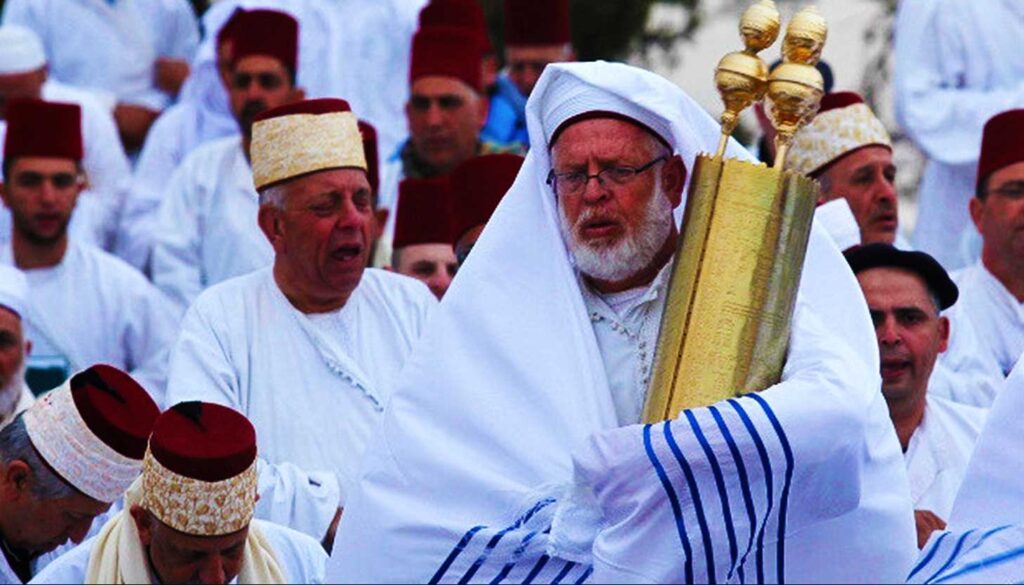
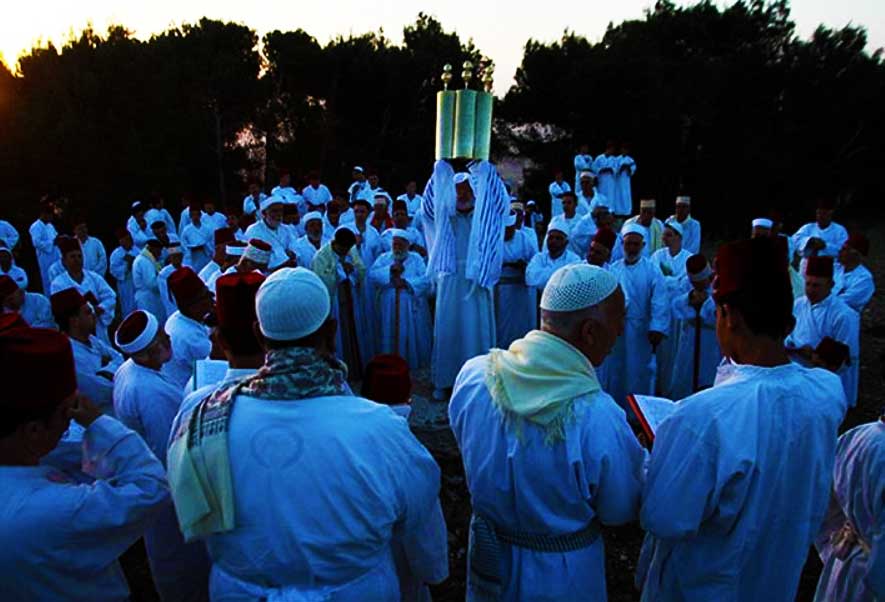
The Samaritans, who can be considered the first Jewish denomination, emerged after the northern Kingdom of Israel was destroyed by the Assyrians in 722 B.C. To secure their control over the region, the Assyrians brought a group of people from Assyria and settled them there. This group later adopted Jewish beliefs. However, since they were not of the Israelite race, the Jews did not consider them to be true Jews. They were called Kutim, in reference to the region they came from. Because they resided in the city of Shomron, they were generally referred to as “Shomronim” in Hebrew, meaning “people of Shomron.” Western sources refer to them as “Samaritans,” while Arabic sources call them “Samiriyyun.” Turkish sources also refer to them as “Samiriler.” The Samaritans, however, call themselves “Shamerim” (the protectors and guardians).
Today, the Samaritans live in the city of Nablus in Israel and in the town of Holon near Tel Aviv. Their religious center is Nablus. The Samaritans do not consider themselves Jewish, but they believe they are of the Israelite race. They view themselves as the true practitioners of the religion of Moses. In addition to “Palestinian Judaism”—formed by Aramaic-speaking Jews centered around the Temple cult—we noted the emergence of “Diaspora Judaism,” which developed under the influence of the Hellenistic tradition and was composed of Greek-speaking Jews settled in Egypt (Alexandria), the Mediterranean (Antioch), and the Aegean basin. The Hellenistic tradition also had an impact on Palestinian Judaism. Under the rule of the Greek Seleucid King Antiochus IV, and with the support of the Judean elite, the people of Judea were forced to abandon the practices of the religion of Yahweh and adopt those of the polytheistic Greek religion.
Led by a family of the Kohenic lineage known as the Maccabees, the devout Jewish community (Hasidim) launched an armed resistance against the Hellenization policy (167–164 BCE); Following the resistance—which ended in victory despite heavy losses—the region of Judea came under the rule of the Hasmonean dynasty, descended from the Maccabees and elevated to the position of High Priest; it later attained semi-independent (kingdom) status (143–63 BCE). During the nearly century-long period of Hasmonean Jewish rule, the Hellenization policy imposed on the Jews by the Seleucid administration was reversed, and non-Jewish groups in the region of Judea (the Idumites, descendants of Edom) were forcibly Judaized for political and economic reasons.
In parallel with all these developments, three communities known as the “Pharisees,” “Sadducees,” and “Essenes” emerged within Palestinian Judaism during this period. Although their existence is traced back to an earlier time, it is generally accepted that the emergence of these Jewish groups—whose existence is definitively attested as of the early 1st century CE—was influenced by a reaction against the erosion of Jewish identity and society caused by the process of Hellenization, as well as by the disappointment experienced under the rule of the Hasmonean dynasty, which itself eventually fell under the influence of Hellenistic culture and acted out of a desire for political and economic power. It is known that the Pharisees, who constituted the largest group numerically and continued to exist even after the destruction of the Temple, played a significant role in the formation of Rabbinic Judaism.
The Pharisees—so named either as “separatists” because they distinguished themselves from Jews who embraced Hellenistic practices (especially the Sadducees and the general populace, who exhibited religious laxity), or as “interpreters” because of their interpretation of the Torah— (Perushim)—were a group composed primarily of Torah scholars known as soferim, who emphasized Torah teachings in contrast to the Sadducees’ focus on the Temple. Claiming to reveal the secondary meaning underlying the literal meaning of the Torah by using the Torah text itself, the Pharisees—who initiated the tradition of interpretation and formed the majority in the Sanhedrin, the high Jewish religious court of the time— sought to unite the Jewish community around Torah teachings and to lead the community, and they enjoyed greater prestige among the people than the Sadducees.
The Sadducees, on the other hand—who took their name from their affiliation with the priestly family descended from Zadok, who served as high priest during the reigns of David and Solomon (Tzedukim)—were an aristocratic and conservative community composed primarily of priests. Viewing themselves as the religious authority in their capacity as administrators of the Temple and the sacrificial cult, and enjoying the support of the ruling class, this group is known for rejecting the interpretive tradition that goes beyond the literal meaning of the Torah, as well as the concept of resurrection—which is not explicitly mentioned in the Torah—and the belief in predestination. The Sadducees, who came under attack during the Great Jewish Revolt of the Roman period (66–70 CE), lost their sphere of influence with the destruction of the Temple. The Essenes (Essenoi/Ossenoi), a reclusive and apolitical group, formed a community much smaller than the other two groups.
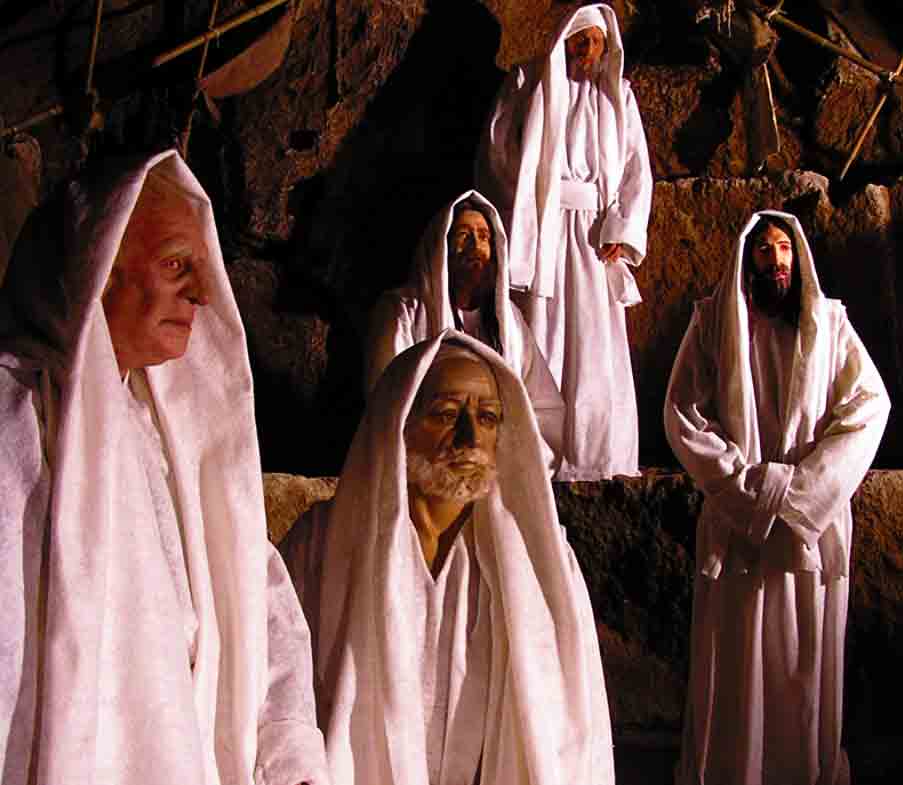
While a small group located near the Temple chose to spread their message as itinerant preachers, the majority—who are identified with the Qumran community—rejected the Second Temple and the legitimacy of the existing religious authority, and lived a communal life separate from society in the settlements they established around the Dead Sea (Lake Lut). It is known that this group held a developed belief in angels and the afterlife, as well as a fatalistic worldview, and that they practiced strict purification rituals. The Essenes, who also had connections to apocalyptic teachings regarding the end of the world, considered partial celibacy necessary based on their belief that the messianic era was near, and believed they were the “chosen remnant” deserving of Israel’s salvation. Some researchers have linked John the Baptist and Jesus Christ, as mentioned in the New Testament, to the Essene community.
Due to the restrictions they imposed on married life, the Esenites were unable to sustain their lineage for long and disappeared from the pages of history shortly after the destruction of the Temple. From the perspective of Judaism, one of the significant events of the Abbasid period was the emergence of Karaite Judaism—or its entry into the process of sectarian differentiation—as an alternative to Rabbinic Judaism, which was founded on the authority of the Talmud and the rabbis. Karaism, which accepts only the written Jewish sacred texts (Tanakh) as authoritative and rejects the oral tradition of interpretation established by Jewish religious scholars (the Talmud), Karaism represents—in the eyes of its adherents—not a movement that emerged later, but rather Judaism based from the very beginning on the correct interpretation of Moses’ teachings, in contrast to Talmudic Judaism, which is a product of later eras.
However, it is generally accepted that this movement, which has ancient roots, began—at least in terms of its process of becoming a distinct sect—with Anan ben David, who lived in Baghdad under Abbasid rule in the 8th century and broke away from other Jewish religious scholars as a result of a dispute over community leadership. It is generally accepted that Islam also played a role in the group—initially known as the “Ananites” (‘Ananiyyün/‘Ananiyyim’) after Anan—pioneering a sort of “return to the Torah” movement by rejecting the oral Torah and Rabbinic authority. Because the Karaites rejected Jewish religious practices derived from the Talmud that were not based on the Torah, they were not recognized as legitimate by Rabbinic Jewish scholars for a long time. The name “Karaites” derives from the Hebrew word mikra, meaning “sacred text” (Torah), and stems from designations such as “bene ha-mikra” (children/followers of the Torah), “ba’ale mikra” (“owners of the Torah”), or simply “Karaim” (those who read the Torah/those who call others to the true path).
Within Rabbinic Judaism, a distinction has emerged between Sephardic and Ashkenazi Jews. This distinction, which manifests itself not so much in fundamental religious differences as in social structure, cultural customs and practices, worship, the language used, and the pronunciation of Hebrew, continues to this day. The Ashkenazi tradition, rooted in the Palestinian tradition, refers to Jews who settled in Central Europe (Germany and France) via Rome and from there in Eastern Europe (Poland and Russia); The Sephardic tradition, considered a continuation of Babylonian Judaism, consists of Jews of Spanish-Portuguese and North African origin; today, the term is also used to include Jews of Middle Eastern and Asian origin (Mizrahim).
Saadya Gaon (d. 942), who lived in Baghdad under Abbasid rule and is known to have been greatly influenced by Mu’tazilite kalam, wrote his famous work, *Kitab al-Imanat wa’l-I’tiqadat*, using the kalam method to reconcile Aristotelian philosophy with Judaism and to explain Jewish religious principles based on the sacred text and in light of rational-philosophical arguments. Originally written in Arabic and later translated into Hebrew (Sefer ha-Emunot ve ha-De’ot), in this work Saadya also aimed to establish religious truth in opposition to the theses of groups he characterized as skeptical and unbelieving, particularly the Karaites. He also translated the Torah into Arabic, initiated the tradition of individual commentary on the Mishnah, and wrote a Hebrew grammar book.
Born two centuries after Saadya in Córdoba, the most important center of learning in Al-Andalus, but who fled the oppressive policies of the Almohad regime and settled in Fatimid-ruled Egypt, Musa b. Meymun (Rambam/Maimonides, d. 1204) is a Sephardic Jew who established himself in the eyes of later generations as the great Jewish philosopher of the Middle Ages through his commentary on the Mishnah (Kitab al-Siraj)—which bears the influence of the Islamic legal methodology tradition—as well as his famous Mishneh Torah, written in Hebrew on Jewish law, and his philosophical work Delalat al-Hairin, written in Arabic (Jewish Arabic) using Hebrew letters (More Nevuhim), he was a Sephardic Jew who established himself as a great Jewish philosopher of the Middle Ages in the eyes of subsequent generations.
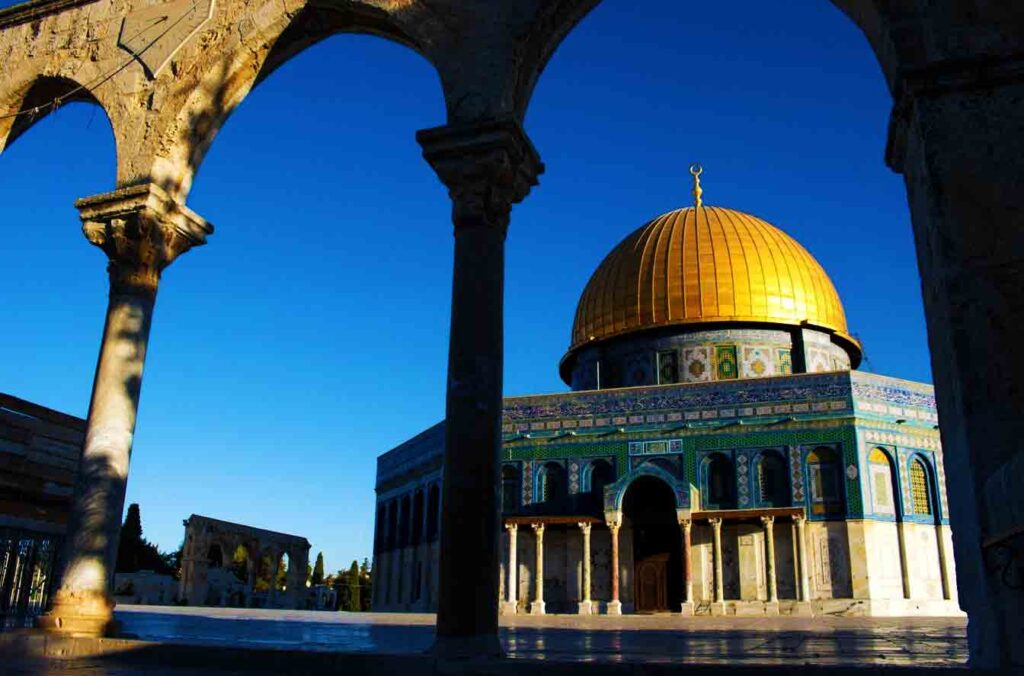
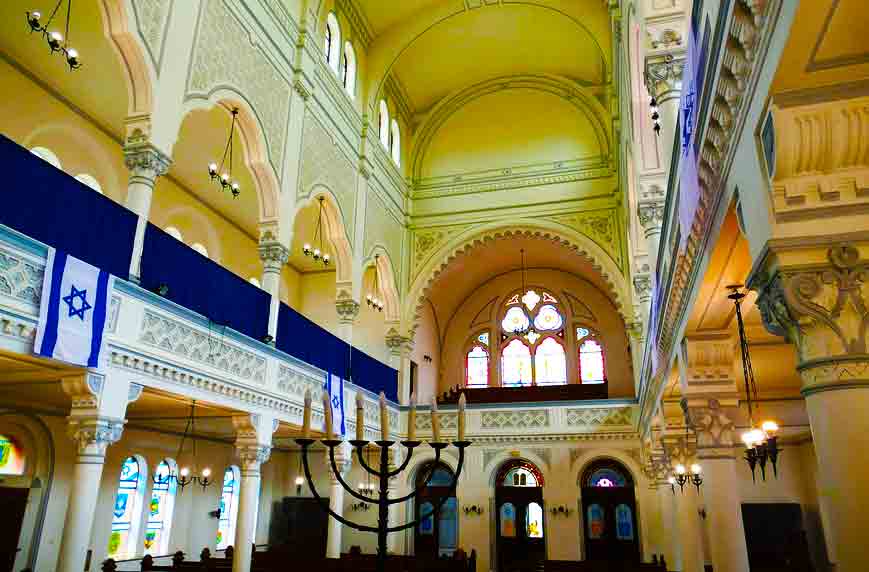
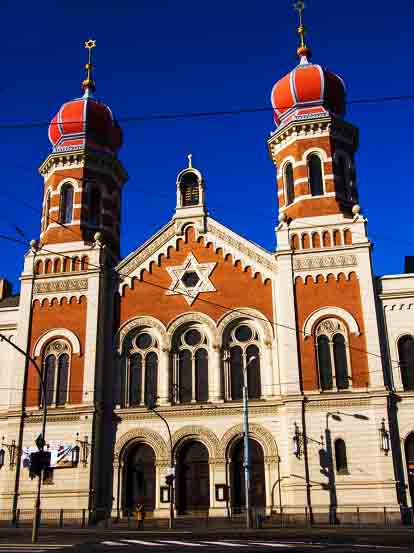
Jews also have places of worship where they perform their rituals. In Judaism, worship is centered around the temple. This temple is the Beit HaMikdash (Bet Amikdash) in Jerusalem, which was first built by King Solomon. Since this temple was completely destroyed in 70 C.E., some of the worship practices commanded in the Torah have been suspended. Today, daily worship takes place in synagogues—which are believed to represent the Temple—or in any other location. The word “synagogue” is of Greek origin. It is believed to have first been used by Hellenistic Jews as a translation of the Hebrew words “kaha,” “kehila,” or “knesset,” which mean “congregation,” “community,” or “assembly.”
In Hebrew, a synagogue is called “bet haknesset.” This word, which means something like “house of assembly” or “community house,” is the exact equivalent of the Muslim term “mosque.” In modern Arabic, the word “kenis” is used for Jewish places of worship, while “kenise” is used for Christian places of worship. The Karaites refer to their own places of worship as “kenasa.” The word “havra,” used in Turkey and other Balkan countries as the equivalent of “synagogue,” derives from the Hebrew “hevrah.” This word, which means “union,” “group,” or “community,” was first used in a specific religious context in the 14th century by Jews in the city of Zaragoza, Spain. Furthermore, Jewish religious leaders are referred to separately.
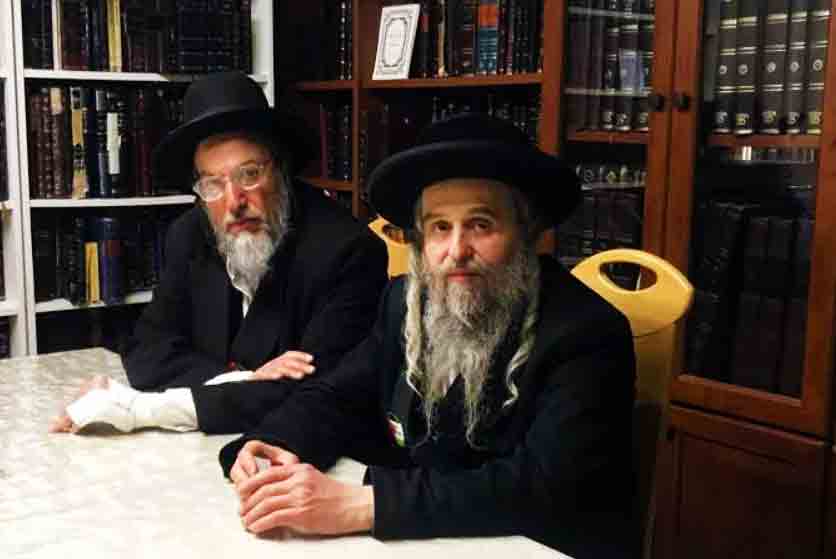
Kohen: The Kohens were religious officials descended from Aaron and held a privileged status. They performed complex rituals at the Temple in Jerusalem, such as offering sacrifices and conducting purification rites. There were a total of twenty-four groups of Kohens, each consisting of six Kohen families. They served in rotating shifts. The rights and responsibilities of the Kohanim are detailed in the Book of Leviticus in the Torah. Rabbi: A rabbi is a community religious leader who possesses sufficient knowledge of the Torah and halakha and is qualified and authorized to issue rulings. According to halakha, every community must have a rabbi. Rabbis are not hereditary. Anyone who has received religious education and possesses the necessary qualifications can become a rabbi. In some places, a rabbi is referred to simply as “rav.” Among the Hasidim, however, rabbis are called “rebbe.” Rebbes are hereditary and possess spiritual qualities; they may display miracles. Rabbis, on the other hand, do not possess such spiritual qualities.
Rabbi: A title used for rabbis, meaning a wise and learned person. In Muslim countries, this term is specifically preferred because the word “rabbi” evokes associations with Allah. The Jewish community in Turkey, however, uses the term “rav” instead of “rabbi.” Hazan: This term refers to those who serve as muezzins in synagogues. A hazan may also lead the service when necessary. Baal Keria: This term refers to those who read the Torah aloud in synagogues according to the rules of cantillation. Gabay: This is the person who assists in the conduct of the service in synagogues and is responsible for the synagogue’s maintenance and repairs.
Jewish Worship and Values
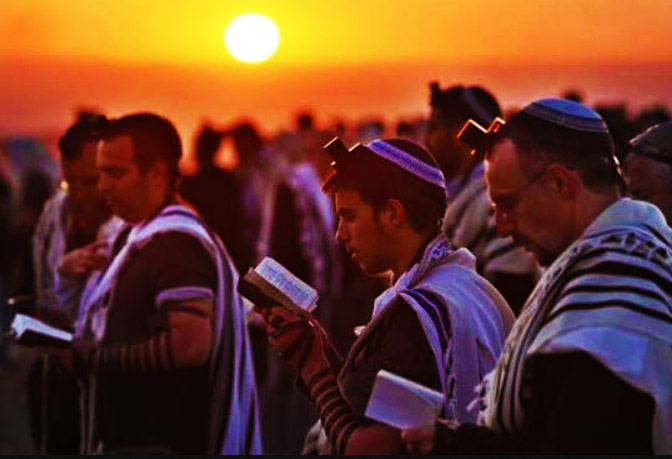
Judaism is, in essence, a religion of deeds and practice. The fundamental duty of Jews is to fulfill the 613 mitzvot in the Torah and to study these mitzvot. A large portion of the mitzvot pertains to sacrifices and offerings. God’s punishment or reward depends on the fulfillment of these mitzvot. However, the Torah and other sections of the Tanakh also contain prayers. Jews have turned to God in prayer, especially during times of trouble and misfortune. The Psalms are particularly rich in prayers of supplication, thanksgiving, and forgiveness. After the destruction of the Temple in 70 CE, prayer took the place of sacrifice and became the central element of worship. Today, Jews pray three times a day: in the morning, afternoon, and evening. Although the number of prayer times is limited, the duration of each prayer is longer than that of Islamic prayers. Some of the prayers recited during these services are taken from the Torah. The most important prayer for Jews is the Shema Yisrael.
The Shema Yisrael is also the Jewish declaration of monotheism. The Turkish translation of this prayer is as follows: “Hear, O Israel! The Lord our God is one God.” (Deuteronomy 6:4) Devout Jews recite this declaration of monotheism twice a day, in the morning and in the evening. They also instruct their children to recite it before going to bed. Let’s also discuss their understanding of prophethood. According to Judaism, prophets are chosen by God. Even if a person develops their intellectual and spiritual faculties to the point where they are capable of receiving revelation, they cannot attain prophethood of their own volition. Rather, God must choose that person as a prophet through His will and decree. According to Ibn Meymun, revelation comes to a prophet in the Tanakh in four ways. The first way: In this type of revelation, the prophet explicitly states that he received the revelation—as conveyed to him by God’s angel—in a dream or through a prophetic vision. Ibn Meymun cites the phrase “God’s angel appeared to me in a dream” (Genesis 31:11) as an example of this type.
Second type: In this type of revelation, the prophet recounts the revelation conveyed to him, but does not specify whether the event occurred through a dream or a prophetic vision. According to Ibn Meymun, the reason for this is that the prophet in question knew that revelation could only be received through a dream or a prophetic vision, and therefore saw no need to mention the angel. Ibn Meymun cites various passages as examples, such as “God said to Jacob, ‘Arise and go to Bethel’ {Genesis 35:1}” and “God spoke to Noah, saying {Genesis 8:15}.” Third form: The prophet narrates the revelation as if it had come directly from God to him, without mentioning the angel at all. However, in this type, the prophet specifies that this revelation, which he says came from God, was received through a dream or a prophetic vision. Ibn Meymun cites the following sentence as an example of this situation: “The word of God came to Abraham through a vision (Genesis 15:1).”
Fourth type: In this final type, the prophet, without mentioning any of the means of revelation—such as an angel, a dream, or a prophetic vision—reports that God spoke directly to him and told him what to do. Although no mention is made of an angel, a dream, or a prophetic vision, the person experiencing this is aware that he has received revelation through these means. Ibn Meymun cites examples such as “God said to Abraham (Genesis 12:1),” “God said to me (Isaiah 8:1),” “The word of God came to me (Ezekiel 24:1),” and “The word of God came clearly (Ezekiel 1:3).” Based on Ibn Meymun’s classification of revelation, the sections of the Tanakh have also been categorized. A—The Torah (Tevrat) section attributed to Moses in terms of his receiving revelation directly from God. B-The Nevi’im section, which compiles revelations of the prophetic (nubuwwah) kind received through an angel or a vision. C-The Ketuvim section, which compiles the writings of those who were inspired by the Holy Spirit (ruah ha-kodesh).
According to Jewish tradition, Moses’s prophethood differs from that of the other prophets of Israel in four ways: 1. Moses spoke with God directly. God communicated with the other prophets through an intermediary. 2. Revelations came to the other prophets in the form of dreams or visions. Moses, however, received revelation directly while fully conscious and awake, without being shown any symbolic scenes. 3-When revelation came to the prophets in the form of a vision or through an angel, their bodies were shaken; they trembled from the intensity of the revelation and were left exhausted. Moses, however, received revelation without feeling any distress or fatigue. 4-Revelation came to all prophets not according to their own will, but according to God’s will. The prophet did not know when a new revelation would come. Moses, however, was able to communicate with God whenever he wished.
Jews do not recognize Jesus and Muhammad as prophets. Jews who acknowledge that Jesus was Jewish view him as a false prophet and a false Messiah. When we look at the profiles of the prophets in the Nevi’im and Ketuvim sections of the Tanakh, their missionary activities take on a more central role. The prophets in these sections strive to guide the Children of Israel onto the right path and constantly warn them against worshipping other gods. The Jewish creed is as follows:
1) God created everything that exists, and He rules over all of it. 2) God is one, and there is no god but Him. 3) God has no physical form and cannot be depicted in any way. 4) God has no beginning and will have no end. 5) We must pray only to God. 6) All the words of the prophets are true. 7) Moses is a true prophet and the greatest of all prophets. 8) The Torah we possess is the same as that given by God to Moses and has not been altered. 9) Our religion is a divine religion and cannot be altered. 10) God knows all the actions and thoughts of human beings. 11) God rewards those who obey His commandments and punishes those who do not. 12) God will send the Messiah (Mashiach), and even though He is delayed, I still wait for Him. 13) My soul is immortal, and God will bring the dead back to life whenever He chooses.
In Judaism, whether through rituals or prophets, we see the struggle to reform a society, set it right, and guide it toward a life of integrity and purity. However, over the years, certain political factors—or divisions arising from jealousy and rivalries among them—led to conflicts, wars, and so on. All of these events necessitated the institutionalization, through the power of the ruling authorities, of people who had strayed from the truth and abandoned the original message, as well as the establishment of a new religious order. Just as the peoples and kingdoms of Mesopotamia and surrounding regions utilized “religion”—through the hands of religious leaders, priests, sorcerers, and soothsayers—to strengthen and perpetuate their own rule, supporting this with the mythical texts they composed, a similar situation arose in Semitic societies over time.