As the Neo-Babylonian Empire rose, the Chaldean people once again became one of the most powerful peoples in Mesopotamia. The legacy of Babylon and the Chaldeans profoundly influenced the Jews, the Arabs, and especially the peoples of Semitic origin.
After Ashurbanipal’s death, the Chaldeans maintained their power. A new king, also a Chaldean chieftain, emerged: Nabopolassar (Nabu-apla-usur). Upon his accession to the throne, the Chaldean (Chaldeans) dynasty—which we refer to as the Late Babylonian period—was established, and Babylon would gain great importance and renown during this era. The Chaldeans were communities living in tribal groups in the marshy regions of the Lower Tigris and Euphrates river basins. The chieftains of the Bit-Amukani, Bit-Yakin, and Bit-Dakuri tribes—whose names appear most frequently in written documents—occasionally proclaimed themselves kings in this region. Their way of life and the “bit” prefix at the beginning of their tribal names resemble those of the Arameans.
Etymologically, the land of the Kaldites was referred to in Hellenic (Ancient Greek) culture as the land of Kaldi (Ancient Greek: Kaldaya; Akkadian: māt Kaldu; Hebrew: Kaśdim; Arabic: Keldan). The name “Kaldî” derives from the Latin word “occultus” (mystery) and means “one who deals with the occult (and/or occultism)” (derived from the Latin verb “occulere,” meaning “to hide” or “to cover up”). In the Holy Bible, the name “Chaldean” is used to refer to an astronomer or a soothsayer. The turmoil and political upheavals preceding the fall of Assyria continued, and consequently, Nabopolassar’s early years were marked by this turmoil. He established a foothold for himself in Nippur. Various archival records indicate that, due to prolonged attacks—particularly in Nippur and Uruk—people were forced to sell their children to obtain food. When Babylon began to pose a threat, Egypt had formed an alliance with its former enemy, Assyria, at that time. In Iran, the Medes—heirs to the Elamites—had also grown in power and emerged onto the scene. Cyaxares marched on Nineveh; the walls of Nimrud and Assur were destroyed, and the city was sacked.
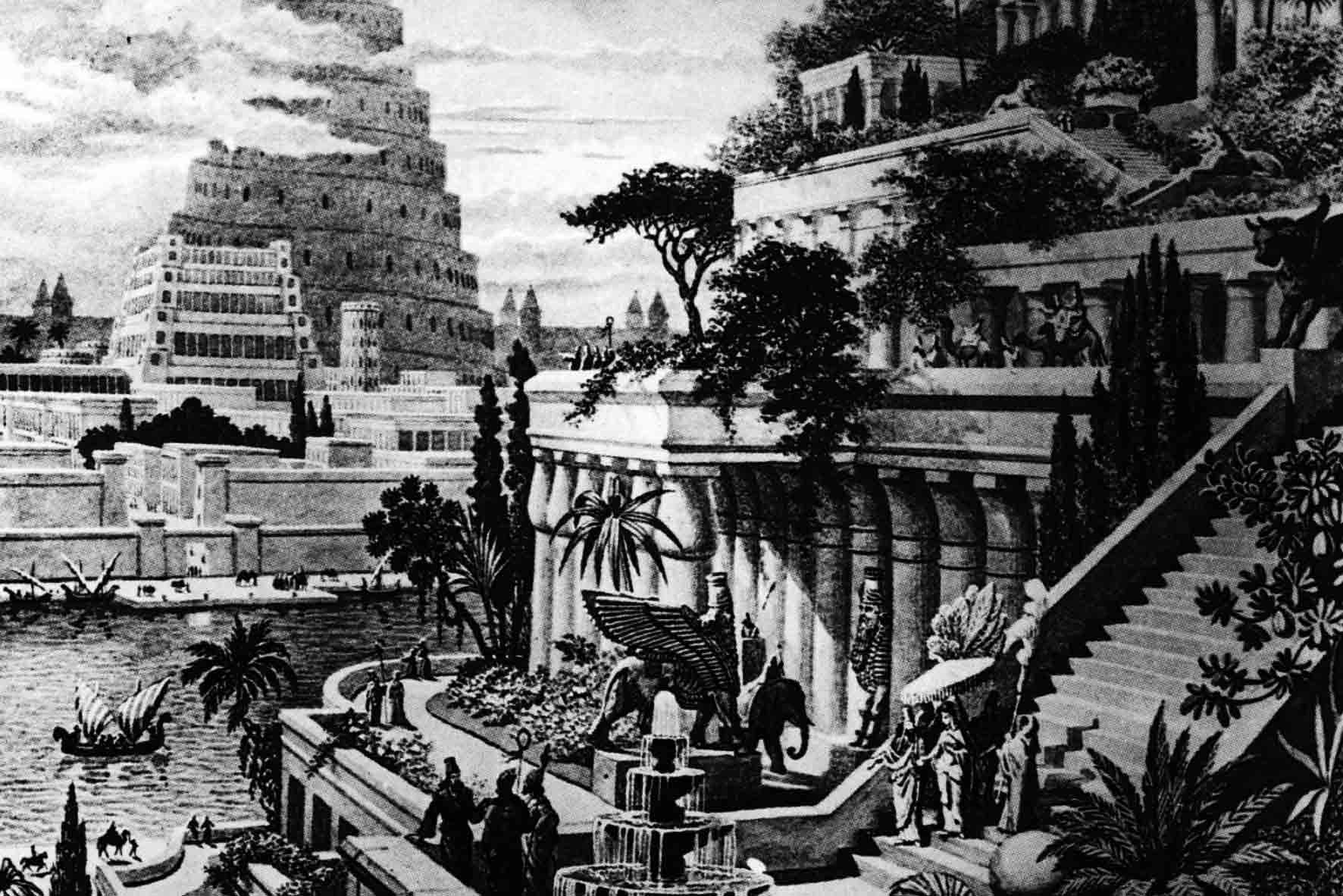
Nabopolassar met with Cyaxares near the ruined city and signed a formal treaty. According to some records, political ties were further strengthened by the marriage of Nabopolassar’s son, Nebuchadnezzar, to Amyitis, the granddaughter of the Median king. The famous Hanging Gardens of Babylon were built by King Nebuchadnezzar II of Babylon to ease Amyitis’s homesickness for her homeland. It is said that a woman named Semiramis was Nebuchadnezzar’s wife, but this claim is weak; there is no historical record of it. Nabopolassar launched various campaigns against Assyria, but in the meantime, the Assyrian king fled south to await his allies—Babel’s enemies, the Egyptians. Egyptian forces, having defeated the small army of Josiah—the last king of Judah before the Babylonian Exile—entered Syria and joined forces with the remnants of the Assyrian army. (This is detailed in the Book of Jeremiah.) The Egyptians were defeated and pursued by the Babylonian army. Of course, this victorious pursuit was cut short by Nabopolassar’s death. Nebuchadnezzar returned to Babylon, claimed the throne, and thus began Babylon’s most famous era. The Assyrian kingdom, meanwhile, had been completely wiped out without a trace.
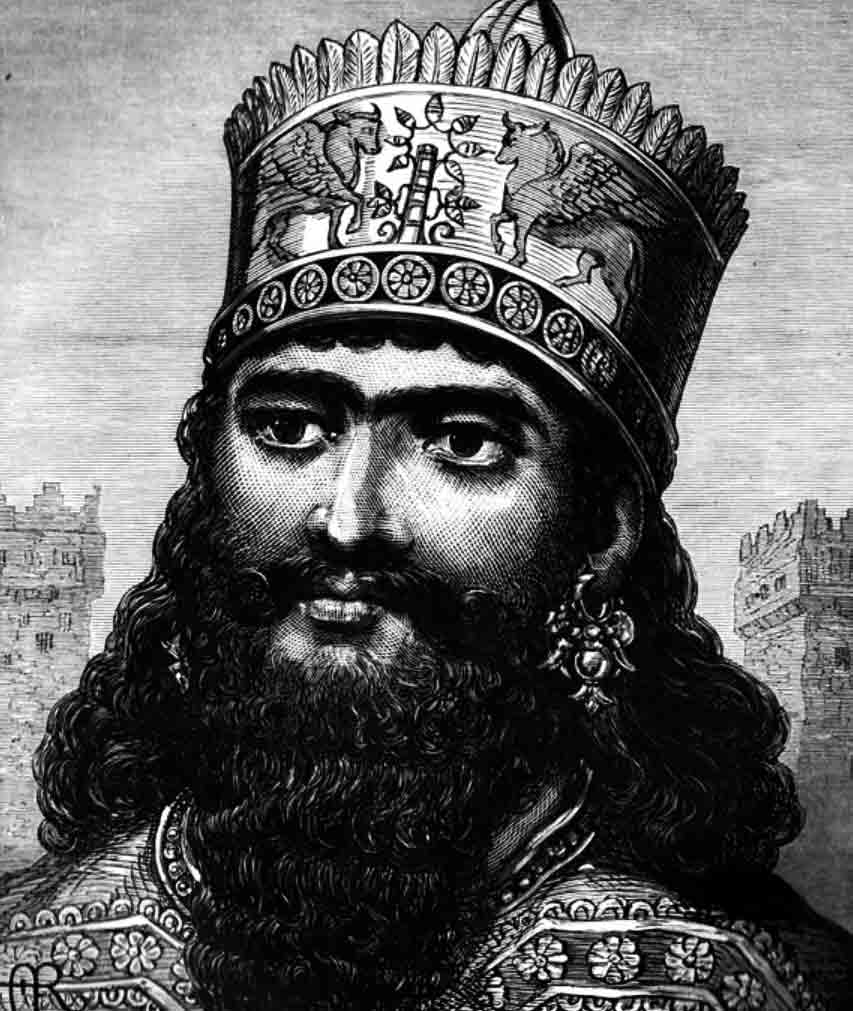
The Reign of Nebuchadnezzar (Nabu-kudurri-asur)
He was a highly talented man, a military general, a passionate individual, and a master builder with a vivid imagination. He oversaw the reconstruction or restoration of most of Babylon’s monuments (the Tower of Babel, the Hanging Gardens, the Ishtar Gate, etc.). Nebuchadnezzar transformed Babylon into a magnificent city that was the envy of the ancient world using the spoils he obtained from the lands he conquered. The famous Ishtar Gate, which opened onto the ceremonial avenue used during New Year’s celebrations, the Tower of Babel, and many other structures took their final form during this period.
Nebuchadnezzar II took particular pride in the Ishtar Gate and the Processional Way; an inscription he left behind describes these two structures and explains why he had them built. Regarding how he had the gates constructed, he states at one point: “… with bricks and blue stones, on which magnificent images of dragons and oxen were carved. I covered their roofs with cedar trees stretching from end to end. I hung cedar doors, adorned with bronze, in all the openings. I adorned it with magnificent scenes—placing wild oxen and fierce dragons in the passageways—that left people gazing in wonder.”
He is known in the Holy Scripture, the Torah, for his campaigns against Jerusalem, which would have a significant impact on institutional Judaism during the Babylonian Exile. We will examine this in detail in the section on Jewish history and institutional religion. In the Torah—particularly in the books of Daniel and Jeremiah—he is portrayed in a rather unfavorable light as “the enemy of God,” described either as a figure used by the God of Israel to serve as a warning or, conversely, as someone sent by God to punish the unbelievers of Yahweh. He organized numerous campaigns, particularly against Syria. However, these campaigns were primarily aimed at collecting tribute and serving as a display of military power. He continued the Assyrian policy of subjugating and punishing those who refused to submit. King Jehoiakim of Judah reluctantly submitted. Interestingly, some Jews, including the prophet Daniel, were taken to Babylon as hostages.
In 601 B.C., when serious losses occurred during the conflicts between Babylon and Egypt, Jehoiakim—upon hearing this—disregarded the warnings of the prophet Jeremiah, ceased paying tribute to Babylon, and aligned himself with Egypt, Babylon’s enemy. Jeremiah was proven right, and in 597 B.C., Nebuchadnezzar sent an army to besiege Jerusalem. It is likely that Jehoiakim had already died before the Babylonian army arrived during the siege. His son, Jehoiachin, along with his family, leading state and military officials, artisans, and soldiers, were taken captive to Babylon. According to Hebrew records, the number of captives taken during this period is said to have been 10,000. Jerusalem itself was left untouched, but heavy tributes were exacted from the Temple of Solomon and the royal treasury. One of Jehoiachin’s uncles (whose name was later changed to Zedekiah—also known as Sidqiah, as we will see in the Torah) was chosen to govern the remaining population, and these exiles were settled in Babylon.
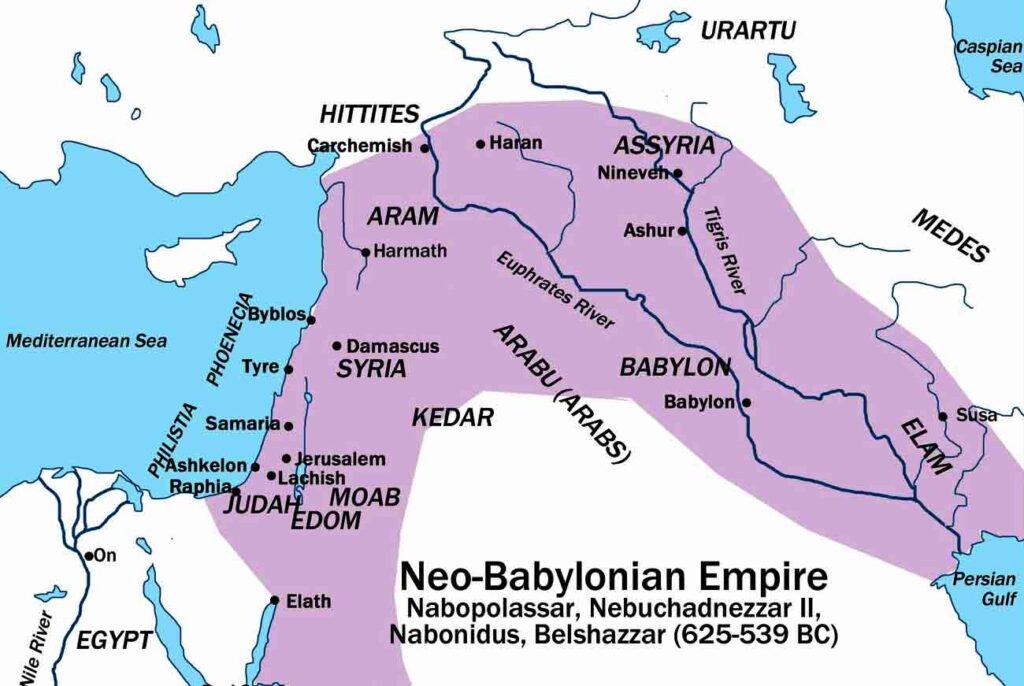
Jehoiachin and his family were held in the palace in Babylon, as we read in the records. The prophet Ezekiel and those with him were also settled in the Nippur region. Although Nebuchadnezzar was much loved, a rebellion broke out in the 10th year of his reign (595 B.C.). Revived Egyptian activities in Palestine led Zedekiah to switch sides. Nebuchadnezzar reacted harshly, sending an army, and Egypt, as a result, abandoned its vassals. Jerusalem was besieged again, and the siege lasted 18 months. While the city struggled with famine, the walls were breached (586 B.C.). Zedekiah fled but was captured near Tiriha.
He was brought to Nebuchadnezzar’s headquarters on the Orontes River in Syria. His sons were killed before his very eyes. His own eyes were gouged out, and he was taken to Babylon. It is even said that Jeremiah had warned him not to do this, but he did not listen. Instead, he had Jeremiah beaten and thrown into prison. Jeremiah had told Zedekiah, “The king will not kill you.” Zedekiah then told the king of Babylon, “The prophet Jeremiah told me, ‘You will not kill me.’” Nebuchadnezzar replied, “Yes, he spoke the truth; I will not kill you,” and had his eyes gouged out. He also had the prophet Jeremiah released from prison and did not harm him.
The Effects of the Babylonian Exile on the Jews
During the exile, the Jews developed a religious life without a temple. The Torah became the center of Jewish identity, and most of the Tanakh was compiled during this period. The Babylonian Talmud was shaped by Jewish scholars in exile. After the exile, some Jews chose to remain in Babylon, forming the first Jewish diaspora. The exile accelerated the Jews’ shift away from polytheistic beliefs toward a monotheistic faith centered on Yahweh. Jerusalem was sacked, its walls were demolished, and the temple and palace were burned. Leaders opposed to Babylon were executed, and the remaining population was exiled. This great Babylonian exile marked a significant turning point in Jewish history.
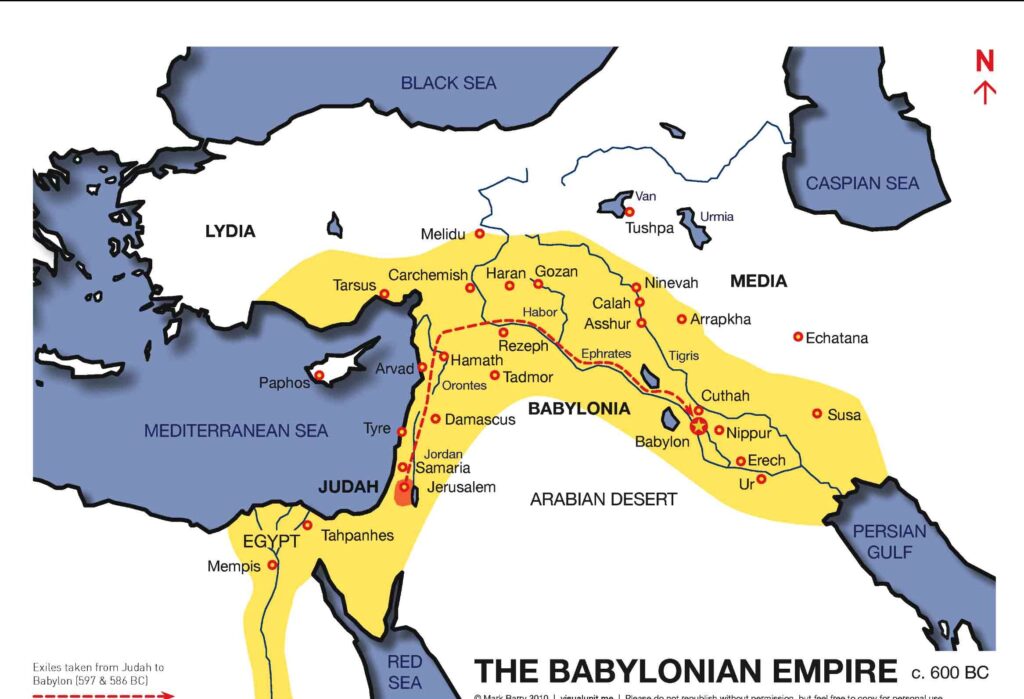
Nebuchadnezzar maintained good relations with the Medes. Cyaxares defeated the Urartians and turned westward toward the Lydian Kingdom in Anatolia. The Lydians had become a thriving trade center after the fall of Assyria. Toward the end of his reign, Nebuchadnezzar began to harbor suspicions toward the Medes. He ordered the construction of a wall north of Babylon. The famous Median Wall was built to halt the raids of barbarian tribes. Nebuchadnezzar died in 562 B.C. He was succeeded by the widely unpopular Amel-Marduk, who was known for his ruthless and lawless nature. The only positive thing said about him is that he treated the exiled Judean king, Jehoiachin, well—releasing him from prison and allowing him to dine at the royal table until his death.