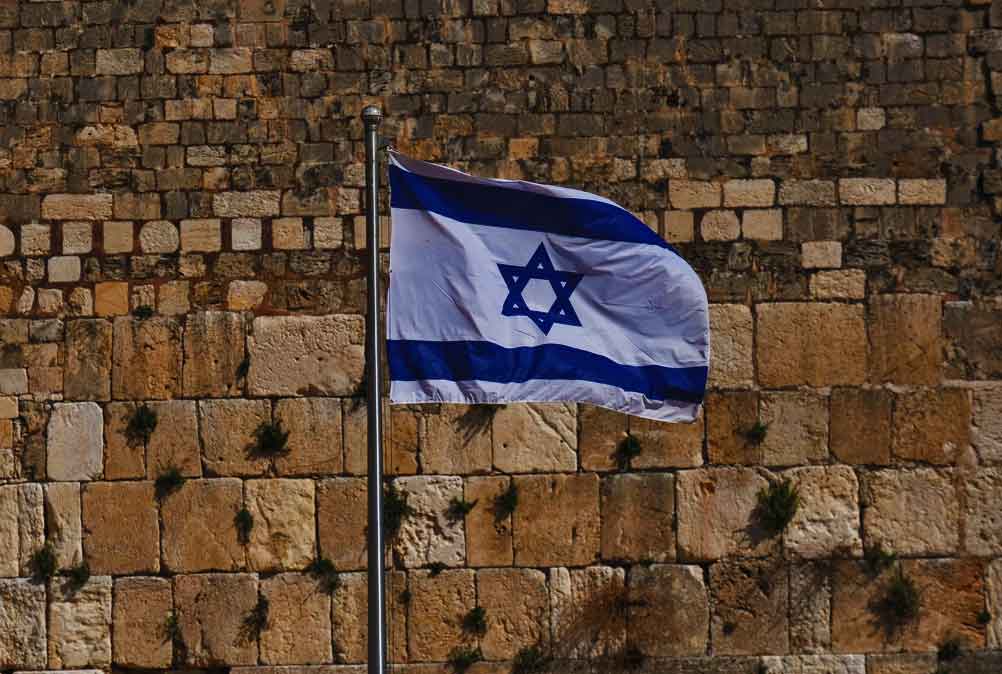
Religion is defined as the relationship between individuals and/or societies and the ‘Sacred’, and the system of beliefs and values they have developed in connection with this. This concept encompasses a wide range of beliefs concerning individual thought, behaviour and moral norms. In this article, we will discuss Judaism and the history of Israel.
Some Terms Relating to Judaism
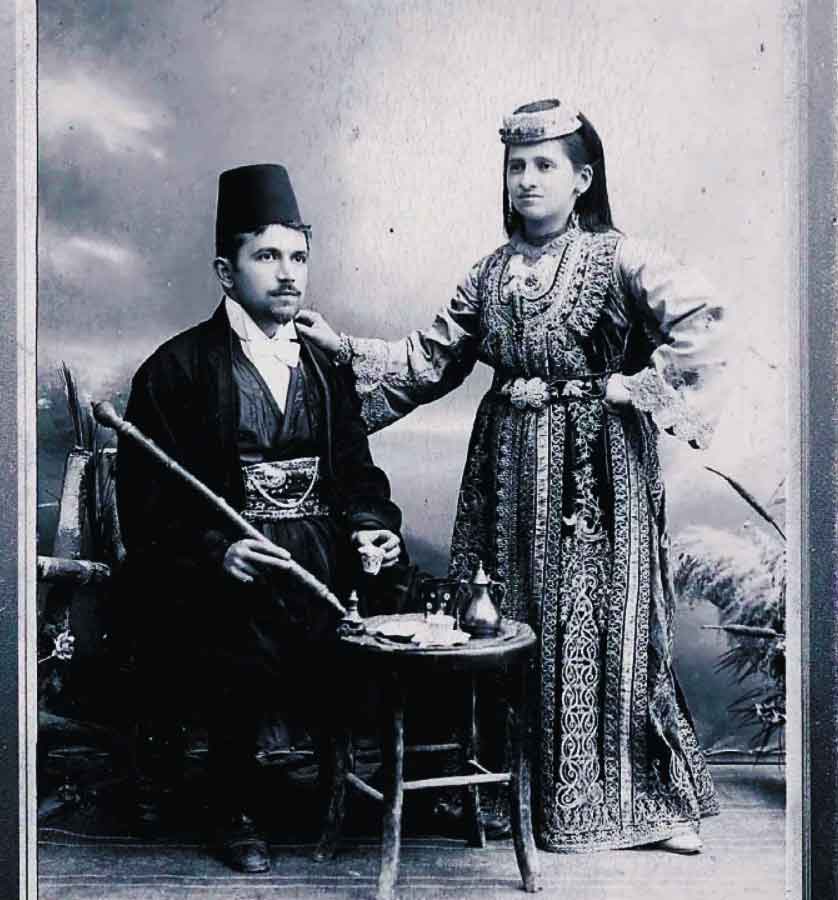
Judaism is a religion that emerged and developed in the 13th or 15th century BCE. The followers of this religion, who have faced numerous persecutions throughout history, live today primarily in Israel, as well as in the United States, Europe, and other parts of the world. Their total population is approximately 13.5 million, with 5 million in Israel and 6 million in the United States. Jews living outside of Israel and the United States reside in various regions. For example, there are approximately 20,000 Jews living in Turkey. Of these, 18,000 live in Istanbul and 1,500 in Izmir, while the rest live in Ankara, Bursa, Edirne, Çanakkale, Kırklareli, Adana, and Hatay. 96% of Turkish Jews are Sephardic, while the number of Ashkenazi Jews is approximately 500. There are also about 100 Karaites who, although they believe in the Torah, do not identify as Jewish. The legal representative of Turkish Jews is the Chief Rabbi.
As this definition makes clear, Judaism is not merely the religion of those who recite the Shema Yisrael (Judaism’s declaration of faith). The fundamental prerequisite for being Jewish is to be born to Jewish parents—or at least to a Jewish mother. A person who is not Jewish by ethnicity but later converts to Judaism is also considered Jewish. However, by converting to Judaism, such a person changes not only their religion but also their ethnicity. In this regard, the term “Judaism” (Yehadut) carries a very broad meaning, denoting membership in a specific race, culture, and religion. Let’s examine some terms commonly used when discussing Judaism but whose meanings are not widely understood, and take a closer look at their definitions.
In traditional Judaism, the word “Ibrani” is a term used to refer to Abraham and means “descendant of Eber.” In Hebrew, it is the name given to the language spoken by Abraham. To elaborate a bit further: In Judaism—or more precisely, in the Torah—all people descend from a single ancestor. This lineage underwent a division during the time of Noah. Noah had three sons named Shem, Ham, and Japheth, and these three later became the ancestors of different nations. Ham is the ancestor of the Hamites, Shem of the Semites, and Japheth of the Japhethites. However, the lineage descended from Shem holds a more distinguished position compared to the others. One of the names descended from Shem is Eber. Eber is, in fact, the great-grandfather of Abraham. This is why the term “Hebrew” is used to refer to Abraham.
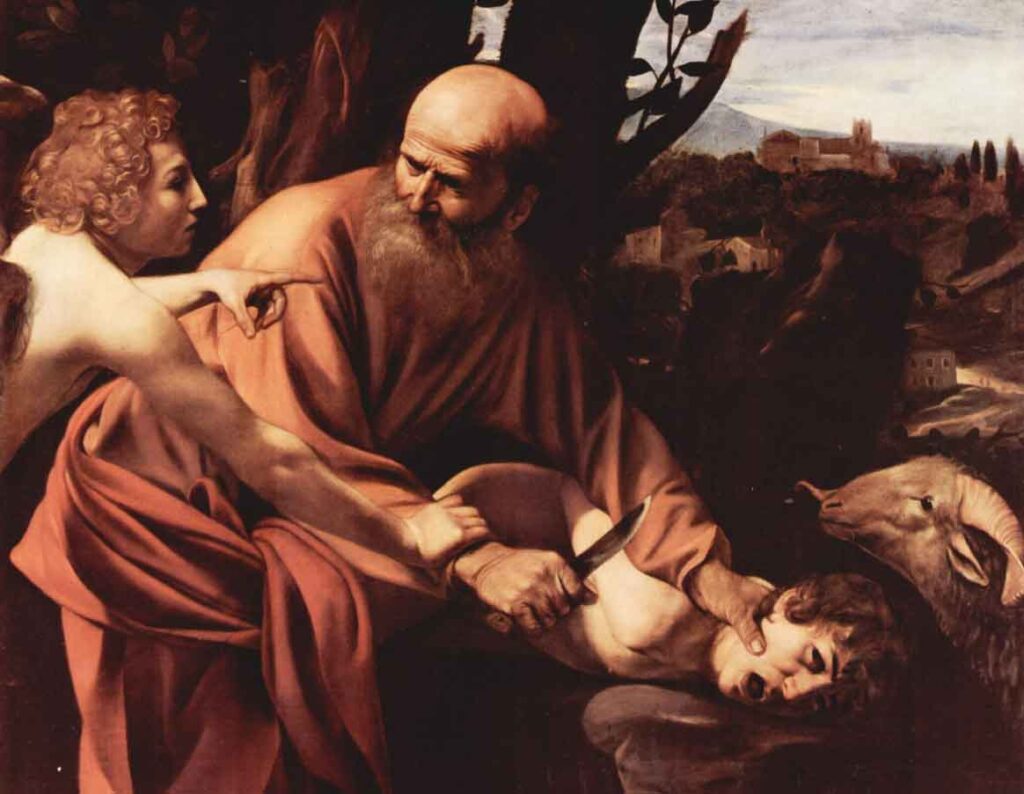
“Israel” is a nickname given to Jacob—who is regarded by Jews as the last of their first Jewish ancestors—following an incident in his life. According to the Torah, a human-like being appeared before Jacob and wrestled with him until dawn, but was unable to defeat him. At dawn, the man blessed Jacob and gave him the name “ Israel ” (Yisrael), meaning “one who wrestles with God,” and referred to his descendants as the Children of Israel (Bnei Yisrael). After this event, the Hebrews began to be known as Israel and the Children of Israel . This remained the case from the time of Jacob until the Babylonian Exile.
After the Babylonian exile, this community took the name “Jew,” meaning “people of Judah,” in reference to the region of Judah in Palestine. The name of the region of Judah in Palestine also derives from Judah, the eldest son of Jacob. Judah is also the name of one of the twelve tribes. While the name “Jew” came to the fore after the Babylonian Exile, the name “ Israel ” continued to be used as well. Over time, these two names acquired connotations related to character; “ Israel ” came to denote a positive character, while “Jew” denoted a negative one. The term “Musevi” began to be used during the final years of the Ottoman Empire. While earlier documents used the terms “Yahudi,” “Yahud,” and “Yahudiyan,” for unknown reasons, the term “Musevi” began appearing in some documents starting in the early 19th century. Today, Turkish Jews refer to themselves as “Musevi.” There is no document explaining the reason for this change. Jews may have preferred this term because the term “Yahudi” had acquired a negative connotation.
Muslims in Turkey distinguish between the terms “Yahudi” and “Musevi.” When the term “Musevi” is used, it brings to mind harmless people who follow the law of Prophet Moses. The term “Musevi” conveys a more positive and gentle image. Although Muslims also use the term “İsevi” for Christians, this term does not indicate a distinction between “Nasara” and “Christian.” There is also the term “Çıfıt” or “Çufut,” which is derived from the Arabic word “Yehud” (Jews). “Yehud” was adopted into Persian as “cuhud.” From Persian, it was transmitted to Turkish dialects as “Çıfıt” or “Çufut.” During the Ottoman period, there were places named “Çıfıt Market,” “Çıfıt Castle,” and “Çıfıt Gate.” Today, this word is still used among Turkish communities bordering the Black Sea, particularly in Crimea. The holiest site for the Crimean Karaites is Çufutkale, which means “Jewish Fortress” in Crimea. Today, “Çıfıt” is generally used among the general public in negative contexts, such as to describe a swindler, a cheat, or a troublemaker.
“Jew” is the classical term for the Semitic peoples who lived in the region formed by the descendants of the Prophet Abraham—who lived around 2000 BCE—in Mesopotamia, the Red Sea, the Eastern Mediterranean, Egypt, and southeastern Anatolia. Judaism can best be examined in three periods. The period spanning the 2000s to the 1200s BCE is referred to as the First Period; the period following the death of the Prophet Moses (1200s BCE) the Babylonian Exile in 587 BCE, and the Third Period, which encompasses the influences from the exile through the time of the Prophet Muhammad. Hebrew names such as “Abram, Jacob, Leah, and Ishmael” have been recorded in artifacts uncovered through archaeological excavations, such as the Mari, Nuzi, and Ebla tablets; and the earliest non-Biblical references to the Israelites were found during the reign of the Egyptian Pharaoh Merneptah, who lived in the 1200s BCE.
Avram (Abraham), who is believed to have lived between the 2000s and 1900s BCE, lived and grew up in Ur—a city known as the city of the moon goddess (Sin)—which was part of the Akkadian Empire that ruled the Mesopotamian region. Raised within Babylonian culture and religion, Avram addressed the planet-worshippers of his society through the lens of their own worldview, using examples of the Sun, Moon, and Stars in his discourses. As a result, he was expelled from Ur. While migrating from there to the vicinity of Harran, where the Hurrians lived in large numbers, he was chosen for his prophetic mission. On this occasion, he took the name Abraham (Ibrahim: “Exalted Father”) in place of his original name, Avram. After a long journey, he settled in Phoenicia in the land of Canaan. In his old age, at the request of his wife Sarah, his son Ishmael (Shamel: “God has heard”) was born to his servant Hagar. Later, his son Isaac (Yitzhak: “May God make me laugh”) was born to Sarah.
Again, at Sarah’s request, her maidservant Hagar and her eldest son Ishmael were sent away from their father’s home and settled in the Hijaz region, located in the Faran Desert. Some time later, Prophet Abraham went to his son Ishmael and preached the One True Religion for a certain period. This is evident from the fact that certain words from the Babylonian language—such as “el-beyt”—which were known in the Mesopotamian region and were clearly taught there through Prophet Abraham, were integrated into the local language “exactly within the same semantic framework,” as mentioned in the Quran. While the lineage that would later be known as the descendants of Ishmael continued to live in this region, Prophet Abraham passed away in the land of Canaan, to which he had returned.
Isaac’s younger son, Jacob—whose other name was Israel —would serve as the reference for the Jews adopting the name “Children of Israel .” Although various interpretations have been proposed regarding the meaning of the name “ Israel ”—such as “one who fights for God,” “one who fights against the gods,” “one guided by God,” “God’s righteous servant,” or “one who wrestles with God”—it is most appropriate to interpret it as “one who walks with God,” in line with the etymological context of the word “isra.” Joseph, one of the sons of Israel (Jacob), was sold into slavery in Egypt following a series of family conflicts and, over time, rose to become a high-ranking bureaucrat. Jacob and his 11 sons, who had migrated to Egypt due to a famine, were welcomed there by Joseph. Thus began their Egyptian sojourn, during which they would reside for approximately 500 years.
Prophet Moses and the Exodus from Egypt
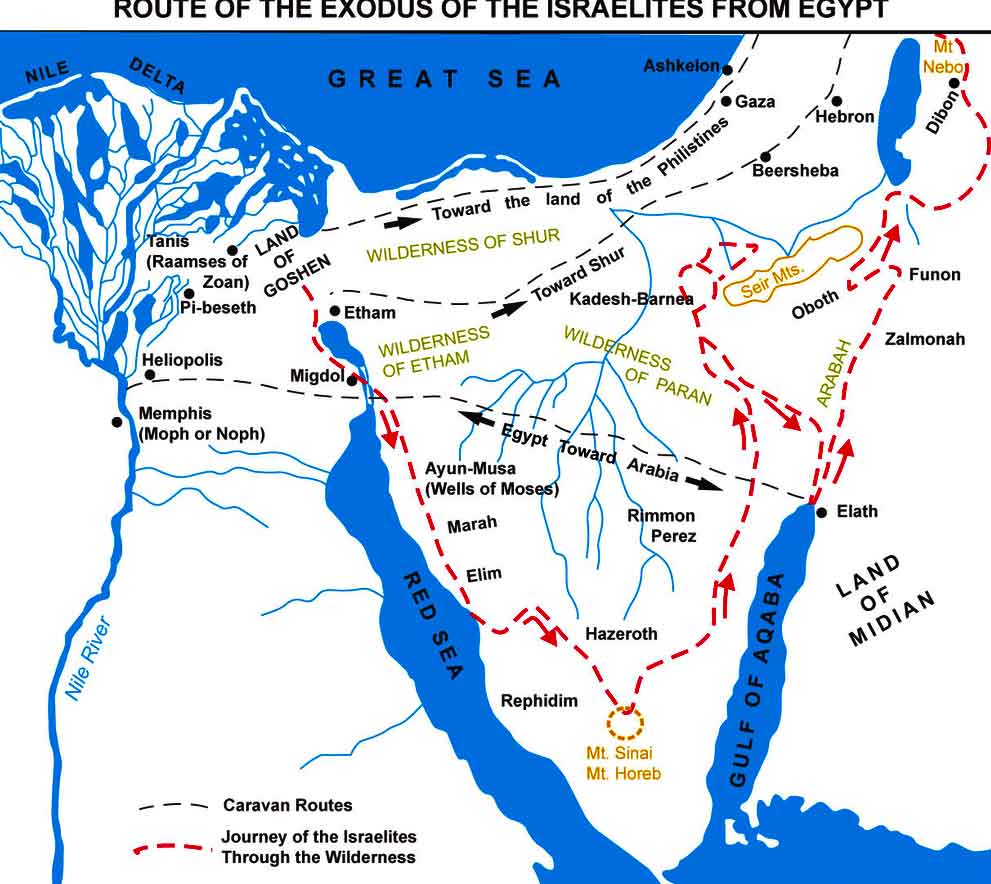
Toward the end of this period, during which they lived under the influence of Egyptian culture, following social upheavals such as the defeats, famines, and power struggles experienced by the Egyptian pharaohs, the burden of this downward spiral began to fall on the Israelite minorities—even though their population was estimated to be at least 600–700, 000 (estimated population), the burden of this downward spiral began to fall on the Israelite minority. A period of oppression and persecution by those in power began, and it is believed that the Israelites were enslaved. With the emergence of the Prophet Moses in the 1250s BCE and his roughly 10–15 years of preaching against the Egyptian government and people, the Exodus from Egypt took place. They wandered for about 40 years in the Tih Desert, located in the region east of Egypt between the Gulf of Suez and the Gulf of Aqaba. The incident involving the golden calf (Apis bull) that occurred during Prophet Moses’s ascent of Mount Sinai serves as evidence of the influence under which the Children of Israel —who had remained in Egypt for a long period—had come to be. The Levites, who did not participate in this incident, were appointed by Prophet Moses to the role of leadership (Rabbanite authority) over the Children of Israel .
Following the death of the Prophet Moses in the desert, the period we refer to as the “First Period” comes to an end, and the Children of Israel , setting out to return to the land of their forefather Jacob, will find that others are now living there. Led by Joshua, the Children of Israel emerged from the desert through battle and settled in the region in a scattered manner. They faced groups such as the Midianites, Edomites, Amalekites, and Moabites. They also became embroiled in a protracted war with the Palestinian people, whom Ramses III had expelled and who had settled along the coastal strip. We can also observe that the conflicts between the Israeli and Palestinian peoples today have a backdrop spanning nearly 3,000 years. Around 1050 BCE, after the Palestinian people—who had defeated the Canaanites—began encroaching on the lands of the Israelites, who were living in scattered groups and even engaging in conflicts among themselves at times, the Israelites were forced to unite. In fact, according to the Tanakh, it is stated that thousands of Israelites were killed in the regional wars and that the Ark of the Covenant fell into the hands of the Philistines.
Some time later, Judge Samuel recognized Saul as king, and after King Saul’s death, David became king. Through intense efforts, he defeated the Philistines, strengthened the centralized kingdom, and, with the help of his non-Israelite mercenaries, captured Jerusalem, achieving a great victory. David, who remained on the throne until his death in 966 BCE, was succeeded by his son Solomon, who reigned until his death in 925–926 BCE. Faced with the Philistine threat, the Israelites had come to understand the necessity of a centralized kingdom. King David’s key achievements included bringing the Period of the Judges to an end and ushering in the Period of the Kings, uniting the 12 tribes of Israel , and establishing Jerusalem as the capital. Furthermore, his good relations with Hiram, king of the neighboring city of Tyre—which contributed to the formation of the Babylonian cultural synthesis—had a positive impact on his society.
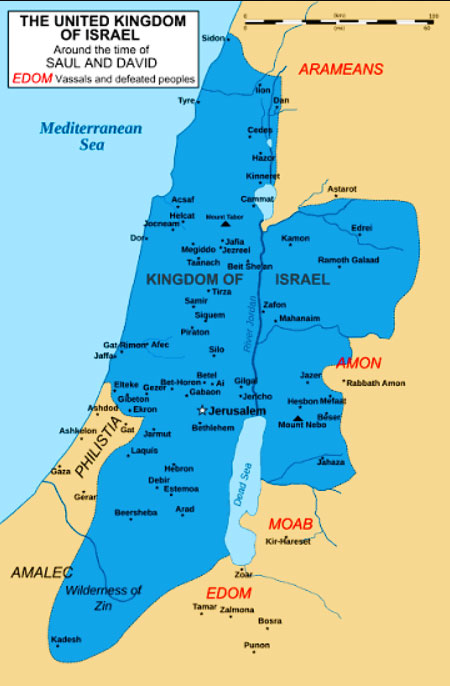
Having wandered in the deserts of Tih for a long time, the Children of Israel naturally had little experience with civilization and infrastructure. Thanks to the friendship established with Hiram, King of the Phoenicians, they benefited from the advanced civilizations—whose roots extended as far back as Babylon—in fields such as shipbuilding, masonry, architecture, and astrology. Following the death of King David—a man of knowledge, wisdom, and prophecy—his son Solomon continued these good relations. Taking advantage of the political instability among the long-established kingdoms of the Middle East and the surrounding regions, he eventually established his political authority over the region, even though he did not achieve immediate success. In addition to maintaining good relations with Hiram, King of Tyre, he also exercised political control over neighboring peoples such as the Hittites, those of Babylonian origin, the Phoenicians, and the people of Sheba.
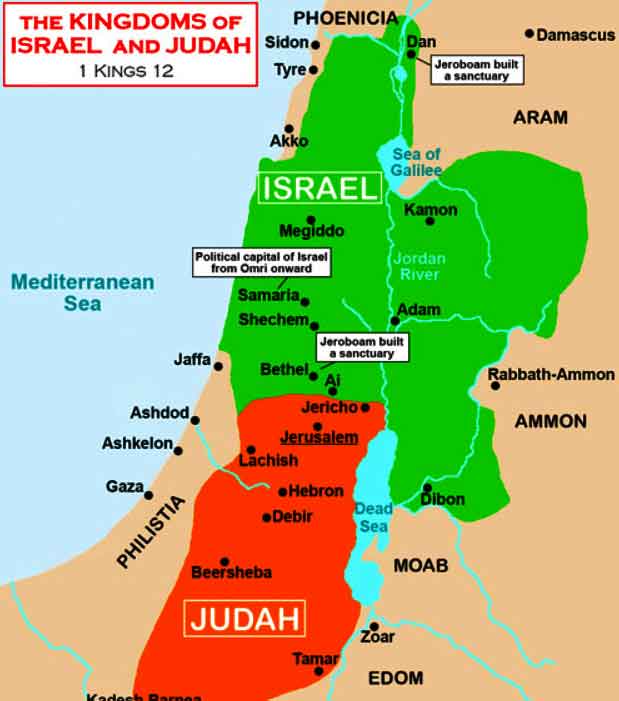
In addition to building the magnificent Temple of Solomon and founding new cities, he established a powerful kingdom. “He was able to establish this authority through magic and sorcery, and we will restore David’s kingdom using the codes he hid beneath the temple”—as well as the origins of movements such as “Freemasonry, the Knights Templar, the Illuminati, Kabbalah, and alchemy”—all emerged as a result of developments stemming from the friendship he forged with King Hiram, who carried on the influence of Babylon. Following the death of King Solomon—possessor of knowledge, wisdom, prophecy, and dominion—the Israelites split into two separate kingdoms. Two tribes, under the leadership of Rehoboam, King Solomon’s son, formed the Kingdom of Judah in the south, while the other ten tribes, refusing to recognize Rehoboam’s authority, established the Kingdom of Israel in the north. It is believed that the term “Jew” derives from both Judah—one of the sons of Jacob (Israel)—and the fact that his descendants came to dominate, leading to the name being used to refer to the state.
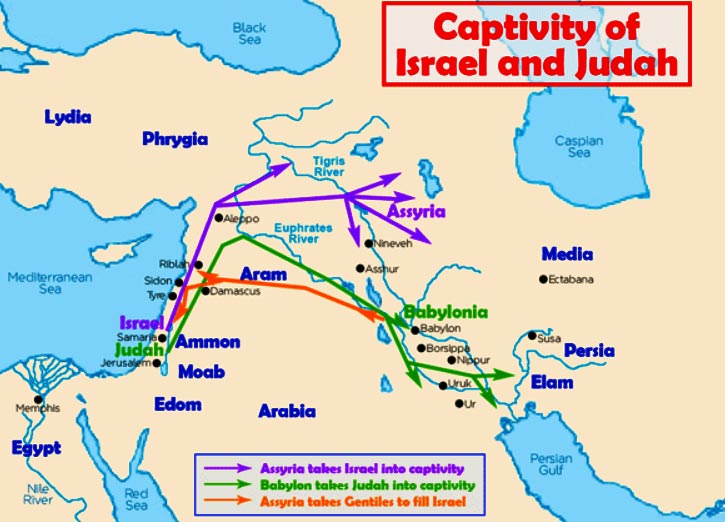
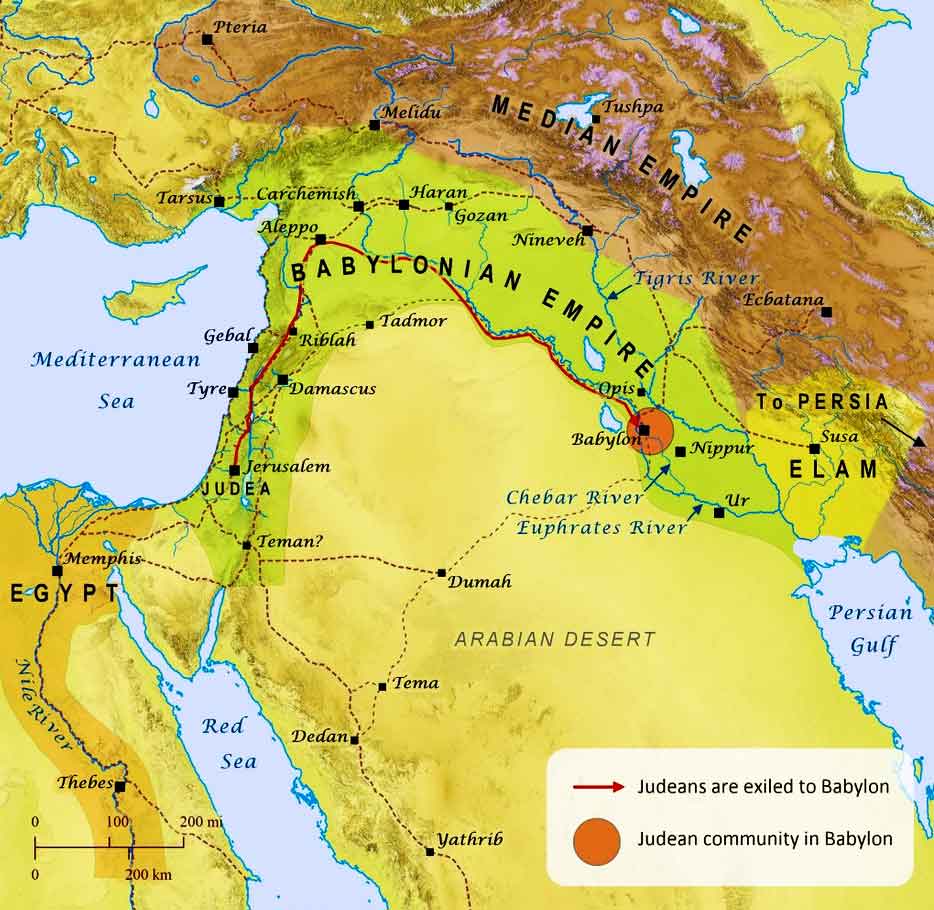
The Northern Kingdom of Israel , by turning a deaf ear to figures like the prophet Elijah, effectively paved the way for its tragic downfall. In 722 B.C., the Northern Kingdom of Israel was destroyed when Sargon II, Emperor of Assyria, entered the capital, Samaria, and razed it to the ground. Sargon II exiled the ten tribes found there. Sargon’s inscriptions state that he scattered “the sons of Israel from Anatolia as far as the lands of the Medes.” These groups, referred to as “the lost children of Israel ,” had now been driven far from their homeland. The Southern Kingdom of Judah, however, did not take the words and warnings of the prophet Jeremiah seriously and met its end in 587 BCE when Nebuchadnezzar, King of New Babylon, entered Jerusalem and burned and destroyed the fortresses, the city, and, of course, the Temple—the apple of the Israelites’ eye. Along with the burning and destruction of the city of Jerusalem, the tablets of Moses (the Law) kept in the Ark of the Covenant were lost, and the upper and middle classes of the Israelites were taken into exile in Babylon.
Israeli Society After the Babylonian Exile
The reason we address the Babylonian Exile as the Second Period stems from the immense trauma it inflicted on the Israelites. During the approximately 50 years of exile—which lasted until the Persian King Krush conquered Babylon—an entire generation was born and raised in Babylon. The reason this marks the beginning of a new period is the major changes that took place among the Israelites following the exile. According to the mindset of the people of that time—which held great significance in their way of thinking—the prevailing narrative was that “Marduk has defeated Yahweh” or “The Temple and Solomon’s mighty kingdom have been destroyed,” some of the Israelites began to worship Marduk; the common people remained in Jerusalem under this heavy psychological burden; the educated, middle, and upper classes were sent into exile in Babylon; and some migrated to the vicinity of Egypt,” and so on—as a result of such events, perceptions changed almost entirely.
Until Cyrus conquered Babylon in 539 B.C., the Israelites living there “learned Aramaic and lived under the influence of Babylonian culture—including prophecy, magic, sorcery, and astrology— and even adopted the Babylonian calendar, which remains their second calendar to this day, among other things.” While all these developments were taking place, a group of Israelites who refused to compromise on the Babylonian religion sought to uphold their own teachings, attributing the blame for all these hardships to themselves and heeding the messages of prophets such as Ezekiel, Daniel, Haggai, and Zechariah. With Krush’s permission, the Israelites began returning to their homeland, Jerusalem, and after this 50-year period of interaction, they started returning to their former capital. When they encountered the Israelites who had remained in Jerusalem, the “language barriers, confusion over perceptions and concepts, and socio-economic” disagreements they faced created a breeding ground for conflict.
In response, Artaxerxes, the Persian king of the time, sent Ezra—who had risen to high office in Babylon in the 450s BCE and had been born and raised there—to Jerusalem as the chief priest (Kohen), along with Nehemiah, whom he had appointed as governor, accompanied by an official delegation. Ezra rewrote the Torah scrolls; in the modest temple that had been rebuilt around 520 BCE—approximately 70 years before his arrival—he established the rule of reading from the Torah on Mondays and Thursdays, had the Torah scrolls written in five books using the grid-based Assyrian alphabet, and changed the first month of their calendar (Nisanu) to mark the Exodus (the departure from Egypt). He established the “Knesset Ha Gadol,” the Great Assembly, which even today lends its name to the Israeli parliament.
Over the course of roughly two centuries, lasting until Alexander the Great’s conquest of Jerusalem in 333 BCE, the Israelites transformed Judaism into “the religion of an institutionalized nation-race.” Of course, this was reinforced by Ezra’s agreements requiring Jewish men to end their marriages to non-Jewish women and by practices such as the prohibition of exogamous (mixed) marriages. During that period, the nationalist (Honi) faction prevailed over the universalist (Tobiah) faction in the Jewish community. Subsequently, as we have observed in various regions of the world, once they reached a stage where they could form a state, driven by the ambition to “rule,” they faced the inevitable outcome of division and sectarianism.
The Influence of Greek and Roman Culture and Its Aftermath
In 333 BCE, after defeating the Persians and expanding his realm as far as Egypt, Mesopotamia, Persian and Afghan territories, and the lands of India and Palestine, Alexander the Great also conquered Jerusalem, thereby establishing its place on the map of the vast empire he had founded. From this period onward, the Children of Israel would feel the influence of ancient Greek culture. Between 323 BCE and 170 BCE, following Alexander’s death, the territories divided among his generals—including Egypt, Palestine, and the area around Jerusalem—were ruled for 150 years by General Ptolemy and subsequent Hellenistic rulers. The Jewish settlement in Alexandria, Egypt, the translation of the Torah into Greek, attempts to abridge the Torah, efforts to transform the Temple in Jerusalem into a Temple of Zeus, and the participation of the Children of Israel in the Olympic Games—and in Greek stadiums (the tragic tension caused by the requirement to compete naked)—are just some of the events that reflect the impact of this 150-year period.
Both the tension within Greek culture over whether or not to degenerate, and the various incidents involving the leaders of Jewish reformist movements—who were attempting to gain the backing of the Greek authorities—and various segments of the population further escalated the tension. And during the period between 166 and 163 BCE, through guerrilla movements led by Judas Maccabeus, a descendant of Israel, the Maccabean Era—also known as the Hammer Era—saw the Greek authorities expelled from Jerusalem. During this period—in which the Israelites regained their freedom and which would last roughly a century—two major sects, the Sadducees and the Pharisees, which had begun to emerge among the people beneath the oppressive weight of Greek culture and were the result of sectarian divisions, became firmly institutionalized as the political factions of the era.
With the destruction of the idols, the Temple was purified, and the Hellenized Israelites were also targeted. During the period when the Roman Empire began to expand, the Israelites were grappling with events such as the collapse of the Hasmonean dynasty, which had emerged victorious after a series of civil wars. During this period, Antipater—the father of Herod, who would later become the Roman-appointed king of the region—rose to positions of power. The famous Roman general Pompey conquered Syrian territories, overthrowing the Seleucid rule, and made a brief stop in Jerusalem. There, he appointed a Jew named Yohanan Hyrcanus as high priest and left the administration of Palestine to the Israelites on the condition that they remain subject to a Roman governor. During this period, the Temple Officials (Ahbarim) secured “religious freedom” by entering into an agreement to pay taxes and refrain from political involvement.
During this period, when the prophets Imran and Zechariah lived, the expectation of the “Messiah-Mahdi” among the Children of Israel reached its peak under the rule of “pagan Rome.” Examples of the major splinter groups of the era include the Zealots—a militant sect—as well as the Pharisees, Sadducees, Essenes, Hemerobaptists, Ossaenites, Herodians, and the Nazarenes (who would later be known as the Sabians), who gathered around John the Baptist. Between the years 30 and 33, the teachings of the Prophet Jesus and the response of the Children of Israel to him began to emerge. After the Prophet Jesus left the region, a small group within the Children of Israel remained loyal to him. Between A.D. 66 and 70, the Children of Israel, led primarily by the Zealots, rose up against Roman rule. Although they initially seemed close to victory, they suffered a bloody and crushing defeat at the hands of Titus—the son of Roman General Vespasian, who had been assigned to the region and handed over command to Titus to quell the uprising due to political chaos in Rome, and who would later become emperor.
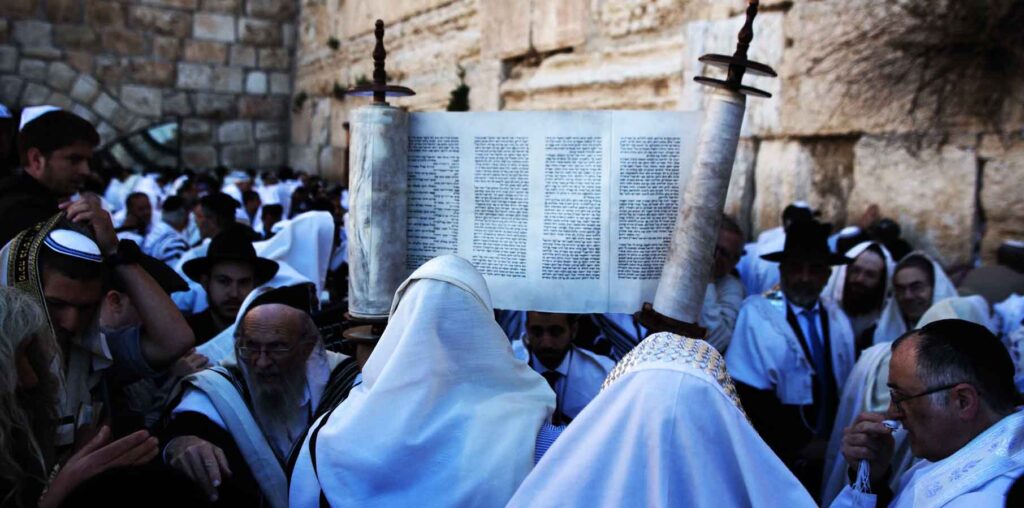
In the event that went down in history as the Great Jewish Revolt, Jerusalem suffered its second major destruction, and the Temple was razed to the ground. It is believed that the only remnant of the Temple is the wall known today as the “Western Wall” (Kotel HaMa’aravi). The vast majority of the Israelites who survived the massacre were exiled to Alexandria, Spain, and various regions of Europe. Following Titus’s death, his brother erected a monument in Rome depicting Titus’s victory over Judea, which featured the seven-branched menorah (Manerah).
In 115 CE, the Jews who remained in the region, as a result of ongoing oppression, launched a second wave of revolt alongside the Jews who had remained in Judea, primarily in Cyprus, Alexandria, Libya, and Mesopotamia. This revolt was harshly suppressed by the Romans. As a result of these severe events, the seeds of the third and final major revolt were sown. In the early 120s, a group of Israelites launched a guerrilla war against the Romans in Judea.
Emperor Hadrian of Rome responded to this uprising with a ban on circumcision that applied to all Jews living within his territories. While circumcision was an indispensable practice for Jews, the Greco-Romans—led by Emperor Hadrian—could not comprehend it, as they viewed the removal of a natural part of the human body as abhorrent due to the sanctity of the human body. As tensions continued to escalate, Emperor Hadrian took an even more provocative step.
He began construction of a temple dedicated to Jupiter (Rome’s supreme god) on the site of Solomon’s Temple, of which only a single wall remained standing from the time of Titus. Under this severe provocation, the Jews—at least a portion of whom believed Bar Kokhba to be the long-awaited Messiah—launched a final rebellion under his leadership. As a result of this rebellion, which was ultimately crushed by the Romans in 135 CE, the political unity of the Jewish people came to a definitive end at a tremendous cost.

This marked the beginning of the diaspora period, which would last roughly 2,000 years. Until the reestablishment of the State of Israel in 1948, Jerusalem would remain nothing more than a homeland longed for by the Jews. The region, which had been known until then as the Province of Judea, would henceforth be known as the Province of Syria-Palestine. Turning our attention to the Arab world during this period: During the time of the Prophet Muhammad, numerous Jewish tribes lived in the city of Yathrib (Medina)—primarily the Banu Qaynuqa, the Banu Nadir, and the Banu Qurayza—as well as in the city of Khaybar and its surroundings. It is not known for certain whether these Arabian Jews were of original Israelite descent (though it is possible they arrived as a result of historical exiles), or if they were former Arab tribes that had converted to Judaism, nor is it known exactly when they arrived in this region.