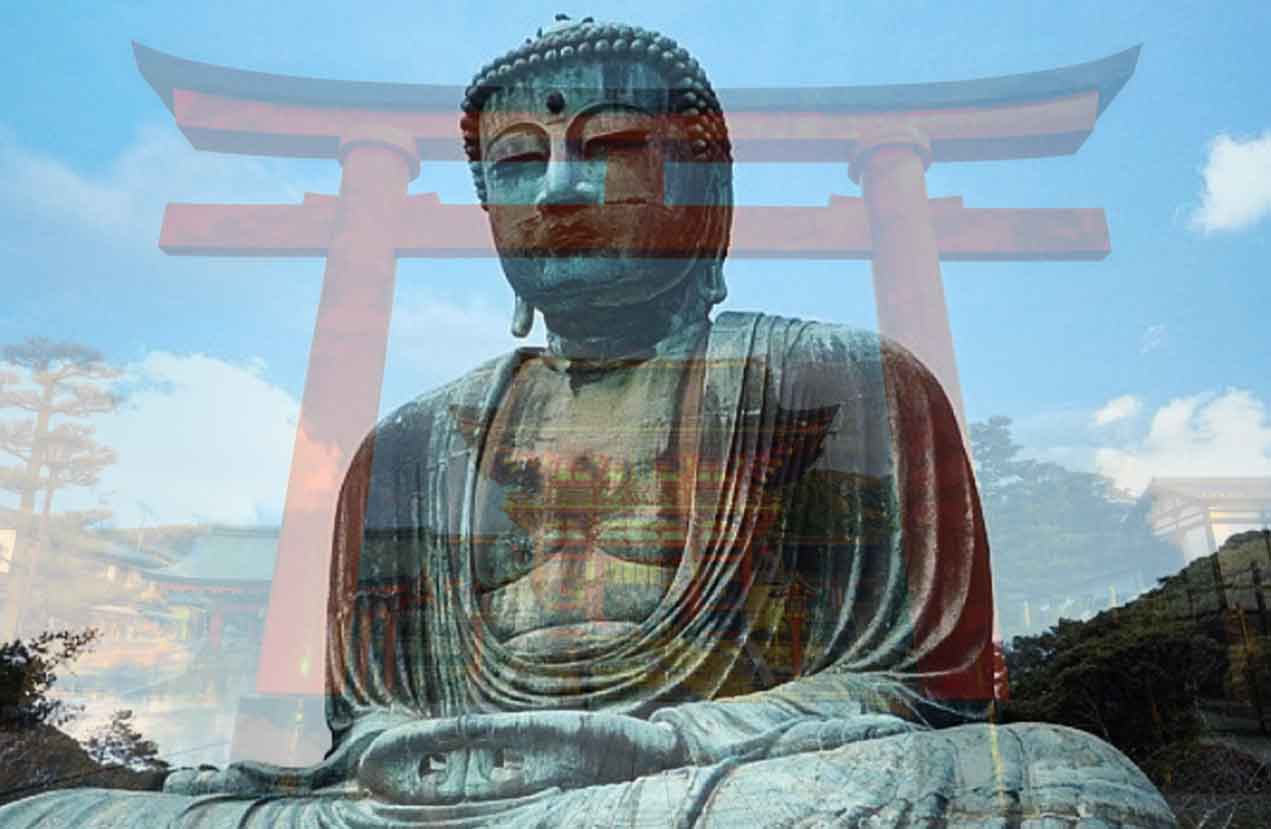
In this article, we will examine the social structure of Japanese families and the mythical traditions embedded in Japanese culture. We will explore how mythological narratives intertwine with religious stories and discuss the roles of Buddhism and Shintoism within Japanese culture.
What Are Japanese Family Relationships Like
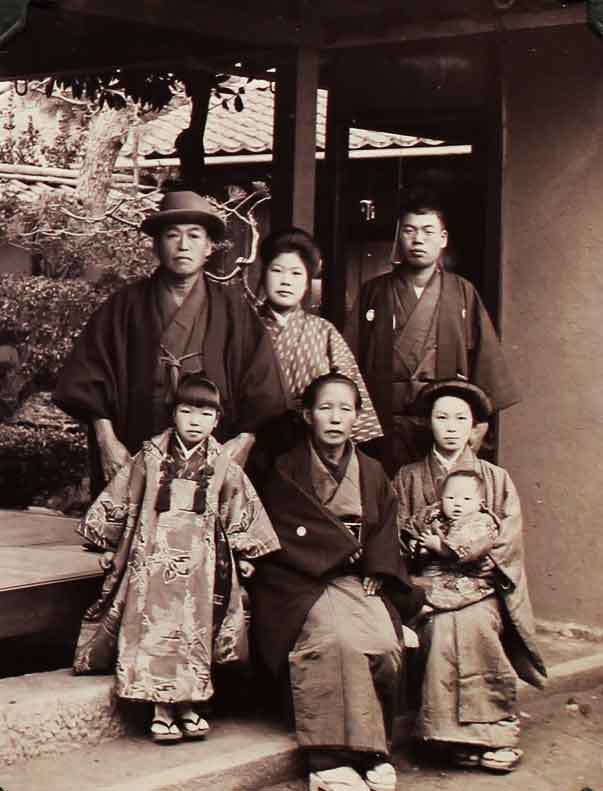
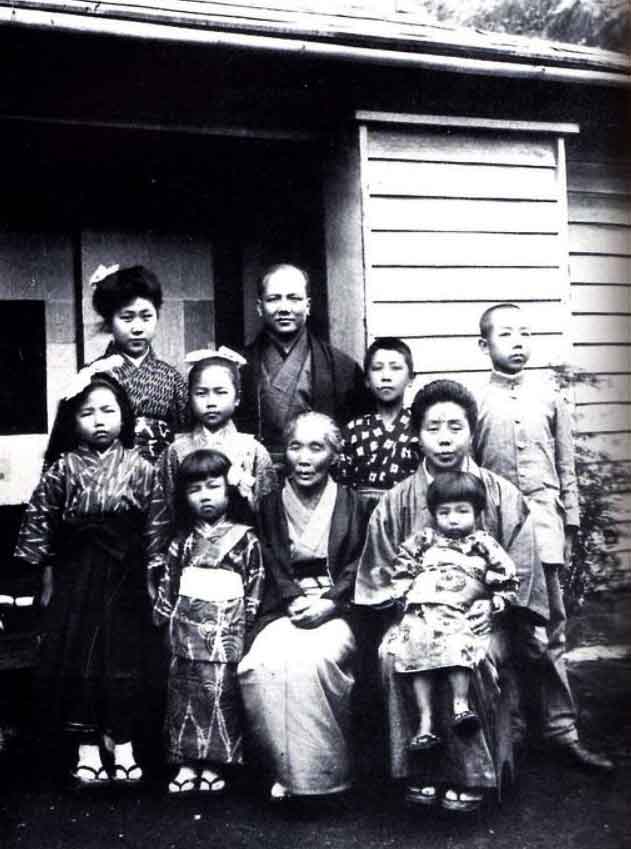
The Japanese kinship and family system differs from that of most other societies in several important ways. The first and most important of these differences is the concept of the ie (household), and the most important traditional responsibility of its members is to ensure its continuity. Normally, an ie consists of a married couple and their unmarried children. Spiritual social categories are also included among the members of the ie: ancestors (known as hotoke and kami) and future generations. The living members also have responsibilities toward these two spiritual categories. Both men and women, as well as unmarried members (except for the member expected to inherit the ie), were members only by virtue of tolerance; sometimes they were members temporarily until they married, and they often severed all ties with the ie in which they were born.
Legally, all productive property passed entirely to the eldest son; however, due to the overriding necessity of ensuring the ie’s continuity, in practice another son could take the place of the eldest son. This situation rarely occurred but existed as a normative and legal possibility. In the absence of a qualified male heir, a married daughter could become the heir; her husband would also be adopted by the daughter’s father and take the ie’s surname. This situation remains relatively common in families that own their own productive property (farms, family-run businesses, and even families of Kabuki actors). Approximately 15 percent of marriages in rural Japan during the twentieth century took this form.
Another peculiarity of the traditional family structure—though less commonly observed in the modern era, when most family economies rely on salaried income—was that the male heir (or female heir) inherited the entire estate of the ie. As a result, small or branch households “split off” from wealthy families and came to possess their own productive resources. Smaller families owed loyalty, ritual obligations, and sometimes economic obligations to their superiors or to the main, or “root,” ie. If a branch household became wealthy, it could split off to form its own branch families. This type of branching is a system among ie known as dozoku. In a metaphorical sense, the Japanese form a “super-dozoku.”
The imperial house, descended from the founder Amaterasu-o-mikami through her grandson Ninigi-no-mikoto, is the honke, or main ie; other households are those connected to the imperial house—either distantly or more closely—through the ie’s continuous process of branching. Some members of these divine or ancestral groups are adopted, while others are born into them. Regardless of the circumstances, some form of a familial bond with no clearly defined boundaries appears in most myths. This also implies that precise family relationships are not so definitive—nor are they particularly important. Ultimately, the main issue is not how any individual adapts to this, but the membership and preservation of the entire system. What truly matters is that the individual acts responsibly as a representative of their group.
Mythological and Religious Traditions in Japanese Culture
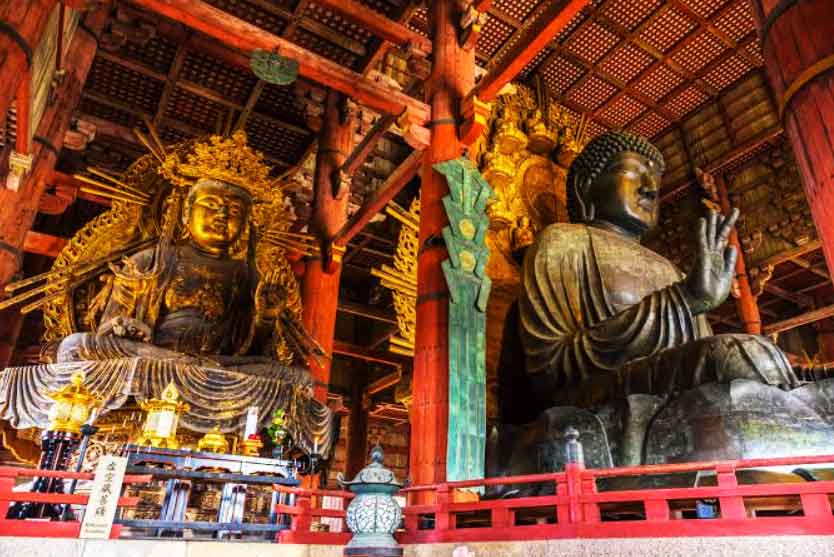
As mentioned earlier, a variety of cultural traditions enrich Japanese mythology. Two dominant influences—Shinto and Buddhism—are often intertwined and blended with one another. We must also add the two “companion” cultures of the Japanese archipelago: the Ainu in the north and the Ryukyuan people in the south. Since they are so deeply woven into Japanese mythology, we will set aside the religious traditions of Shinto and Buddhism to a certain extent. Shinto: Japan’s indigenous religion, Shinto, adopted this name after the need arose for the Japanese to distinguish their own local practices from the foreign “Bukkyo” or “Butsu-do”—that is, Buddhism. The indigenous religion was generally based on reverence for and invocation of local spirits believed to reside in natural or nature-like material objects.
It was believed that mountains, unusual trees, waterfalls, bodies of water, oddly shaped rocks, and other objects possessed a power—kami—that purposefully influenced people’s lives. The spirits of the dead were also of this nature, even though they were thought to dwell in a dark and damp place, much like the classical Greek underworld. Kami could and did dwell in anything that aroused astonishment or even great interest. Even today in Japan, there are trees, rocks, waterfalls, and oddly shaped stones that are considered to be kami. These serve as additions to the sun, the mountains, and other major geographical and natural formations. Local religion places a strong emphasis not only on direct interaction with kami and the offering of gifts as part of worship but also on personal purification: There is no clear distinction between the everyday world and the world of kami.
As we can see, most of these practices stem from Japan’s diverse array of small-scale traditions. Local beliefs were regional and unwritten. There was no strict limit on the number of kami. Some kami specialized in certain areas; for example, the rice paddy kami or the water kami. In fact, while living in northern Japan, our garden was adorned with a small spring that emerged from beneath a stone engraved with the word “suijin” (water kami). My landlord would ask us to keep the stone clean at all times and to leave “offerings” at its base from time to time, which we did in accordance with custom; we would leave sake and flowers, which were easy to obtain and brought joy (just as in all Shinto rituals, we would share the kami’s sake and, just like it, take pleasure in tending to the flowers).
As the Yamato state grew and strengthened, it faced the need for centralization and for controlling the people through religion, among other means, just as other states did. Thus, the Yamato state’s local sect became the most exalted religious system on the Japanese islands, and the local kami, its myths, and rituals were incorporated into—or made to resemble—the great royal tradition. This situation gave rise to two somewhat contradictory characteristics. On the one hand, a series of “constructed” myths—resulting from efforts to synthesize disparate traditions—emerged, and these eventually, particularly once they were written down, became the standard Japanese mythology.
These myths, which frequently incorporate local myths and inevitably contain contradictions, constitute the written mythology found in books such as the Kojiki and the Nihonshoki. Such mythologies are the privileged myths of the Japanese state. On the other hand, those who emphasize the myths of this grand tradition are the myths of smaller traditions that, in one way or another, conform to the grand tradition’s overly inclusive structure. Whether the saints and goblins, kami and demons of local mythology were pleased or not, they were forced to conform to the prevailing perspective: They were all once “kami,” and they still are.
Kami and the Classification of Kami in Japanese Culture
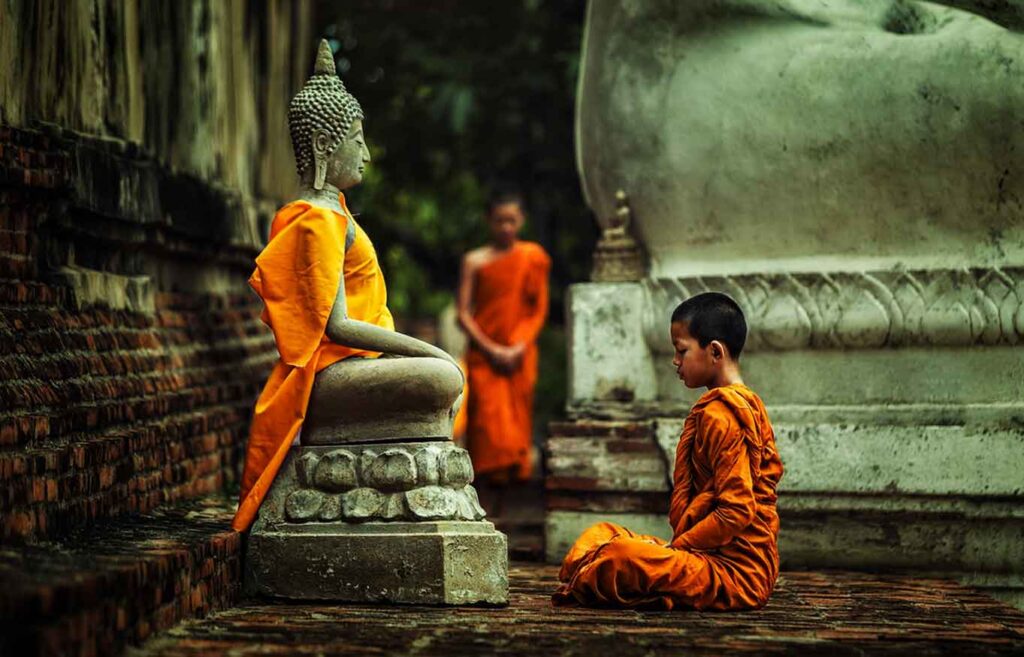
The term “kami,” used throughout this article, is a complex one. For our purposes (and to avoid lengthy discussions), the term functions as both a noun and an adjective. As a noun, “kami” refers to powerful beings concerned with human lives and possessing the ability to intervene in human relationships by directly or indirectly influencing the activities of other kami, animals, or natural phenomena and places: in short, a deity. As an adjective, the term has a meaning close to “sacred”: This is a mysterious and exalted quality possessed to varying degrees by various living beings, including animals and humans. The noun form “kami” encompasses the adjective form “kami” quite broadly; although, as the story of Susano-wo shows, they too can lose this quality to some extent—or even to a great extent.
Kami (adjective) is closely associated with purification. Defiling oneself or others diminishes one’s “reserve” of kami. Conversely, purifying oneself—through asceticism, washing in pure water or seawater, the use of salt or fire, and avoiding contamination by substances such as corpses, feces, or blood—will increase one’s reserve of kami. Shinto mythological figures—deities, humans, or animals—are individuals possessing varying degrees of kami. Among them, the deities generally possess quite human-like characteristics. All figures, whether deities or humans, require purification to maintain their status.
In fact, the line between the human and divine classes is quite thin. Humans can purify themselves more thoroughly and thus may possess more kami than some deities. Most Japanese deities assist and protect humans—usually those within their own ranks or lineages—as long as they are properly honored. These “matsurareru karnis” (famous deities), as Yanagida refers to them, can become angry and furious if appropriate offerings are not made to them. When such deities become angry, they often resort to violent actions to express their feelings. Although most Japanese kami are described using the phrase “X deity,” where X represents a phenomenon such as thunder, wind, fire, or the like, this is not entirely accurate.
Most Japanese kami are associated with certain natural phenomena—or perhaps these phenomena are inherent within them. The ambiguity of this relationship has two implications: Most kami can be associated with a phenomenon, and the nature of that association may be obscure. Raiden and Takemikazuchi are also completely independent “gods of thunder.” Shinto acknowledges the existence of yaoyorozu-no-kami (eight million kami) as an indication that the number of kami is effectively unlimited. In reality, however, far fewer kami are mentioned in myths. Nevertheless, this number is complicated by the fact that most kami have multiple names that can vary depending on the circumstances (much like individuals in traditional Japan who took different names during their lifetimes and after death). Sometimes, a specific kami is given multiple names at birth in a myth.
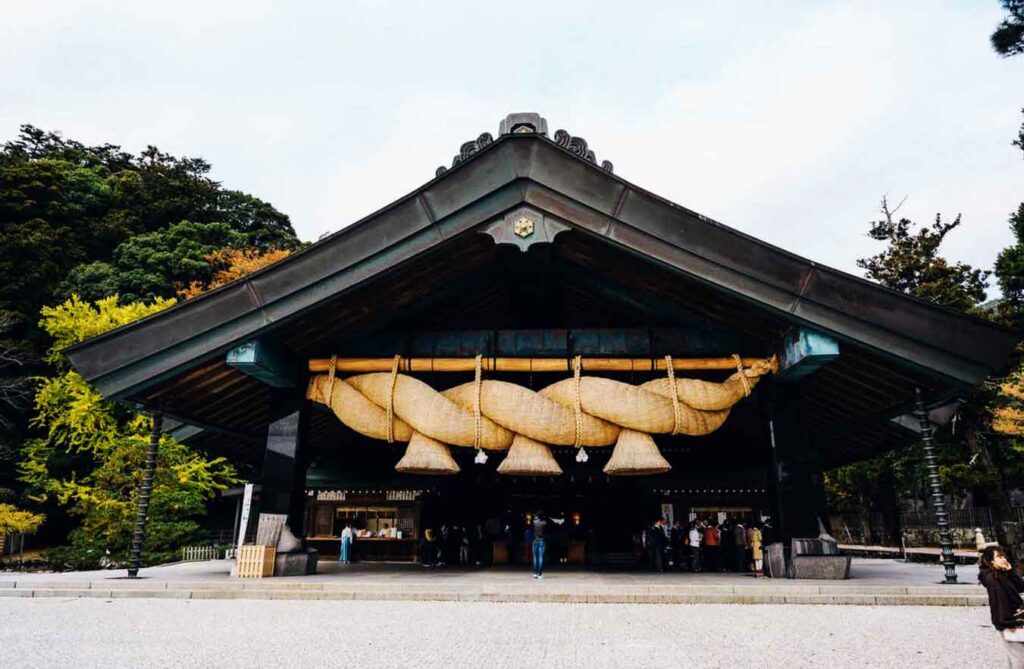
Karni names are further complicated by the fact that they are descriptive or always include one or more titles, such as na-karni or o-rnikoto. Each karni is believed to possess three rnitarna (spirits or qualities): ararnitarna (rough and wild), nigirnitarna (sensitive and life-sustaining), and sakirnitarna (nourishing). Of course, one of these qualities may be more dominant in any given myth: while Susano-wo typically manifests the ararnitarna quality, Amaterasu displays the nigirnitarna quality. However, under different circumstances—for example, when a deity is not properly honored—another aspect of the deity may come to the fore: Susano-wo’s blatant rebellion, or Amaterasu immediately embracing the ararnitama aspect, arming herself like a warrior, and performing aggressive rituals.
A few brief words should be said about Shinto as a religion. The ritual practices and beliefs we refer to as Shinto had been present in Japan long before the term was coined. These practices fell under two categories: appeasement and divination. Appeasement involved purification rites—water, sparks, and salt being the most common elements—the repetition of a prayer or petition, and food offerings consisting of vegetables, fruits, and wines from various regions, which were generally considered pure. More elaborate rituals incorporated specific forms of entertainment, such as a dance, a magical game, or some music. (Remember that in all simple societies, rituals serve as a major source of entertainment alongside awe and worship.) Divination, on the other hand, was performed using a variety of tools: cauldrons of hot water, trance-induced possession, and dances—many of which are still performed today.
With the rise of the Yamato state, these rituals became institutionalized, and specialized groups such as the Nakatomi took it upon themselves to ensure the “proper” organization of rituals within the region. With the development of this system, Shinto entered a long period of stagnation. Kamis were often worshipped within Buddhist temples. Major rituals were performed for the nobility; on the other hand, the common people, as always, conducted their rituals for the sake of the spirits—whether led by a Buddhist priest, a local ritual specialist, or a wandering kebozu (a “hairy priest,” typically a wandering mendicant member of the Shugendo sect who did not shave his head; also known as yamabushi), or any local ritual expert they could find. Then, in the eighteenth century, as a result of political events, some Japanese scholars began to take an interest in the “Japanese” elements of their own religion and sought to separate them from “foreign” elements, particularly Buddhism. The Kojiki regained popularity.
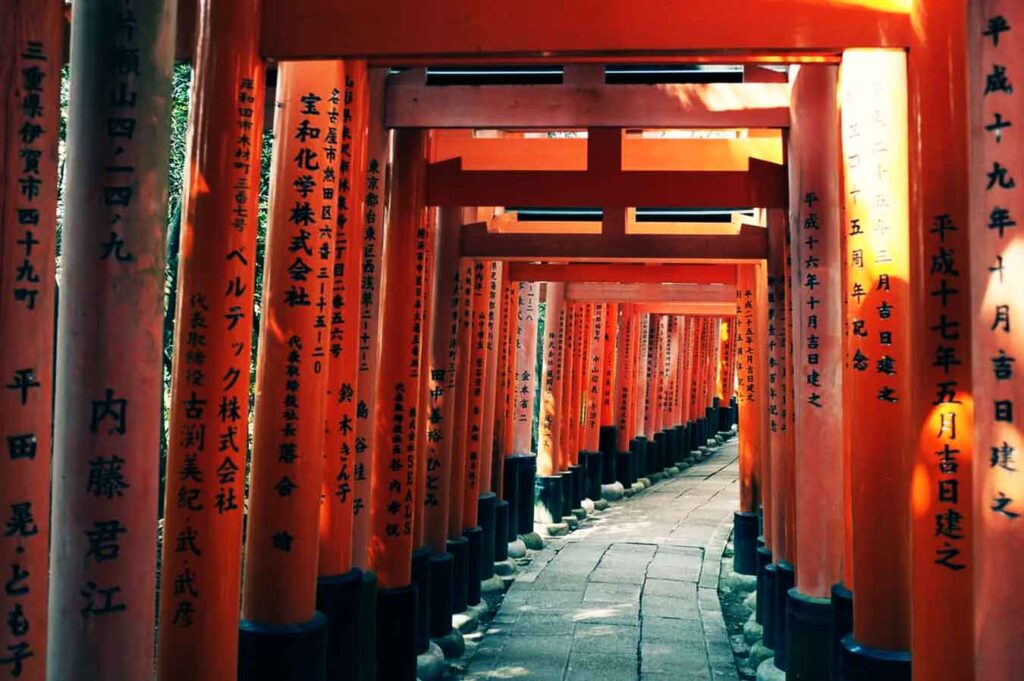
When the middle-class samurai of the non-Tokugawa clans overthrew the shogunate in 1868, part of their motivation stemmed from the Shinto/Japanese nationalist ideology that had begun in the eighteenth century. Quite rapidly, in 1873, the new government forcibly separated Buddhism and Shinto by compelling Ryobu Shinto (Two Schools of Shinto) to abandon all its Buddhist ties and ideology, including its honji-suijaku theories. This process was neither sudden nor entirely meticulous. There are still many Shinto shrines served by Buddhist priests, and most bodhisattvas are the kami of Shinto shrines. Nevertheless, a distinction that had not existed before had been created. Major Shinto shrines were supported by the government, and a new ideology—Kokutai Shinto (National Shinto)—had emerged. According to this theory, Shinto was more than a religion: it was an expression of the Japanese people’s inner spirit and way of life.
Shinto priests had become salaried government officials. Shinto had been directed toward national glorification and support for the government’s actions. In 1946, following Japan’s defeat in World War II, the occupying authorities enacted a new religious law that strictly separated religion from the government. Shinto shrines regained their independence. Today, they are all supported by donations and are free to worship whichever kami they choose, in whatever manner they wish. Although there are several confederations of shrines and priests, there are certain differences between shrines and regions.
The Emergence of Buddhism and Its Spread in Japan
Buddhism emerged in the fifth century BCE as a response to the social and religious conditions in Northern India. After reaching China through a series of routes, Buddhism spread from there to Japan. The transmission to Japan was not direct. Buddhism first entered Japan in the fifth century CE from the Paekche Kingdom in Korea. The Koreans were interested in “taming” their Japanese cousins across the sea—both to ward off the threat of piracy and raids and to utilize Buddhism in their own wars against the rising power of Silla, another Korean kingdom. Not surprisingly, the primary emphasis in this early form of Buddhism was on magic and material benefits.
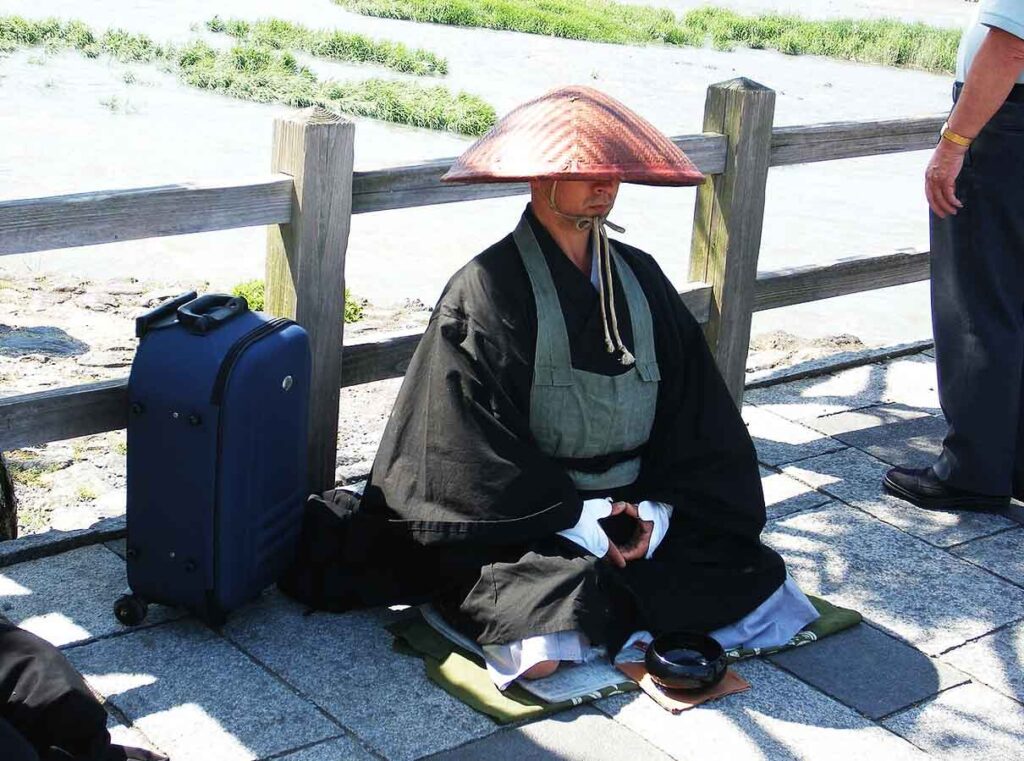
Later, Japanese scholars—Ennin, Kukai, and others—traveled to China, each bringing back a different version of Buddhist belief, practice, and mythology; these were incorporated into both local traditions and the traditions of the Japanese courts, depending on local conditions and prevailing political trends and prestige. Buddhism introduced many significant features. Perhaps the most important of these was the Buddhist approach to life after death and salvation. In traditional Buddhist philosophy (such as that of Shakyamuni, the founder of Buddhism), death marks either the beginning of rebirth or, if the devout person practices the “right path” (dharma), the beginning of Buddhahood, in which one is freed from the burdens of rebirth. In the Chinese context, these beliefs began to be woven into China’s local concepts of hell and punishment, and it was precisely these beliefs and their associated practices that reached Japan.
As a result, Buddhist practice came to focus primarily on the afterlife and dealing with the dead. The second characteristic is closely related to the first. During its migration from India to China via Tibet and Mongolia, Buddhism acquired detailed rituals and extensive sacred texts. Most of these rituals were related to the dead (funerals, burial rites, and memorial services), but the majority emphasized the practical benefit—that is, bringing about material change through the application of the “correct” ritual formula. A key element here was the Buddhist belief that one could directly influence material outcomes if one knew the correct formula. Buddhism differed radically from Shinto in many ways. First, it was a “revealed” religion.
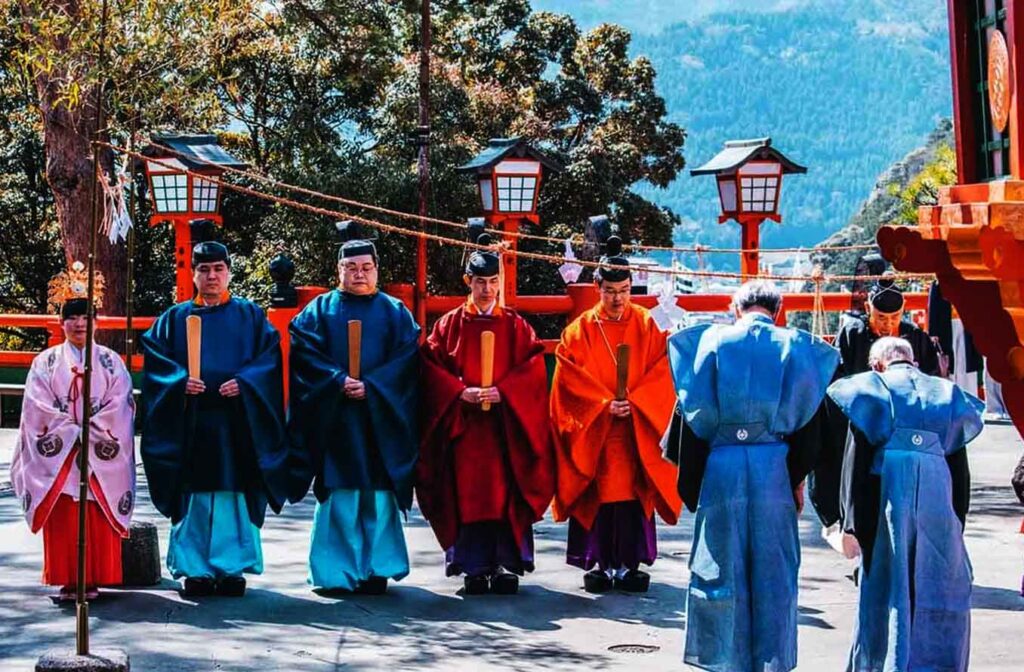
It had a specific founder named Siddhartha Shakyamuni, who was a prince of the Sakya clan in what is now Nepal. Second, it focused on personal morality, liberation, and the afterlife. Third, it was a world religion whose message was consciously aimed at all of humanity, rather than a specific nation or culture. But that was not all; Buddhism has always acknowledged that life extends throughout the universe of time and space and can take many local forms in different worlds. Fourth, as a result of these factors, the Japanese people were introduced to a series of new philosophical and political concepts that had a profound impact on their institutions and ways of thinking.
Individual salvation is the essence of the Buddhist faith. The question of how an individual can attain salvation can be answered in two different ways. Some Buddhist thinkers argue that individuals cannot attain salvation through their own efforts. This “other-salvation” group believes that an individual’s attainment of heaven or nirvana depends on the grace of a special being—a Buddha or a bodhisattva. Other thinkers, on the other hand, argue that individuals can attain liberation solely through their own efforts. This “self-liberation” school, in contrast to the former, believes that an individual must follow a rigorous regimen of renunciation and discipline to attain liberation—something not everyone is capable of practicing. Consequently, this implies that most people will never reach the goal outlined by Shakyamuni.
It is important to note that the “other-salvation” school points out that this contains a contradiction: If the Buddha were concerned only with his own salvation, he could not have been compassionate toward everyone, could he? In Buddhist scriptures, both perspectives are supported in various passages. Unsurprisingly, the “other salvation” school became more popular. This school forms the foundation of most Buddhist sects in Japan and China. Although the “self-salvation” school is popular today in Sri Lanka and Southeast Asia, it finds an echo in Japanese Buddhism in the form of Zen.
Buddhism in Japanese Society
The characteristics of Japanese Buddhism owe their existence to two sources: Shinto influence and the Japanese people’s freedom to choose one of the vast array of beliefs, practices, and philosophies presented to them under the name of Buddhism. Although the main cosmological tenets are more or less universally accepted, subtle differences in interpretation have led to the emergence of a variety of Buddhist forms—or sects—that continue to develop in Japan today. The arrival of Buddhism in Japan was a gradual process. By the time the king of Paekche sent his famous image of Dainichi to the Japanese emperor—beginning with the personal importation of images and texts—a group that already sympathized with this new religion had formed. As mentioned earlier, Buddhism officially entered Japan from Korea in the 6th century as a result of a political and cultural assimilation effort.
The king of Paekche—a Korean kingdom with linguistic, cultural, and blood ties to the Yamato court—sent numerous Buddhist images, a number of teachers, scrolls, and artists to the Yamato court. This was not only an attempt to counter the raids by Japanese pirates in Korea but also an effort to forge a closer political and military alliance against the rising power of Silla, Paekche’s rival on the Korean Peninsula. Years of opposition in Japan were not enough to dampen the enthusiasm for the new doctrine. After approximately fifty years of resistance by the major imperial clans—most notably the Mononobe warriors and the Nakatomi priests—Buddhism was adopted as the court religion. Buddhist practices were embraced at court and officially supported by the imperial regent Shotoku Taishi.
By the seventh century, many Buddhist sects were active in Japan; however, today only one of these earliest sects—the Hosso sect—still survives. These sects were primarily established in Nara, the capital of that era. However, as of 741, the government decided to establish a kokubunji (provincial temple) in each province. These temples not only facilitated the spread of Buddhist doctrine but also, just as importantly, gradually assumed two governmental functions: registration of births (since support for the temples was initially entrusted to local families, this was initially limited to the elite class, but in later centuries all households were registered) and deaths (because the temples also assumed responsibility for ritual practices for the deceased, an area where Shinto generally fell short).
Japanese Buddhism was divided into a series of “schools” or sects; these roughly corresponded to the Christian orders that reached Japan or were formulated in Japan during different periods of history. The period from 550 to 850 AD was a time of external influence. Various schools of Chinese Buddhism were brought to Japan by traveling scholars. The two most important and influential schools to survive from that period are Tendai and Shingon. Zen was introduced to Japan some time later. The last of these imported schools was the Obaku Zen school, which arrived in the seventeenth century. Although based on Chinese thought, Jodo—one of the major Buddhist schools—was, at its core, a Japanese school. This is certainly true of Jodo Shinshu, a broad and difficult-to-control branch of Jodo. The last of the major Buddhist schools to arrive was Nichiren-shu, which came in the fifteenth century.
The differences between the schools stem from the emphasis placed on different aspects of Buddhist doctrine. Each school has selected a specific group of important sutras and texts, along with their own specific deities and rituals associated with them. Each school tends to define a “central” Buddha (Amida being the most popular), albeit with very slight differences (which are significant for practitioners). For our purposes, this also implies that different Buddhist schools emphasize different mythological beings. Nevertheless, since many schools (with Nichiren-shu and Jodo Shinshu being major exceptions) encompass a potentially unlimited number of Buddhas, they acknowledge the importance of many other deities or figures, whether or not they serve as central figures in their own doctrines.
Each of these sects draws from the same—or at least a similar—sea of anecdotes, myths, and imagery; however, each emphasizes a different part of this vast sea. Religious differences between the sects may be profound, but mythological differences stem more from choosing one myth over another to recount. The powerful influence of Buddhist thought and symbolism—including myths—was also tied to another institution undertaken by Buddhist temples, particularly in rural areas: education. From the seventeenth century onward, virtually every town and medium-sized village had a teragoya, or temple school; here, boys from the local population (while samurai boys were educated in their own schools) could receive an excellent education, albeit one with a Buddhist framework.
Graduates of these schools went on to become successful merchants, landowners, and artisans; and, as Bellah (1957) noted, just as importantly, they harbored the ambition to go further and achieve success as a way of glorifying God, much like the Protestants of late medieval Europe. The following sections provide a brief overview of the major Buddhist sects currently existing in Japan, listed roughly in the order of their emergence.