In our first article, we examined Jewish history and provided a general overview. In this article, we will focus on the religious aspects of Judaism. We will take a closer look at the religious understanding within Judaism, its fundamental beliefs, its specific boundaries and guidelines, and its concept of God
Concept of God
After centuries of humanity’s journey of encountering, understanding, and comprehending the concept of God, the Children of Israel emerged as a community in which the emphasis on the “One God” began to be particularly highlighted, and this emphasis was sought to be ingrained through a succession of prophets. In sources related to Judaism, the concept of “God” is described as “a perfect, infinite spiritual power. He is the sole Creator and Owner of all things. He sees everything, hears everything, knows everything, and rules over all creatures and the universe.” According to the Children of Israel, God—who is one and unique—is a being distinct from everything that exists, has existed, or will exist; that is, He is a being without equal. He is uncreated, without beginning or end; He sees, hears, and knows all things; He is invisible, and, given His majesty, no images or statues of Him should be made.
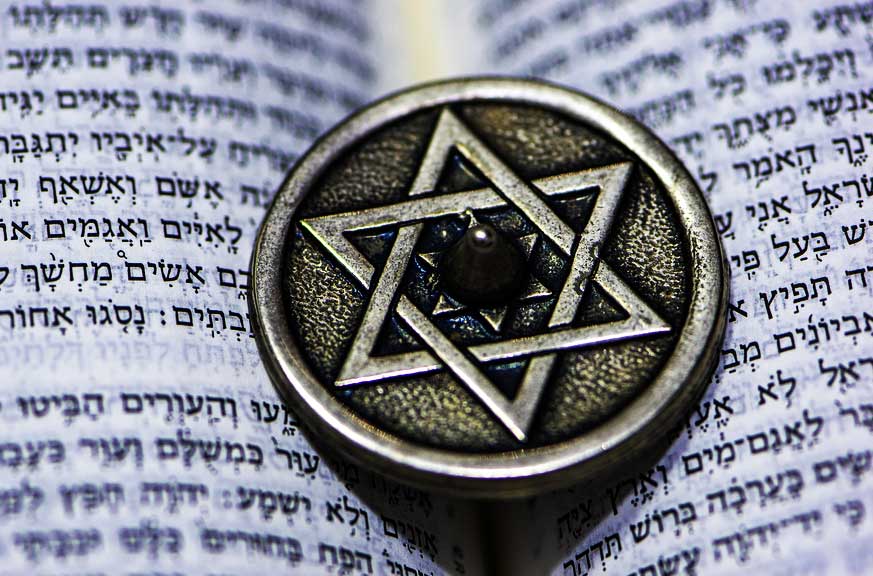
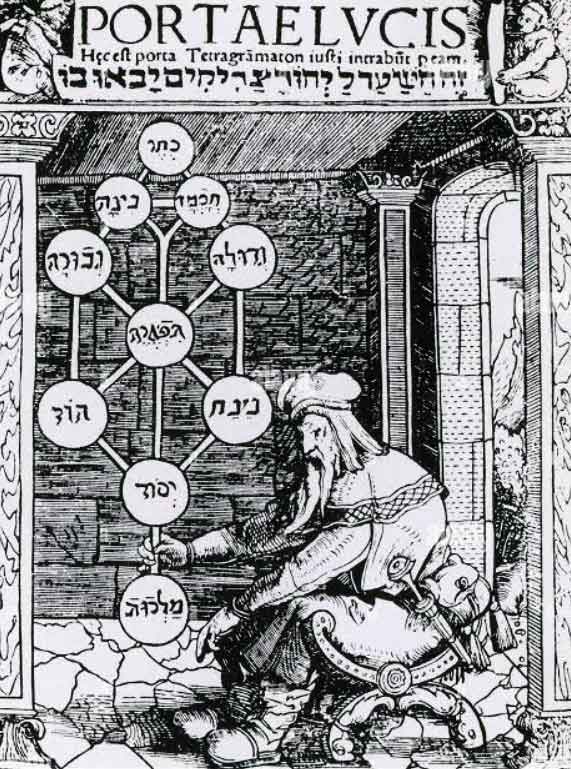
In the sacred texts, God’s name is referred to by names such as “YHVH, Elohim, Adonay.” Since the word “YHVH”—which appears approximately 6,000 times in these texts—lacks vowels due to its Semitic origin, there have been differing approaches to its pronunciation. Pronunciations such as “Yahveh, Yahvoh, Yehve, and Jehovah” have been used. It is also argued that, in accordance with the commandment “You shall not take the name of the Lord your God in vain,” the word is written without vowels. In fact, it is noted that the name YHVH—considered to be God’s proper name—was mentioned only once a year in the temple by the high priest during the blessing prayer on Yom Kippur, the Day of Atonement.
There are also those who believe that the term “Yahweh” or “Jehovah” in the Holy Scriptures means “Lord,” while the term “Elohim” means “Mighty, Almighty.” The term YHVH, consisting of four consonants, was referred to in Greek as the “Tetragrammaton” (four letters); due to translations in Greek texts, it was thought to be “Yahweh,” and after the pronunciation of the name was prohibited for certain reasons, the name “Adonai,” meaning “Lord,” began to be used; according to some, the vowel sounds of the word “Adonai” were inserted between the consonants of YHVH, resulting in the form “(J)Ya-Ho-Va-H.” As we can observe in various sources, the “concept of God” for Jews bears similarities to the profile of the “One Supreme God” mentioned in ancient communities. (As you may recall, we read about this in the Su-il-la text, where the emphasis on the “One God” was also very pronounced.) In the history of the Children of Israel, the emphasis on “oneness” is far more dominant, and this has clearly taken the form of a tradition.
Let us quote from Jewish sources that summarize what “the concept of God” entails, both as reflected in the Holy Scriptures and through the perspectives of various movements in Jewish history: “He is entirely distinct from the world; He is not subject to laws or restrictions; He is more powerful than anyone or anything. God is One (Deuteronomy 4:35, 6:4), which expresses His Oneness and the fact that He is incomparable. God is the source of all things (Isaiah 45:7). God is beyond time and outside the universe (Isaiah 66:1, Jeremiah 23:24). He is eternal, having no beginning or end, and unchanging (Malachi 3:6). He is holy (kadosh), and the word “glory” (kavod) also serves to describe His unique being. He is (beyond human imagination) outside the world (Psalms 97:9) yet is the foundation of all things (Exodus 3:12–15). He is “the Spirit of our spirit” and is very near to humankind (Psalms 145:18). He is a God who reveals Himself to humankind but who also often “remains hidden” (Isaiah 45:15). God is defined as a being with a personality. He is anthropomorphic. He engages in dialogue with people, makes demands, commands, judges, punishes, and rewards. He knows the circumstances of people (Exodus 2:24) and approaches humanity with love (Exodus 2:24). God created the universe out of nothing and as an expression of His divine will (Psalms 33:9)…
Although this poses a problem from a theological perspective, the Tanakh (Old Testament) describes God using emotional terms. He is angry (Exodus 22:23), sad and disappointed (Genesis 6:6), merciful (Jonah 4:11), loving (Deuteronomy 23:6), and hateful (Amos 5:21). The Rabbis have stated that the Torah uses expressions in human language to make God’s actions understandable. Otherwise, it is not the case that God experiences the emotions mentioned, which are specific to human beings… God is One. His life, will, power, and wisdom are also One. The attributes ascribed to Him are within the framework of human understanding. However, in essence, God exists beyond the dimensions that humans can comprehend or conceive… In Talmudic writings, the Rabbis regarded the concept of God as central to Judaism and labeled those who deny God as “deniers of the foundation” (kofer be-ikar)… In light of the views regarding God’s oneness and the principle that no physical attributes should be ascribed to God, Maimonides examined the connection between the eternal and unchanging God and the universe, which is in a state of constant change, and stated that the answer to this question lies once again with God.
Kabbalah, on the other hand, holds that although God is unknowable, He can be known through mystical experiences. Since God is “hidden in the depths of His own being,” it is impossible to say anything about infinity beyond God’s existence. The concept of the Supreme God in Judaism shows parallels with the information passed down to us from the many schools of thought that have sought to explain it in the past. For the vast majority of people in early Jewish society, the anthropomorphic perception of God—which was quite natural given the conditions of the time—reflects a process of evolving understanding, as we have been discussing from the outset. In other words, the perception of God found in mythological elements has evolved over time. We can see how God was conceived in the minds of people living in ancient times. This is, after all, a very natural phenomenon.
Since the “indescribability of God” would have been incomprehensible to the people of that time, a method of definition was devised precisely to make this indescribability understandable. Maimonides’s tanzihist interpretations of God had a significant influence on later Judaism. Although the work mentions many famous thinkers on the subject, it is likely that Spinoza—a renowned philosopher whose name does not appear in the text and who lived in a Jewish community in the 17th century—was excommunicated from Judaism; he further developed Maimonides’ ideas and summarized them in the statement that “God is indefinable.” All these developments appear to have shaped the views on the “concept of God” held by at least a portion of the Jewish community in later eras. Looking back from the present, it is understood that the sharp emphasis on “monotheism” in Jewish history was established to “break the habit of fragmented interpretations” inherited from humanity’s earlier eras. Despite the prominence of this emphasis, the Children of Israel could not entirely avoid turning to “other gods” due to the influence of the communities with which they interacted in one way or another throughout their history.
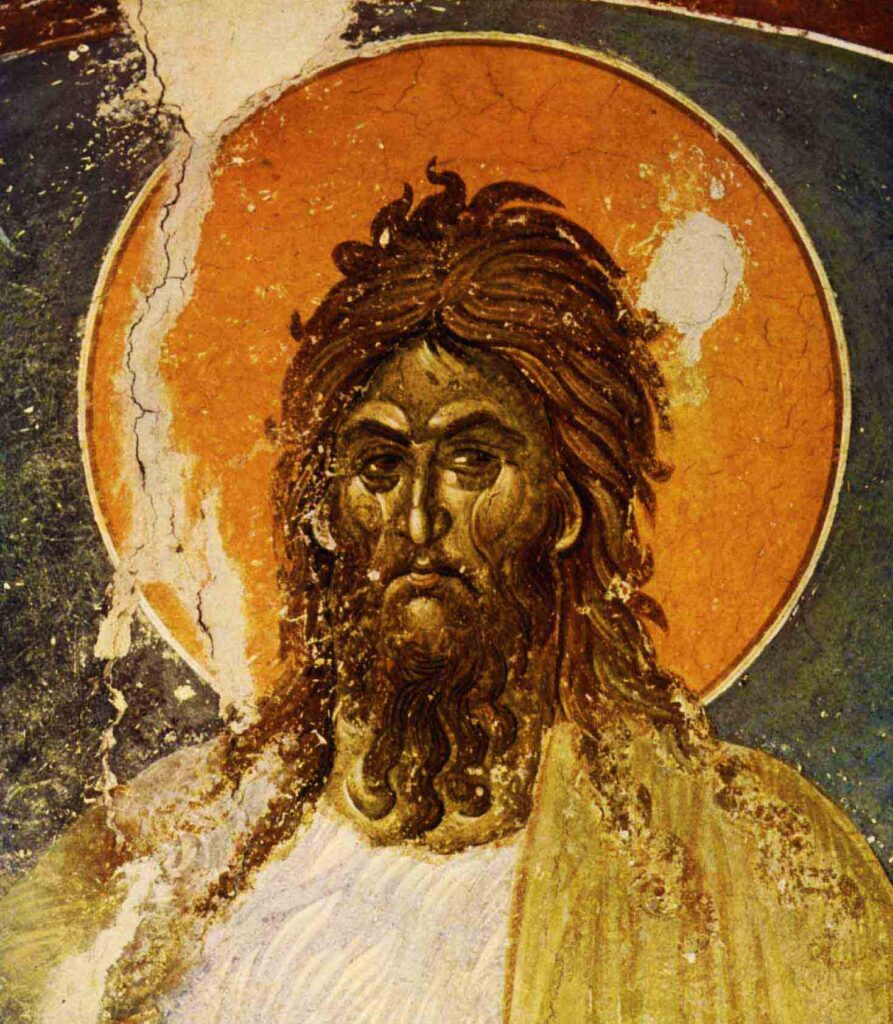
The stories of the Children of Israel—whether they believed in the gods of other nations alongside Yahweh or in gods other than Yahweh—have been recounted in many sources, including their own Scriptures. The struggles of the successive prophets against this situation are historical events. Of course, there have always been people among the Jewish people—sometimes few, sometimes many—who have strived to preserve the “belief in one God.” However, what we must understand here is that people cannot immediately abandon their habits and cannot immediately grasp the value of the concepts at the core of their beliefs. (Just as they were influenced by local religions during the Babylonian exile and their stay in Egypt) For this reason, in order for certain concepts—such as the concept of God—to take root and be internalized, successive prophets were sent, and these periods of ups and downs were experienced. The process was carried out with the support of “a specific people,” which was significant in many ways, especially when considering the conditions of that time.
In other words, we can see how much effort those appointed as prophets—who emerged from within their societies—exerted to reform their communities. In essence, that ONE GOD, the Lord (in His capacity as the Educator), is guiding these societies, whose perceptions are shaped by their beliefs. George Thomas Bettany, in his book on the history of religions, evaluates the work of “the Prophets sent to the Children of Israel”; in doing so, we must adopt a perspective that transcends the national and view their contribution to the spiritual development of humankind as the most important outcome. Let us acknowledge that ethical monotheism is their legacy. They had arrived at the belief in a single God—the only one who is holy and just, who carries out His will or what is morally good in the world. And they had made this belief, through word and writing, an inalienable and indispensable heritage of humanity.
What they offered people was not an intellectual or philosophical system, but a religious belief. The God of the prophets had a character quite different from that of the God of the Greek and Roman philosophers. “What constituted His nature was holiness, righteousness, and mercy.” In the paragraph above, as we noted earlier, he describes—from his own perspective—the contribution made by the “One God” belief, which was put into practice through the Israelites, to the process that ensured its permanent establishment among human generations. Mircea Eliade also offers the following commentary of a similar nature in his work: “…This ‘sacred history,’ which at first glance appears to have only a ‘national’ character, emerges from a certain point onward as an example from which all of humanity can learn.”
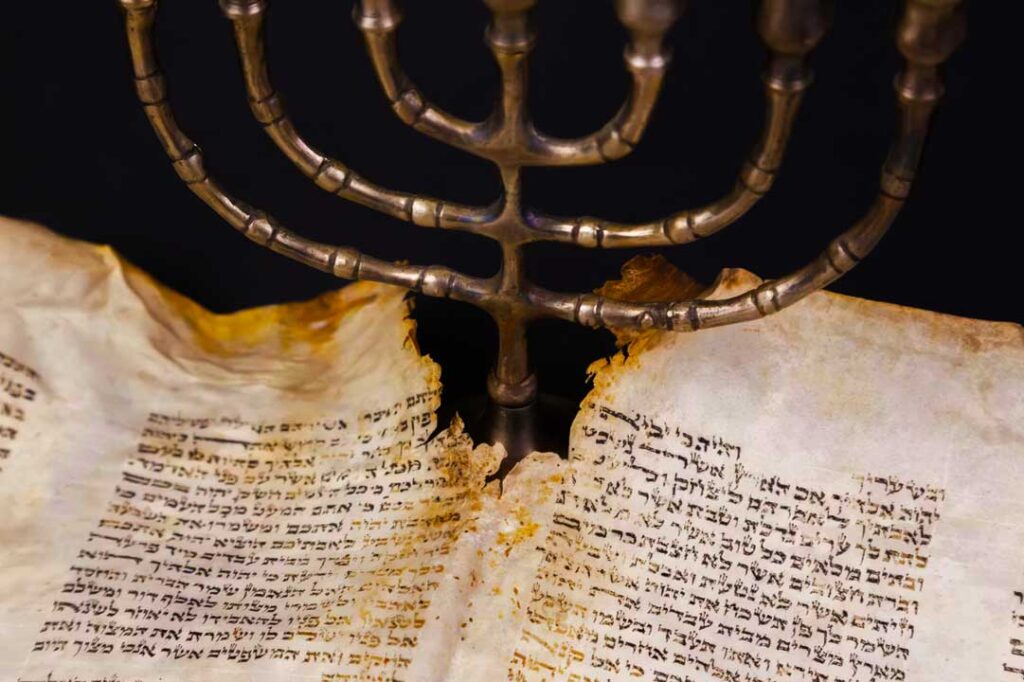
Through Prophet Moses—to whom, according to the Quran, the Book was revealed—a new concept was introduced to humanity. This concept is the term “angel.” When we examine the beliefs of ancient communities, we find that this term—which was not present in their beliefs—is thought to refer to “gods who serve under the One Supreme God.” This seems consistent. To briefly explain the evolution of the term “angel” after Prophet Moses: It was used as “Malah,” a term thought to mean “messenger” in Hebrew, and over time, it was arranged in a hierarchical order. The suffix “el” at the end of these words means “God,” while the prefixes were used to indicate their specific functions. For example: Michael—“Who is like God?”; Gabriel—“God’s messenger”; Uriel—“God is my light”; Raphael—“God heals,” and so on. While angels are accepted as a type of being in which the vast majority of Jews believe, they are not regarded favorably by Reform Jews.
The Jewish Bible
Today, Jews refer to the written record of the revelation given to the Prophet Moses and his descendants as the TANAH. Divided into three sections, the Tanakh consists of the TORAH, which comprises the Five Books of Moses; the NEVI’IM, which contains the books of the Prophets; and the KETUBIM, which comprises the other books. The Tanakh, which Christians call the Old Testament and which the Quran refers to as the Torah, is the written record of divine revelation that Jews have preserved for approximately 2,500 years. It is believed that this text was first written down as early as the 700s BCE and took its final form by the 100s CE. From the Jewish perspective, the sacred tablets—believed to have been inscribed by the Prophet Moses or given in written form by God on Mount Sinai—were safeguarded by the Children of Israel and kept in a special chamber set aside for them after the construction of Solomon’s Temple. It is said that the Ark of the Covenant, which contained these sacred relics, was lost following the fall of the Kingdom of Judah and the destruction of the Temple.
It was accepted by Ezra, the High Priest who returned to Jerusalem after the Babylonian exile, and a council presided over by him that the text had been rewritten “as it was originally.” Although traditional Jewish belief holds that the Torah has come down to us unchanged, a tradition of critical analysis of the Holy Scriptures has emerged in modern times. This trend intensified in the 20th century. Through textual criticism, scholars have rejected the claim that the Torah was authored by Moses. During these critical studies, many different theories have been proposed. The most famous of these is known as the “source theory.” According to this theory, the Torah was written by four distinct schools: the Yahwist Text, the Elohist Text, the Priestly Text, and the Deuteronomistic Text. The sections of the text that use the name Yahweh for God are called the Yahwist Text; those that use the name Elohim are called the Elohist Text; the sections compiled by the Kohanim are called the Priestly Text; and finally, the texts that serve as a sort of summary of the Torah are called the Deuteronomic Text. According to this theory, the oldest parts of the Torah were written by the Yahwist school and date back to the 10th century BCE.
It is believed that the most recently written sections were also composed by the kohanim in the 5th century BCE. In addition to this theory, the “addition hypothesis” has been proposed. According to this theory, the Israelites had a single text of the Torah. Different schools of thought added to this single text, thereby forming the Torah we have today. Some researchers also claim that the core text of the Torah is the Deuteronomic Text, which was compiled during the reign of Josiah (640–609 BCE). The first translation of the Tanakh into another language is the Greek translation known as the “Septuagint.” This translation, known as the Septuagint, contains the entire Tanakh. According to researchers, the translation of the Torah section was completed around 250 BCE at the request of Ptolemy Philadelphus to be placed in the Library of Alexandria. It is believed that the translation of the books in Nevi’im and Ketuvim continued until the 1st century BCE.
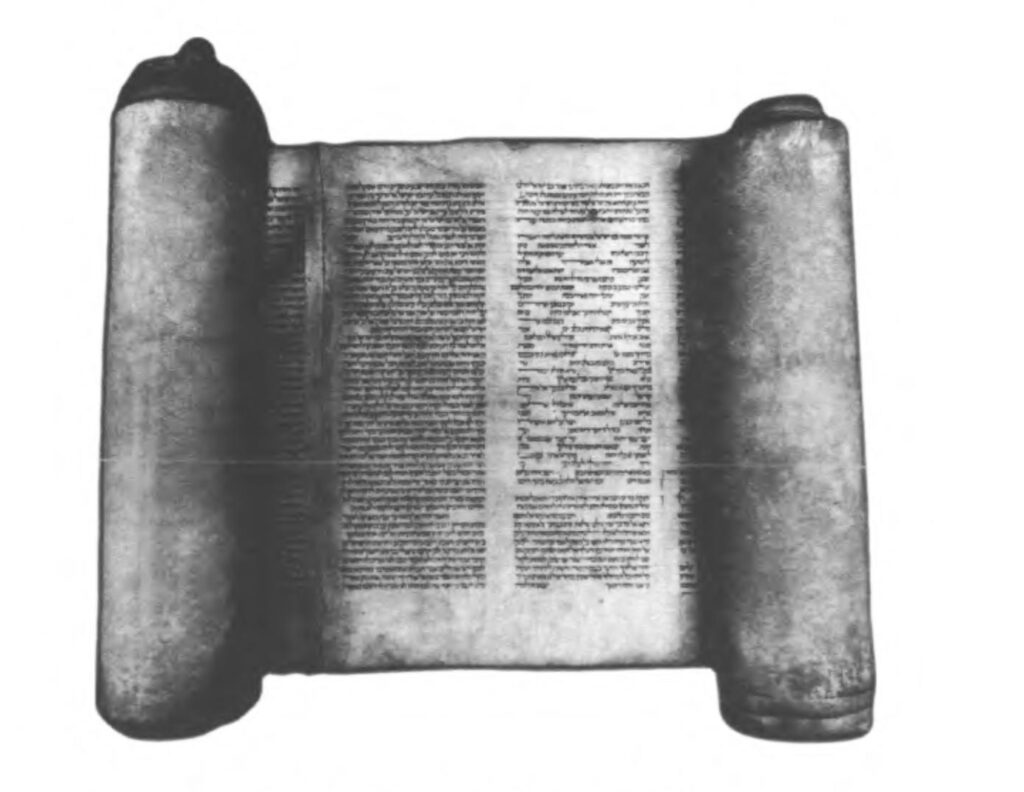
According to tradition, the Tanakh was translated into Greek by seventy people. However, Rabbinic tradition later mythologized this account, stating that a group of seventy-two people—[six from each of the twelve tribes]—translated the text in exactly the same way, working independently in seventy-two different rooms without knowing what the others were doing (Babylonian Talmud, Megillah 9a). In Western literature, the Septuagint is written in a form that represents the number seventy using Roman numerals. According to traditional Jewish belief, when Moses went up the mountain for forty days, he received not only the Torah but also its explanations orally. Moses conveyed these explanations to Joshua, who was with him, and Joshua in turn relayed them to the leaders of the people.
In this way, the interpretations of the Torah have been passed down from generation to generation through Jewish religious scholars. This is known as the Oral Torah. The Oral Torah consists of two primary texts: the Mishnah and the Gemara (Talmud). It is not clear exactly which works the Oral Torah encompasses or up to what time period it extends. In general, midrashim, and specifically legal midrashim (midrash ha/aha), are considered part of the Oral Torah. Kabbalists also attribute the Zohar to the Oral Torah. Maimonides states in his list of articles of faith that the Oral Torah—which he defines as the interpretation of the Torah—is also the product of revelation and has been transmitted without alteration. Orthodox Judaism regards the Oral Torah as binding, while Conservative Judaism, though it does not consider it binding, still values it and uses it as a religious source. Among Jewish groups, the Samaritans, Sadducees, Reform, Liberal, Reconstructionist, and Karaite Jews do not recognize the Oral Torah.
The verb *shana*, from which the word *Mishnah* is derived, means “to repeat, to say a second time, and to memorize.” Based on this, the *Mishnah* is defined as “that which is repeated, memorized through repetition, and learned.” The six sections of the Mishnah and their contents are as follows: 1-Zeraim: Laws concerning prayers and agriculture. 2-Moed: Laws concerning the Sabbath and holidays. 3-Nashim: Laws concerning marriage, divorce, oaths, and the Nazirite vow. 4-Nezikin: Laws concerning civil and criminal law. 5-Kodashim: Rulings regarding sacrifices, offerings, the Temple, and kashrut.
6-Taharot: Laws concerning purity and impurity. The term “Gemara” means “to add” or “to complete.” The “Gemara” refers to the commentaries and interpretations made by Jewish scholars in Palestine and Babylonia on the explanations found in the Mishnah. The Mishnah is a single text compiled in the land of Palestine. Two different Gemaras were written based on this single text. The commentaries by scholars in Palestine are called the Palestinian Gemara (Palestinian Talmud), while those by scholars in Babylon are called the Babylonian Gemara (Babylonian Talmud).
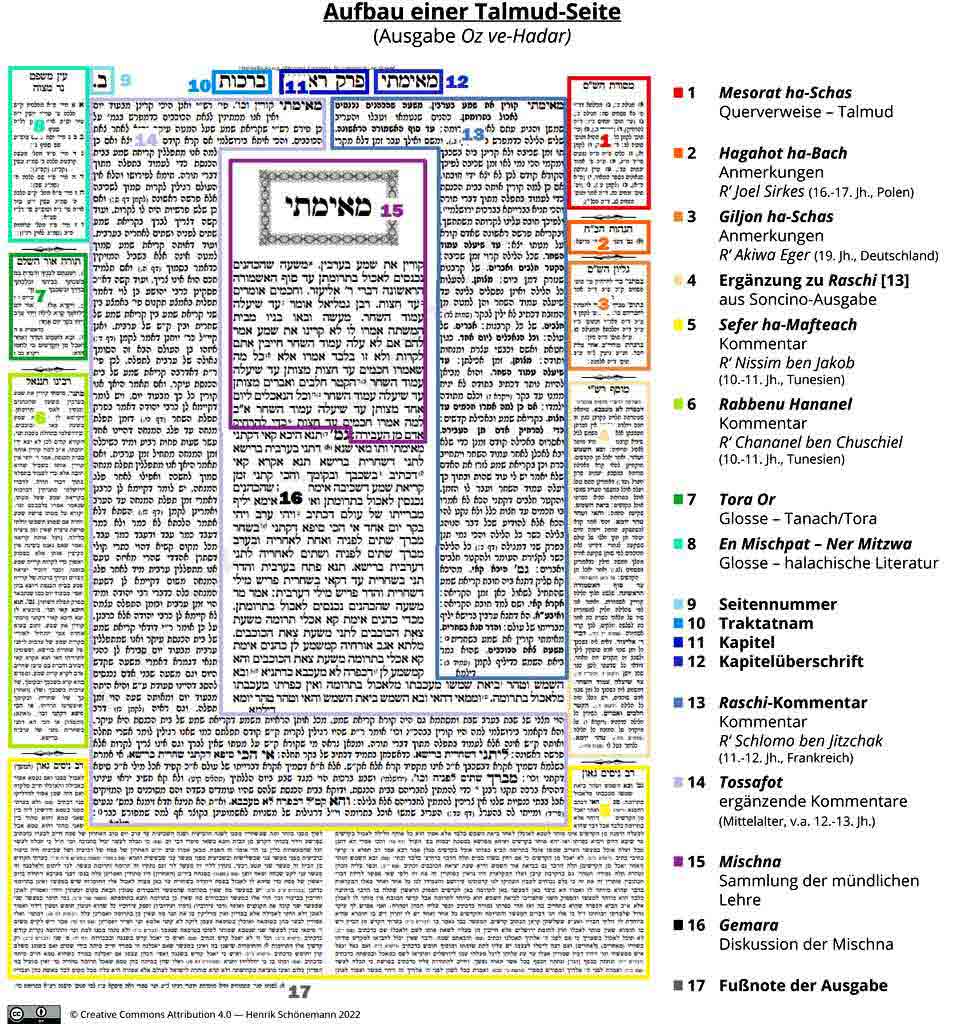
The content of the Tanakh (Torah), consisting of a total of 39 chapters, can be briefly summarized as follows: 1: TORAH; The Five Books of Moses (considered to be the sections containing the revelation given to Moses) A- Genesis (Bereishit) The creation of the universe, the world, and Adam and his wife; the story of Satan and Adam, the story of Prophet Noah and the Flood, the story of Abraham and his sons Ishmael, Isaac, and Jacob (Israel), and the journey of the Children of Israel to Egypt through Joseph. B- Exodus (Shemot—Exodus—The Exodus from Egypt) This book recounts the story of Moses, the deliverance of the Children of Israel from Pharaoh and their exodus from Egypt approximately 500 years after Joseph, their forty-year wandering in the Sinai Desert, the revelation of the Ten Commandments, and the establishment of the fundamental laws of the Torah.
C- Leviticus (Vayikra – Leviticus – The Levites) This book describes the appointment of the sons of Aaron, Moses’s brother, as religious teachers and leaders, and details specific rituals (nusuk). D- Numbers (Bamidbar – Numbers – Census in the Desert) recounts the story of the Israelites from the Sinai Desert to their arrival at the eastern border of the Land of Canaan, the census of the tribes, and other decrees revealed to Moses. E- Deuteronomy (Devarim—Deuteronomy—Repetition of the Law) contains the exhortations Moses gave to the Children of Israel in the wilderness of Moab before his death, as well as a reiteration of the religion and the Sharia.
2- NEVI’IM; The Prophets (The section containing the Revelations that recount historical events following Moses, the stories of important figures, and were revealed to the prophets of the children of Israel—his “descendants”—who came after him) A- Joshua: Describes the wars and conquests of Joshua, son of Nun. B- Judges: Covers the events following Joshua’s death. C- 1 and 2 Samuel: Describes how the first Jewish kingdom was established, focusing on Saul and David. D- 1 and 2 Kings: The northern kingdom was called the Kingdom of Israel, and the southern kingdom was called the Kingdom of Judah. It recounts the division of the Jewish nation following the reign of King Solomon. E- Isaiah: He was the son of Amoz and a prophet who lived in the Southern Kingdom of Judah. This book describes the Assyrian and Babylonian invasions suffered by the Israelites due to their sins, the Persians’ assistance in their deliverance, and the strength of their faith in God. He is one of the ancient prophets most frequently quoted in the New Testament.
F- Jeremiah: The message of the Prophet Jeremiah is recounted. G- Ezekiel: The story of the Prophet Ezekiel in Babylon is recounted. H- Hosea: This is the first book of the “Twelve Prophets.” It concludes with Joel, Amos, Obadiah, Jonah, Micah, Nahum, Habakkuk, Zephaniah, Haggai, Zechariah, and Malachi. I- Joel: He calls the Jewish people to fast and prophesies that Judah will one day achieve victory again. J- Amos: He lived in the mid-8th century BCE. He was the first prophet to have his words written down. K- Obadiah: The shortest book in the Tanakh, it provides information about the Edomites. L- Jonah: The story of Jonah’s journey to Nineveh, the capital of Assyria, is told. M- Micah: He always speaks of a future filled with peace.
N- Nahum: Through the three themes that make up the entire book, the collapse of the Assyrian Empire is described. O- Habakkuk: Consisting of only three themes, this book expresses profound and poetic thoughts. P- Zephaniah: This is also a book with three themes. This prophet, descended from the royal line, expresses the hope that Jerusalem will one day regain its former glory. Q- Haggai: The story of the prophet Haggai is told. R- Zechariah: Through 14 passages, it conveys to the Jewish people the belief that with the coming of the Messiah, peace will last forever. S- Malachi: Through Malachi, the Lord conveys the weight of His word to the children of Israel.
3- KETUBIM; A- 1 Chronicles: It recounts the genealogies from Adam to David and the story of David. B- 2 Chronicles: It recounts the story of Solomon and the kings who followed him. C- Psalms: The psalms of the Prophet David. Known as the Zebur, this book is recognized not only for its poetic style but also as a book of hymns and prayers. D- Job: The story of Job’s questioning and patience in the face of the hardships he endured is told through his dialogues with his three friends. The narrative structure of this section differs slightly from that of the rest of the Quran. E- Ezra: This section tells the story of Ezra, the “scholar,” who arrived in Jerusalem after the Babylonian exile and received significant support from the Persian king.
F- Nehemiah: It tells the story of Nehemiah, who was appointed governor of Jerusalem with the permission of the Persian king and became Ezra’s most important supporter. G- Esther: It focuses on the courage of Esther (Hadassah), who saved her people from disaster and rose to the position of queen. H- Proverbs of Solomon: Contains words of wisdom used in daily life that carry deep meanings. It includes sayings that shed light on the rules governing every aspect of life. I- Song of Songs: Contains songs filled with loving, poetic expressions. J- Ruth: It tells a beautiful story of self-sacrifice and friendship. It recounts Ruth’s loyalty and self-sacrifice toward her mother-in-law despite her husband’s death. Through her mother-in-law’s efforts to find a husband named Boaz for her daughter-in-law, David will be born in the third generation of the lineage resulting from this marriage (Obed-Jesse-David).
K- Lamentations of Jeremiah: This book contains five mournful laments. It expresses the suffering endured by the Jewish people following the destruction of Jerusalem by the Babylonians in 586 B.C.E. This book is also read in synagogues on Tisha B’Av. L- Ecclesiastes: The book, whose Hebrew title is “Ha-Kohelet,” is believed to have been written by Solomon in his old age, as it begins with the words, “These are the words of the Preacher, the son of David.” This book attempts to present a philosophy of life in a question-and-answer format. It is also claimed that this book, which advocates patience and courage, reflects the ideas of Greek philosophical schools. M- Daniel: This book, which recounts the sacrifices made by Daniel and his three friends to remain faithful to their religion and act with integrity, is also known as “the first book in the Torah to mention the end times.”
The Torah (Tanah), which we have at the moment, constitutes these sections. For the Torah researchers, it is said that there are various approaches based on the differences in the forms of expression found in the inner structure of the Mushaf. It is thought that different approaches are integrated into the work during the time until the Mushaf becomes what it is today. These are mainly divided into categories such as Judge, Elohist, Cahines and Compilers. In the light of the events that took place in the historical process and the other works that we have obtained, we can say the following; when we read the Tanah (Tahrat) that we have today, we can say two sheets of “ya, which are expressed in the heading Exit from Egypt, which contain particularly relevant bounds After Moses angrily broke the slabs in his hand, he cut two stone slabs to renew the agreement and descended with the tablets written after going up to Sinaia (34:1-29), narratives such as ” should contain at least volume-limited information in the Jewish faith.
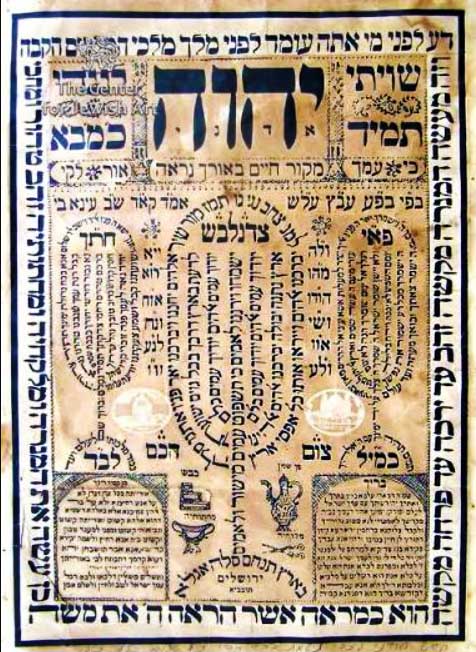
Alongside the Tanakh—the most important work of the written tradition—there is also the oral tradition known as the Talmud, which was likewise committed to writing over time. The oral tradition that constitutes part of the Talmud was set down in writing in the second century by Rabbi Judah ha-Nasi, under the name Mishnah, meaning “to repeat for the sake of study, information, or the second law.” The Mishnah, which sets forth rulings and principles concerning matters of daily routine, is divided into six sections. And in time, owing to the difficulties involved in understanding it, the need for commentary and exegesis arose, giving rise to the Gemaras; through this, the other half of the Talmud took shape in two forms — the Babylonian Gemara (Babylonian Talmud) and the Jerusalem Gemara (Jerusalem Talmud).
Beyond this, there are also the Deuterocanonical (Apocryphal) Books. The Apocryphal Books are of great importance in providing valuable information concerning the history, life, thought, worship, and religious traditions of the Jews who lived in the centuries before the Messiah Jesus. In this way, we can better understand the historical and cultural environment in which the Messiah Jesus lived out his life and teaching. The Deuterocanonical (Apocryphal) Books consist of historical texts, legends, sayings of wisdom, prayers and hymns, and texts concerning future events. The books, in order, are: Tobit, Judith, Esther (the Greek translation, containing certain additions to the original text found in the Old Testament), Wisdom, Sirach, Baruch, the Letter of Jeremiah, the Prayer of Azariah and the Song of the Three Young Men, Susanna, Bel and the Dragon, 1 Maccabees, 2 Maccabees, 3 Maccabees, 1 Esdras, 4 Ezra, the Prayer of Manasseh, Psalm 151, and 4 Maccabees.
Beliefs About The Afterlife
Various views exist regarding belief in life after death within the history of the Children of Israel. There are a range of opinions: that the subject was not mentioned up until the period of exile and came onto the agenda, or resurfaced, specifically through those who returned under Persian influence; that the belief that the other world — that is, paradise (Gan Eden) and hell (Gehinnom) — existed in this world gained currency and subsequently entered the literature; that the subject was not broached in the time of Moses and the great prophets; and that, although the Torah contains no explicit statements on the matter, it nonetheless entered the articles of faith over time. Yet it is evident that, in the scripture set down after the time of the Prophet Moses — particularly in the period of Ezra — the memories of the earliest period had grown considerably faint.
When we look at the relevant passages in the Torah on this subject, let us set aside vague expressions such as “the realm of the dead” (Genesis 37:35, 42:38, 44:29–31; Job 7:9) and “being gathered to one’s fathers” (Numbers 20:26, 27:13; 1 Kings 2:10, 11:43), and cite instead the following statements: “But your dead will live; their bodies will rise. You who dwell in the dust, wake up and shout for joy. For your dew is like the dew of the morning; the earth will give birth to her dead…” (Isaiah 26:19). “Many of those who sleep in the dust of the earth will awake: some to everlasting life, others to shame and everlasting contempt.
Those who are wise will shine like the brightness of the heavens, and those who lead many to righteousness, like the stars, for ever and ever.” (Daniel 12:2–3). “Before I go to the place of no return, to the land of gloom and deep shadow, to the land of deepest night, of deep shadow and disorder, where even the light is like darkness.” (Job 10:21–22). “In the way of righteousness there is life; along that path is immortality.” (Proverbs 12:28). “Whoever oppresses the poor shows contempt for their Maker, but whoever is kind to the needy honors God. The wicked are brought down by their wickedness, but the righteous find refuge, even in death.” (Proverbs 14:31–32).
We have provided several examples found in the scripture concerning belief in life after death, and, as can be seen, we observe that information regarding immortality is treated only partially, without offering detailed evidence. Let us also add certain statements found under the entry “soul” in the Encyclopaedia Judaica: “…The Bible contains some hints of a belief in life after death, but it does not put forward explicit concepts of an immortality developed in connection with the fate of humankind and divine justice… Terms such as ‘Olam Haba’ (the world to come) or ‘tehiyat ha-metim’ (resurrection of the dead) relate particularly to divine justice, individual destiny, and spiritual salvation. In this context, according to the sages of religion, the term ‘world to come’ represents the entire spiritual realm that the deserving soul attains after physical death, where there is ‘neither eating nor drinking… but the righteous sit and enjoy the splendor of the Divine Presence.’”
The belief in “life after death,” which appears only vaguely, particularly in the Torah portion of the scripture, was not accepted by Sadduceeism, an important sect that emerged from within Judaism. According to this school, which recognizes no religious authority outside the Torah portion of the scripture, many metaphysical concepts, including life after death, are rejected. The Pharisees, however, who were more numerous within the Jewish community, held fast to the belief in life after death, and in the time that elapsed, this belief was explicitly recorded as an article of faith in the creed by the Jewish theologian Saadia Gaon, who lived between 882 and 942 CE. Maimonides (Moshe ben Maimon), who expanded this Jewish creed — originally compiled in eight articles — into thirteen, likewise emphasized the religious necessity of believing in resurrection.
In sum, the belief in resurrection announced to ancient communities was given, step by step and in accordance with their level of development, to the Children of Israel, chosen for the purpose of establishing the emphasis on One God. The emphasis on the afterlife found among the Prophets of the Book’s revelation — such as Moses — remained faint in the minds of the Children of Israel, who reflected the generations of humanity’s adolescence; by giving priority instead to the narrative of an “abode of peace” that they might build in this world, an environment was created in which they could, in time, come to accept — or, more precisely, internalize — this teaching.
Viewed from the perspective of general human history, the history of Judaism was not a religious teaching confined to a single segment or a single period; rather, beyond this, it constituted the field of experience of a chosen nation, so that humanity, having set out on a long journey, might come to properly appreciate — that is, not merely to know, but to truly come to know — “that One God.” In our figurative account, they have been the representatives of humanity’s experience at ages nine to twelve to fifteen.
The careful underscoring of the emphasis on One God, and the fact that this teaching flowed forward with mercy despite the dozens upon hundreds of deviations that occurred along the way, constitute one of the thresholds in our overall journey. We have already tried, in the relevant sections, to briefly explain that the distinction of “that One God” has been made since ancient civilizations; but following the experience of the Children of Israel, this was conveyed to the ears of humanity in a still stronger manner. Indeed, many historians of religion have, on account of this leap, interpreted the Prophet Abraham as “the founder of the monotheistic religions.” By now, the reader will have understood that this interpretation is a rather shallow and incomplete characterization. To put it once more: the statement would rather be that “That One God has, at any given time, sent down only a single religion.”
The subtlety here is that, with the Prophet Abraham, the instruments of the three domains of unseen knowledge changed. That is, through a single nation, this began to be implanted more intensively into humanity’s collective consciousness and collective unconscious. When we examine the Torah scripture or other sources, we see that, through the Children of Israel, in order for them to be able to properly hold on to the life already flowing before their eyes, they were first enabled to live out “the Kingdom of David” — that is, to strive to spread goodness, peace, mercy, and righteousness throughout the earth. Of course, given that this was “a human matter,” it was not something that could happen all at once. Although the succession of Prophets explained that, in order to be purified, they needed to free themselves from all sins, evils, oppressions, and injustices, the Jewish community imagined that they could purify themselves through sacrifices offered before the Temple — such as the ritual, bequeathed by the Jewish people to humanity, known as the “scapegoat.”
While this process was carried out at times through closed and ambiguous concepts and at times through open and comprehensible ones, the model of the Kingdom of David — now intended to represent goodness on earth — was also laying the groundwork, in the period that followed, for a humanity capable of bearing still loftier ideas. Of course, centuries had to pass before the Children of Israel, and other peoples alongside them, could hear this, and before the Prophet Jesus — recalling the Kingdom of David with longing — could point instead to the “Kingdom of Heaven.” From the standpoint of the Children of Israel, the transformation of the Kingdom of David into a political-social project serving the interests of a single nation represents nothing other than the kind of deviation that befalls every society that fails to grasp the meaning of this earthly life.
Indeed, it is not difficult to see that expressions grounded in sacred blood, race, nation, people, and community — however much they may have become slogans that satisfied the societies holding them — were never anything more than romantic rhetoric. As we have said from the outset, labels, uniforms, slogans, and the like are merely instruments by which people who have not attained awareness, who are sleepwalking, attempt to console themselves.