In this article, we will discuss who Jesus was, where he was born, the Essene community to which he belonged, his ministry, and many other topics related to Jesus. In doing so, we have drawn upon the primary sources of the Abrahamic religions and the insights of numerous scholars to prepare this article on the Prophet Jesus.
In this article, we will attempt to paint a slightly different portrait of Jesus than the traditional one. Our main goal is to present Jesus as realistically as possible through an objective interpretation based on multiple sources. It is not possible to fully reconstruct the life story of Jesus in light of the information provided by both Christian and non-Christian sources. However, when we compile the information about Jesus provided by the canonical Gospels—Mark, Matthew, Luke, and John—we can say the following about his identity: Jesus was a Galilean Jew born to the Virgin Mary in the town of Nazareth in the region of Galilee around 4 B.C., the year of King Herod’s death.
He spent his childhood and youth in this town; around A.D. 28, he was baptized by John the Baptist in the Jordan River; began his preaching activities at around the age of thirty, following John the Baptist’s execution by beheading at the hands of Herod Antipas; in the year 30 AD, he was arrested by Caiaphas, the High Priest of the time who was responsible for public order in the Jerusalem region, for causing certain incidents and disturbances at the Holy Temple in Jerusalem; He was sentenced to death on charges of inciting chaos, anarchy, and rebellion, and was executed by crucifixion under the Roman governor of the time, Pontius Pilate. About three days after his death, he rose from the dead and ascended into heaven.
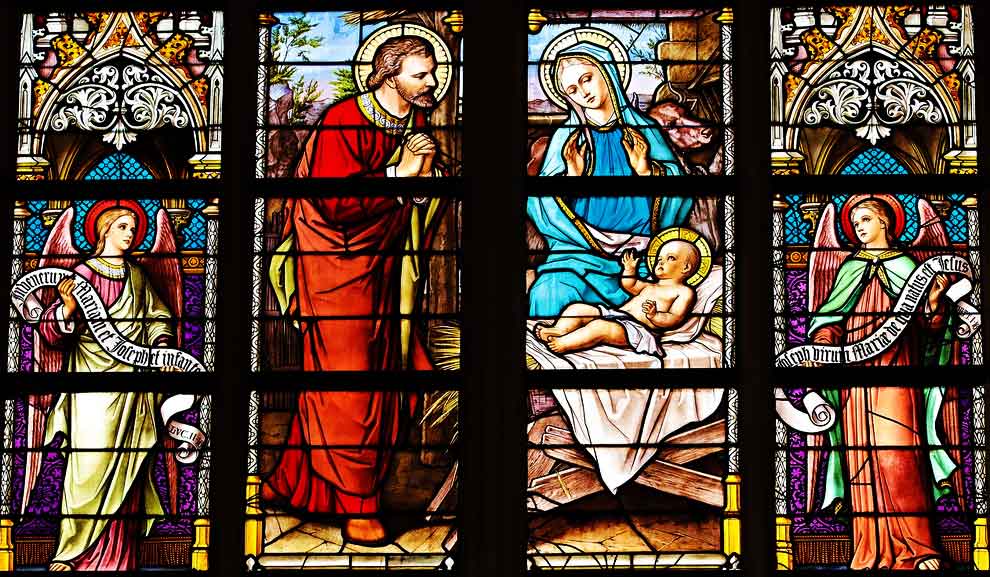
Who Is Jesus Christ
Contrary to general assumptions, the Gospels contain a few details that provide clues about the year of Jesus’ birth. The birth of Jesus is recounted in Matthew 2:1; after Jesus was born in Bethlehem of Judea during the reign of King Herod, some magi came from the East to Jerusalem and asked, “Where is the one who has been born king of the Jews? For we saw his star in the East and have come to worship him.” King Herod (b. 74 B.C. – d. 4 B.C., Jerusalem), also known as Herod I or Herod the Great, was a Jewish king appointed to the province of Judea by the Roman Empire. He died in 4 B.C. If we look at the account in the Bible, we can say that Jesus’s birth took place before Herod’s death.
Nowadays, the Western Churches recognise 25 December as the day of Jesus’s birth, and celebrations are held on that day. The Eastern Churches, on the other hand, recognise 6 January as that day and celebrate Jesus’s birth on that date. The choice of December 25 stems from the birth of Mithras. The ancient Romans grieved when the sun abandoned them in winter; on December 25, when the days began to grow longer, they held great celebrations in honor of the sun’s liberation from captivity. This is the birthday of Mithras, the God of Light. Following this custom, the early Christians would even greet the sun as they entered the church on that day. During the reign of Roman Emperor Constantine, December 25 was celebrated as the birth of Jesus Christ. In the year 354, this celebration gained official status by a decision of Liberius, the Bishop of Rome. Thus, yet another ancient pagan custom was Christianized under the slogan, “Jesus is our sun.”
There is no definitive information about the birth of Jesus. According to the Gospel of Luke (2:4–8), at the time of Jesus’s birth, shepherds were tending their flocks in the fields by day and by night. However, this is not possible in winter. In the years 6–7 AD, Emperor Augustus ordered a census to be conducted (Luke 2:1–3). Everyone went to their hometown for this purpose. The Virgin Mary also traveled with her fiancé Joseph from Nazareth to Bethlehem, 150 km away. Aside from the fact that it would have been difficult for a pregnant woman to make such a journey in winter, it makes little sense that an emperor who did not interfere in local affairs would require the Jews—who were always ready to revolt—to undertake a long journey in winter for a census. According to tradition, John the Baptist was born on the Feast of the Fish (April 15), six months before his cousin Jesus. The Holy Quran states that the Virgin Mary gave birth during the season of fresh dates (Maryam: 22–25). From all this, it is clear that Jesus was born in October during the Feast of Tabernacles.
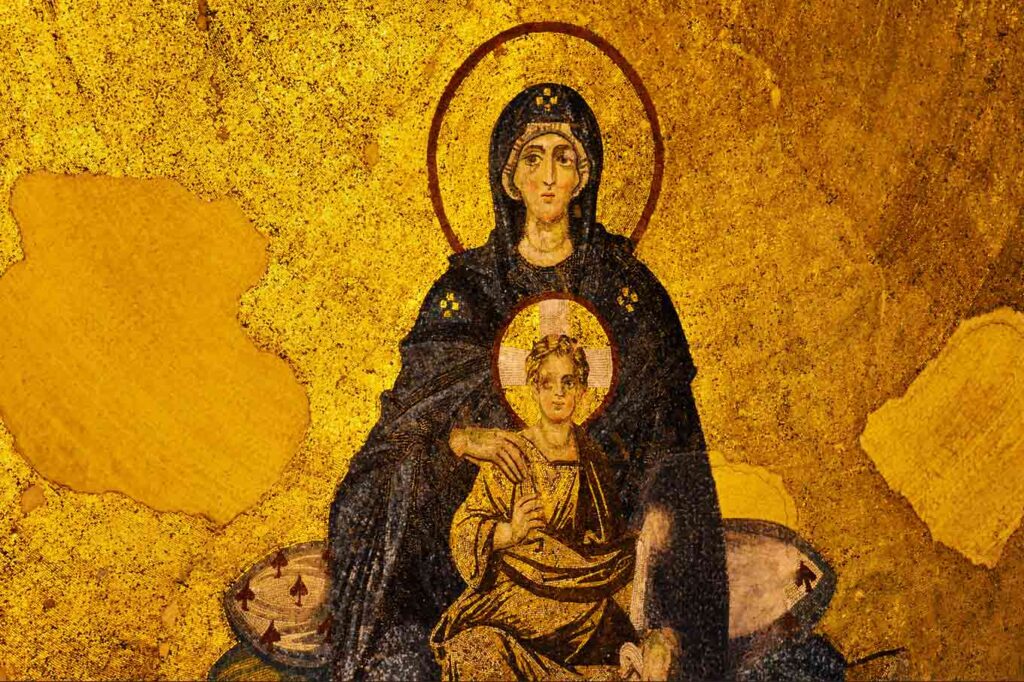
Since Herod the Great died in 4 B.C., according to the Gospel account, Jesus must have been born before that date. December 25 or January 6 cannot be his date of birth, because the account mentions lambs that had just been born. In that case, we must look to the spring months rather than winter. According to Matthew 2:16, when King Herod (Hirodes) realized he had been deceived by the Magi, he ordered the killing of all male children under the age of two. This massacre is known as the “Massacre of the Innocents.” Based on this information, we must consider a date between 4 BC and 6 BC. From a Quran-centered perspective, Mary was eating fresh dates at the time of her delivery.
Again, this leads us to the dates of late August, September, and October. Jesus’s birth is generally accepted as a miracle, and it is widely believed that he was born of a virgin. According to the Gospel of Matthew, after marrying Mary, Joseph learned that she was pregnant before their marriage; not wanting to shame her in front of everyone, he decided to quietly separate from her. However, an angel appeared to Joseph in a dream and said, “Joseph, son of David, do not be afraid to take Mary as your wife, for the child conceived in her is from the Holy Spirit.” Upon hearing this, Joseph took Mary into his home but did not have sexual relations with her until after Jesus was born.
However, when we look at the passages in the Quran, the fact that Mary was engaged to Joseph indicates that Joseph was Jesus’s biological father. We can see this both in the Gospels and in the context of verse 44 of Surah Al-Imran in the Quran. “For Mary was one who was dedicated to the temple.” According to tradition, a woman cannot be dedicated to the temple in the first place, and there is also a rule that a dedicated woman cannot marry. Mary is a woman who broke this tradition. She married and even had a child. Since the Jewish scribes could not tolerate this situation, they slandered and persecuted Mary, believing she had violated tradition and defied the sacred law.
In fact, by breaking with tradition, Mary stood up to the Jewish scribes. This is my interpretation for now. There are also passages that support this view. In this context, Mary’s statement upon seeing a man—“No man has touched me; how can I have a child? I am not an immoral woman”—reflects the situation she faced in the early stages of her life. In other words, Mary was a woman consecrated to the temple; she was not married, which is why she asked, “How can this be?” Because she was familiar with the tradition. It is perhaps possible to interpret that after receiving the Annunciation, she became engaged to Joseph and that events unfolded subsequently—but this is merely one interpretation.
What Did Jesus Do While With The Essenes and in Egypt
The striking point regarding Mary’s journey to Egypt is this: In the Gospel of Matthew, it says, “Get up! Take the child and his mother and flee to Egypt! Stay there until I tell you, for Herod will search for the child until he kills him!” (Gospel of Matthew, Chapter 2, “The Flight to Egypt”) The Quran, however, refers to this situation in Surah Al-Mu’minun, verse 50: “We made Mary’s son and his mother a sign. We settled them on a hill with a flowing stream.” It is believed that this passage also refers to this event. The route of this journey, known as the Holy Journey, is as follows: from Bethlehem in the West Bank to the Gaza region.
The main journey began in El Arish and continued through El Ferma, Tel Basta, and Mustadrid to the region of ancient Egypt. From there, they proceeded to the Sa’id region; after staying and hiding there for a while, they crossed Wadi El Natron (Natron Valley) and reached the towns of Belbesin, Semnud, and Seha/Suha in the northern delta region. On the return journey from Egypt, they crossed the Sinai Desert and ended up in Palestine. The journey to Egypt lasted a total of 3 years (according to some sources, 2 years, 6 months, and 10 days). It is said that God’s angel appeared to Yusuf Naccar a second time here and commanded, “The danger has now passed; return to the lands of Palestine where your family has returned.”
There is a theory that Jesus was associated with the Essenes during his youth. It is believed that he underwent some form of initiation in Egypt. Some sources provide various pieces of evidence to support this. It is also claimed that he spent time with the Essenes and received training from them in areas such as healing. One of the common points that led to Jesus being linked to the Essenes is the connection drawn between James—mentioned in the New Testament as Jesus’s brother and the head of the Jerusalem community—and the title “Siddik Murshid” held by the leader of the Essene community. Is the James mentioned in the Gospels Jesus’s biological brother by Mary (peace be upon her), or is he a “spiritual brother” indicating that they belonged to the same community? As Robert Eisenman also points out, sources record that the James mentioned in the New Testament was 96 years old when he was stoned to death in A.D. 62.
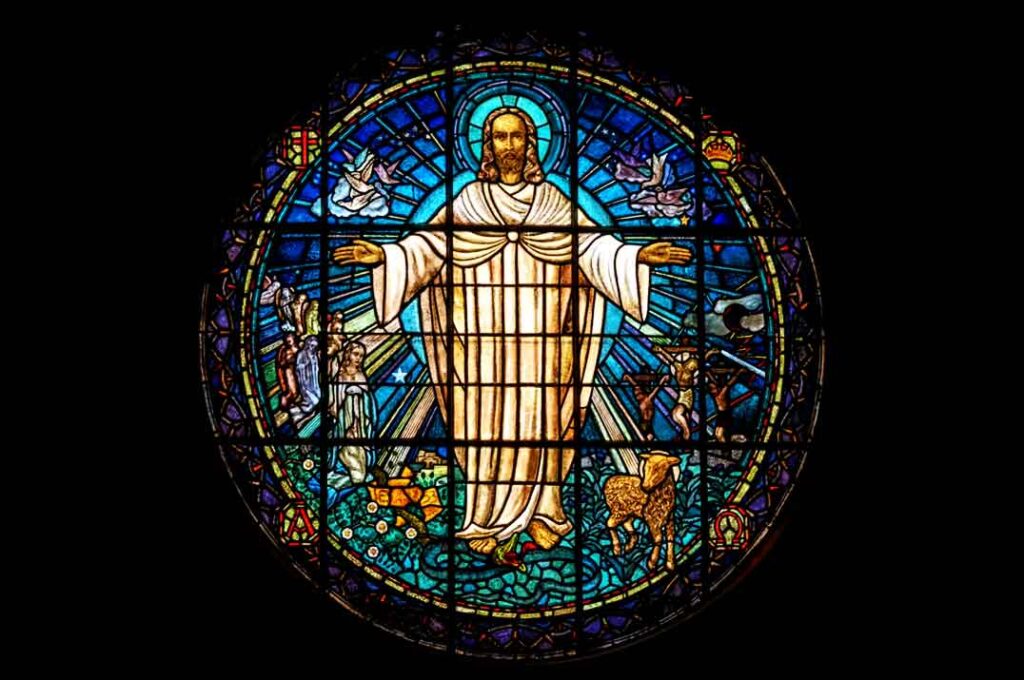
Accordingly, the James mentioned in the New Testament must have been at least 34 years old when Jesus was born, which indicates that he was not Jesus’s brother born to Mary. Another possible connection between the Essenes, Jesus, and Christianity lies in the accounts regarding John the Baptist, known to Christians as John the Baptist. Certain similarities have been identified between the characteristics of John the Baptist described in the Gospels and those of the disciples belonging to the Essene community. According to the Gospels, John the Baptist lived “in the wilderness,” just like the Essenes, and preached there. Indeed, like John the Baptist, they also described themselves as “those who prepare the way in the wilderness.”
The Crucifixion of Jesus
Some claims about Jesus: There are many areas of study regarding Jesus that fall outside the scope of official Christianity and traditional Islam. Scientific and historical research conducted in the West, particularly under the general heading of “The Historical Jesus,” has yielded findings that challenge official Christian paradigms regarding Jesus. These findings and theories have gained such popularity that they have even been featured in novels like *The Da Vinci Code*. There is a claim that “Jesus was taken down from the cross alive (unconscious or in a coma) and brought back to life as a result of intensive medical treatment”; “After being saved from death, Jesus carried out his missionary activities in Palestine and Syria for a time, then traveled to India and Kashmir to continue his preaching there; and after living a life of over a hundred years, he passed away in Srinagar, Kashmir.”
Jesus was nailed both through his hands and through his feet. His two feet were placed one on top of the other and secured with a single nail. Although this method of crucifixion caused great suffering, it did not result in serious injury and, provided there was no infection, allowed for a quick recovery. Crucified prisoners often survived for three days or longer. If they did not die within that time, their legs and arms were broken with iron sledgehammers to hasten their death. Regarding the crucifixion process, three individuals stand out in the Gospels as having played a role or carried out a specific task during the crucifixion.
The Centurion: According to the apocryphal “Acta Pilate” (“The Acts of Pilate”), the soldier overseeing the crucifixion was the Roman Centurion Longinus. According to one account, Longinus later served as a bishop in his homeland of Cappadocia (the Nevşehir region). In other words, the Centurion was actually a secret believer. This explains many aspects of the crucifixion. Another figure is Joseph of Arimathea, one of the 70 esteemed members of the Sanhedrin, the Jewish religious high council; he, too, believed in Jesus but kept his faith a secret. John 1:9:38 …Joseph was a disciple of Jesus, but he kept it secret because he feared the Jewish authorities… Mark 1:5:43 …Joseph of Arimathea, a respected member of the Sanhedrin who was eagerly awaiting the Kingdom of God… Luke 23:50 There was a good and righteous man named Joseph, a member of the Sanhedrin. A Jew from Aramatya, Joseph, who earnestly awaited the Kingdom of God, did not approve of the Sanhedrin’s decision or action.
Nicodemus: He, too, was one of the 70 members of the Sanhedrin. He was among those who believed in Jesus (John 3:1–22). Both Joseph and Nicodemus saw Jesus’ crucifixion as inevitable. Having prepared a plan for the aftermath of this inevitable outcome—which they could not prevent—they carried out that plan step by step. A significant intervention at the cross: John 19:29 There was a jar of vinegar there. They attached a sponge soaked in vinegar to a hyssop branch and held it to his lips. When Jesus tasted the vinegar, he said, “It is finished!” and, bowing his head, gave up his spirit. Was the vinegar offered to Jesus truly undiluted, or was it vinegar laced with opium? (If Jesus had been rendered unconscious by opium, he would have been presumed dead; it would have been possible to take him down immediately and provide medical treatment.)
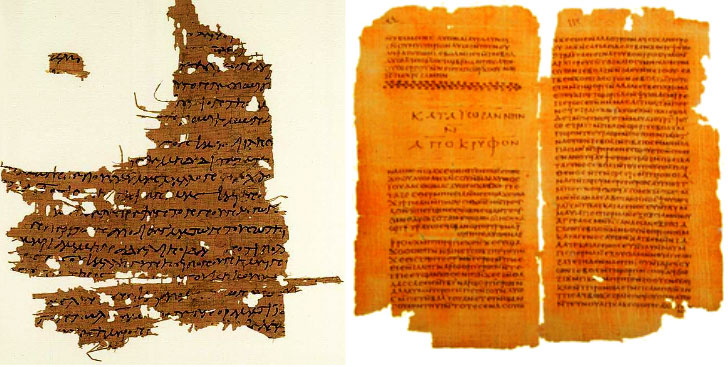
Michael Baigent confirms this view as follows: In the Gospels, there is a puzzling event that can perhaps only be explained by hypotheses: While [Jesus] was on the cross, he complained of thirst. A sponge soaked in vinegar was attached to the end of a long pole and held out to him. However, instead of regaining consciousness after drinking it, Jesus died. This is an intriguing reaction and suggests that the sponge was not soaked in vinegar—a substance that would have revived him—but in some other substance that would have caused him to lose consciousness, such as a type of anesthetic. Such anesthetics were available in the Middle East.
It was well known that effective anesthetics could be obtained by soaking a sponge in mixtures such as opium, belladonna, or poppy. After being soaked in the mixture, these sponges were dried and transported to the desired location. When it was necessary to put someone to sleep—for example, for surgery—the sponge was soaked in water to activate the anesthetic inside, and then placed in the nose or mouth of the person who needed to lose consciousness. When the events surrounding Jesus’ time on the cross and the explanations regarding his sudden death are carefully evaluated, the idea that he was actually anesthetized using the sponge method seems very plausible. No matter how carefully the crucifixion was “staged” “to keep Jesus alive,” it was impossible to predict the impact of the shock he would experience. Above all, crucifixion was a traumatic experience, both physically and mentally. Sedation would have reduced the impact of the trauma, increasing his chances of survival; thus, the sedative would have been used for a good purpose.
According to John, Jesus remained on the cross for 3 hours; according to Mark, for 6 hours. In the other two Gospels, the duration remains ambiguous, suggesting it could have been either 3 or 6 hours. It is understood that Jesus remained on the cross for 3 or at most 6 hours. Since the following day was Saturday (Shabbat) and, as with Muslims, days in Judaism begin at sunset, the three prisoners had to be taken down from the cross before sunset. John 19:31 The Jewish authorities asked Pilate [the Roman Provincial Governor] to have the legs of those crucified broken and their bodies removed. Since it was Preparation Day, they did not want the bodies to remain on the cross during the Sabbath.
For that Sabbath was a high holiday. A six-hour crucifixion is not fatal. Indeed, since it was clear that the other two prisoners had not died, their legs were broken with a sledgehammer to ensure their deaths. The request to take them down from the cross Mark 1:5:42–43 That day was Preparation Day, that is, the day before the Sabbath. It was already evening. For this reason, Joseph of Arimathea, a respected member of the Sanhedrin who was waiting in hope for the Kingdom of God, came forward, gathered his courage, and went before Pilate to ask for Jesus’ body. 44 Pilate was surprised that Jesus had died so quickly. He called the centurion and asked, “Has it been long since he died?”
Flavius Josephus (A.D. 37–100), a renowned historian of that era of Jewish descent, recounts the following memory in his autobiography (IV, 75, p. 25): I had been sent by the Roman emperor Titus, along with Ceralius and a thousand cavalrymen, to the town of Thecoa to check whether it was suitable for setting up camp. On my way back, I saw prisoners who had been crucified. I recognized three of them; they were my old friends. Overcome with great sorrow and tears, I went to Titus and explained the situation. Titus immediately ordered that the three prisoners be taken down from the cross and treated. Two of my three friends who were taken down from the cross died while being treated, but the third was revived.
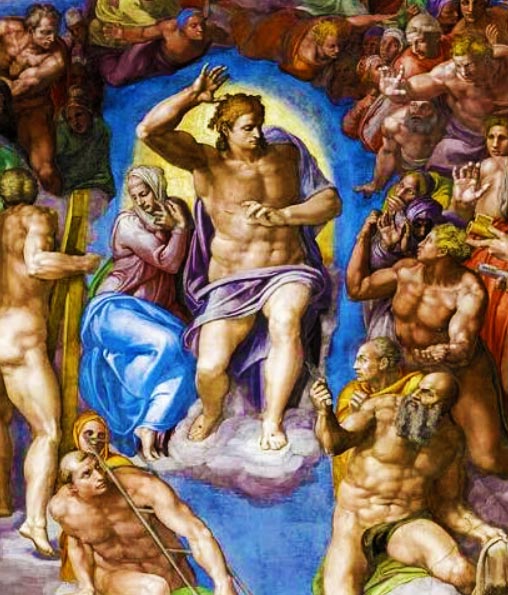
It is known that the Essenes, who lived a reclusive life in Qumran, and Jesus, who spent a period of time with them, gained fame for their healing methods, which are known today as “alternative.” A letter written by Abgar Uchama, King of Edessa [Urfa], to Jesus has survived to the present day through Eusebius’s *Church History*, written in A.D. 313 when Eusebius was the archbishop of Caesarea. The letter reads as follows: Abgar [Ukkama], King of Edessa, sends his greetings to Jesus, who has appeared in the city of Jerusalem. I have heard of you and the healings you perform without the use of medicine. According to reports, you open the eyes of the blind, raise the lame to their feet, heal those afflicted with leprosy, cast out evil spirits, and raise the dead. (…) My request is that you come to me and deliver me from my illness. I have also heard that the Jews are against you and are plotting to harm you. I have a small but just city, large enough for both of us. While washing the dead is a religious obligation in Judaism, the fact that Jesus’ body was not washed and was not placed directly in a tomb is one of the signs that he was alive and had been healed.
Who Punished the Jesus
Jesus is the son of Mary. When he reached his thirties, he did not claim to be a cosmic/divine savior, but rather claimed the title of Messiah—in the sense of being the leader of the Jews—as a political-religious title. Jesus articulated a political-philosophical revolutionary discourse based entirely on social justice, a simple life, and the sharing of property with the poor; he preached that the priestly class of institutional Judaism had corrupted the messages of Moses and the other Israelite prophets. All of these activities were perceived as a threat by the Jewish priestly class and as a rebellion by the Romans. At the end of this process, Jesus either died or left the region; the Jewish group of followers he left behind, known as the Nazarenes and the Jerusalem Community, continued as a branch of Judaism under the leadership of Jesus’s brother, James, nicknamed “the Just.” From the perspective of the history of religions, the historical Jesus was a prophet sent to the Children of Israel after Moses, like the other prophets; from the perspective of political history, he was a Jewish reform leader committed to the monotheistic faith of the Old Testament who sought to unite the Jews against Rome.
After Jesus’s departure from the historical stage, the Jewish followers of Jesus (Nasrani/Jerusalem Community), led by “Adil” Jacob, joined forces with other Jews and participated in large-scale uprisings. Foremost among these were the First Jewish-Roman War (AD 66–73), in which 20,000 Jews were killed; the Battle of Kishush (or Kitos) (AD 115–117); and, finally, the Bar Kokhba Revolt (132–136), in which 580,000 Jews were killed. During this period, the Jewish followers of Jesus—led by James, who regarded Jesus as the Messiah—were largely killed following the martyrdom of James the Just between 66 and 70 CE; some, however, fled from Rome to remote regions such as Africa and Arabia/Hejaz. The tradition of executing criminals by crucifixion was a method of punishment practiced in the Roman Empire. This method of punishment was generally applied to political rebels and rebellious slaves. Since Jesus was not a slave, he was clearly crucified as a political criminal.
When we look at Mark 11–15, Passion Week begins with Jesus’s triumphant entry into Jerusalem on a donkey, amid crowds hailing him as “king,” and ends with his resurrection after his crucifixion. Now let me show you an image—this is a depiction believed to be one of the earliest drawings of the cross. Known as the Alexamenos Graffito, this drawing is dated to the late 2nd century or early 3rd century CE and is considered one of the oldest depictions of Jesus on the cross. This was a period before Christianity became the official religion of the Roman Empire, and as is clearly evident, this emerging religion was not particularly well-liked by some segments of society. The graffito depicts a human-like figure with the head of a donkey, crucified on a cross.
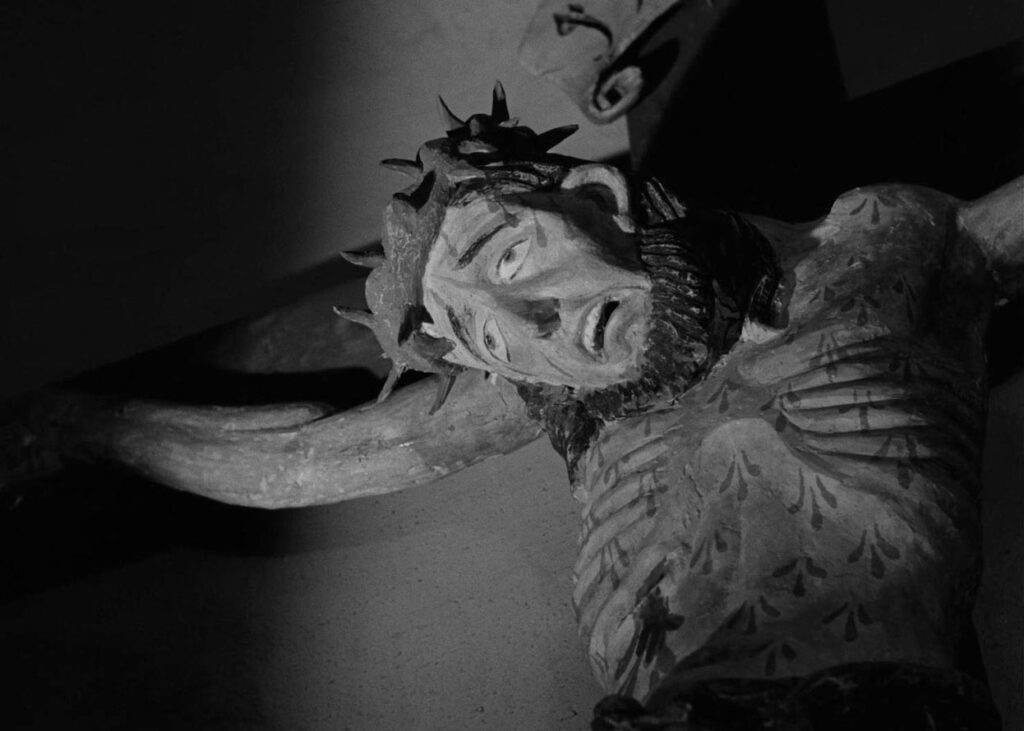
On the left, a man is seen extending his left arm toward this donkey-headed figure. Jesus enters Jerusalem on a donkey; the people welcome him with open arms, shouting, “Hosanna! Blessed is he who comes in the name of the Lord! Blessed is the coming kingdom of our father David.” In fact, according to the accounts in the Gospels of Matthew and Luke, they explicitly call him “the Son of David” and “king.” Temple guards/police loyal to the high priest arrest Jesus and bring him before the high priest and the members of the Sanhedrin, the Jewish High Council. Witnesses accuse Jesus of threatening to destroy the temple, but there is insufficient evidence to convict him. According to Mark alone, Jesus admits before the high priest that he is both the “Messiah” and the “Son of God,” and is convicted of blasphemy.
These five events in the Gospels concerning Jesus’ Passion Week raise the following four central questions: What was the purpose of Jesus’ actions in the temple? Why did the high priest arrest Jesus or have him arrested? Why did the high priest hand Jesus over to the Roman governor Pontius Pilate after interrogating him? Why—or on what charge—did Pilate accuse Jesus? He was fulfilling the prophecy found in the Old Testament book of Zechariah and recorded in the Gospel of Matthew: “Rejoice greatly, O Daughter of Zion! Shout for joy, O Daughter of Jerusalem! Behold, your King! He is the righteous Savior, humble and meek. He is coming to you riding on a donkey—yes, on a colt, the foal of a donkey.” According to Sanders, by entering Jerusalem on a donkey in accordance with this prophecy, Jesus clearly declared himself to be king, and his followers affirmed his kingship by cheering him and showing him signs of affection.
Indeed, the Synoptic Gospels also support this conclusion: He drove them out of the temple, saying, “My house shall be called a house of prayer for all nations, but you have made it a den of thieves.” The phrase “house of prayer” in this statement is taken from Isaiah 24, and the phrase “den of thieves” is taken from Jeremiah 25. Judas betrayed Jesus in collusion with the high priest Caiaphas and the members of the Sanhedrin. This event is clearly recorded in Mark 14:1–2, 10–11. Judas’s act of betrayal is described in Mark 14:35–43, where it is noted that he kissed Jesus when an armed unit composed of the temple police and Roman soldiers arrived at the Garden of Gethsemane to arrest him.
A careful examination of the Gospel accounts strongly suggests that the Romans executed Jesus because they recognized him as the heir to King David’s throne. Accordingly, the reason the Romans executed Jesus was not because they personally witnessed that he was the heir to David’s throne—and thus the Messiah/King awaited by the Jews—but because certain words and actions of his were misunderstood by the society in which he lived, leading to his being portrayed as such. Furthermore, it is highly likely that certain statements Jesus made against the temple played a significant role in his execution. In reality, we know very little about Jesus’s arrest, trial, and execution. This is because the accounts of Jesus’s arrest in the Gospels are purely fictional. We infer that he was arrested only because we know he was executed. Similarly, we have no historically reliable information regarding Jesus’s trial by the high priest and the Romans. His resurrection on the third day after his death is also likely derived from Hosea 6:2: “The Lord will revive us after two days; on the third day he will raise us up, that we may live in his presence.”
According to the Gospel of John, there were Roman soldiers among those who arrested Jesus. By asserting that Roman soldiers were also among those who arrested Jesus, the Gospel of John demonstrates that not only the Jews but also the Romans bear responsibility for Jesus’s arrest. The early Christian community had shifted the responsibility for Jesus’ crucifixion from Pilate, the governor who ordered the crucifixion, to the Jews. When this transfer of responsibility is evaluated in the context of John’s claim, it becomes clear that it is not historically accurate but rather a narrative constructed as a result of the conditions in which the early Christian community lived.
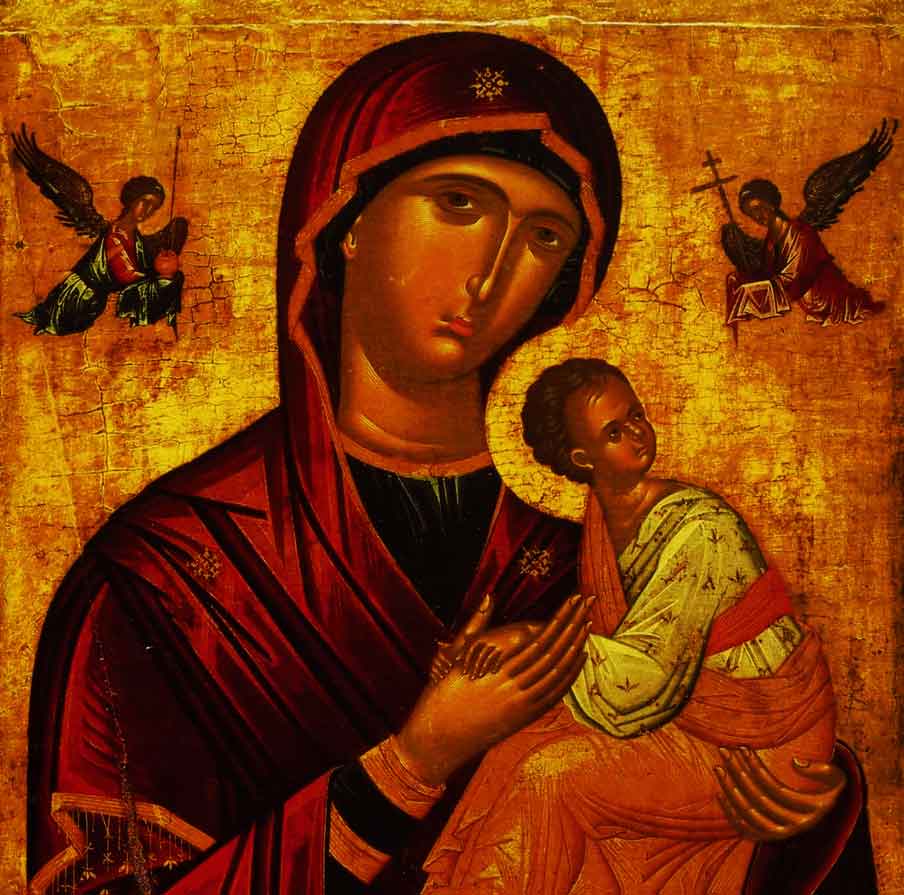
This is because Governor Pilate became involved in the matter at the very beginning of the process, not later under pressure from Jewish religious leaders and notables. The gathering of crowds in Jerusalem during major Jewish festivals was always dangerous and risky for the occupying forces. For example, according to Josephus, at least four serious attempts at rebellion occurred during the celebration of these festivals approximately 150 years before Jesus’ death. Christian sources cite three reasons for Jesus’s arrest. The first is Jesus’s triumphant entry into Jerusalem on a donkey, his being hailed as “king” by the crowds, and his expulsion of the pigeon sellers and money changers from the Temple of Solomon, threatening the people that he would destroy the Temple and rebuild it.
Indeed, Caiaphas and Pilate, convinced that Jesus—through his teachings about the Kingdom of God and his actions in the Temple before the Passover—was seeking an earthly kingdom and would rise up against Roman rule with his followers to achieve it, arrested him and executed him as a rebel. He also opposed the extreme legalism and excessive adherence to rituals among the Jewish religious leaders and the Pharisees. It was precisely because of these theological disagreements with Jesus that the Jewish religious leaders and the Pharisees hatched a plot to eliminate him; as a result of this plot, they arrested him, handed him over to Governor Pilate, and ultimately secured his execution.
Since none of Jesus’s apostles or disciples were eyewitnesses to the trial, the accounts of this event are both contradictory and historically suspect. The high priest and his men did not convene the Sanhedrin to try Jesus. This is because it is historically unlikely that the entire Sanhedrin could have convened at midnight on the first night of the Passover. From the Gospel accounts, it appears that the high priest Caiaphas, viewing Jesus as a political threat who needed to be eliminated immediately, conducted a perfunctory trial with a few of his men. The most important evidence that this trial was merely a formality is the high priest’s behavior during the proceedings. Indeed, the high priest first accuses Jesus of threatening to destroy the temple, but when he cannot find sufficient evidence to prove this charge, he accuses him of being the Messiah, the Son of God, and claims that this is clear blasphemy—arguing that this alone is sufficient grounds to sentence Jesus to death.
In fact, to demonstrate the gravity of this charge against Jesus, the high priest tears his garments. In Jewish tradition, tearing one’s garments in response to an event was considered a very strong sign of mourning. Since tearing one’s garments was prohibited by the Old Testament, the high priest’s act of tearing his garments in response to an event was the clearest indication of the gravity of that event and the sorrow felt over it. In short, according to the Gospel of Mark—and the Gospels of Matthew and Luke, which use it as a source—the high priest and his men viewed Jesus as a political threat to public order and peace because of his statements regarding the Kingdom of God, his reception by the crowds as a “king” upon his arrival in Jerusalem before Passover, and certain incidents he caused within the temple precincts—and thus viewed him as a political threat to public order and peace, leading them to plot his elimination.
Consequently, Jesus was a criminal who had been sentenced before being tried. However, according to Jewish tradition, he had to be tried. That is why, when the high priest and his men had Jesus arrested on the first night of Passover, they held an emergency trial without waiting for morning or convening the Sanhedrin, and accused him of threatening the temple. Unable to find sufficient evidence to prove this charge, they accused him of being the “Son of God”—which, according to Jewish law, constituted clear “blasphemy”—and ruled that he deserved the death penalty. What is noteworthy here is that Caiaphas, the high priest who was determined to sentence Jesus to death,—unable to find a crime for which to impose this punishment—accused him of attributing to himself titles such as “Son of God,” “Messiah”—titles considered blasphemous in Jewish tradition—and in this way attempted to justify the death sentence handed down against Jesus in the eyes of the public.
However, when we examine Jesus’s teachings and the early Christian tradition, we see that Jesus never in any way attributed these titles to himself; rather, they were ascribed to him within the early Christian tradition after his death. For this very reason, we believe it is impossible to say that the Gospel accounts claiming Jesus was executed because he attributed these titles to himself are historically reliable. High Priest Caiaphas and the members of the Sanhedrin, in collaboration with Governor Pilate, arrested and tried Jesus to prevent potential uprisings in the Jerusalem region against Roman rule and to preserve peace and order. This is because, in their view, during a period when the Jews were awaiting an earthly Messiah/Savior who would deliver them from Roman rule, Jesus—by causing certain disturbances in the temple precincts while the crowds were celebrating the Passover—could have reignited the people’s expectations of a savior and thereby triggered the outbreak of a potential rebellion.
In short, Jesus was arrested, tried, and sentenced to death not for religious or theological reasons—such as attributing to himself certain titles considered blasphemous against God in Jewish tradition—but because he was viewed as the leader of a potential rebellion against Roman rule. Regarding the Roman governor Pilate, we gain some information from the works of Josephus, a Jewish historian who served the Roman Empire, in addition to the Gospels. He was an extremely merciless, ruthless, and militarily brutal governor who remained in office longer than any other governor. In contrast, the image of Governor Pilate presented in the Gospels portrays him as a merciful and compassionate figure who felt compelled to crucify Jesus out of fear that the high priest Caiaphas and leading Jewish religious figures would launch a negative campaign against him.
The apparent aim of the Gospel compilers in depicting Jesus’ appearance before the Roman governor Pilate was to demonstrate that Jesus was not a criminal deserving of crucifixion. For if Jesus had been a political criminal deserving of the cross, then the Roman authorities would have been justified in viewing him and his followers as dangerous and lawless individuals. Under such circumstances, the spread of Christianity among Roman citizens would not have been possible. In short, by propagating the idea that Jesus—whom Christians followed and took as their guide—was not a rebel but an innocent victim executed without cause, the Gospel compilers aimed to win over Roman citizens and thereby spread Christianity.
As can be seen, the Gospel of Matthew shifts the responsibility for crucifying Jesus from the Roman governor to the Jews. Indeed, the Quran also states regarding the Jews, “They neither killed him nor crucified him.” In reality, it was Rome that carried out the act. However, in the history written after Jesus’s time, the victors—who would not want to portray themselves in a negative light—placed the blame on the Jews. Subsequent writers, believing the situation to be as such, have echoed this narrative. One must examine the context of the regions where Christianity spread, and specifically the conditions within the society in which the Gospel of Matthew was written. As mentioned above, modern Christianity, which took shape in the Antioch region during the post-Jesus period, spread throughout a region under the rule of the Roman Empire.
There is a claim to this effect, but since it is based on the existing Gospels, it is weak. Furthermore, the letter in question is thought to have been written in the 17th or 18th century, a time period quite distant from the events in question. The claim is that “Pilate frequently proposed Jesus instead of Barabbas, who was favored by the Jewish communities and had participated in the uprising” (since those who took part in a rebellion against Rome were not treated with much goodwill), and that “I will not be held responsible for this man’s blood”—that is, his washing his hands before the crowd—and that “this man has done nothing to deserve the death penalty.” (Matthew 27:11–24, Mark 15:1–14, Luke 23:1–24), “the letter written by Gladius Ensa in A.D. 62, reflecting Pontius Pilate’s desire to make efforts to save the innocent Prophet Jesus,” , practices such as Pontius Pilate’s “placing a covering over the head of the person being crucified—contrary to Roman custom”—and other legends indicate that Pontius Pilate, the Roman governor, spared the Prophet Jesus from the punishment the Jewish communities had been expecting and facilitated his escape from the region.
Was Jesus Married
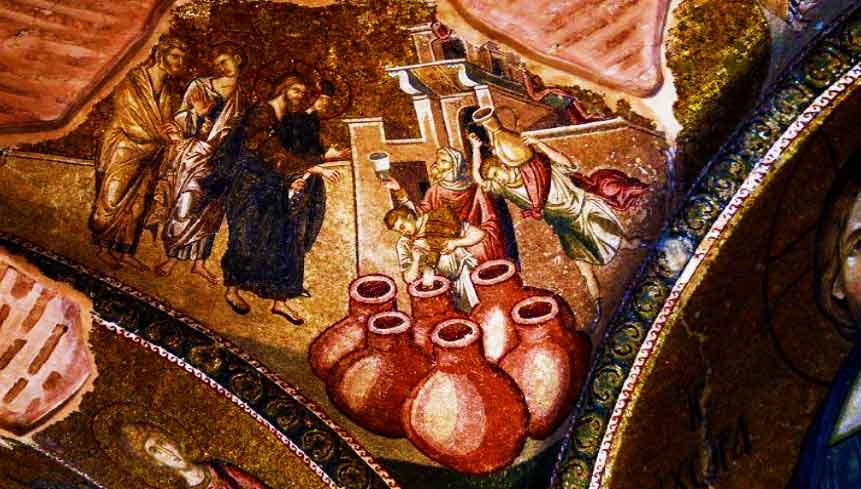
Unlike the Gospels accepted by the councils, we generally see certain details more clearly in the apocryphal Gospels. And as historical material, these Gospel texts appear to be somewhat more reliable. (Gospel According to John 2:1-12) “On the third day, there was a wedding in the village of Cana in Galilee. Jesus’s mother was there. Jesus and his disciples had also been invited to the wedding. When the wine ran out, his mother said to Jesus, ‘They have no more wine.’ Jesus replied, ‘Mother, what do you want from me? My hour has not yet come.’ His mother said to the servants, ‘Do whatever he tells you.’ There were six stone jars there, used for Jewish ritual purification, each holding between eighty and one hundred twenty liters. Jesus told the servants, ‘Fill the jars with water.’ So they filled them to the brim. Then he said to the servants, “Now draw some out and take it to the master of the banquet.” So they took it to him. The master of the banquet tasted the water that had been turned into wine. He did not know where it came from, though the servants who had drawn the water from the jars knew.
The master of the banquet called the bridegroom over and said, “Everyone serves the good wine first, and then the inferior wine after the guests have had their fill,” but “you have kept the good wine until now.” Jesus performed this first miracle in the village of Cana in Galilee and revealed his glory. His disciples also came to believe in him. After this, Jesus, his mother, his brothers, and his disciples went to Capernaum and stayed there for a few days.” “Jesus came again to the village of Cana in Galilee, where he had turned water into wine. There was an official there whose son was ill in Capernaum” (Gospel According to John 4:46). “After this, Jesus appeared again to his disciples by the Sea of Tiberias. This is how it happened: Simon Peter, Thomas (called the Twin), Nathanael from Cana in Galilee, the sons of Zebedee, and two other disciples of Jesus were together.”
“Mary, however, was standing outside the tomb, weeping. As she wept, she bent over to look into the tomb. She saw two angels dressed in white; one was sitting at the head of the place where Jesus’ body had lain, and the other at the foot. They asked Mary, ‘Woman, why are you weeping?’ Mary said, “They have taken away my Lord/Master. I don’t know where they have laid him.” After saying this, she turned around and saw Jesus standing there. But she did not realize it was Jesus. Jesus said, “Woman, why are you weeping?” “Who are you looking for?” Thinking He was the gardener, Mary said, “Sir, if you have taken Him away, tell me where you have laid Him, so that I may go and take Him.” Jesus said to her, “Mary.” She turned and said to Him in Hebrew, “Rabbuni.” Rabbuni means “my teacher.” Jesus said to her, “Do not touch me! For I have not yet ascended to the Father. Go to my brothers and tell them, ‘I am ascending to my Father and your Father, to my God and your God.’” Mary of Magdala went to the disciples. She told them, “I have seen the Lord!” Then she told them what the Lord had said to her” (Gospel According to John 20:11–18).
“Early on the first day of the week, after Jesus had risen, he appeared first to Mary Magdalene. He had cast seven demons out of her” (Gospel According to Mark: 16:9). Gospel of Mary: 15 “Peter said to Mary, ‘Sister, we know that the Savior loves you more than all the other women.’ ‘Tell us the words of the Savior that we have not heard or known, but which you know and remember’” (Gospel of Mary Magdalene: 3:5,6). “She questioned them about the Savior: ‘Did He really speak privately with a woman without telling us? Should we turn to her and listen to her? Did he choose her over us?” (The Gospel of Mary Magdalene: 9:4). “This is why he loves her more than us. Instead, let us be humble and act like perfect human beings, and let us go our separate ways as the Savior commanded us—without establishing any rules beyond those he has set—and let us extol the good news” (The Gospel of Mary Magdalene: 9:9).
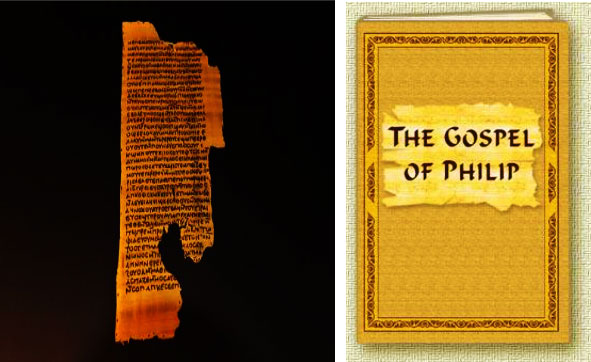
“…For perfect conception and birth come through a kiss. That is why we kiss one another. We draw inspiration from the virtue found in another. There were three people who always walked with the Master. Mary, her mother, her sister, and the one called Magdalene, who was also called his wife. Her sister, her mother, and his wife—they were all named Mary” (Gospel of Philip: 36). “…and […] his wife is Mary of Magdala […] he loved her more than all his disciples and kissed her (on the mouth, on the lips) frequently. The rest of his disciples […]. They said to him, ‘Why do you love her more than us?’ The Savior replied, ‘Why shouldn’t I love you just as much as her?’ (Gospel of Philip:59).
Apollonius of Tyana
Finally, let’s turn to the subject of Apollonius of Tyana, who has also been the subject of similar debates. Apollonius of Tyana, who lived during the same period as Jesus, was born in 4 BCE in Kemerhisar/Tyana, Anatolia (d. c. 96 CE) and lived in Anatolia (known to the Arabs as Balinius); the recorded biography of Apollonius written during that period is almost identical to the life story of Jesus. For example: He was the son of the god Apollo (or, as the people called him, the son of the god Proteus, regarding him as a god—he was a god in human form); the people called him a prophet; he was a savior; a famous healer (he was also a spiritual therapist; it should be noted that he had been initiated into a secret, occult Pythagorean society at a young age), he performed miracles, he could practice magic and sorcery, he was interested in astronomy and medicine, and he taught the doctrine of light versus darkness and good versus evil.
Just as he was being tried and sentenced to death, he suddenly vanished and later appeared to many people (just as Jesus had appeared to many after his death), he was accused of sorcery like Jesus (though his actions were more akin to medical healing), he raised the dead (but he called this a natural phenomenon rather than a miracle— whereas Jesus had raised them by the power of God), he saved an entire city from a plague, and he cast out demons (he expelled the demons that had taken control of mentally ill patients using “natural” methods, whereas Jesus had said he cast them out by the power of God); like Jesus, he was betrayed by one of his closest friends, while in prison, he himself stated and wrote that he would “die and rise again” (Jesus also frequently stated that he would die and rise again), he visited and criticized pagan temples and debated with moneylenders (Jesus also visited and criticized Jewish temples and debated with moneylenders).
It is claimed that Constantine I of Byzantium and his council, who pursued the goal of “A New Religion, A New State,” took Apollonius’s life story and adapted it to Jesus, and that Apollonius’s works and name were banned by Constantine and his successors—as well as by the Catholic Church: He was effectively erased from the historical record—and banned—between approximately 300 and 1500 CE. Today, he is referred to as the “Founder of Christianity.” Although Apollonius traveled to Athens, Antioch, Babylon, Egypt, India, Ephesus, and Rome during his approximately 100-year life and conversed with religious leaders and philosophers in these places, he never mentioned Jesus in any of his works or in his 81 known letters. Apollonius did not practice “hocus-pocus” style magic; rather, he engaged in healing, magic, and sorcery of a medical, astronomical, mathematical, alchemical, hermetic, esoteric, and alchemist nature, which he had learned during his travels in Egypt, India, and Greece.
Under the central tenet that “Love is the only immortality in the entire universe,” Apollonius preached and spread love wherever he went; this is reflected in the New Testament through the identification of Jesus with “Love.” As a result, it is nearly impossible to determine which figure—Apollonius or Jesus—is which. Although it was never their intention, the Church deified one and caused the other to be forgotten. Contrary to popular belief, there is actually a different portrait of Jesus. This is the picture that emerges from the information we have gathered through our readings of the sources. Additional articles will also be published on the development and spread of Christianity after Jesus, as well as its establishment as an institutional religion within the Roman Empire.