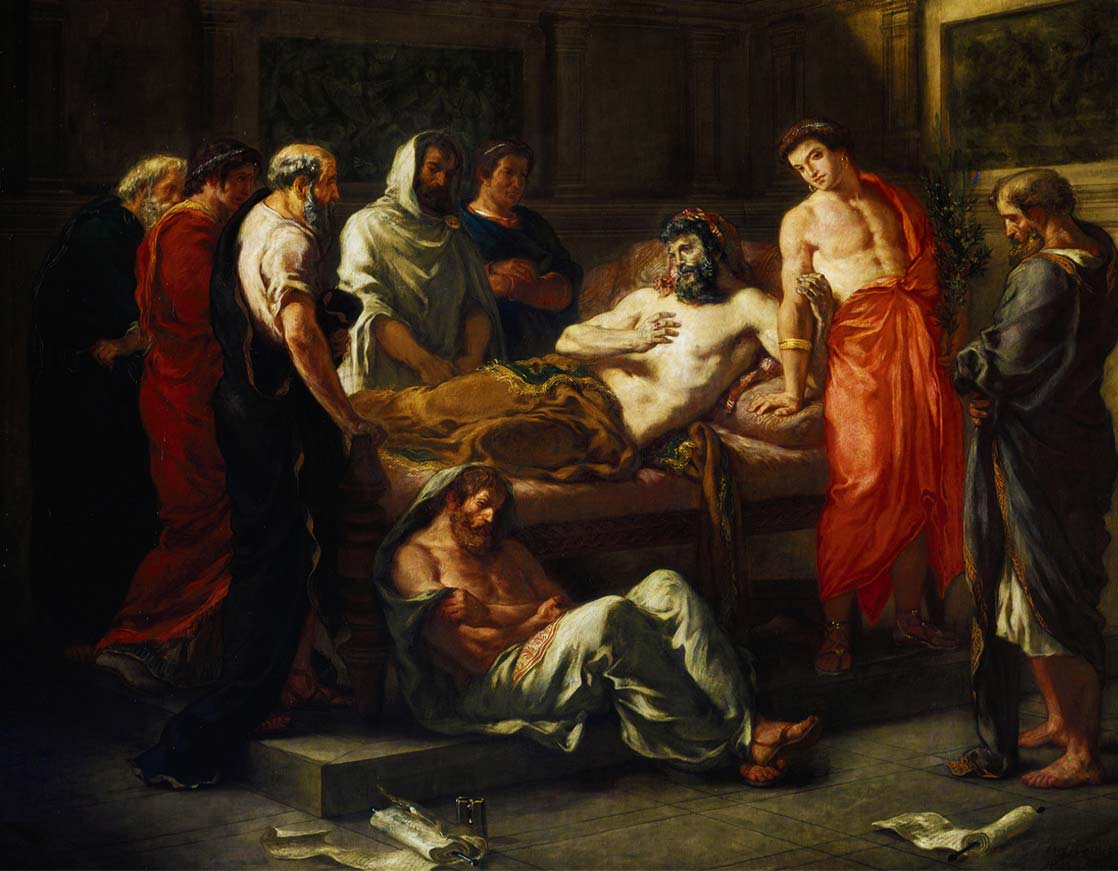
Romanticism, which emerged in the 19th century as a reaction against Neoclassicism and placed an intense focus on emotions, is an artistic movement that was interpreted in a wide variety of ways by sculptors, poets, painters, and writers of the time. Developing as a dynamic and ever-changing artistic movement, Romanticism lasted for approximately 100 years. In this article, we will discuss the Romantic movement in general and highlight its distinctive aspects.
Neoclassicism and Romanticism
Both the Neoclassical movement, which emerged before Romanticism, and the Romantic movement arose out of the fiery revolutionary spirit of the era. Neoclassicism addressed political resistance by emphasizing balanced depictions, the spirit of the classical age, and themes such as human virtue. Romanticism, on the other hand, sought to convey the changing social dynamics through sculptures and poems shaped by vibrant colors and boundless imagination. Unlike Neoclassical art, Romantic art encompasses artists working in different times, places, and methods. This makes it quite difficult to explain the ideas and foundations within the art influenced by the Romantic movement. In fact, while Romantic artists share the same fundamental principles and ideas, their interpretations of these core concepts—that is, Romanticism—differ from one another. However, most artists influenced by Romanticism have focused on approaches and techniques rooted in imagination, building upon existing, ongoing practices.
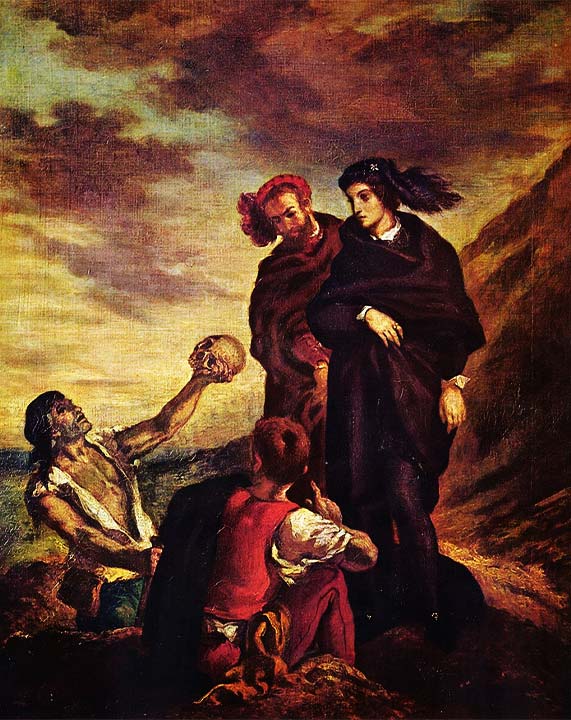
Among Romantic artists, there were those inspired by figures such as the poet Lord Byron or the philosopher Jean-Jacques Rousseau. Some even drew inspiration from Baroque art to create their own interpretations of Romanticism. The period in which Romanticism emerged was a time of rapid and successive transformations for humanity. Political revolutions, uprisings of the working classes, and the accompanying rise of industrialization were replacing traditional values with modern ones. It was within this rapidly changing world that the Romantic movement was born. Established social norms were crumbling one by one. Nature was now being approached in a more rational manner. The works produced by Romantic artists were of a kind that provoked thought and left a nostalgic feeling. Romantic artists focused primarily on expressing their emotions and feelings in the best possible way. Under the influence of Romanticism, these artists rebelled against old, traditional, and rigid rules and sought to enrich their works with expressive depth by using vibrant colors.
A common trait among Romantic artists is their opposition to mechanization and industrialization. Perhaps to criticize these innovations, many Romantic artists focused on themes related to human nature or folk tales, as well as exotic, mysterious, and supernatural subjects. Others embraced themes such as dramatic tragedies and love stories. The works of Romantic art possess passionate, imaginative, instinctive, and expressive qualities. Romantic artists placed greater importance on emotions and intuition than on logic. Emotions that people and societies typically suppressed were expressed through Romantic artists. Thanks to Romanticism’s bold, daring, expressive, and creative qualities, Romantic artists were able to make people feel the themes reflected in their works. Through Romantic art, artists expressed their emotions more freely than ever before, and they did so spontaneously and naturally. In the Romantic movement, the artists’ feelings took on great significance.
The Principles and Representatives of Romanticism
The Romantic movement first emerged in France and spread as far as England, Germany, and America. The term “Romanticism” was first used in the 19th century to describe a style that developed to encompass art, politics, philosophy, and many other fields. Setting aside the subjective differences among Romantic artists, they placed extreme importance on emotions to express their personal feelings and skepticism toward modern developments. Leading figures of Romanticism produced striking, bold, and subjective works, while sharply severing their ties to the past. One of the leading representatives of the Romantic movement was the French painter Eugene Delacroix (1798–1863). Eugene was a Romantic artist who stood out for the striking color combinations he used in his paintings. The painter William Blake (1757–1827) created breathtaking atmospheres in his works through powerful imaginative and symbolic imagery. Francisco de Goya (1746–1828) employed fantastical imagery in his satirical works addressing humanity and endless wars. Other significant representatives of the Romantic movement include Caspar David Friedrich (1774–1840), Théodore Géricault (1791–1824), and the English painter John Constable.
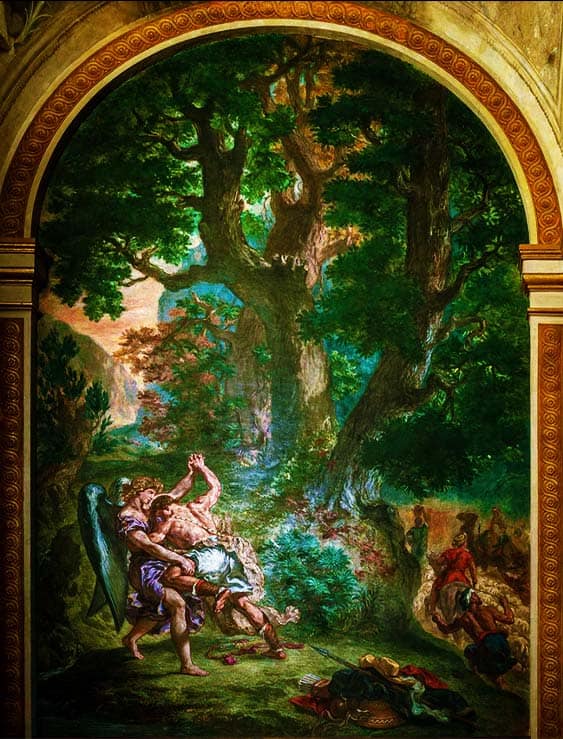
Delacroix, widely regarded as the greatest of the Romantic painters, had a profound influence on both the Romantic artists of his own time and those who came after him. The images he created in his paintings were extremely passionate and vivid. For this reason, they stirred the emotions of those who viewed them. In addition, rather than subjecting his paintings to extremely laborious planning until they reached their final form, Delacroix pioneered methods that involved working directly on the canvas, thereby paving the way for these techniques and advocating for improvisation. These are the fundamental principles upon which Romanticism is based. In this article, we have briefly examined the core principles of Romanticism and the major artists influenced by the Romantic movement. We hope you now have a basic understanding of the Romantic movement and its leading artists.