Following the Babylonian Empire, we will cover a wide range of topics, including the Jahiliyyah Period and the situation on the Arabian Peninsula, as well as the states, emirates and kingdoms established by the Arabs from that period up to the fifth century, and the Arab society to which the Prophet Muhammad addressed his message.
As is generally observed in the writing of Islamic history—and in historiography in general—there are many distortions, and a biased stance that is far from objective is adopted. This situation also applies to the Arab society in Jahiliyyah period—that is, the people to whom the Prophet Muhammad addressed his message. Pre-Islamic Arab history (The Jahiliyyah Period) is generally referred to as the Age of Ignorance (Jahiliyyah), and the culture of this period is termed “Jahiliyyah culture.” These terms refer to the Arab past spanning from the first century to the fifth century. Arab culture essentially refers to the environment into which the Prophet Muhammad was sent as a prophet. Therefore, in order to properly understand both the Quran and the people recognized as the first recipients of the Prophet’s message, it is necessary to accurately identify the conditions of the Jahiliyyah Period and the mindset of the people of that era.
Ancient Arabia and The Origins of Arabs ( Himyarite and Nabataean Kingdoms)
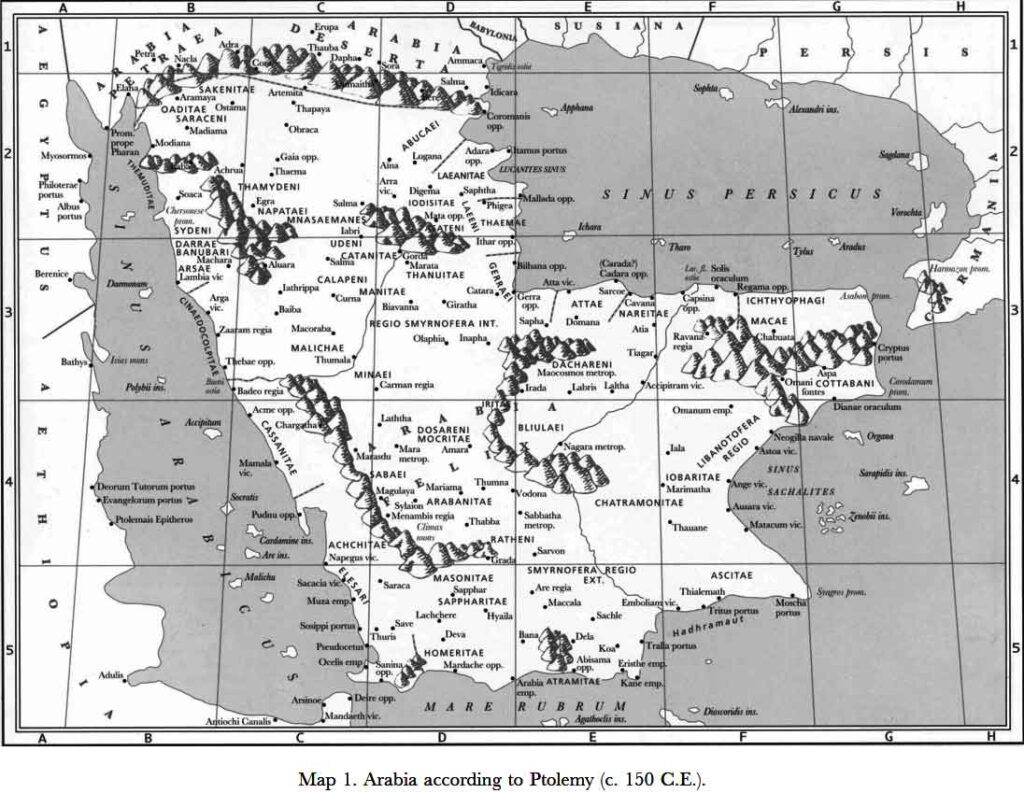
Historians, particularly in the writings of the Latins and Greeks, have divided the Arabian Peninsula into three regions based on its climate and geography: Arabia Felix (al-Arabiyya al-Sa’ida), meaning “Happy Arabia,” due to the fertile and green region of Southern Arabia; “Arabia Petraea,” meaning “Rocky Arabia,” referring to the rocky terrain of Northern Arabia; and “Arabia Deserta,” meaning “Desert Arabia,” a term appropriate for the boundless sea of sand in Central Arabia. Specifically regarding Mecca, while the term “Macoraba” mentioned in Ptolemy’s writings is thought to refer to this region, it is believed that the word derives from an expression in Yemeni Arabic that originally meant “sacred” and later came to mean “the House of the Lord.” Some linguistic studies have also suggested that the name “Macoraba” might be “Bekke,” which is thought to mean “great valley” or “Valley of the Lord.”
The Semitic language family, which encompasses the linguistic structure of the region, includes languages such as Akkadian, Ugaritic, Phoenician, Aramaic, Babylonian, Assyrian, Syriac, Hebrew, Amharic, and Arabic; however, it is noted that Arabic has better preserved the core Semitic influences. It is understood that the peoples of Northern and Central Arabia, where the land is generally unsuitable for agriculture, sustained themselves over time through trade routes originating in the South. Researchers classify the ancient societies of the Arabian Peninsula into two groups: the Baide and the Bakiye Arabs. The Baide Arabs refer to the ancient peoples known as the Amalika, Ad, Thamud, Tasim, Jadhis, and Jurhum, while the Bakiye Arabs—who would later develop in the Hijaz as well—are divided into two subgroups: the Qahtanites and the Adnanites.
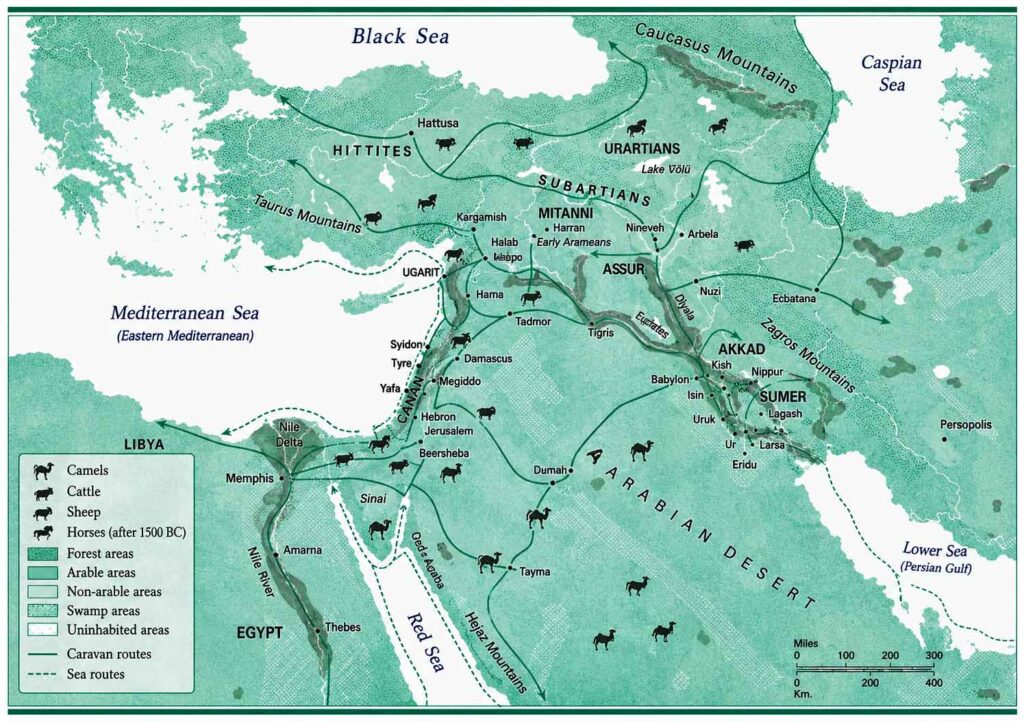
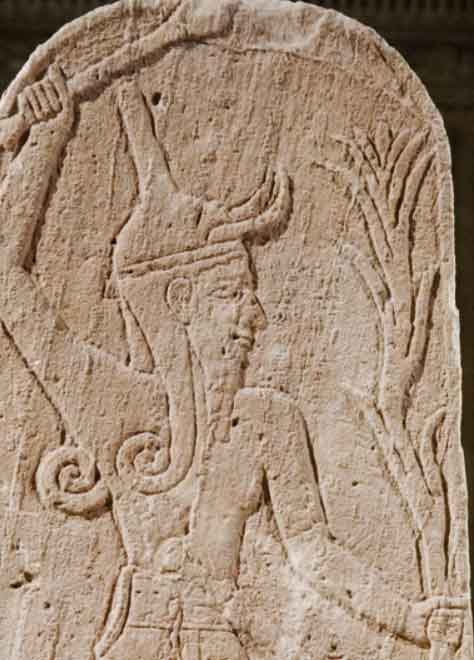
Ismael, who came to Mecca with Abraham in the 1950s BCE, not only brought the teachings there but also established kinship through marriage with the Amalika-Jurhum tribes living in the region. The oldest known state on the Arabian Peninsula is the Main State, believed to have been founded around 1400 BCE. Established by the Amalekites of Iraq, it survived thanks to its commercial activities—which involved supplying goods brought from the Indo-Chinese region to northern lands such as Egypt, Syria, and Petra—and was destroyed around 650 BCE. Although their language contained Arabic elements, they also preserved the Babylonian dialect. They called their kings “Karn”—a term meaning “horn” in Semitic and a reflection of the ancient symbol of prophethood—and named their capital “Karna.”
Although the exact date of its founding is unknown, the Kingdom of Sheba—believed to have been established around 1000 BCE—was founded as a result of Babylonian-origin peoples traveling southward via the Eastern Arabian route, crossing the treacherous deserts. It is said that they brought the advanced standards of Babylonian civilization to this region, particularly through the Maghrib Dam, the temples of Barran and Avam, and their writing system. Thanks to the favorable climate and their possession of advanced tools and equipment, they extended the success they achieved in agriculture to trade and commerce as well. It is believed that the “two gardens” (cenneteyn) mentioned in the story of the garden owners in the Quran refer to Sheba.
The fact that the famous Queen Bilqis is supported by tablets and other inscriptions as having lived during the reign of King Solomon, along with the fact that the land of Yemen—much like Egypt, the grain storehouse of the era—served as a storehouse of vegetables and fruits, explains why Solomon marched south with his cavalry, positioned at the center of the trade triangle. Political dominance over the triangle stretching from the Gulf of Aden to Egypt and then to Phoenicia was maintained under King Solomon’s control, partly due to the instability of the great powers of the era. Although they became Arabized through constant interaction with the Arabs after their arrival in the region, the differences in the pronunciation, intonation, and certain names in their language, the similarity of their state structures to those of Hammurabi’s Babylon, and their beliefs that continued the planetary cult would preserve their Babylonian-origin elements.
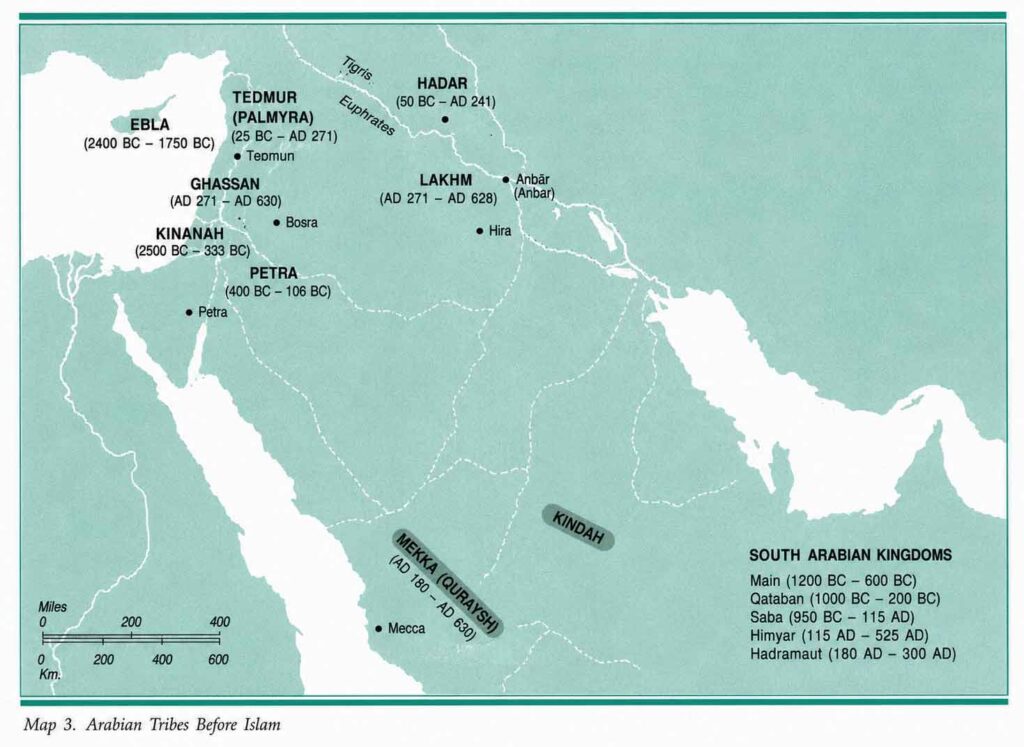
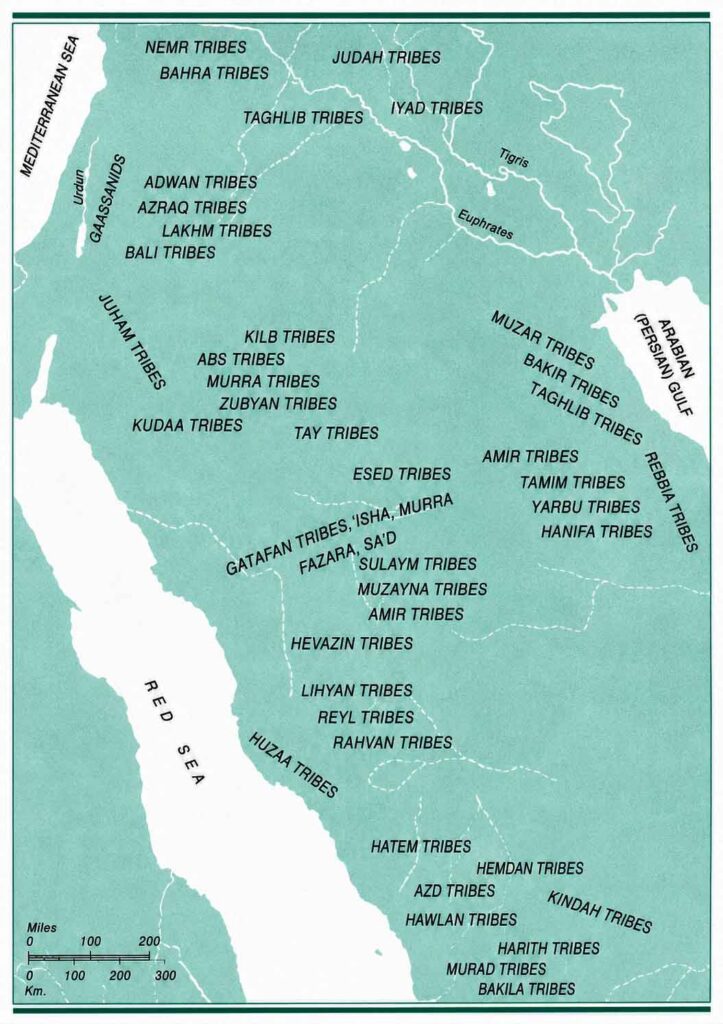
Following the collapse of the dam—which is believed to have been destroyed around 525 BCE due to the effects of disasters such as the Arim flood—the resulting adverse conditions led the Babylonian-origin groups to disperse and spread toward Central and Northern Arabia. They settled in Syria as the Ghassanids, in Iraq as the Lahmids, in Medina as the Aus and Khazraj tribes, and in Mecca as the Huzaa tribe. Arabia would come under the control of the Himyarites—relatives of the Sabaeans—in 115 BCE. During a wave of migration from the south to Central Arabia around 525 BCE, the Kahtani Huzaa tribe, which had arrived in Mecca, formed an alliance with the Kinane tribe—descendants of Ishmael—and expelled the Jurhum, who had considered the region their homeland for centuries; control of Mecca then passed to the Huzaa leader Amr bin Luhey.
While the Kahtanis, who came from the Yemen region, bore traces of a more advanced civilization due to socio-economic and many other reasons, the Jurhum and the sons of Ishmael in the region—having lived for centuries in small settlements in the middle of the desert—had not developed in areas such as social structure, economy, architecture, administrative law, writing, and language, and thus fell behind the Kahtanis’ accumulated knowledge. The Kahtanis, meanwhile, began to adopt Arab customs while preserving their own nomadic culture during their long journey that had continued since the time of Babylon. Alongside Luhey, they advanced through initiatives in trade models, caravan transportation, and logistics. However, as their level of civilization declined over the centuries, they adapted both to the name “Adnanites” (sons of Ishmael) and to the oral culture dominant in the region. Through their largely unchanged religion, they influenced the Adnanites and, via seers who taught Adnanite children subjects such as divination, sorcery, and magic, introduced the science of the stars to the surrounding people.
Because they influenced the societies of their time in “mysterious” fields such as prophecy, sorcery, and magic, the Adnanites referred to them as “Possessors of Jinn” and those possessing satanic traits. The Huzaa would remain in control of Mecca for approximately 925 years, until around 450 AD, and although there are no clear records specifying the extent of their interactions with the sons of Ishmael, they would continue their mutual interactions as we know from the natural course of life. While these events were unfolding in Mecca, a branch that had split off from the Kahtani Ezd tribe, which had settled in Mina, migrated to Medina (Yathrib) and settled there. When the Ezd arrived, they found Jews in the region and were not as fortunate as their Huzaa relatives. It is said that the Jewish rulers, who initially put them to work in date palm groves, gradually increased the pressure on the Ezd tribe; some rulers even committed humiliating acts—such as enforcing the “right of the first night,” a practice reminiscent of medieval feudal rules—against certain members of the tribe.
Naturally, this fostered resentment toward the Jews. Following the death of Harise bin Salebe, a prominent figure among the Ezd, the tribe split into two branches—the Evs and the Hazrec—and both are reported to have lived under Jewish oppression for a long time. This situation would continue until the uprising in 450 CE. It is an irony of history that while the Kahtanites were about to take power in Medina, the Kahtanites in Mecca would be removed from power during the same years. Between 400 and 300 BCE, the Nabataeans emerged as the oldest known state in Northern Arabia. A Semitic community of Amalika and Amurru origin drove the Edomites out of the region and established the city of Petra—carved into magnificent rock formations—as their capital.
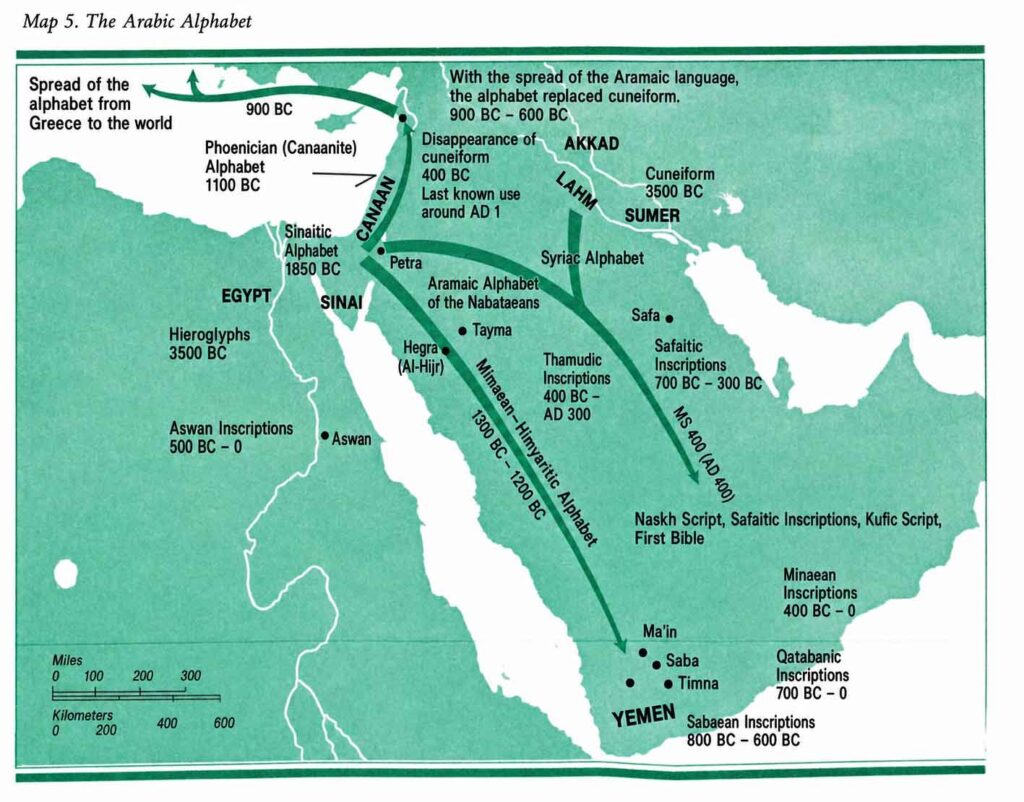
Serving as a buffer between the Hijaz Desert and Roman territories for a long period, the Nabataeans eventually went to war with Rome and were destroyed by the Romans in 106 CE. The Nabataeans did not merely leave a religious legacy in the region; they also bequeathed to posterity the origins of the Arabic alphabet, which has endured to this day. Although it was once thought that the roots of the Arabic alphabet derived from the Yemeni-Himyarite alphabet, recent research seems to have confirmed that it actually stems from the Nabataean alphabet. The capital of the Palmyra Kingdom—believed to have been founded in the 1st century BCE, a couple of centuries after the Nabataeans—is a city whose origins date back much further.
In the 600s BCE, the famous Babylonian-Chaldean King Nebuchadnezzar razed the city, but the Amurru people, of Amalika origin, rebuilt it. It was named Palmyra—meaning “oasis of date palms”—because of its magnificent date palm groves. In 130 AD, Palmyra, like the Nabataeans, came under Roman rule and served as an outpost against the Sasanian threat; although it reached the height of its power under Roman protection, it ultimately lost after declaring war on Rome. King Uzeyne of Palmyra was awarded the title of “Augustus” in 264 for his loyalty to Rome. Following the king’s death in 267, his wife Zenobia (Zeynep) ascended the throne as queen, despite having four children. As soon as she found the right opportunity, Queen Zenobia marched against Roman forces, conquered Egypt, and even advanced into Anatolia, establishing control as far as Kadıköy via Ankara.
Although she collected taxes from regions that were once Roman territories, this did not last long. Emperor Aurelian, having regrouped his forces, began his advance southward, quelling the Palmyrenian uprising that had lasted for four to five years and capturing the city; however, Zenobia sought refuge with the Sassanians. Following this defeat of Zenobia—one of history’s most warlike women—Palmyra faded into history. During the century when the Nabataeans and Palmyra were active in the north, a new Babylonian-origin state, the Himyarites (115 BCE), was established in southern Arabia. At the time of their founding, the official religion was a Babylonian-rooted planetary cult. The Himyarites, a warlike people, faced threats from the Abyssinians, who periodically invaded from the west to establish dominance, and from the Sassanians, who were founded in 224 AD in the east. Zu Nuvas, a radical Jew among the Himyarite kings, not only pressured the Christians in his realm to convert, but also launched a campaign specifically against the Najran region, burning down the Najran Monastery along with the Christian people and clergy he had gathered there.
In the wake of these tragic events, those who managed to escape the massacre sought help from Rome; the Romans, however, rather than launching an expedition to this distant region, proposed to the Abyssinian ruler that he take Yemen, and Abyssinia—which had long coveted the fertile southern lands of Arabia—prepared its army. In the war that took place in 525, the Himyarites were defeated, and the region once again came under the rule of governors appointed by Abyssinia.
The Lineage of the Prophet Muhammad and the Origins of the Quraysh
Let us now turn to the geography of central Arabia. The peoples of both the northern and southern regions have, over the centuries, inevitably influenced one another to varying degrees due to political, social, religious, or commercial movements. Around the 450s AD, a new figure emerged in Mecca. Kusay bin Kilab, who spent his childhood in the cosmopolitan city of Damascus, returned to Mecca. There, in addition to gaining respect for his knowledge, oratory skills, and demeanor, he married the daughter of the leader of the dominant Huzaa tribe. This move was also akin to a sound investment in the future. After waiting for the right conditions to mature—such as the Abyssinian occupation of the Yemeni kingdom, which was distantly related to the Huzaa—he formed a series of alliances and waged war against the Kahtani-origin tribes (excluding some Huzaa tribes related to him) to drive them out of Mecca. As a member of the Adnani (son of Ismail) branch, as soon as he seized the Kahtani-Huzaa rule—which had lasted for roughly a thousand years—he set out to implement his own reforms.
His first and most significant move was to have houses built in the Masjid al-Haram area—a place believed by some local people for centuries to be off-limits—and to settle his relatives there. While it was expected that he would be punished by God for doing what was “forbidden” in the Haram area and for this excess, the fact that everything turned out well simultaneously reinforced the local people’s sense of sanctity. He then turned his attention to the water supply—a matter of great importance for pilgrims—and had wells and massive water reservoirs constructed. The children, cousins, and members of certain Huzaa tribes that Kusay settled in the Mecca valley would form the foundation of the new Quraysh tribe; these tribes would become the pillars of the Quraysh.
To summarize the process in order: the Amalika, the Jurhum, the sons of Ishmael, the Kahtani-Huzaa, and finally, Kusay—leading to the Quraysh. Of course, over time, dozens of tribal names emerged, branching out into the details found in the sources. Kusay also established the separation of powers—and consequently, balance—by distributing responsibilities among his relatives, such as the protection of the Kaaba in Mecca, managing the pilgrims’ routes, distributing water, and feeding the pilgrims. Additionally, the concepts of “Ahmesi” and “Hill,” believed to have emerged during Kusay’s time, are significant. “Ahmesilik” emerged as a religious-sociological term encompassing the free people of Mecca and was used to emphasize that the Quraysh community was a more special and elite society compared to other Arabs, due to their role as servants of God’s House. “Hill,” on the other hand, was used to refer to Arabs coming from outside. It has been suggested that “Ahmesilik” could be considered the term for the Meccans’ religion during the pre-Islamic period (Jahiliyyah period). After Kusay, who prohibited warfare in the vicinity of Mecca, the Quraysh identity—that is, the concept of the “People of Hicr” (those possessing inviolability)—can be said to have become firmly established.
It is said that Kusay had four sons: Abduddar, Abdulmenaf, Abduluzza, and Abdukusay. Following the power struggle that erupted after Kusay’s death, and inspired by the symbol of the agreement, those who supported his eldest son, Abduddar, were called the “blood-lickers” (Ahkaf), while those who supported his other son, Abdulmenaf, were called the “perfumed ones” (Mutayyabun). From Abdulmenaf’s eldest son, Abdüşşems, descended the Umayyads, and from his younger son, Hashim, descended the Hashimites. Political disputes between Hashim’s son Shayba (Abdulmuttalib) and the Umayyads—which included his uncle and his sons—would lead to a struggle that would continue for years, culminating in the Umayyad-Abbasid conflict.
In fact, a power struggle believed to have taken place between the Banu Hashim and the Banu Umayya in the 530s was resolved in favor of the Banu Hashim through arbitration by a man named Huzai, approximately 120 years later, the arbitration incident between Ali of the Hashimites and Muawiya of the Umayyads would result in a victory for the Umayyads. To give some examples of notable figures who would emerge after the advent of Islam: The first caliph, Abu Bakr, was from the Banu Taym tribe—descended from Qusay’s older brother—and the second caliph, Umar, was from the Banu Adiyy tribe; the third caliph, Uthman, would come from the Umayyads, and the fourth caliph, Ali, would come from the Hashimites.
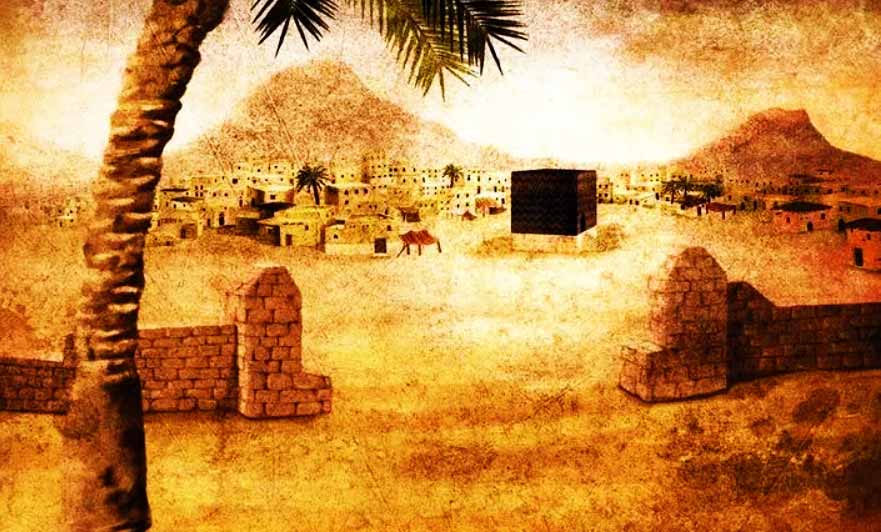
In the year 570, Ebrehe—the governor of Yemen under the Abyssinian Empire and a devout Christian—sought both to gain complete control over trade between the north and south and to promote the temple he had built in Sana’a as an alternative to Mecca, which was generally preferred by the Arab world for the pilgrimage. From then on, Mecca would be referred to as Umm al-Qura, meaning “Mother of Cities,” and the people of Mecca as Ummis. Although Jews and Christians would use the term “ummi” pejoratively to mean “ignorant, without scripture, without revelation,” it would serve as a significant source of attraction for Arabs with whom they shared religious affinities.
In the 450s CE, in Medina, the Evs and Hazrec tribes, who were under oppression, succeeded in freeing themselves from Jewish persecution by seeking help from the Ghassanids—their relatives who had settled in the Syrian region and subsequently adopted Christianity. As a result of both their kinship and their Christian faith, the arrival of a contingent from the Ghassanids in Medina led to the Jews being removed from power after centuries of rule. However, although this move removed the Jewish communities from power, they skillfully employed the “divide and rule” strategy and succeeded in pitting the Evs and Hazrec tribes against one another. When the echoes of the Prophet Muhammad’s message reached Medina, young people weary of the civil wars between the two tribes pledged allegiance to the Prophet through the meetings known to history as the Pledges of Aqaba.
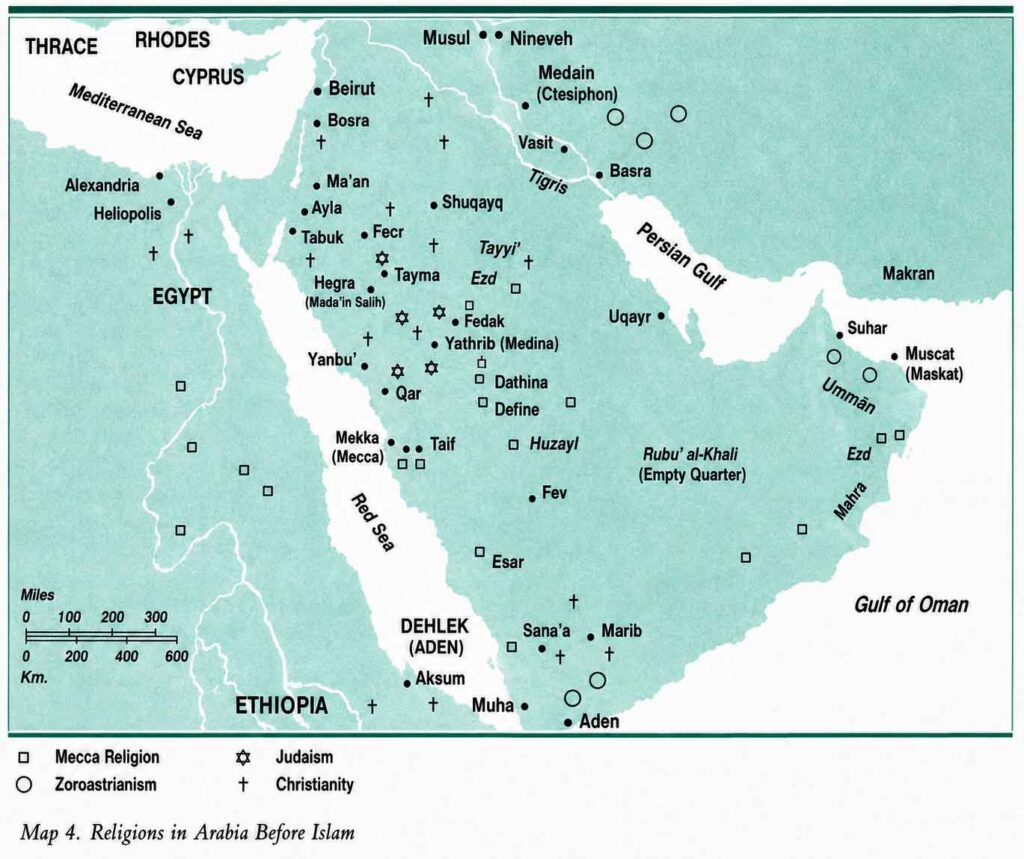
Although the Babylonian-origin communities gradually began to assimilate into Arab culture in the southern region where they had settled, they continued to practice their beliefs centered on the cult of the planet. In addition to worshiping well-known Babylonian deities such as Il, Baal, Shamash, Sin, and Astarte, they built numerous temples dedicated to these gods. The Huzaa, a Babylonian-origin group that settled near Mecca, adopted—and even expanded upon—the centuries-old practices regarding the Masjid al-Haram area, which was sacred to the descendants of Ishmael: the area was off-limits to settlement, trees could not be cut down, walking at night was prohibited, and building houses was forbidden. By effectively capitalizing on the region’s religious tourism, they provided pilgrims with quality services and hospitality, while also bringing the influence of the Northern Nabatean religion to the area, thereby establishing it as an important stop along the caravan routes.
Beliefs, Idolatry, and Idols of The Kaaba in Pre-Islamic Arabia (The Jahiliyyah Period)
Although Amr bin Luhey, the leader of the Huzaa tribe, is often cited as the one who introduced idols to Mecca, we believe this to be incorrect. It is well known that the people of the region had been using formless stones as religious symbols for centuries. Moreover, it is not difficult to understand that significant changes occurred during the roughly 1,400 years that elapsed between the time of Abraham and Ishmael and the arrival of the Kahtanis in the region. Although Prophet Ishmael introduced the people of the region to the One Supreme God as Allah and explained the other elements of the One True Religion, over time, minor deities such as Lat, Manat, and Uzza were integrated into the belief system. Consequently, the practice of offering prayers and sacrifices to these lesser deities—who were subordinate to Allah, who remained supreme—serves as an example of the distortions that occurred over the centuries.
If Luhey introduced any innovation, it stems solely from the fact that he was the first to bring the metamorphic or anthropomorphic “idols with human features” attributed to the gods of the Babylonian cult. According to the sources, Hubel—one of the most important idols brought to Mecca by Luhey and carved in the shape of a human from red agate—would later be placed inside the Kaaba. While “sacred stones” in Adnani culture are found in cubic (hewn) form but are not located around the Kaaba, Luhey both brought the figurative idols and placed them around the Kaaba. According to historians, he erected seven pillars—standing stones—in Mina and had three stones thrown at each one, thereby enabling the worshippers to declare to the god symbolized by the stone, “O such-and-such deity, you are the greatest.” He is recognized as the person who brought idols to Mecca by placing the idols worshipped by the people of the Hejaz region and the Southern Arabs here, allowing them to freely perform their rituals and sacrifices—that is, their religious activities—and, as a result of the increase in Kaaba-centered pilgrimage activities, transforming the pilgrimage site into a fairground.
At the same time, people from the surrounding regions built small shrines called “taghut” for their own idols. It is likely that the beliefs of the Kahtanites—which were centered on celestial bodies such as the Sun and the Moon—did not apply to the Adnanites as a whole. This is because the Adnanites, influenced by their traditions, did not prostrate themselves before the sun or the moon. Nevertheless, it should not be overlooked that over time, numerous variations could have emerged in which different beliefs were integrated into their lives to varying degrees. Regarding the concept of divination, those who interpreted prophecies in the temples were called “arraf,” meaning “the knowledgeable,” as well as “hazi,” a Chaldean term meaning “prophet-philosopher.” The main tasks of the soothsayers included: interpreting outcomes based on physical build or footprints; kıyafe, the predictions and prophecies of the arraf; arafet, drawing conclusions about the future from the movements of birds; iyafe, reading the signs of the sick and blowing on them; and rukye, obtaining predictions about the future using divination arrows placed before Hubel; these can be listed as divination arrows.
It is believed that the Hazi soothsayers, of Babylonian origin, received sacred knowledge from the heavens; however, this is a process that occurs not from above to below, but from below to above. The person known as a Hazi, through jinn—entities believed to be under their control—would intercept information from the angels who write destinies (Melek-i Ala) to make prophecies regarding what will happen in the future, how illnesses will be cured, whether trade will be prosperous, or the conditions of the climate. For this reason, the belief in poets, soothsayers, and mad sorcerers—who were thought to be possessed by jinn and to “steal ‘sacred knowledge—revelation’ through them”—was firmly established in the eyes of the societies of that time. The masses of that era not only viewed individuals with this type of seer profile as special and sacred but also feared and shunned them. This was because these individuals claimed that the entities they had taken possession of—known as “jinn”—could also afflict other people.
In addition, a belief had developed that the revelation to be sent by Allah—regarded as the Most High God—could only be brought by angels who openly walked among the people. The religious beliefs built upon a top-down demand for the knowledge that soothsayers “stole from the heavens” represent some of the significant differences between them and the revelation sent down to the Prophet Muhammad. Against this backdrop, it was only natural that when the Prophet Muhammad began his mission, his opponents would label him a “madman,” a “soothsayer,” or ask, “Shouldn’t there be angels with him?” Let us now turn to the Nabataeans, one of the civilizations of Northern Arabia. In Nabatean inscriptions, the term “Allah” frequently appears as “Allaha” and was used specifically in personal names such as “Abdullah, Vehballah, Halfallah, Sadallah,” etc., particularly on various tomb inscriptions.
Surrounding Arab peoples used the name “Allah” as a proper name, while adopting the term “ilah” as a general concept for divine beings. Although there is no explicit statement in Nabatean inscriptions that Allaha was the supreme deity worshiped, the fact that Semitic peoples gave names such as El, Ilu, or Allaha to their gods suggests that the Nabataeans, like the pre-Islamic Arabs (Jahiliyyah Period), used the term Allaha—which was frequently used in personal names—to refer to “The Supreme God.” In addition, the Nabataeans preferred to refer to the supreme God using the term Dušara (owner of Šara)—a term inspired by the city of Šara, which they regarded as sacred, and which appears to function as an attributive epithet.
Lord of the Worlds: In an inscription found at Madain Salih (al-Hijr), Dušara is referred to as “the lord of the world, the lord of the universe.” The One Who Separates Night from Day: At the entrance to a tomb, Dušara is described as “the one who separates night from day.” God of the Kingdom: In various tomb inscriptions, he is referred to as “the god of our lord (our king)” or “Dushara, the god of our lord.” Furthermore, when we examine some of the gods the Nabataeans adopted as subordinates to the Most High God (Allah), we encounter familiar names from the pre-Islamic Hijaz region. Allat: The Lady of Happiness. This goddess, who has a cult stone and holds an important position in the pantheon, will be known as “Lat” in the Hijaz. Manot: Known as the “Goddess of Goddesses” and the “Goddess of Fate.” As the form suggests, she is held in a very important position and will be known as “Menat” in the Hijaz. Hubalu: As a protective and punitive god, he is mentioned less frequently than the others. In Hijaz, he will take the form of “Hubel.” Al-Uzza: The goddess of power, strength, fertility, and fortune. Associated with the planet Venus, Al-Uzza will be known as “Uzza” in Hijaz.
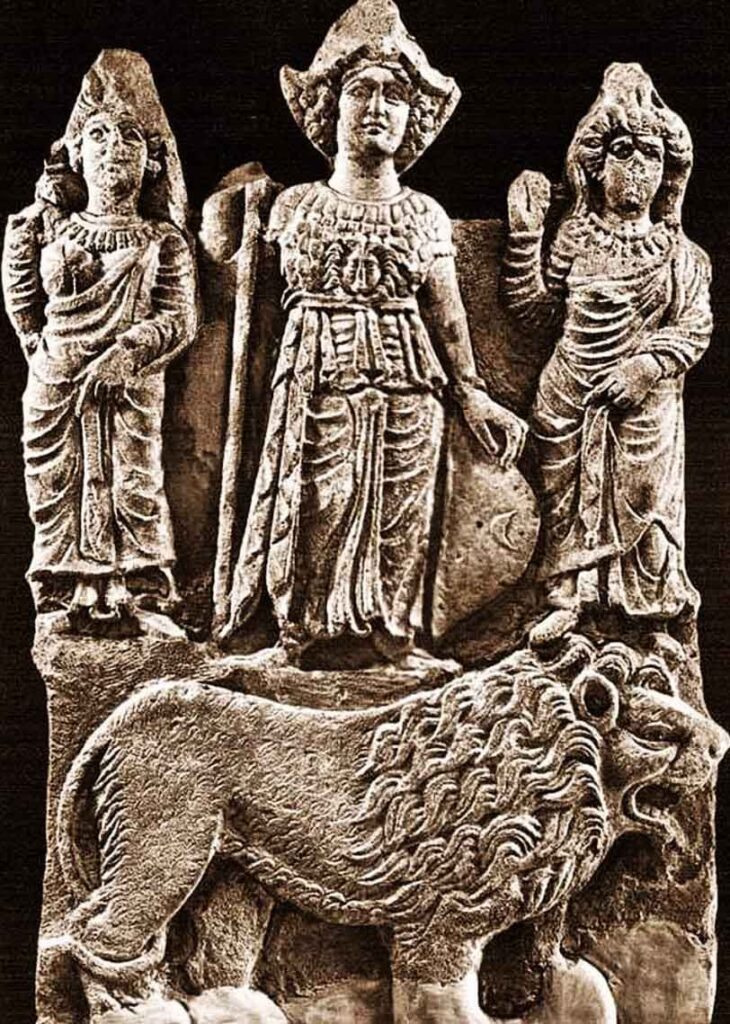
The fact that the Nabataeans interpreted their formless stone and rock monuments in a divine sense indicates that they influenced both the people of Palmyra and the Arabs of the Hijaz until the Roman influence began. In addition, it is known that they called the sacred sites they built on high ground “beyta” (beyt) and the special sections within them “masgide” (mosque). Palmyra, another city in Northern Arabia, adhered to a religious belief system resulting from the fusion of the Babylonian planetary cult with Mithraism, as evidenced by the fact that when the city was destroyed following Roman invasions, the magnificent decorations of the Sun Temple located there were transferred to the Temple of Sol Invictus, built in Rome as a memorial to victory. The Himyarites, the last state established in South Arabia before the Common Era, would also begin to adopt Judaism in the 200s CE, though we do not know under which king or for what reasons.
While there may have been many reasons for their adoption of Judaism, it is thought that the conversion of the Ethiopians—who posed a constant threat to them—to Christianity also played a role. Since Judaism gained significant momentum in the 200s, Roman missionaries who arrived in the region in the 300s with the support of the Ethiopian state—though they were unable to make a significant impact in the region as a whole—succeeded in Christianizing cities in the north, such as Najran. The Himyarite king Zu Nuvas would attempt to resist this rapid spread of Christianity with an iron fist, but he would ultimately be defeated. We can now narrow our focus to the geography of Central Arabia. The fact that the names of many Arab tribes—such as Quraysh (Shark), Banu Asad (Lion), Banu Kalb (Dog), Banu Sa’lebe (Female Fox), and Sakif (Strong Vinegar)—have such meanings has been interpreted as evidence that the region went through phases of totemism, animism, fetishism, and idolatry. The belief that each region was controlled by its own unique gods or spirits, along with the presence of special stones carefully kept in homes, provides insight into the religious backdrop of the era.
With the 450s and the intensive activities of Kusayy ibn Kilab, the newly established Quraysh tribe elevated the Hajj rituals—originally part of the fair system established by Luhey—to the status of a major fair center. In the Hajj rituals—which constituted the most important religious obligation—the Ahmesis, who were natives of Mecca, did not go to Arafat like the Hill Arabs; they only traveled to and from Muzdalifah and Mina, and then came to the Kaaba to have their heads shaved in front of the idol of Manat. In other words, the Ahmesis did not leave the confines of the Masjid al-Haram during the days of the Hajj. Those from Hill, on the other hand, would either buy or rent clothing from the Ahmesis to perform the tawaf, or if they could not afford it, they would perform the tawaf naked.
Due to this political and religious backdrop, the greatest opposition to the Prophet Muhammad—a descendant of Hashim—would come from the Umayyads led by Abu Sufyan. Abu Sufyan, a devout adherent of the Ahmeshi faith, declared: “We organize, maintain, clean, protect, and prepare the House of the Lord (the Kaaba) for its visitors. We are the people of the sacred Haram, and our religion predates that of Muhammad.” Such statements can be attributed both to past familial animosities and to the religious beliefs associated with them. Indeed, the sociological, political, and religious origins of pre-Islamic Arab society (Jahiliyyah Period) can be summarized in this way. The era and life of the Prophet Muhammad are also very extensive and complex topics. For this reason, we can conclude this article, which has addressed the emergence and sociological structure of Arab society, at this point.