Rembrandt van Rijn is one of the most important artists of the Baroque period. Rembrandt, a Dutch artist who interpreted the Baroque style in his own unique way, inspired many artists who came after him with his portraits, engravings, and group portraits. In this way, the great artist made his mark on the art world of the Dutch Republic in the 1600s.
Art of the Baroque Period
The art of the Baroque period, which emerged between the Renaissance and the Classical periods, was an artistic style that originally prioritized emotional expression and aimed to reach a large segment of society. As Catholic Christianity gradually weakened alongside the rise of Protestantism, it harnessed the expressive and communicative power of art to influence the masses through powerful and evocative imagery. For this reason, religion and art moved in tandem, giving rise to a conception of art in the service of religion, with the goal of influencing people. Consequently, works of art in the style we call Baroque were created, and artists strove to produce dramatic works.
In Baroque art, forms were arranged through contrasts of light and shadow, and artists sought to express their entirely individual observations through art. For this reason, contour lines gradually disappeared from works of art. This approach, focused on light and shading, added a certain vitality and dynamism to the works. Since the goal of Baroque art was to evoke dramatic emotions in viewers, artists drew upon their own imaginations rather than nature itself as a reference and adjusted the direction of light according to their own desires. As can be understood from its connection to religion, themes in Baroque art were generally mythological and religious. Compared to the simple and unadorned style of the Renaissance period, Baroque art championed a more ornate and ostentatious form of expression. Perspective retained its importance in Baroque art, and foreshortening was brought to the forefront.
Rembrandt Van Rijn’s Life
The famous painter Rembrandt van Rijn was born in 1606, at a time when the Netherlands was growing increasingly wealthy—a trend that was reflected in the arts—and when Dutch art was at its peak. With the establishment of the newly formed Republic on what is now Dutch territory, a unified government was established, and artists used their art to depict scenes from the lives of the increasingly prosperous people living under this government. Since the Dutch Republic was a Protestant government—and because Protestantism strictly opposed the depiction of religious imagery—artists began to take on different commissions rather than creating sculptures or portraits of religious figures. For this reason, in the early 1600s, the art market in the Dutch territories consisted primarily of commissions from wealthy patrons and artisans. At local art markets and fairs held regularly, people from all walks of life—rich and poor alike—met with artists, and as a result, investment in artists gradually increased.
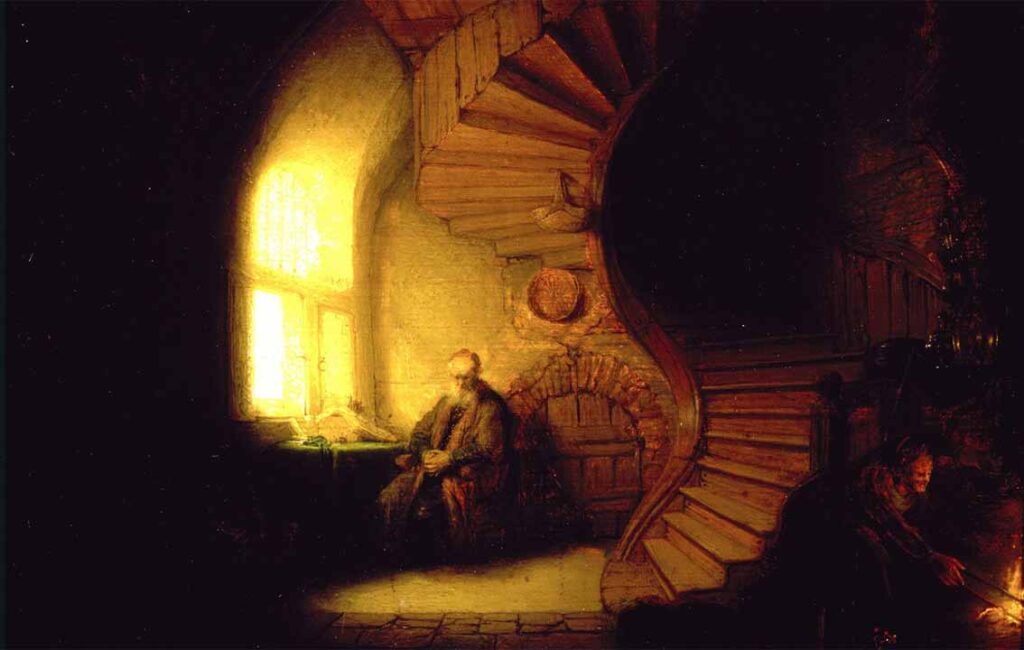
The artist Rembrandt is best known for his portraits, landscape paintings, and works with religious or mythological themes. If we examine Rembrandt’s works, we see how prominently he emphasized light and shadow—which is to be expected, given the era in which he lived. Born in Leiden, Rembrandt had the opportunity to pursue art at a young age because his family’s financial stability spared him from material worries. Although Rembrandt initially applied to university, he chose not to continue on that path, opting instead to move to Amsterdam to pursue his passion for art. After moving to Amsterdam, Rembrandt began to gain fame as a portrait painter in the region.
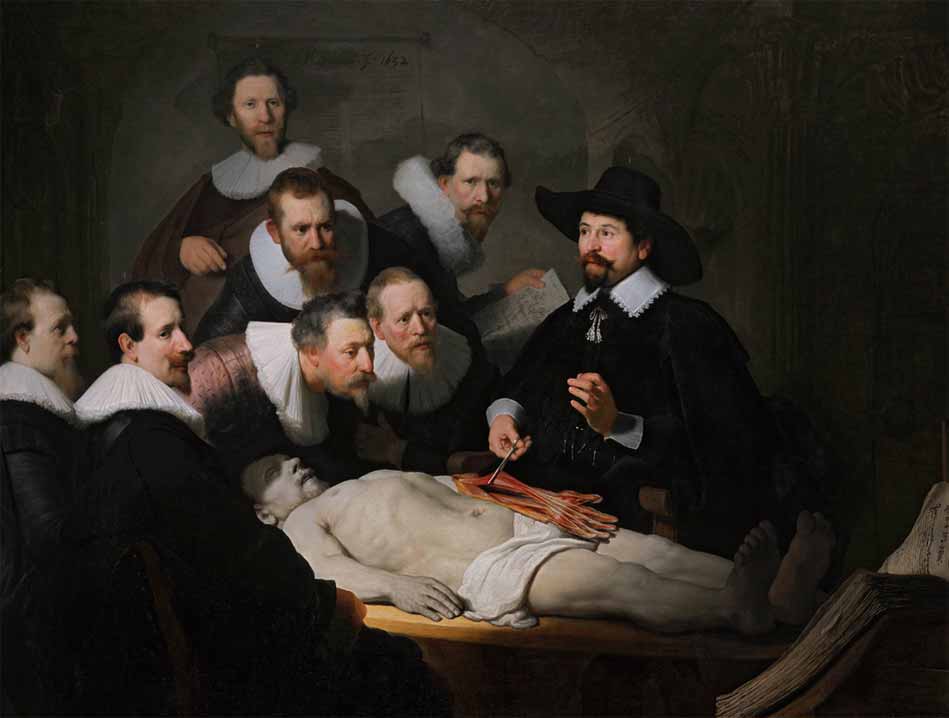
During his time in Amsterdam, Rembrandt gradually began to gain fame. As the young artist’s fame grew, his financial means expanded, and he later became quite wealthy by marrying the daughter of a wealthy family. Saskia van Uylenburgh, the woman Rembrandt married, and her siblings did not face financial difficulties thanks to her father’s wealth. This marriage played a significant role in Rembrandt’s rapid rise to fame and in ensuring that his works were respected and in demand among the upper classes. Some time later, Rembrandt had a son, but shortly after his son’s death, he lost his wife. Although Rembrandt began to devote himself more to his art after his wife’s death, his works began to see less demand. Thus, the artist gradually lost money and fell into debt, eventually losing many of his possessions—including his home—and was left alone with his son.
Left alone with his son, Rembrandt began a relationship with Hendrickje Stoffels, the maid who had taken on the care of his son years earlier. This relationship proved to be a source of motivation for Rembrandt and helped him hold on to life more tenaciously. Rembrandt, who had a daughter from this relationship, taught his son Titus—born from his marriage to his former wife—the art of painting. Years later, although Titus, working as an art dealer, tried to pay off his father’s debts and sell his works, Rembrandt could never achieve financial stability. Shortly thereafter, he lost his son Titus as well and was left alone with his wife. While these events allowed the artist to focus more intensely on his art, they took a heavy emotional toll on him. Following the death of his son and then his wife, the artist was left completely alone and passed away in poverty in Amsterdam in 1669.
Rembrandt’s Art
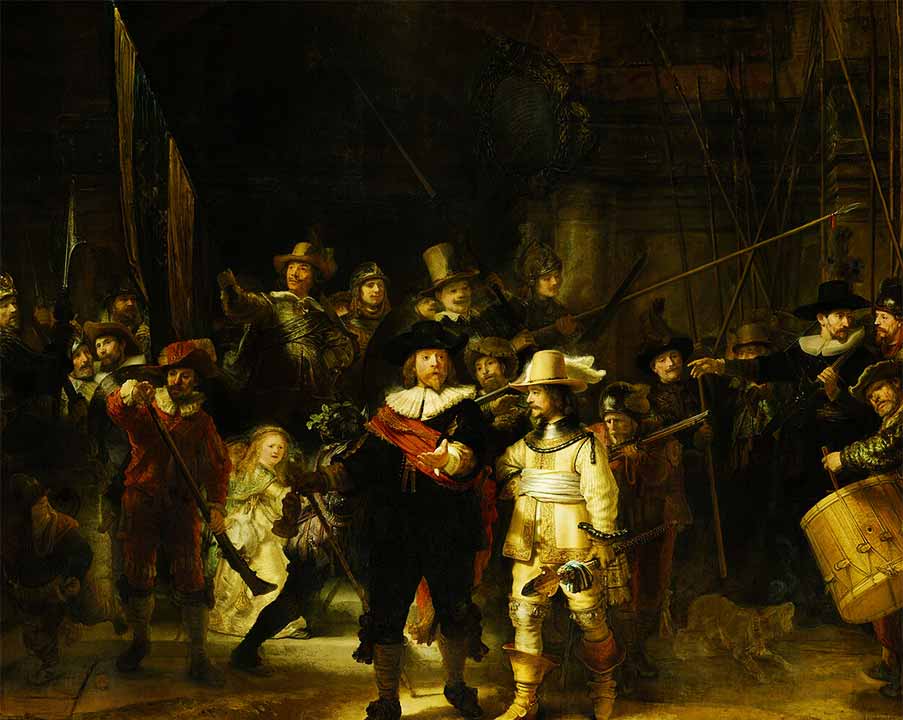
Rembrandt used the chiaroscuro technique in his works to create a striking effect and produce dramatic images. In keeping with the artistic spirit of his time, Rembrandt frequently played with light and shadow; to emphasize the light in his paintings, he created dark, thick, and undulating layers. Rembrandt spread the paint in thick layers using the handle of his brush and applied it in successive layers. For this reason, someone viewing his paintings up close could discern the brushstrokes. To fully immerse themselves in the composition of Rembrandt’s paintings, viewers had to observe them from a distance. When viewed from a distance, Rembrandt’s paintings appear extremely realistic, and the techniques used are not apparent. However, as you get closer, you’ll be amazed by the thickness of the paint, the layers built up repeatedly with fine brushstrokes, and the grooves. In fact, for this reason, Rembrandt advised his clients to place their paintings where they could be viewed from a distance and under strong lighting.
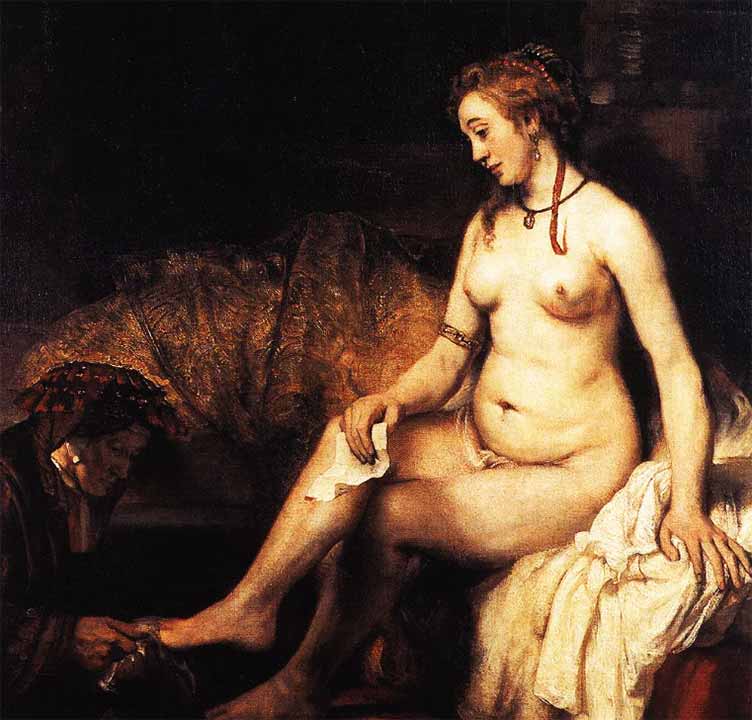
The additional layers of varnish create a more distinct image in the painting. Rembrandt used this technique so effectively that his painting depicting Captain Cocq’s guards in broad daylight came to be known as “The Night Watch.” Although Rembrandt died struggling with loneliness and poverty, after his death, people began to emerge who spoke of him and sought to write his biography. In the 1800s, the “Old Master’s” fame grew even further thanks to the great efforts of historians and catalogers to evaluate Rembrandt’s works. Rembrandt’s life exemplifies the shifting aesthetic perceptions in art over time. While his works went unnoticed in the 1600s, by the 1700s he had become a source of inspiration for many great artists, such as Sir Joshua Reynolds, and came to be known as the Old Master.