Mannerism developed in Florence and Rome in the 1520s amid social upheavals such as the Protestant Reformation, which divided Central Europe; the plague, which killed thousands; and the Sack of Rome in 1527. In response to these turbulent times, many artists abandoned the harmonious ideals of the Renaissance and began to create images with more emotional content.
The Mannerist period lasted roughly from Raphael’s death in 1520 to the beginning of the Baroque era in 1600. In addition to emerging as a reaction to the social and political upheavals in Europe, Mannerism was a direct result of the rising social status of artists in those later years. They were no longer simply craftsmen quietly producing works that served the religious beliefs of society. In circles where refinement, sophisticated tastes, and style were valued, they stood on equal footing with scholars, poets, and philosophers. Art ceased to be merely a tool serving religious purposes and began to be recognized for its own intrinsic value.
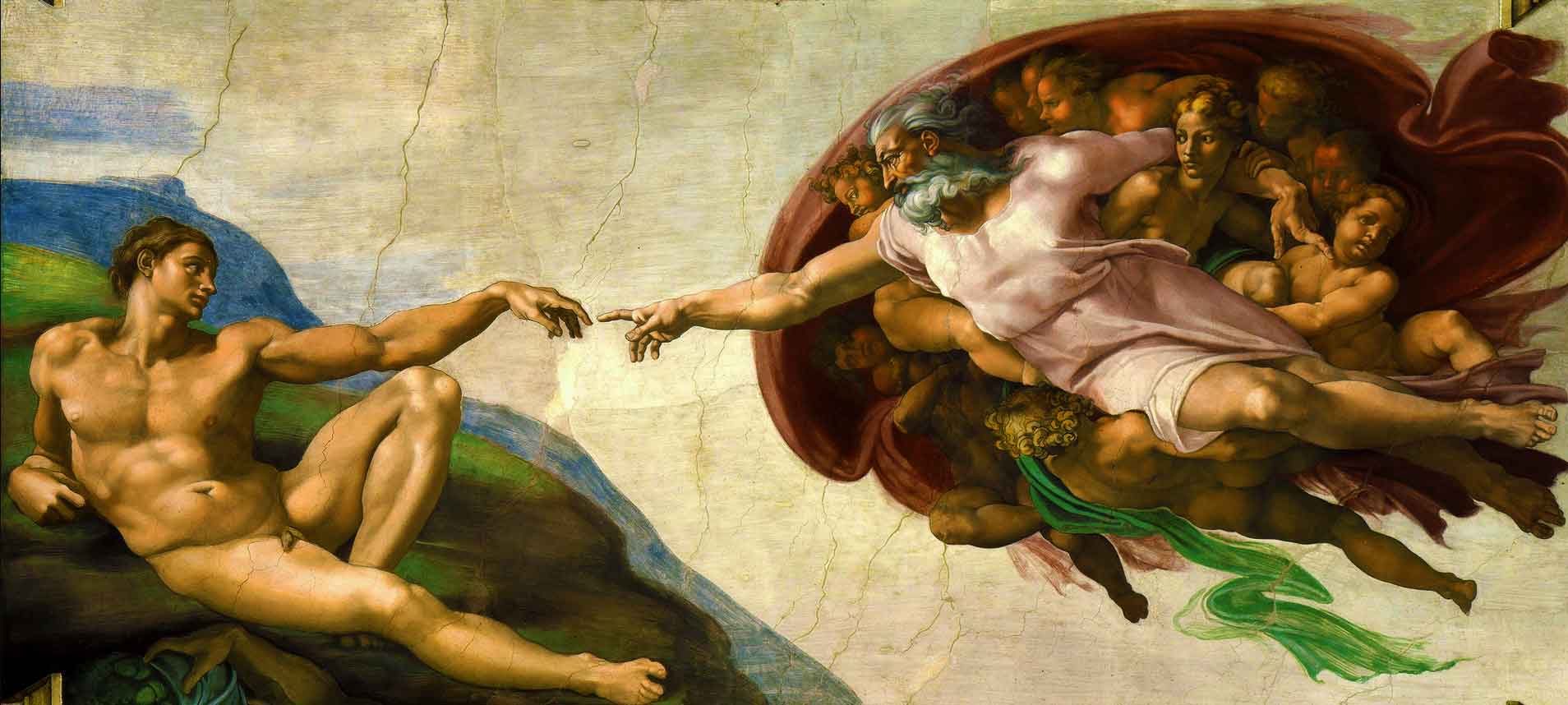
The term “Mannerism” (or “stylism”) was coined in the 17th century from the Italian word *maniera*, meaning “style.” It was intended to be a derogatory term. Throughout the Renaissance, artists observed nature and sought to imitate it as realistically as possible. Witnessing the perfectionism of the High Renaissance, the Mannerists rejected this approach and instead imitated other works rather than life itself. They imitated the styles of prominent artists and interpreted them in an exaggerated manner. In particular, Michelangelo’s dramatic and emotionally charged late works sparked the underlying philosophy of this movement. Many artists drew inspiration from the majestic and dominant forms of Michelangelo’s late period, embellishing his style to create even more dramatic images.
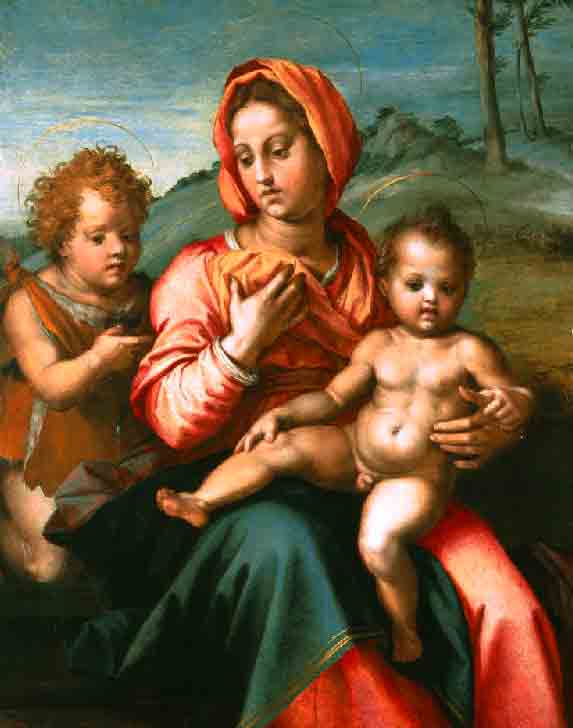
Another artist who inspired the Mannerists was Andrea del Sarto (1486/87–1530/31), one of the renowned figures of the High Renaissance, who used vibrant colors and varied, complex poses in his paintings. The third artist who had a major influence on the Mannerists was Correggio (1489–1534). Correggio was another Italian High Renaissance artist who employed magnificent, eye-catching effects in his religious works, blending overwhelming splendor with delicacy and emotional depth. By pushing the limits of perspective, Correggio created illusions of boundless space in his paintings. His ability to depict figures as they would appear when viewed from below inspired Mannerist painters to render their figures in unusual positions or from unconventional angles, creating striking imagery. While painters combined intense use of color with long, flowing brushstrokes, sculptors emphasized striking poses and dramatic gestures.
The Foundations of the Renaissance and the Emergence of Mannerism
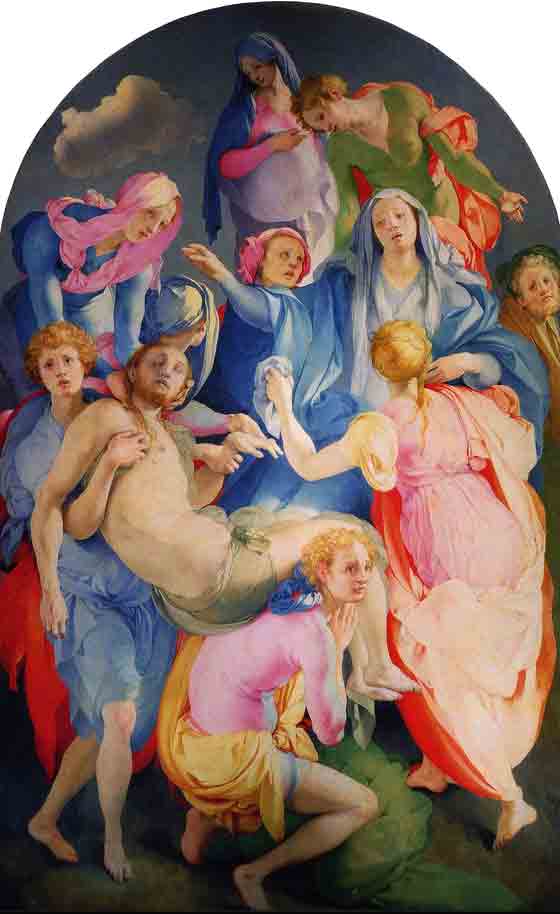
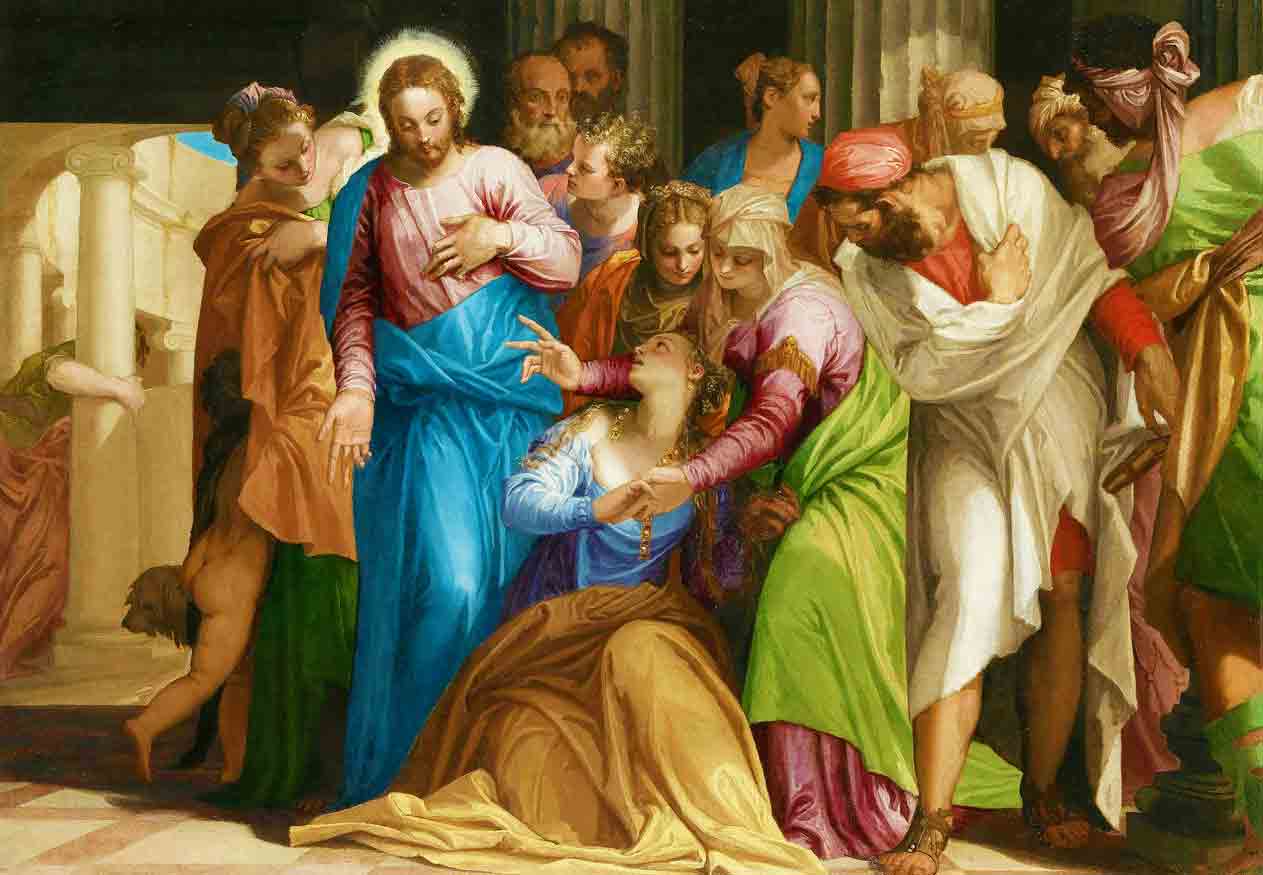
The painting above is a typical Mannerist work. Although Mannerism began while Michelangelo was still alive, in this work we can see the difference between his heavy, sculptural figures and Mannerist interpretations. The figures here are ethereal and almost weightless. In addition to their long, slender limbs, their heads appear small when compared to their flowing garments. The figures seem confined within the frame, as if moving on a limited, unreal plane. Their pastel-colored garments represent a shift away from the bright tones of the Renaissance. All of these elements combine to create an otherworldly atmosphere. These people do not seem to live in this world; they appear to be creatures from another realm. Mannerism’s fantastical dimension captivated the imagination and visual imagery of its contemporaries.
The unconventional characteristics of Mannerism began to appear simultaneously in Florence and Rome. One of the Mannerists’ favorite subjects was the nude. While imitating the nude figures and other elements in the works of the High Renaissance artists they admired, they dramatized the distinctive features of these figures and created exaggerations. Common features seen in the figures—which they often elongated and distorted—included narrow shoulders, wide hips, and long, slender hands and feet. The relaxed, contrapposto-posed figures of the Renaissance were typically depicted in intricate and challenging poses. Painters used soft, pastel colors or sharp, unnatural tones instead of realistic colors. Both painting and sculpture were heavily based on imagination.
The focus was as much on style as on content. While High Renaissance artists sought balance and harmony, the Mannerists deliberately created imbalance and tension. Popular themes were generally a mixture of Classicism, Christianity, and mythology. Mannerism was partly a deliberate movement and partly a method that did not require artists to strive to surpass the mastery of the High Renaissance. While striving to be more original than their recent predecessors, they created works featuring distinctive elements that would capture the viewers’ attention. The underlying philosophy was to make art more interesting and eye-catching—provocative and thought-provoking—and to demonstrate that artists could play with classical proportions and styles as they pleased. They were not obliged to imitate life as it appeared, but could create their depictions according to their own choices, in whatever beauty and style they desired.
The Most Important Mannerist Artists and Their Legacies
Jacopo da Pontormo (1494–1557), a student of Andrea del Sarto, and Rosso da Fiorentino (1494–1540) became leading Mannerists. Pontormo’s student, Agnolo Bronzino (1503–72), became the court painter to Cosimo I de’ Medici, Grand Duke of Tuscany, in 1540; he was regarded as Florence’s foremost artist and helped boost the popularity of Mannerism. Bartolomeo Ammanati (1511–92) and the Flemish sculptor Giambologna (1529–1608) were leading Mannerist sculptors who traveled throughout Europe. They produced sinuous and fluid works featuring elongated figures in intertwined poses. Parmigianino (1503–40) gained admiration and influence for his idealized, lifelike figures in contrived poses and situations. In Mannerism, the aim was not merely to create an imitation of the posing model in portraits. Beyond the model’s appearance, an attempt was made to reflect her personality and spirit. This is a characteristic of stylistic interpretations of Mannerism.
Bartholomeus Spranger (1546–1611) and Hans von Aachen (1552–1615) were Flemish painters who traveled throughout Europe and became renowned for their Mannerist styles. Constantly seeking new ways to express themselves, the Mannerists traveled throughout Europe, taking on commissions and gathering new ideas from one another. The Sack of Rome in 1527 triggered a massive exodus of artists fleeing to cities across Europe. King Francis I of France established Mannerism as the leading style in France by employing many Italian artists at Fontainebleau. By the mid-16th century, the influence of Mannerism had spread far beyond Rome and Florence