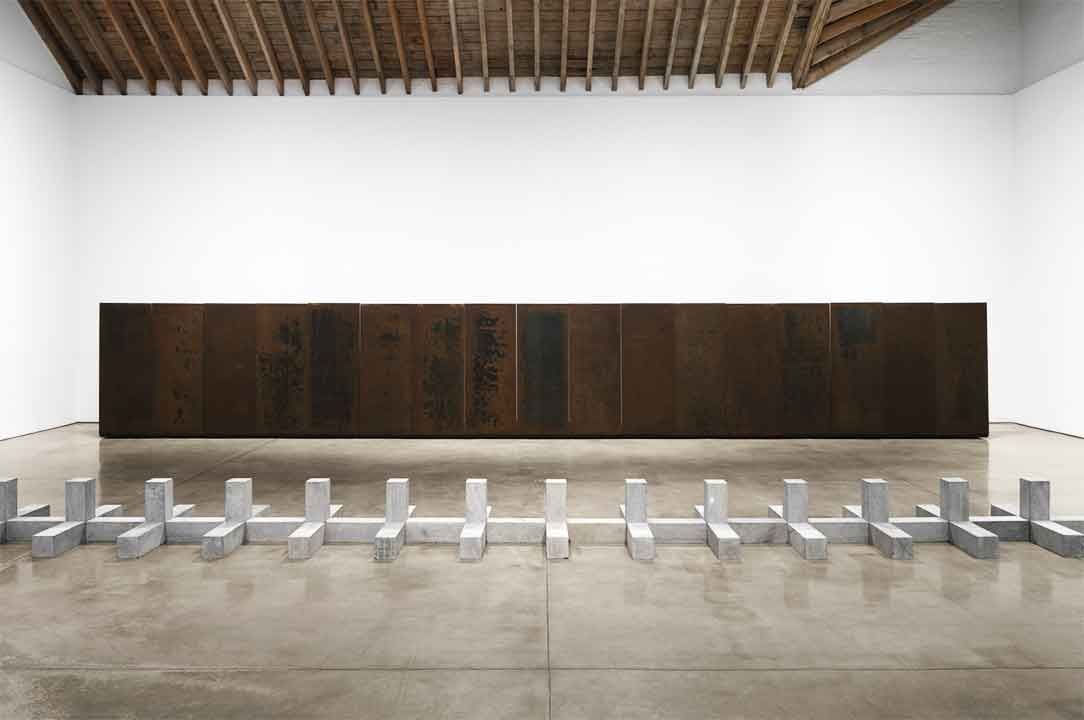
The Minimalist movement was an art style that drew influences from many art movements that emerged in the 20th century. The term “Minimalism” was first used in the title of an article written by the British philosopher Richard Wollheim in 1965 to describe an abstract art style that was beginning to emerge in New York.
Simple and Unadorned Art
Artists associated with the Minimalist movement preferred logic and objectivity over emotionality and subjectivity in art. In this sense, Minimalist art can also be seen as a reaction to Abstract Expressionism. Instead of using random brushstrokes to express their emotions on the canvas, they worked in a mathematical and meticulous manner. In a sense, minimalist artists were also followers of the Constructivist movement because they believed art should be created using modern and industrial materials. This is why they frequently used fluorescent lights and bricks in their works. The minimalist movement emphasizes that art must have its own identity. Challenging the traditional aspects of art, minimalist artists used industrial materials in accordance with the principles and ideas underlying art.
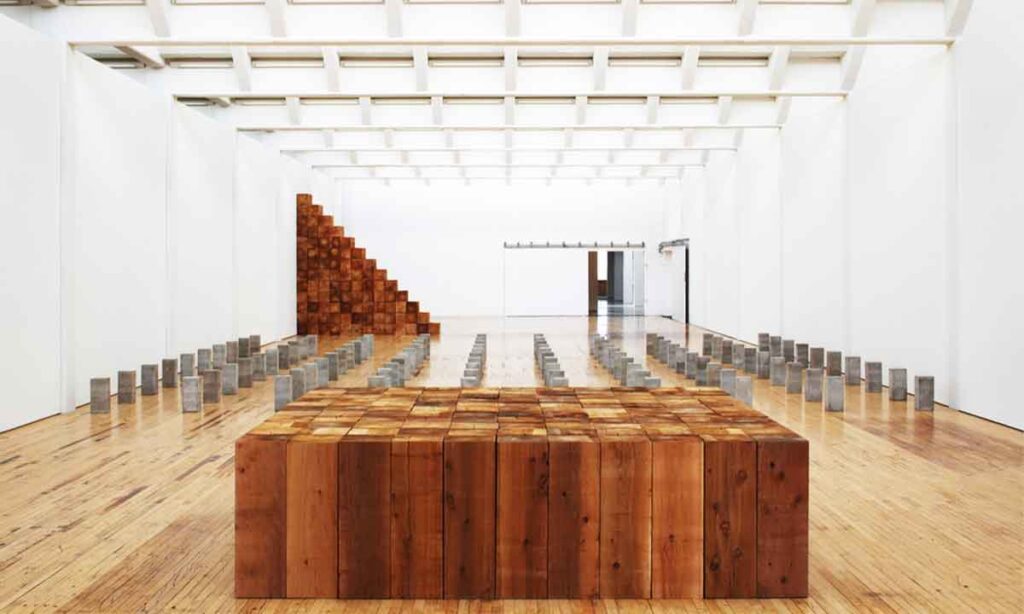
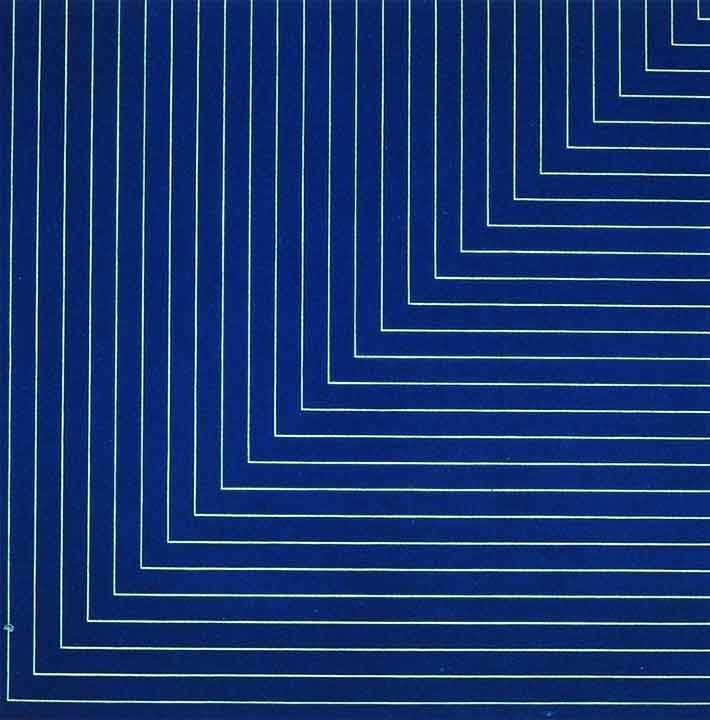
Minimalist works were largely based on geometric shapes, and there was no room for subjective expression in the colors, forms, and lines used in these works. Most minimalist artists frequently produced three-dimensional works. A common thread among all minimalist artists was to limit depictions and impressions as much as possible. The leading representatives of the minimalist movement include Frank Stella, Donald Judd, Robert Morris, Richard Serra, and Carl Andre.
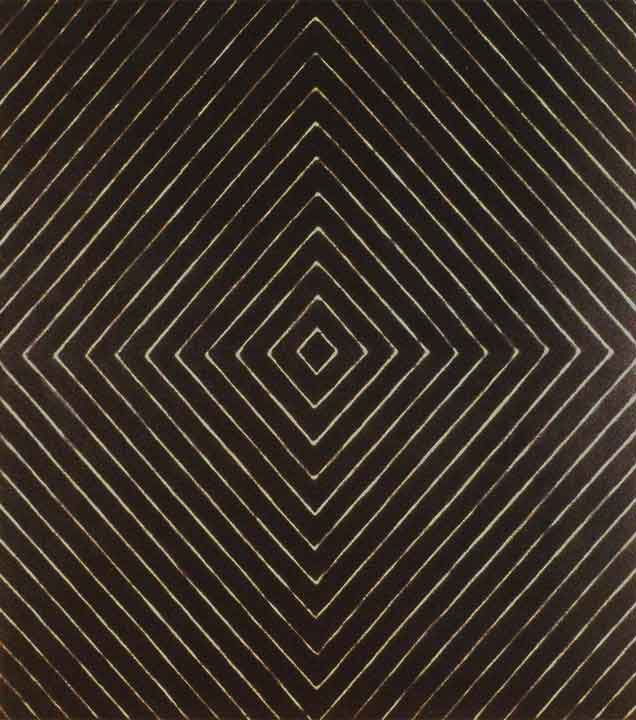
Minimalism began to gain popularity primarily through Frank Stella’s series of paintings titled “Black Paintings,” which carried no hidden meanings, themes, symbols, or references. Stella described his paintings as follows: “They are nothing more than a flat surface with paint on it.” Stella’s series was exhibited in 1959 at the Museum of Modern Art (MoMA) in New York as part of the exhibition titled “Sixteen Americans.”
Logical and Minimalist Artworks
Witnessing these minimalist works inspired many artists to develop their own three-dimensional interpretations within the minimalist movement, guided by similar principles. The minimalist movement is largely based on theoretical concepts. Although minimalism did not emerge as an organized movement, it nevertheless became quite popular in the 1960s and 1970s. Artists sought to interpret the theoretical concepts underlying minimalist art in their own ways.
In 1966, Carl Andre organized a series titled “Equivalents,” consisting of eight sculptures made of firebricks. Each of these sculptures was composed of an equal number of bricks. The final sculpture in the series, Equivalent V/1, was acquired by the Tate Gallery. In the 1960s, Donald Judd began creating three-dimensional structures he called “Specific Objects,” which focused on the relationship between the artwork and the viewer.
He was influenced by other artists such as Carl Andre, Stella, and Brancusi. Like other minimalist artists, he challenged the tradition of artistic expression by using industrial materials such as brick, sheet metal, hard plastic, and wood. Don Flavin spent years focusing on how to use fluorescent lights in his works, conducting artistic experiments by playing with form, light, and color. Sol LeWitt created experimental works using black-and-white reliefs.
His sculptures sometimes appeared in rational forms and sometimes in irrational ones. These choices regarding form were intended to allow viewers to interpret his works in their own way. Another prominent minimalist is Ad Reinhardt. The reason Reinhardt is counted among the artists who influenced minimalist art is his monochrome paintings, writings, and the lectures he gave.
Minimalist artists used materials such as bricks, plywood, and lighting fixtures—materials commonly found in the construction industry. Colors were used to distinguish between materials and spaces within the work and to create a sense of balance. By refraining from adding any personal dimension to their works, minimalist artists consistently expressed their commitment to mathematical and geometric concepts. Every work associated with the minimalist movement was created to be evaluated in a manner stripped of deep meanings or emotional themes.
By questioning the role of art, these artists focused more on the reactions it evoked in people than on the objects themselves. Although many people mocked minimalist art during its time, the minimalist movement—which emerged as a reactionary trend—left a profound mark on design and architecture with its revolutionary qualities, serving as a source of inspiration for subsequent art movements.