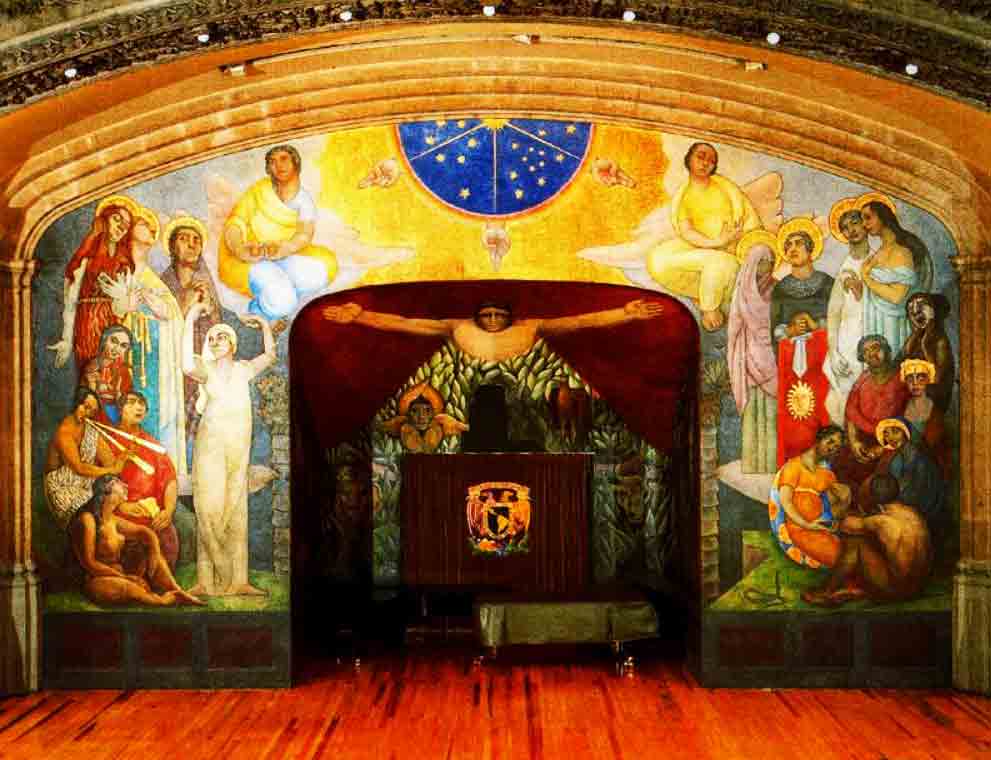
The Mexican Revolution, which began in 1910, turned into a protracted civil war. Throughout this period, a small group of Mexican artists created large-scale murals in public spaces to instill a national and socialist identity in the people. This is how the Mexican mural style emerged.
Although the emergence of Mexican muralism was directly linked to the country’s political situation, the artists involved in this movement were also influenced by European art movements such as the Renaissance, Post-Impressionism, Cubism, Expressionism, Symbolism, and Surrealism. In addition, they incorporated elements from their own cultural heritage and Mexican folk art into their works. The movement’s most important artists—José Clemente Orozco (1883–1949), Diego Rivera (1886–1957), and David Alfaro Siqueiros (1896–1974)—came to be collectively known as Los Tres Grandes (The Big Three). Of the many revolutions in Mexican history, the most significant was the one that took place between 1910 and 1920. In 1922, the new national revolutionary government—led by Education Minister José Vasconcelos (1882–1959), the new national revolutionary government decided to use art for propaganda purposes and tasked artists with creating a new sense of national identity, focusing on the lives of the oppressed people, instilling self-confidence in them, and fostering an atmosphere of optimism for a new Mexico in the face of the injustices and oppression experienced before the revolution.
The Emerging Mural Painting Tradition from Mexico
The new government commissioned numerous public murals from specific painters to be displayed in places visible to everyone, showcasing Mexico’s strength and supporting the vision of a more democratic country free from class divisions and prejudice. The Mexican Murals were the most influential and large-scale state-sponsored mural project since the Italian Renaissance. These murals also demonstrated the artists’ commitment to the post-revolutionary leftist political tradition. Siqueiros—who had a history of imprisonment and had fought in the Spanish Civil War—was the most politically active of the three artists, all of whom were deeply patriotic and socialist. Through their murals, they sought to convey their social and political messages to everyone, including the illiterate. Most of the murals were located in public spaces in the capital, Mexico City, and in Guadalajara, Mexico’s second-largest city. In these works, they depicted their pride in Mexico and showcased their local cultural heritage in various ways.
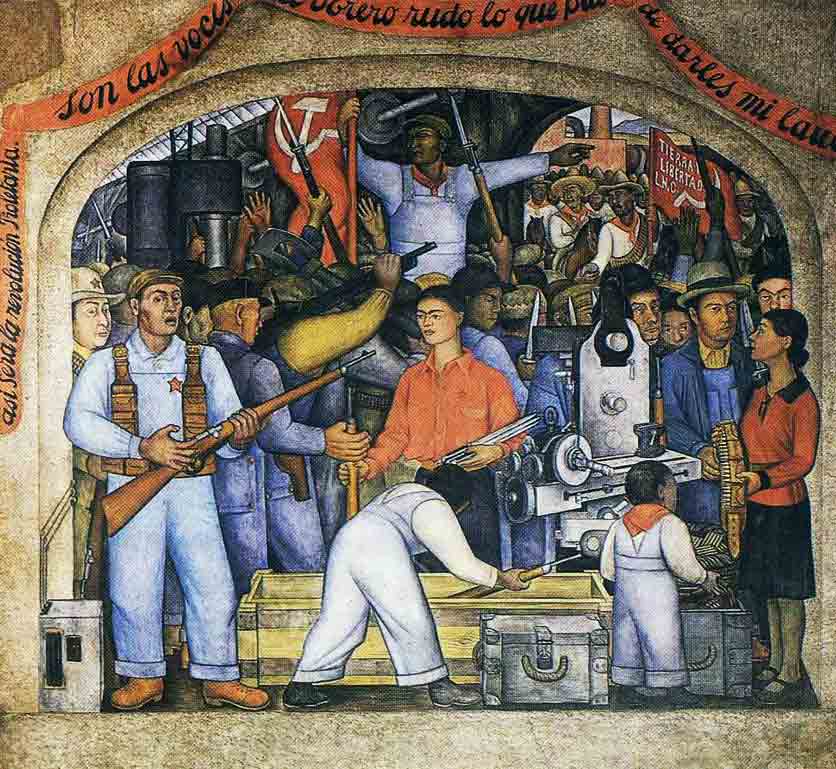
The mural tradition was financially supported because it is a traditional art form with a very long history in Mexico that continues to this day. For example, murals—which were part of Maya culture—later appeared in Spanish Baroque churches throughout Mexico. Mexican murals were created in a realistic style, often featuring simple and clear narratives, so that they could be understood by as many people as possible. On the other hand, all artists combined traditional and modernist influences. All of the artists charted their own paths to address the needs of the political era, successfully presenting their works with distinct identities—Mexican, universal, decorative, educational, and inspiring. For example, Rivera, known as a leading figure of this movement, drew upon elements of modern art as well as pre-Hispanic art, which refers to the period preceding 16th-century European colonialism.
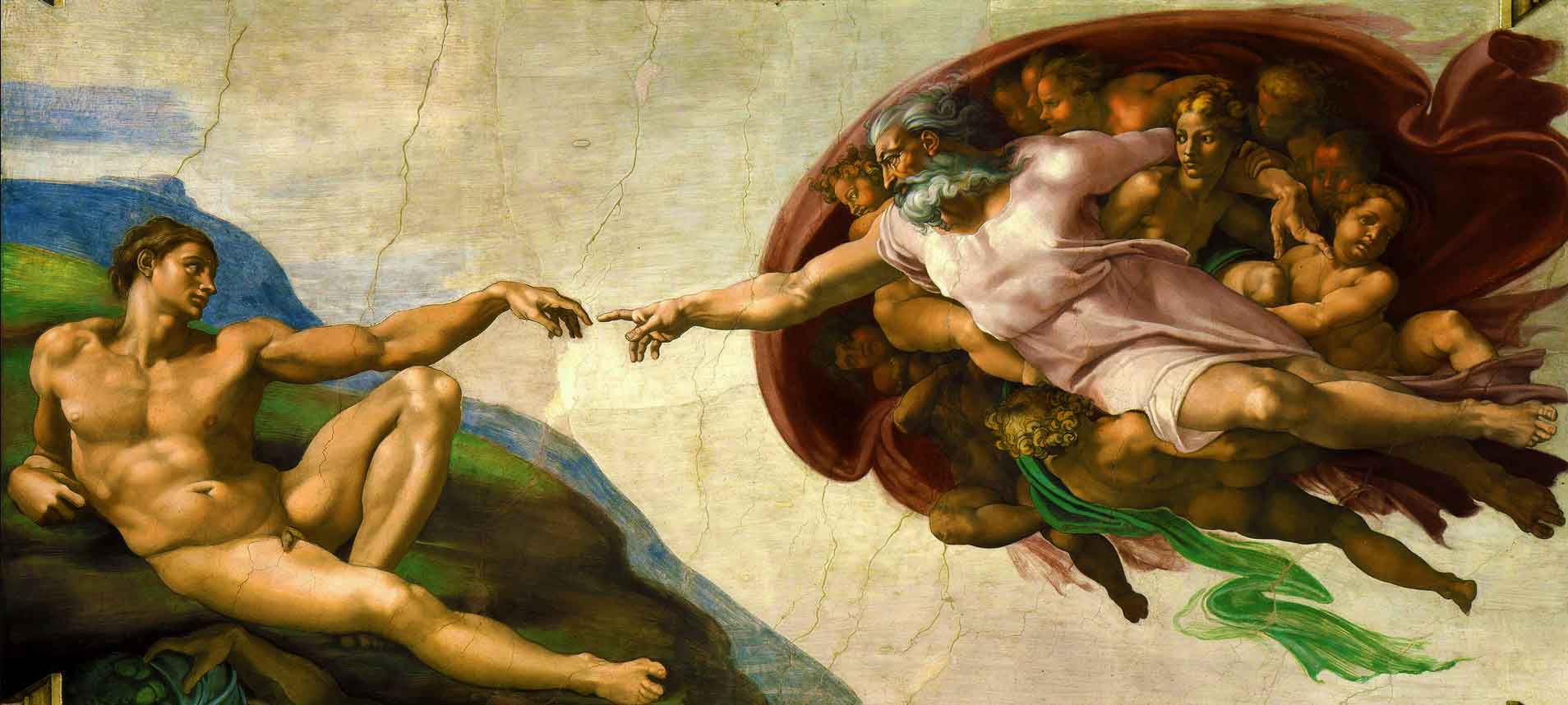
Rivera, who lived in Europe from 1907 to 1921, spent most of his time there in Paris, where he developed his own distinctive, bold, and colorful form of Synthetic Cubism while working with Picasso and Gris. His murals (and frescoes), which incorporate elements from pre-Columbian cultures, also feature many Cubist techniques, such as the diagonal grid structure in his compositions and the use of non-traditional perspective, reminiscent of Gauguin’s Symbolism. Orozco’s works, influenced by Expressionism, drew attention to the suffering of the Mexican people through their dark and striking colors. On the other hand, Siqueiros’ dynamic and dramatic paintings, characterized by strong color contrasts, were strongly influenced by Surrealism, folk art, and Michelangelo—whose works he studied during his stay in Europe from 1919 to 1922.
Local Mexican Art
Local artistic traditions in Central and South America had been suppressed by European colonialism in the 16th century. The settlers—mostly Spanish and Portuguese—nearly completely eradicated local art as they rebuilt their own towns, cities, and social environments from scratch in their new colonies. However, with the Mexican Revolution, traditional Mexican art—particularly that rooted in pre-Columbian cultures—was revived. These artists’ influence spread rapidly, and they were highly regarded in the United States, where they participated in public art projects and, as a result, influenced subsequent art movements. In the early 1930s, while living in San Francisco, Detroit, and New York, Rivera created murals for municipal buildings. In 1931, the Museum of Modern Art (MoMA) held a retrospective exhibition featuring small-scale, portable frescoes he had created specifically for the occasion.
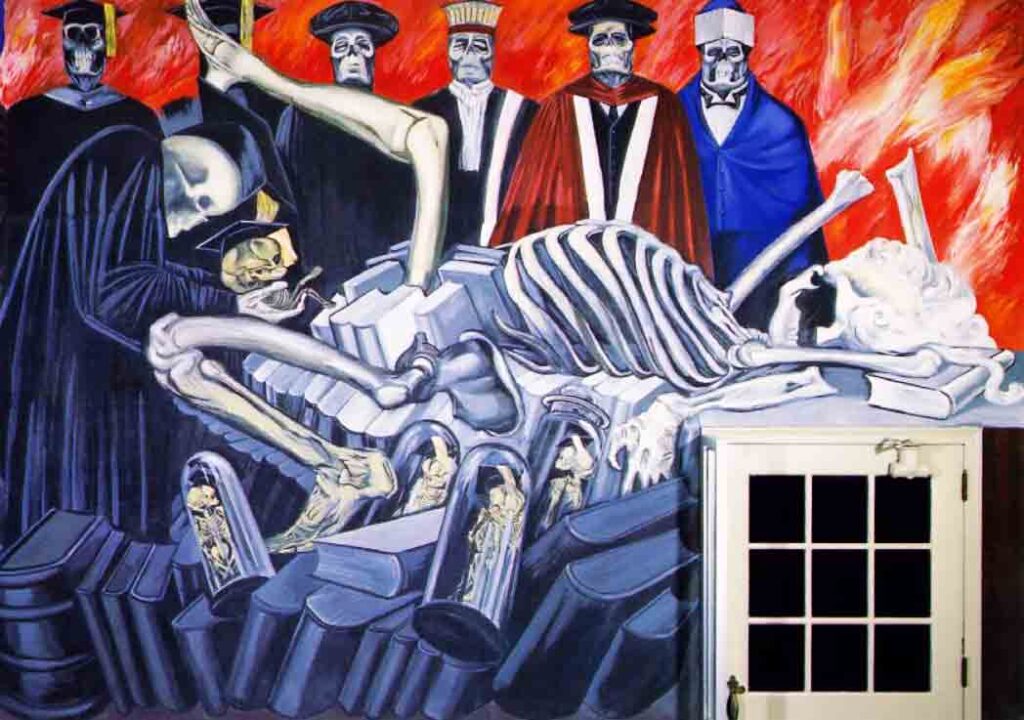
Between 1927 and 1934, Orozco lived in New York, where he created a series of murals for the New School for Social Research. While living in New York in the early 1930s, Siqueiros participated in the “Mexican Graphic Art” exhibition and created a mural in Los Angeles with a group of students. Since the political situation in Mexico was unstable, Mexican mural art came to a temporary halt while the Big Three were in the United States. At the same time, the artists adapted their painting styles to smaller canvases in order to gain greater recognition for their work outside of Mexico and in the United States, as well as to secure the additional income they needed. They typically received commissions for these smaller-scale works from American patrons.