After 1308, as the authority of the major political powers in the Anatolian region weakened and oppression diminished, a political vacuum emerged. This vacuum was filled by numerous small principalities, one of which was the Principality of the Ottomans. The Ottoman Empire began as such and, over time, expanded its territories both eastward and westward, eventually gaining control of Anatolia. During this process, it developed Islamic art while also drawing inspiration from Seljuk art.
The Rise and Expansion of the Ottomans
In 1453, following a grueling defense, the city of Constantinople surrendered to the Young Sultan Mehmed II and fell into Ottoman hands. This development, which followed Sultan Bayezid’s defeat by Timur in the East, can be considered a turning point for the Ottomans. For with this event, no obstacles remained in the Ottomans’ path to expand westward. Furthermore, Constantinople—which remained a central hub for the Orthodox Christian world—fell into Turkish hands. Following this event, the Ottomans rapidly advanced toward their imperial goals, gaining territory through numerous campaigns in both the East and the West. In the century following the conquest of Istanbul, the Ottomans rose to the status of a regional superpower, both among Islamic states and in the eyes of other nations. The Ottoman Empire, which had turned a large part of the Mediterranean into a “Turkish lake” by the 17th century, saw its systematic expansion come to an end following the Siege of Vienna in 1683.
Since the Ottoman Empire eventually expanded across three continents, it possessed an international culture. The immense wealth of the Ottomans was also evident in the arts. Ottoman art can be studied as a subcategory under the broader heading of Islamic Art, as it possesses a distinctive character in artistic fields such as architecture and ceramics. The backbone of Ottoman architecture is the domed square form.
This form first appeared as a central concept in the “Ertuğrul Mosque,” built in the 14th century, and was developed and applied over the centuries. The main characteristics of Ottoman architecture include elegance, simplicity, and minimalism, as well as high technical standards. In fact, these qualities are evident not only in architecture but also in other artistic fields. This means you can distinguish Ottoman architecture from Algeria to Iraq. Elements such as domed porticos, courtyards, minarets, and buttresses possess a distinctive style.
In fact, the domed square form dates back to ancient times. For example, domed square structures began to appear in Iraq as early as the 9th century. However, nowhere else did this form come to the fore as a primary architectural element as it did in the Ottoman Empire. The degree of centralization brought about by such a vast empire led to a strong influence of bureaucracy on architectural design, and this process took shape with the establishment of a government department tasked with producing plans that could be reused repeatedly. This system made local architects dependent on the center, perhaps imposing an unintended uniformity on the works of architects in different provinces. They were able to make decisions on practical matters, such as whether to use exposed brick or plaster, or whether to build monochromatic or patterned walls.
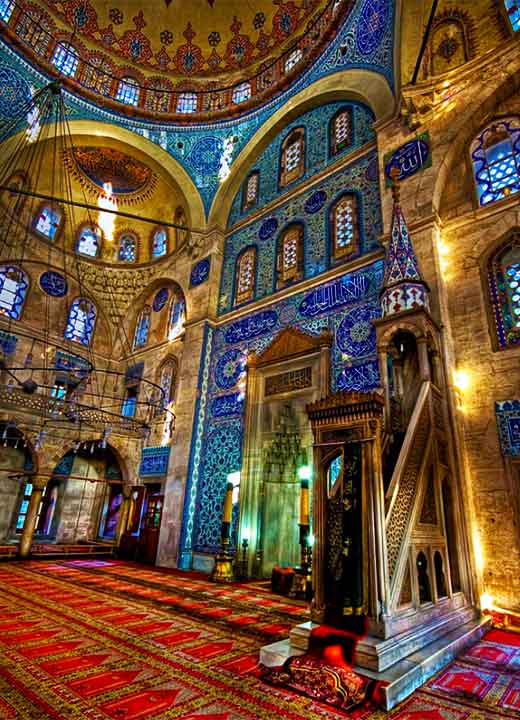
It can be said that Ottoman architecture was centered around the mosque. The undeniable prestige of the mosque as a building type ensured that it became the focal point of imperial patronage. As a result, it became the venue where all innovations were first showcased, facilitating the rapid spread of new ideas with the endorsement of the most sacred building type. Furthermore, all the major stages in the evolution of mosque design took place in the capital cities—first in Iznik, then in Bursa, and finally in Istanbul—which endowed them with a grandeur befitting a metropolis. Additionally, the fact that most Ottoman imperial mosques were of extremely large dimensions, including their courtyards, made them unexpectedly useful models for the various elements of the complex—such as caravanserais, madrasas, and other structures arranged around the mosque.
The Great Master Architect Sinan
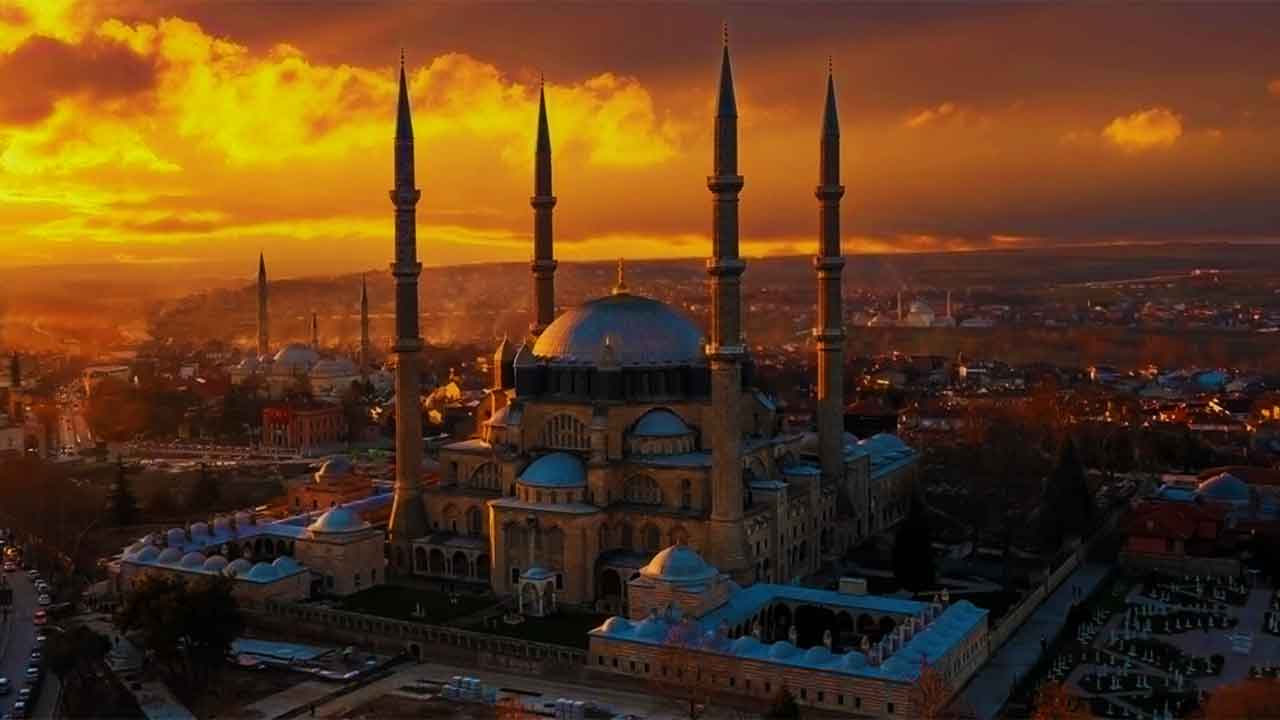
The leading figure of 16th-century Ottoman architecture is Sinan (1491–1588). As chief architect (or, in modern terms, Director of Urban Planning), Sinan was responsible for the construction of more than three hundred buildings throughout his exceptionally long career. Both his own works—one of the most significant being the Selimiye Mosque in Edirne, which he completed in 1575 at the age of eighty—and the plans prepared in his office and sent throughout the Ottoman Empire, where they were implemented by his assistants or local craftsmen using local details, have made him the most famous architect in the Islamic world.
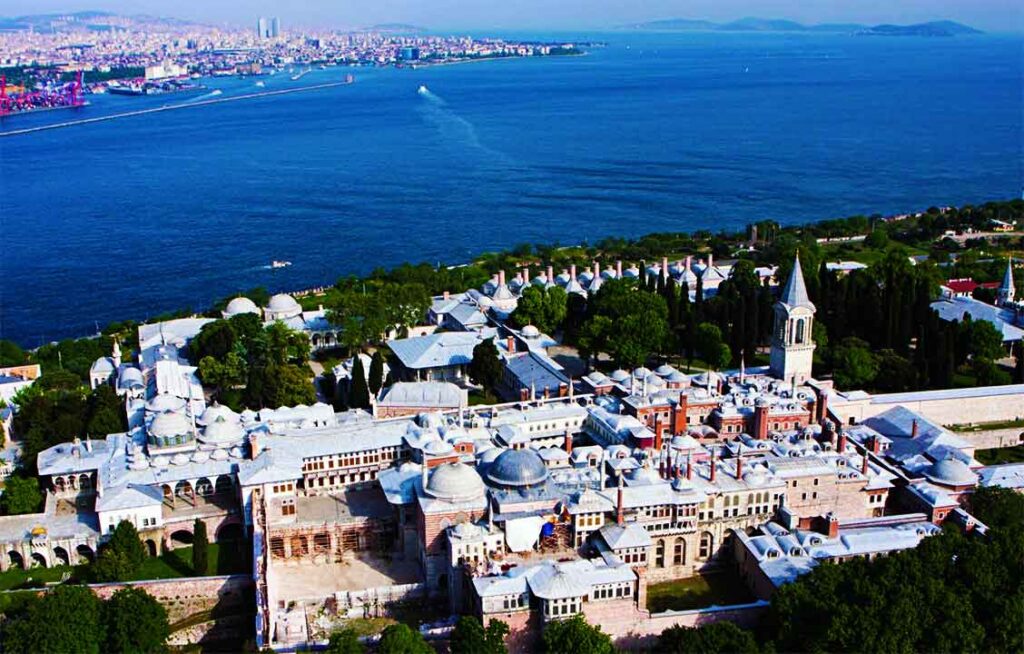
He transformed the bare, ornament-free facades of Ottoman mosques with single or double porticos, porticoes, doors, fountains, windows, buttresses, lattices, and—most importantly—the interlocking volumes of domes and half-domes clustered around the central dome, along with a series of connecting elements such as new, tall (reaching up to 70 meters) and pen-shaped minarets that define the building’s outer boundaries—it is Architect Sinan who developed these features.
The most impressive mosques are like gray mountains built of stone, yet they possess a complexity and harmony of form. These are the works of a true architect. Details such as carved elements, two-toned keystones, sloped lintels, muqarnas capitals, and door frames demonstrate the meticulous attention paid to detail; yet, these are used sparingly and with restraint to create a contrast with the simple tone that dominates the whole. The razor-sharp precision of the stonework is a decorative element in itself. Red, blue, and yellow painted floral and geometric patterns, calligraphic medallions, stained glass, and Iznik tiles—which, as in the Rüstem Pasha Mosque, sometimes cover the entire interior—make the interiors more colorful. This balance between decoration and architecture was gradually lost after the construction of the Sultan Ahmed Complex in 1609–17.
Pottery and Ceramics in the Ottoman Empire
There is a certain irony in the fact that Iznik ceramics and tiles—the most famous and popular of the Ottoman art forms—are made from inexpensive and humble materials. They are among the most renowned and coveted ceramics produced in the Islamic world. Iznik ceramics owe their fame not only to their high aesthetic and technical quality but also to the fact that both tiles and ceramic pieces have survived to the present day in large quantities and generally in excellent condition. Here, the dominance of an industry supported by the state and provided with financial resources is immediately apparent. Iznik ceramic production was an official undertaking requiring extensive bureaucratic and financial oversight due to its massive scale. While Iznik became the primary center for high-quality glazed ceramics, production centers in other provinces declined, and some disappeared entirely. However, the concentration of ceramic production in a single center was, of course, not a new phenomenon in Islamic art.
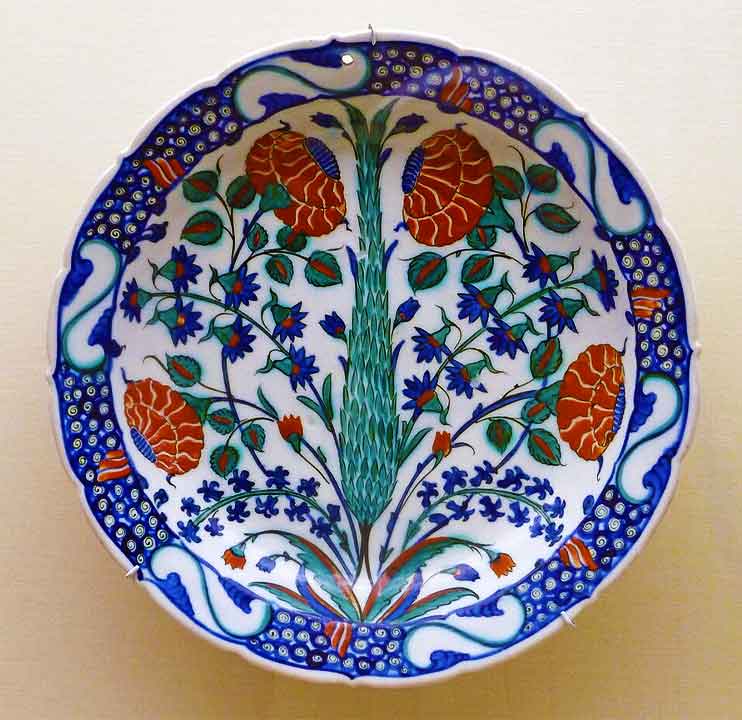
The Ottoman Empire spanned a vast geographical area and had access to both the East and the West. The multicultural structure resulting from this played a decisive role in many artistic fields, ranging from Ottoman architecture to Ottoman textiles, and from textiles to Ottoman ceramic art. However, just as in Roman art, the Ottomans combined and blended these cultural elements to create a unique artistic style. In this article, we have examined these distinctive features of Ottoman art. In particular, we focused on Ottoman architecture and the art of ceramics. This is because these are the areas that stand out most in Ottoman art.