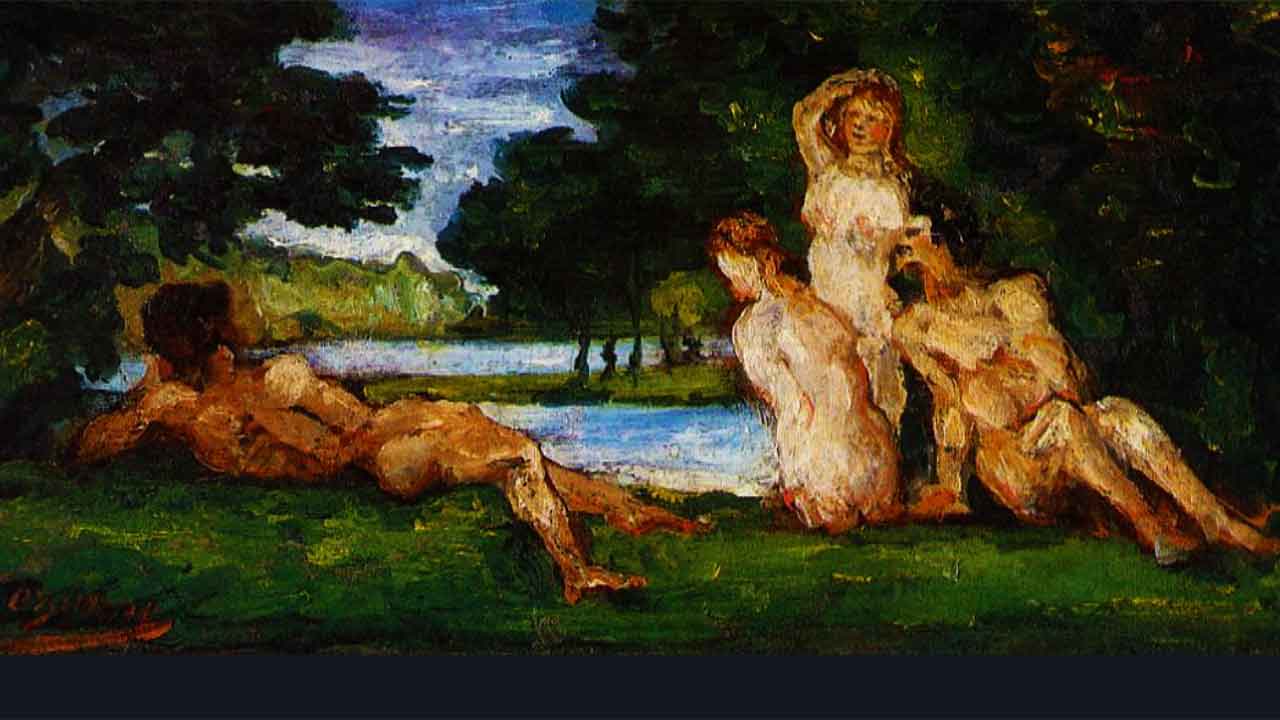
Paul Cézanne was not as popular during his own lifetime as he is today. Cezanne came to be recognized by the general public thanks to popular artists who emerged after his death and were influenced by his art. Today, he is regarded as one of the greatest artists of the 20th century. Paul Cezanne and his art…
A Pioneer of Modern Art
In 1907, Pablo Picasso first exhibited his painting *Les Demoiselles d’Avignon*. We can say that this massive canvas was a major step on the path toward the Cubist movement. Picasso drew heavily on Cezanne for this work. As we noted in the introduction, this demonstrates that Cezanne’s influence extends even to Cubism, one of the greatest artistic movements of the 20th century. We can say that Cezanne’s late works were particularly influential for Cubism. Not only Picasso but also artists such as Matisse, Duchamp, Kandinsky, and Gauguin were deeply influenced by Cezanne’s intellectual world. In fact, they were so influenced that Picasso and Matisse used to refer to Cezanne as “our father.”
Although Cezanne is regarded today as one of the pioneers of modern art, he did not enjoy such fame in the 19th century. Cezanne’s personality was marked by extreme contradictions. For example, while his passion for art drove him to work on it, his belief that he would fail simultaneously put him in difficult situations when it came to completing his works.
Émile Zola was one of Cézanne’s close friends, and there were striking similarities between the main character in his short story *L’œuvre* and Cézanne’s own life. In fact, we can say that his friend Émile Zola drew inspiration from Cézanne while writing this story. If there is one thing we can say about Cezanne’s artistic philosophy, it is this: Cezanne strove to capture nature in its entirety.
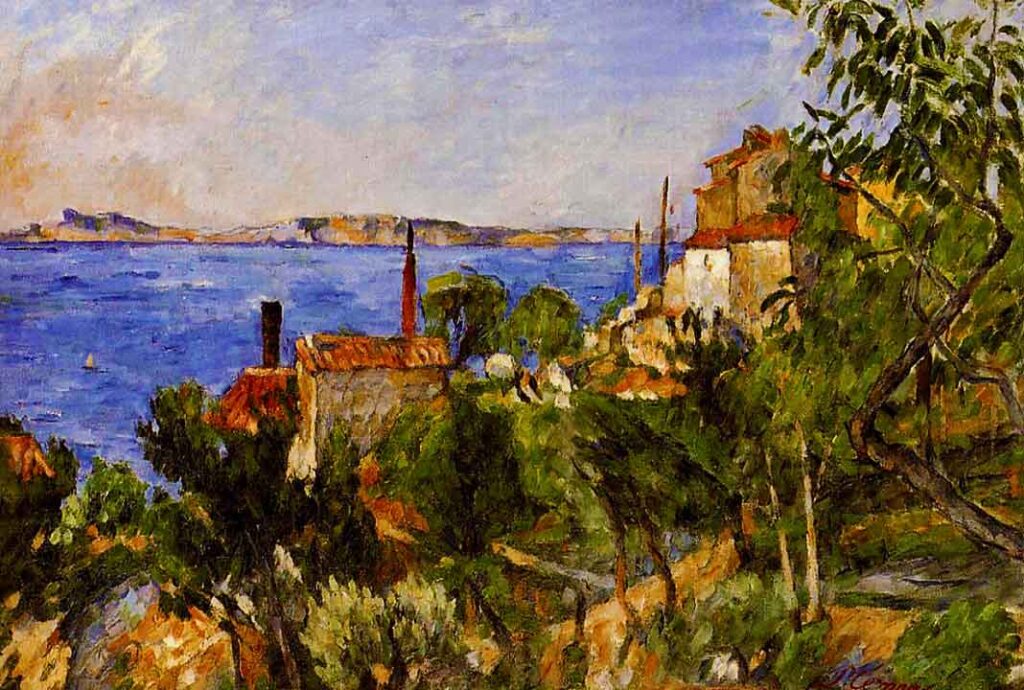
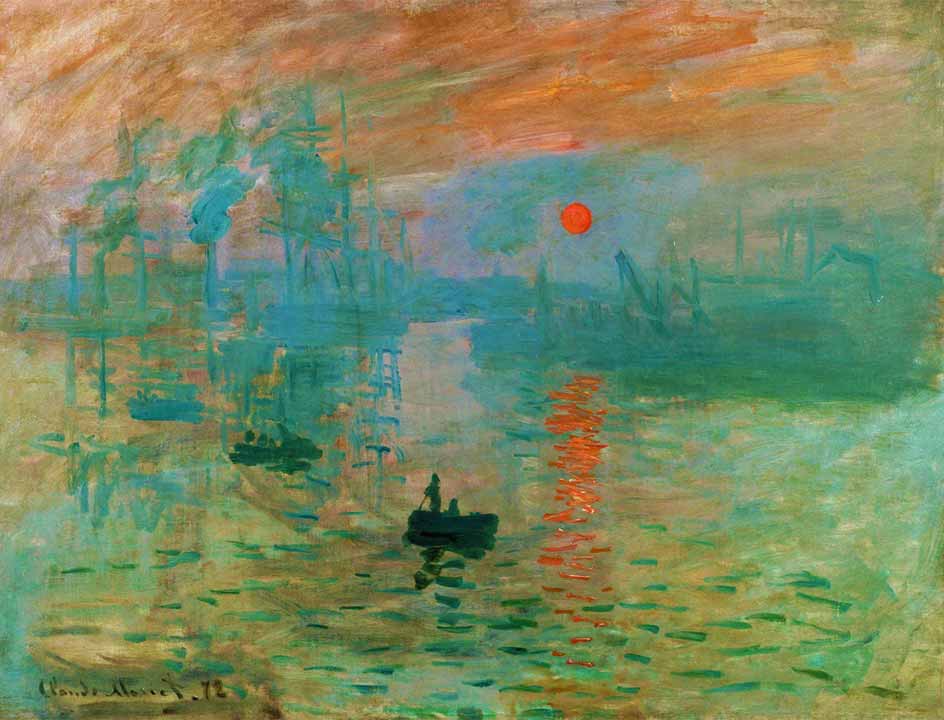
Like his Impressionist contemporaries, he was interested in capturing reality in painting. He admired Monet and other great Impressionist artists. However, rather than simply depicting scenes from nature exactly as they were, as other artists did, he wanted to go beyond these scenes to capture the essence of nature. To this end, Cezanne, weary of Paris’s crowded streets, would occasionally retreat to Aix-en-Provence. During these periods of seclusion, he would thoroughly examine and closely analyze his art.
He believed that nature existed according to certain fundamental principles and that, consequently, when depicting scenes from nature, these principles should serve as a reference. For this reason, he drew heavily on mathematics—the language of the universe—in his paintings. So much so that he based his depictions of objects on the shapes of cylinders, cones, and spheres. In this way, everything in the painting had to be arranged in a calculated manner down to the finest detail.
Paul Cezanne The Rejected Artist
Cezanne’s role in the development of modern art lay in his artistic style, which shattered the paradigms of the Western painting tradition of the past 500 years and brought elements beyond realism to the forefront. This artistic approach drew criticism from many artists and critics during his lifetime. However, some of the great artists of his time recognized his genius. For example, in a letter to his son, Pissarro wrote the following about Cézanne: “You wouldn’t believe how hard I’ve tried to convince some art lovers—even friends of the Impressionists—that Cézanne possesses extraordinary and rare qualities.
In my opinion, it will take centuries for people to realize this.” As Cezanne made progress in his art, his ideas—that everything is interconnected as part of a spiritual system encompassing nature—grew even stronger. Perhaps for reasons like these, the first thing that stands out in Cezanne’s art is objectivity.
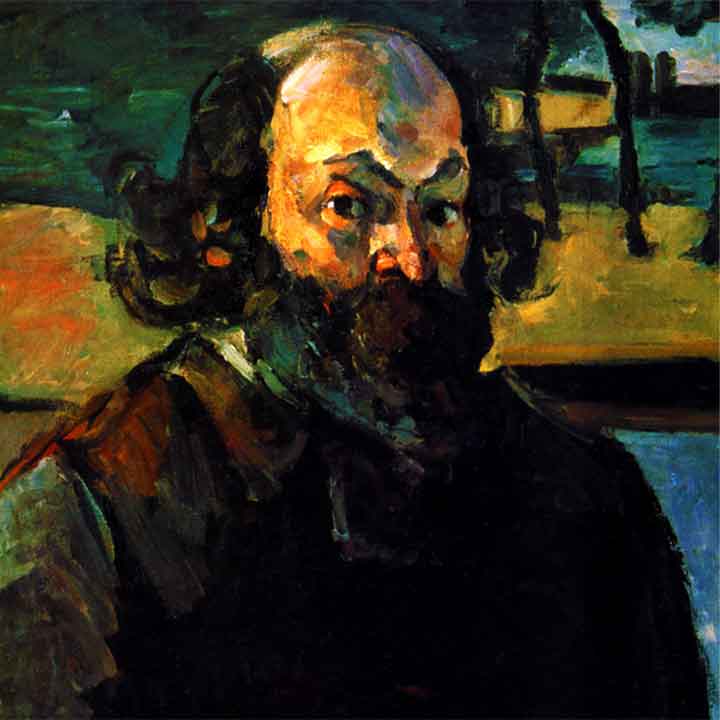
Alongside objectivity—a distinctive feature we can see in Cezanne’s works—he also manages to convey the dynamics of his inner world in his art. Recognized as one of the most valuable artists of the 20th century, Cezanne earned this reputation by dedicating his life to depicting the truth behind nature and the complexity within himself; unfortunately, however, people would come to recognize him in this way only years after his death. While developing his art in Paris in the 1860s, Cezanne carefully studied the works of Manet, Courbet, and Rembrandt out of admiration for their art. Inspired by their works, he blended vivid colors and painted portraits and landscapes using a palette knife or thick brushstrokes.
Cezanne’s Evolving Art
An element stands out in the paintings Cezanne created after 1865. This element is a chaotic expression of the conflict between the sexes. In many of his works from this period, Cezanne depicted this element in ways that were at times unsettling. We know that in his personal life, Cezanne adopted an attitude toward the opposite sex that could be described as shy or reserved. After moving to Paris—leaving behind his mother and sister, who were perhaps the women he got along with best in his youth—he began to have very little interaction with women.
However, this attitude toward the opposite sex may also have been an approach Cezanne chose of his own volition. We can understand from his own writings that he saw solitude as a fitting way of life. In short, the works he produced during this period—in which the element of inner conflict came to the fore—received no attention from either the art community or his friends at the time.
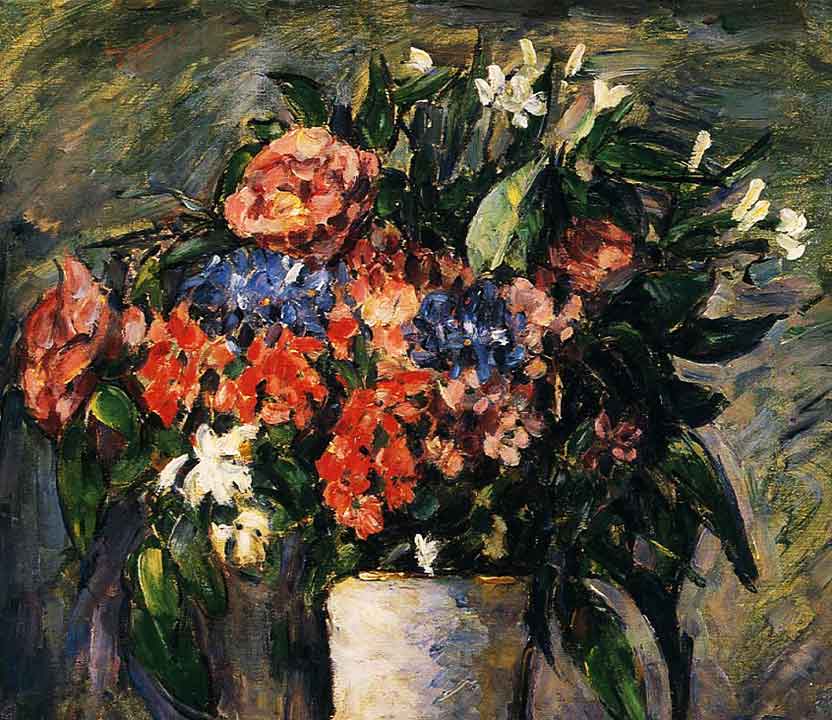
At that time, the artistic style endorsed and encouraged by the Salon juries and art authorities focused on achieving a detailed and “ ” realistic appearance using thin paints, fine-tipped brushes, and smooth surfaces. However, in contrast to the academic art style of his era, Cézanne’s artistic style was quite different. When beginning his works, Cézanne would spread thick paint mixtures with a palette knife.
He focused on creating strong contrasts with the rich, cool-toned paints he used, employing small, thick brushstrokes. During this period, Cezanne constantly strove to develop his own unique artistic style or formula. For this reason, he spent much of his time copying and studying the works of the great artists who came before him. In this way, he attempted to create an original style.
Cezanne’s art was distinctive and served as a source of inspiration for young artists. Nevertheless, it cannot be considered entirely separate from the fundamental elements of Impressionism. Cezanne was constantly developing his art; he aimed to express lasting impressions rather than fleeting ones. Among Cezanne’s favorite subjects were Mount Sainte-Victoire, bathers, and still lifes. In his later years, his artistic style increasingly embraced loose brushstrokes and striking colors.
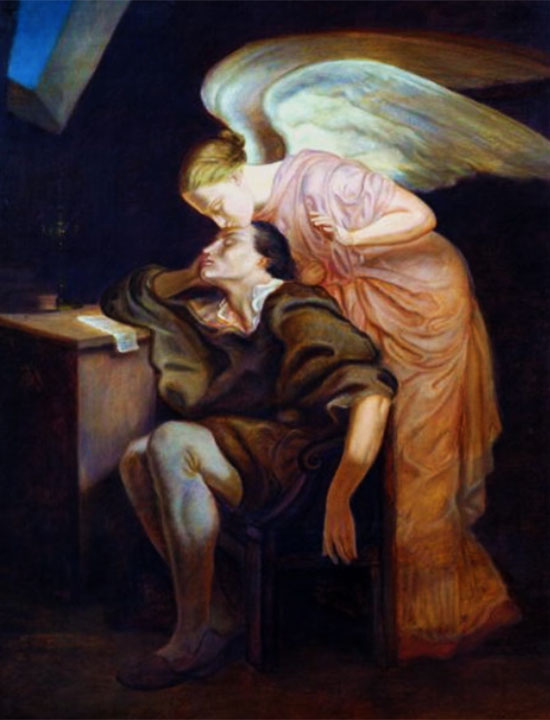
In this way, he adopted a more innovative style. Essentially, his artistic approach remained the same, but he had moved away from the complex color forms he had used in his earlier works. Before beginning to depict the subjects of his works, he would try to understand the effect the chosen theme evoked within him and reflect on it. Cezanne’s intense dedication to art took a toll on his health; in 1906, while painting outdoors, he was caught in a storm and lost consciousness. Some people who saw him carried him home, but about eight days later, Cezanne died of pneumonia that same year.