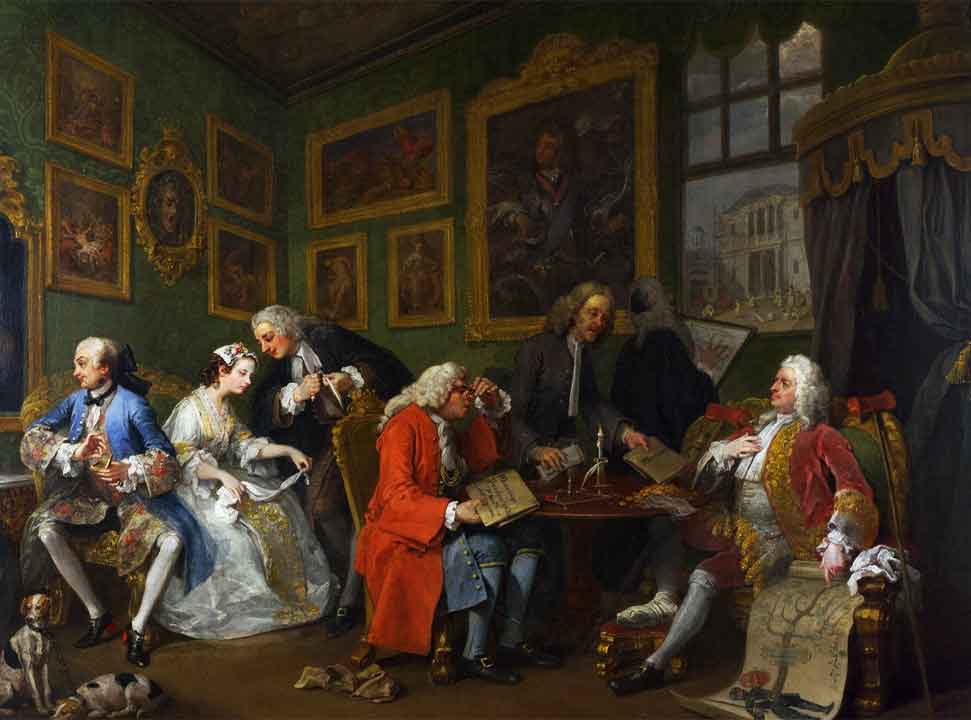
The Rococo style emerged in the 18th century and was particularly favored as an interior design style in the field of architecture. For this reason, Rococo designs were created with a focus on decoration rather than functionality. The Rococo style quickly gained popularity due to its elegant qualities.
Optimistic Ornaments and Decorations
The final quarter of the 17th century and the 18th century—known in Europe as the Age of Enlightenment—are recognized as a period when conservative social norms began to be questioned amid accelerating scientific advancements and technological innovations. The educated classes believed that reason and logic could free humanity from the anxieties that had led to the deaths of millions in wars waged under the influence of superstition or religious oppression. The spread of the printing press and encyclopedias, along with rising literacy rates, fostered the emergence of independent and innovative ideas in the visual arts as well.
In this environment, intellectual and sociopolitical reforms generally created a positive impact on people’s expectations for the future. This positive impact also significantly influenced art. As a result of these developments, the situation in America and Europe became less cause for concern compared to previous centuries. Concepts such as democracy and individual freedom began to take center stage. The Rococo movement emerged as an aesthetic expression of this period’s optimistic outlook.
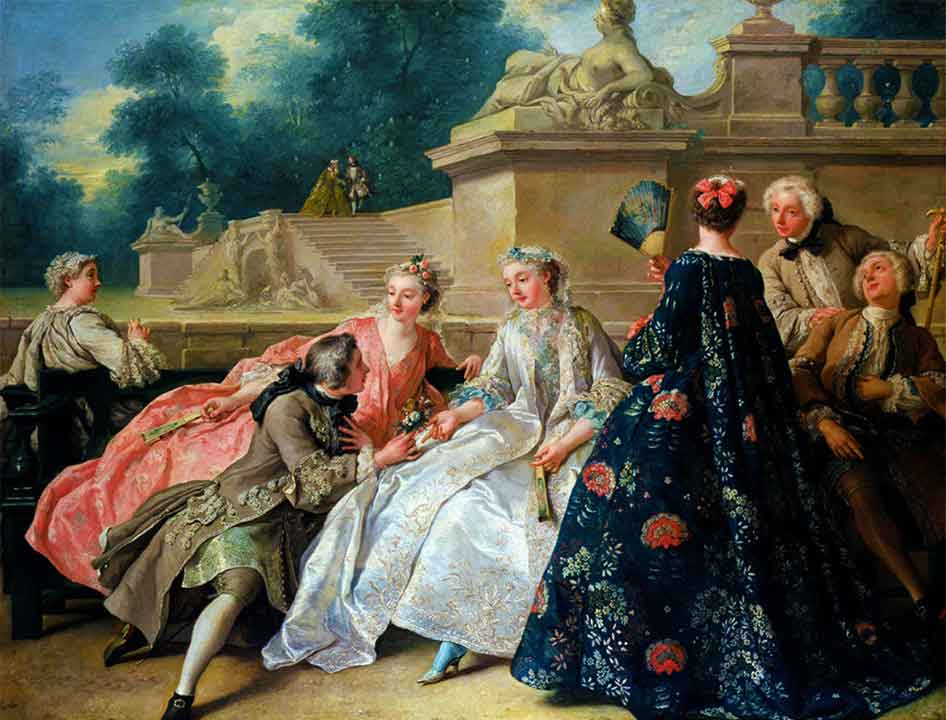
The term “Rococo” came into widespread use in the 1700s. It is believed to be derived from the French word “rocaille,” which refers to ornamentation made from seashells. However, because it first emerged in France, the Rococo style was originally known as the “French Style.” In art, an approach centered on entertainment and ornamentation was evident in the opulent appearance of King Louis XIV’s palace at Versailles.
The designs created under this approach did not conceal any intellectual messages. This aesthetic had become fashionable in royal palaces and among the French bourgeoisie. Themes drawn from everyday life, rooted in mythology and imagination, were preferred over historical and rigid religious themes. In this way, a highly light, elegant, ornate, and decorative art style emerged.
Famous Rococo Artists
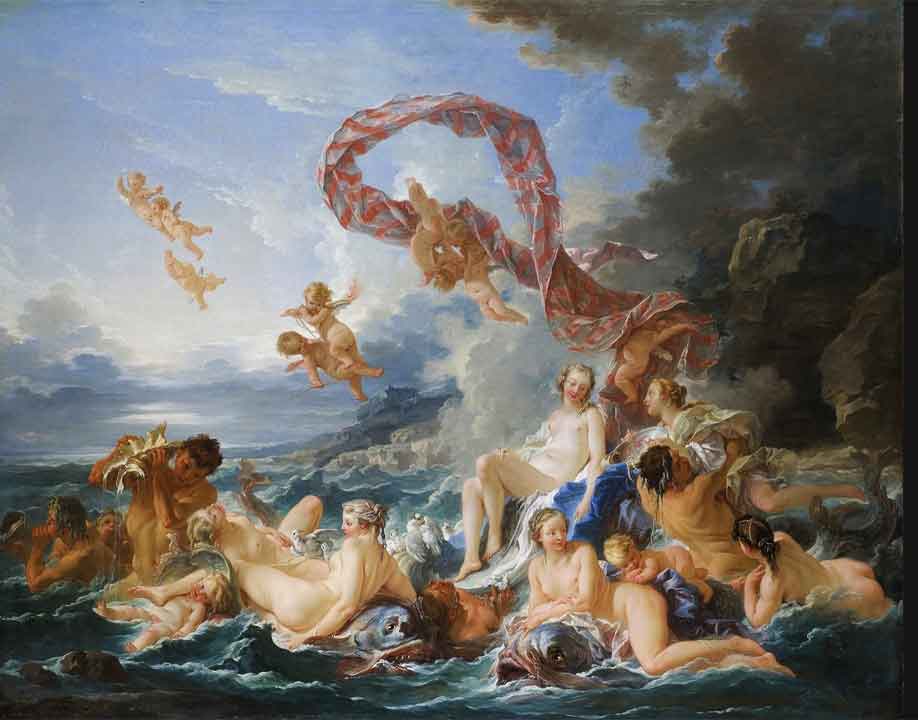
Rococo works, which retained some characteristics of the preceding Baroque style such as the use of complex motifs and forms—were designed on a smaller scale and incorporated oriental patterns. The Rococo style, which emerged in France over time, spread from France to Italy and throughout Europe, and from there to the Americas. Examples of themes depicted in the Rococo style include aristocrats portrayed at parties—performing, playing music, and flirting—often rendered in elegant, idealized tones. Jean-Antoine Watteau is one of the most popular artists known for producing Rococo-style works featuring “rural scenes” and fêtes galantes (lavish celebrations).
François Boucher, one of King Louis XV’s favorite artists, incorporated classical themes, allegories, and alluring forms into his portraits. Jean-Honoré Fragonard elegantly reflected the French aristocratic class of the pre-Revolutionary era in his works. Like many Rococo paintings, Simeon Chardin’s works—which were neither elegant nor decorative—depicted the life of the Parisian bourgeoisie. We can also see the influence of the Rococo style in Elisabeth-Louise’s works, particularly in her fluid brushstrokes and color choices.
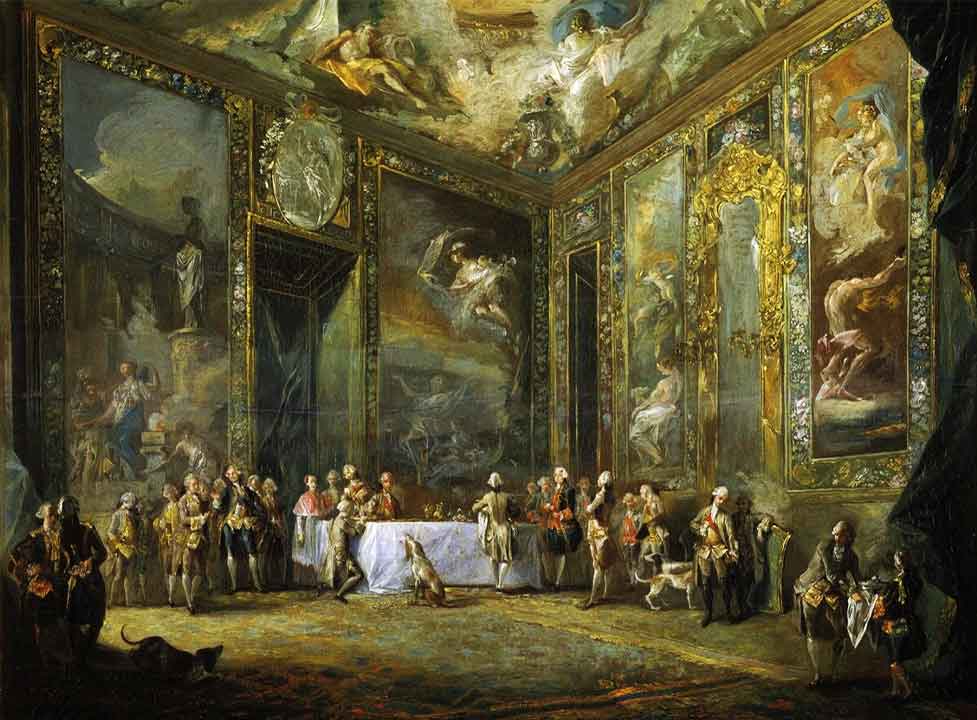
Etienne-Maurice Falconet elegantly explored themes of love and pleasure in the sculptures he created. In England, Sir Joshua Reynolds, Thomas Gainsborough, and William Hogarth; in Italy, Giambattista Tiepolo, Canaletto, and Francesco Guardi are masterful examples of leading Rococo artists in their respective countries. When we examine the Rococo period, we see that it was quite short-lived. In fact, overshadowed by Neoclassicism—which emerged afterward and reinterpreted the classical elements of Greek and Roman culture and art—Rococo gradually lost its former popularity in many places over time. In this way, the Rococo style, with its ornate aesthetic, came to an end.