Ukiyo-e is the name given to a type of print that originated in Edo (now Tokyo). “Ukiyo” is a Buddhist term meaning “the transient world” of ever-changing circumstances. The Japanese word “e” means “picture,” so ukiyo-e translates to “pictures of the transient world.” From 1603 to 1868, during the period when Japan was ruled by the shogun, Edo became one of the largest cities in the world.
From the 17th to the 19th century, under the repressive shogunate regime, restrictions were placed on entertainment, and various regulations were imposed on the pleasure quarters and entertainment districts in Japanese cities. As a result of these regulations, the difficulty of spending time in a pleasurable and enjoyable manner fueled people’s passion for entertainment and their desire to be entertained. Courtesans, geishas, sumo wrestlers, and kabuki actors became the most famous figures of the Edo period. These individuals became the subjects of popular ukiyo-zoshi novels (stories of the transient world), ukiyo-e paintings, and woodblock prints. Although “the transient world” originally meant the fleeting nature of life, it later came to be used to describe the relaxed, carefree, and pleasant atmospheres of theaters, restaurants, and teahouses—places far removed from the ordinariness and monotony of daily life and the growing city.
The Emergence of Ukiyo-e and Its Leading Artists
To many people, the colorful lives of these celebrities seemed to hover above the depressing realities of everyday life. Paintings by artists depicting the dazzling worlds of these flamboyant figures began to enjoy great popularity. Later, animals, birds, narrative scenes, and landscapes also entered the artists’ repertoires. Depictions of this “transient world”—or the world beyond ordinary reality—became extremely popular. For the first time in Japanese history, artists produced images that were appreciated by the general public. The name “ukiyo-e” comes from the feeling it gave viewers of floating above the depicted worlds and observing them from above. The images were drawn to convey the message that viewers could enjoy the pleasant aspects of life without defying the shogun or taking an active part in events. For the same reason, ukiyo-e paintings often employed an unconventional perspective to give viewers the sensation of floating above a landscape or scene.
Although most of the paintings were created before the invention of photography, they were often cropped—much like in photography—to create the impression of a fleeting moment within a scene rather than providing a general overview of the entire image. These unconventional compositions enhanced the dreamlike and fantastical qualities of the paintings. Diagonal lines running through the artwork created a sense of movement and emphasized the flatness of the paper on which they were drawn. No special effort was made to create different tones or textures. The prints were art, not representations of reality. Harmony was key, so areas filled with intense colors and motifs were balanced by the empty spaces between them. Ukiyo-e was popular among a large portion of the Japanese public, but most people could not afford to purchase these prints.
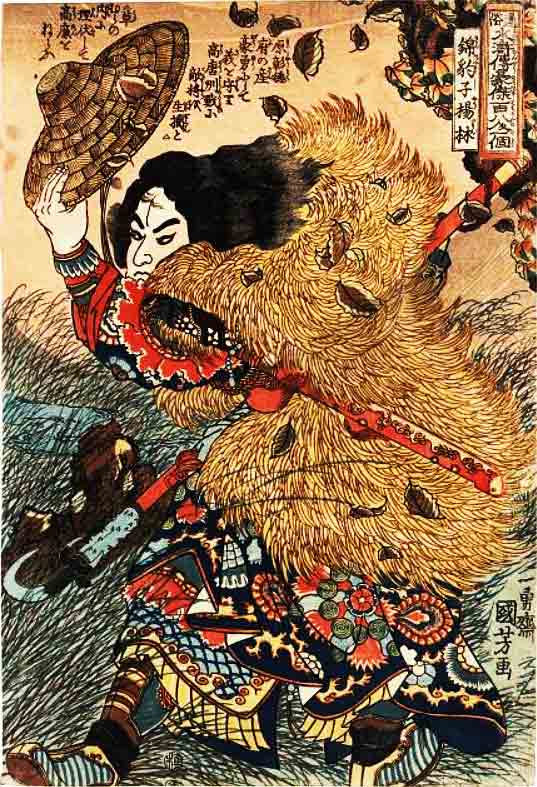
Early works were created using Indian ink, a costly material. Later, in 1670, Hishikawa Moronobu—known as the “father of ukiyo-e”—experimented with single-color woodblock printing. This method quickly gained popularity because it enabled mass production and made prices more affordable. Some of these prints were hand-painted with colored ink until 1765, when Suzuki Harunobu (1724–70) developed the color-printing technique. Although the results of this labor-intensive method were quite satisfactory, the colors—which became even more vibrant with the advent of color printing—served as an element that complemented the bold designs, making ukiyo-e even more popular.
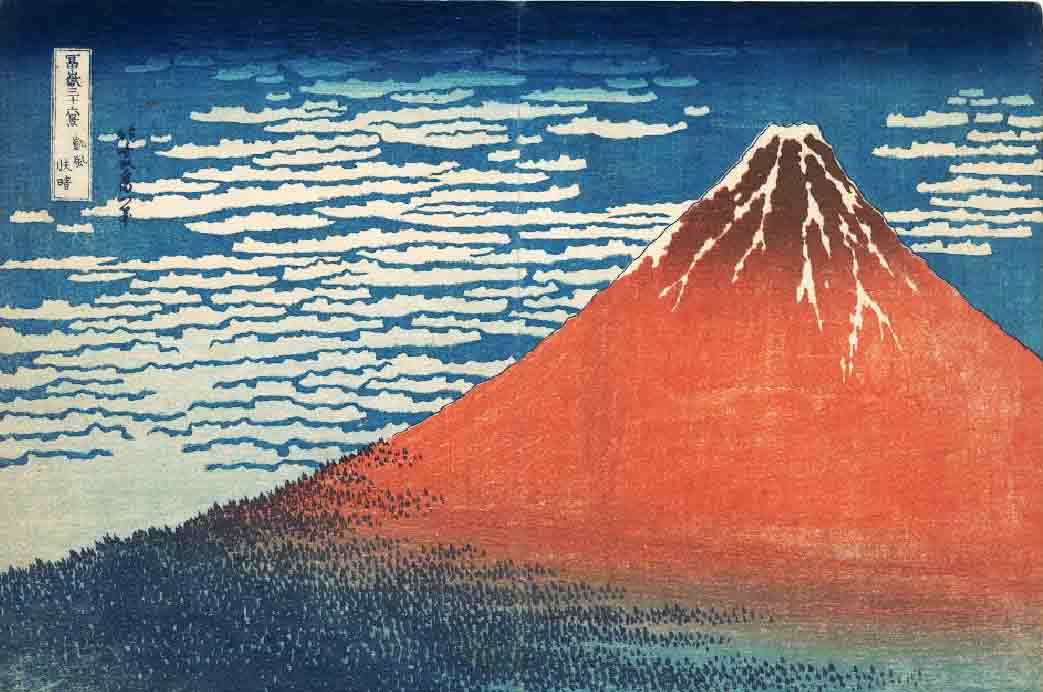
Another influential ukiyo-e artist of this period was Okomura Masanobu (1686–1764). Many Ukiyo-e prints by artists such as Kitagawa Utamaro (1753–1806) and Toshūsai Sharaku, who was active in 1794–95, were originally designed as posters advertising theater performances and brothels or depicting actors, courtesans, and geishas. By the 19th century, landscapes were added to these depictions of urban culture. Artists such as Katsushika Hokusai (1760–1849) and Anda Hiroshige (1797–1858) skillfully played with perspective to depict natural phenomena and wildlife in an elegant and emotional manner.
Japonism and the Artist Hiroshige
Between 1639 and 1854, the Japanese traded only with the Dutch and the Chinese. Despite this isolation, Western ideas and scientific discoveries were being introduced to Japan by the Dutch. Europe, too, was learning about developments in Japan, again thanks to the Dutch. After the Meiji Restoration in 1868, Japan resumed trade with the rest of the world. Western concepts such as photography and linear perspective influenced Japanese artists, and ukiyo-e gradually fell out of fashion. The prints, which had lost nearly all their value, began to be used to wrap exported goods. On the other hand, the impact of their discovery in Europe was sensational. The artistic ideas they encountered in these prints—such as the use of everyday subjects, unconventional viewpoints, oblique perspectives, bold and flat colors, and sharp contours—astonished European artists. Such ideas had never been seen in the West before and became a major source of inspiration for some of the most important Impressionist, Post-Impressionist, and Art Nouveau artists and designers. In France, this new craze came to be known as Japonism.

The image above shows a pack of foxes gathered beneath a massive holly tree, viewed from a high vantage point. This is the Oji Inari Shrine, located north of Edo. It was believed that foxes in the Kanto region gathered around the holly tree in front of the shrine on New Year’s Eve to transform into humans. The local people would observe the phosphorescent light produced by a certain type of mushroom to predict the following year’s harvest. Hiroshige, regarded as the last great master of ukiyo-e art, shifted the tradition—which had largely focused on depicting famous social figures of the time—toward nature, and his keen observational skills are evident even in this mythological work. The dramatic elements added to this composition by dynamic angles become even more effective when we consider that Japanese is read from right to left.