One of the greatest figures of Mexican cinema is the legendary director Guillermo del Toro. His most well-known and prominent work is the film Pan’s Labyrinth. A look at del Toro’s craftsmanship and an analysis of Pan’s Labyrinth.
As a national cinema, Mexican cinema has a style that reflects the late nineteenth century. *Y Tu Mamá También* (Alfonso Cuarón, 2001), *Amores Perros* (Alejandro González Iñárritu, 2000), *Gram* (Iñárritu, 2003), *Babel* (Iñárritu, 2006), and *Y Tu Mamá También* (Cuarón, 2006) are among the most enjoyable and well-known examples of this cinema. (The prominent directors of these films are Iñárritu, Cuarón, and Guillermo del Toro.) Although these directors’ films visibly follow the format of American mainstream cinema, it is also evident that certain parts (or even the entirety) of the films remain rooted in Mexico’s specific cultural motifs and concepts.
The Compass of Fantasy Cinema: Pan’s Labyrinth (2006)
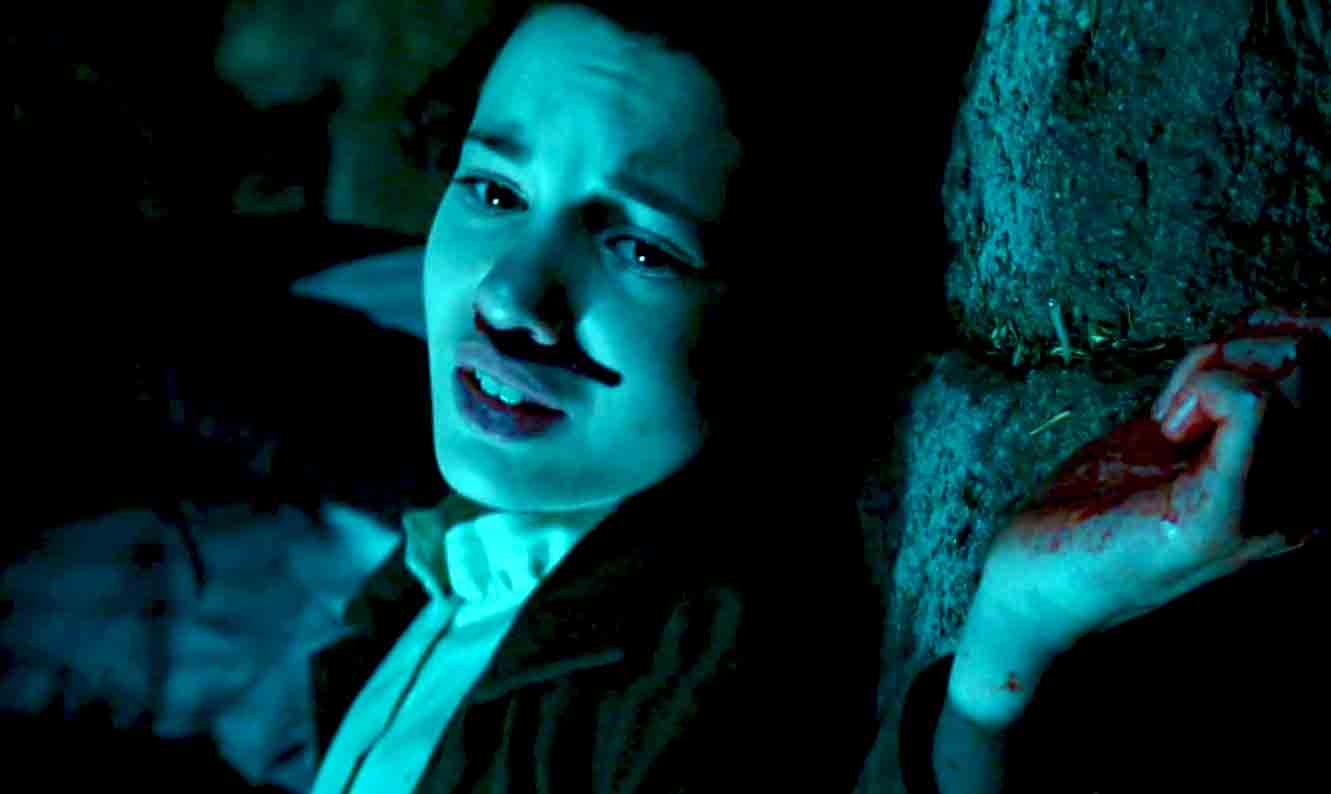
The year is 1944. A forested region in Spain has become a refuge for anti-fascist rebels. The brutal commander known as Captain Vidal—the rebels’ worst nightmare—uses an abandoned mill as his headquarters. His wife and stepdaughter are also there. Ofelia gradually begins to take exploratory trips into the forest. During one such outing, she discovers the underground labyrinth associated with Pan, the forest god—the very name that gives the film its title. (Pan: a half-goat, half-human forest god—translator’s note.) Pan assigns Ofelia three tasks, which she will later come to understand are connected to a long-standing legend. Ofelia takes on each of these challenging tasks, and her struggle is presented in parallel with the story of the Captain, who is fighting to capture the anti-fascist rebels in the forest. Mercedes, the farm manager whom Ofelia befriends in the forest, supports the guerrillas.
Although filmed in Spain, the director’s Mexican heritage is clearly evident in his blending of the aesthetics of Mexican Christian engravings with popular narrative forms, as well as the influence of Catholic imagery. Mexican cinema began to experience its own new wave in the early 1990s with films such as *Como Agua Para Chocolate* (1992) and *Cronos* (1993). Another factor contributing to the leap forward in Mexican cinema was the Mexican government’s establishment of the country’s two major film schools and the Mexican Film Institute. Another factor was the development of a certain creative consciousness among the works of directors who emerged in the 1990s. At a certain point, the Mexican government lost its position as the sole producer of films, which forced directors to turn to international sources of financing. Another notable feature of the 1990s was the emergence of many female directors, such as Busi Cortes, Guita Schyfter, Dana Rotberg, and Marisa Sistach.
*Pan’s Labyrinth* offers the audience an opportunity to grapple with the issue of violence. It is also evident that Del Toro confronts the concept of violence—and the choice between violence and nonviolence. In an interview, Del Toro stated that he is a fan of fairy tales; in his film, he blends different approaches into a single genre through a rich cinematic narrative. Violence is a common element in fairy tales, and *Pan’s Labyrinth* confirms this observation within its conceptual framework. In an article he wrote about the 2006 screening in London, Del Toro said: “Of course, this film also has a fairy-tale structure. However, rather than being a work that follows a sterile and clean form reminiscent of a children’s story, we strove to make it a film with a much more distinct stance—a film with sharp edges. To understand the style of this film, it would be helpful to recall the eccentric style Arthur Hughes used when illustrating Victorian fables.”
As a fantasy film shot without being tied to a specific source text, *Pan’s Labyrinth* not only achieved great success but also enhanced the genre’s reputation by distinguishing itself from horror and science fiction. Pan’s Labyrinth was filmed in the early years of the twenty-first century, a time when Mexico and Mexican directors were beginning to engage with the rest of the world. Iñárritu and del Toro are two directors deeply engaged with Mexican culture and imagery within this emerging cinematic movement. Alejandro González Iñárritu has made the following comments regarding the distinctive characteristics of Mexican cinema: “Our films are concerned more with the instinctual dimension of life than with its material dimension. We are moved more by our gut than by our minds.”
Guillermo del Toro’s Mastery
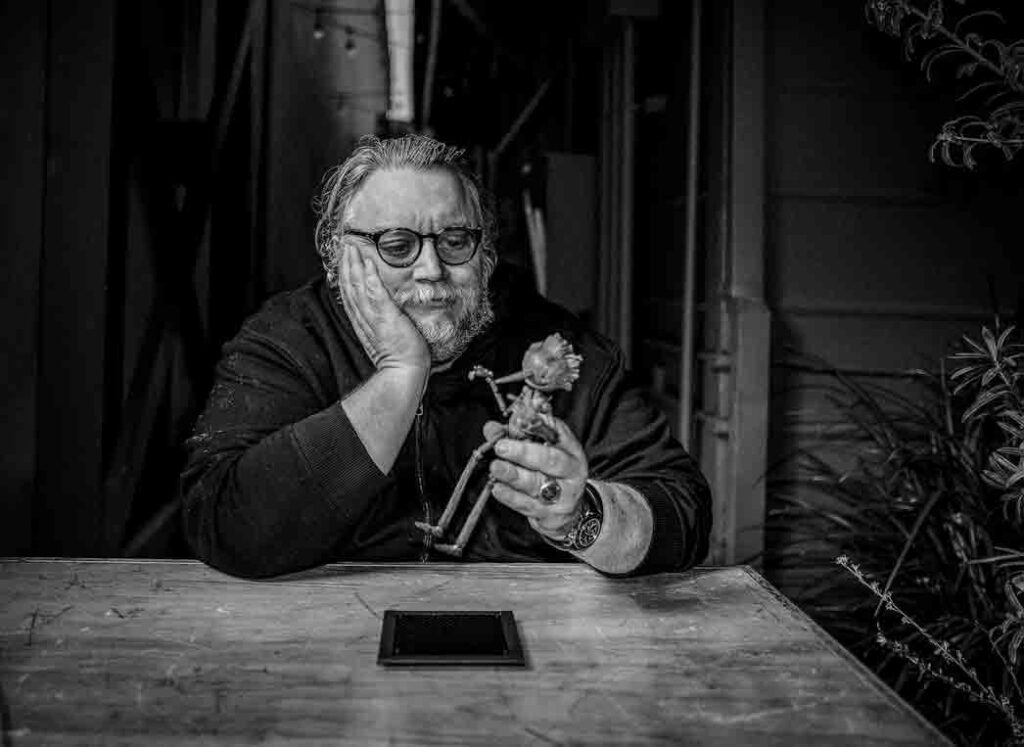
In fact, Del Toro had initially wanted to direct an adaptation of one of the Harry Potter stories, but later decided to stick with the *Pan’s Labyrinth* project. Although Del Toro frequently traveled outside Mexico to secure funding, the film ultimately achieved a distinctly Mexican character by focusing on the space between the fantastical and the realistic. In fact, Del Toro’s ability to secure funding was made possible by his collaborations with key local producers. To give the film a fantastical scale and quality, Del Toro did not shy away from using computer technology. In an interview, he commented on this: “We proceeded with a very delicate balance in the design of every stage; all the colors, shapes, and motifs that dominate the film were carefully arranged to align the fable with real life.”
The most captivating aspect of the film is its highly successful blending of genre-specific qualities; in an article, Mark Kermode described Del Toro as “the foremost living representative of fable-like cinema.” Although the film’s promotional campaign highlighted alluring phantasmagorical elements, the writer noted that the film is a war movie set against a fantastical backdrop. In an interview with *Sight and Sound*’s December 2006 issue, Del Toro says: “A vicious cycle is a process in which you lose yourself, whereas a labyrinth is a transitional process in which you inevitably move toward a new center of gravity.”
The difficult choice between the inevitability of life and death is also among the themes explored in the film. At the beginning of the film, the Captain squeezes Ofelia’s arm, injuring it. From that moment on, Ofelia rediscovers the value of life. The image of her clothes hanging from the dead tree at the entrance to the underground forest is frequently repeated throughout the film. The camera occasionally pans back to the clothes hanging on the tree, and each time they appear a little more tattered, with pieces of fabric scattering a little further to the left and right. It could be said that Del Toro, in this age of digital effects, has taken pleasure in the process of creating illusion by making delightful and effective choices—such as having the title character, played by Doug Jones, brought to life through a live-action performance featuring complex and enchanting costumes and professional face makeup.
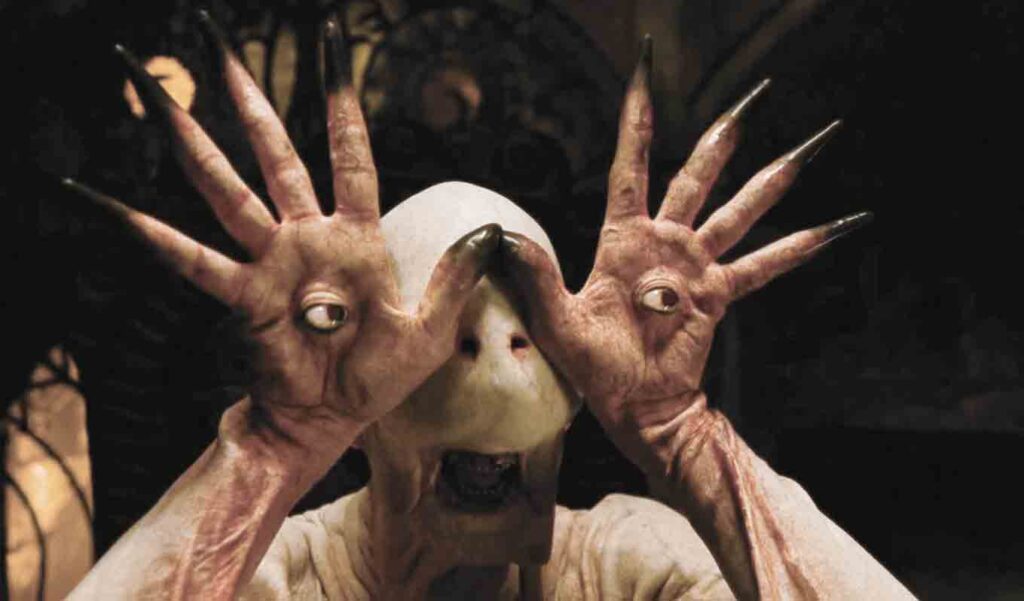
The image of the fairy sitting on a rock in the forest during the film’s opening scene evokes Miyazaki’s *Spirited Away* (2001). The film’s inclusion of explicit and detailed images of horror and violence can be explained by its adherence to the fundamental rules of the fairy tale genre—just as light and shadow always coexist. When it premiered in 2006, it was enthusiastically received as a fantasy film for adult audiences. Numerous reviews and critiques praising the film’s vast imagination and intelligence were published, such as the following excerpt from the renowned film magazine *Empire*: “There are numerous references to the world of magic, most notably the Pale Man—with his eyeball-like orbs and terrifyingly sagging skin—who has an intriguing encounter with Clive-Barkerian’s ghost.
In fact, it is not only Ofelia’s magical experiences that dominate the film. Nevertheless, a few relatively harsh reviews have also been published, such as Peter Bradshaw’s cold and critical piece in *The Guardian*: ‘What exactly is the reference to fascism in all these creatures? Or what is fascism’s discourse regarding these beings? An interesting visual universe has been chosen to depict fascism, but there are no particularly clear or distinct allusions.” Variety magazine, meanwhile, described the film as “a fairy tale that has absolutely nothing to do with children.”