While Europe was busy healing its wounds in the aftermath of World War II, the United States began to emerge as a political and economic powerhouse. Many European intellectuals and artists—including figures such as André Breton, Piet Mondrian, and Max Ernst—emigrated to the United States to escape persecution and torture. This situation created an environment that was highly conducive to the emergence of the Abstract Expressionism movement.
By the late 1940s, an atmosphere of optimism prevailed in the United States, and patriotism was on the rise. Interest in culture and American history grew, and a group of artists began creating with newfound confidence. Of course, the situation was not quite so rosy for all of America. Newspapers and news reports spoke of the destruction and suffering caused by the war; the first atomic bomb had been dropped on Hiroshima, the aftershocks of the Great Depression were still being felt in some regions, and the Cold War had begun. Under these conditions, many artists expressed the complex emotions—such as hope, caution, anger, horror, and fear—that both they and society felt about the times in which they lived.
The mutual interaction that has always existed between art, culture, and society has never been as intense as it was in the United States during the decades following World War II. While the Abstract Expressionists had been a small group of artists working in different styles before the war and connected only by loose ties, in the 1940s they charted radical new directions in their work that reflected the spirit of the times. With the United States’ entry into World War II in 1941, Americans began to confront the harrowing accounts and images of the atrocities unfolding in Europe. Beginning in the mid-1940s, many artists working in and around New York debated how to express their own feelings—and those of the nation—in response to the state of the world. Deciding that they could convey their messages through color and brushwork rather than narrative or thematic storytelling, they employed paint in an expressive manner.
Abstract Expressionism and the New York School
Abstract Expressionism was a general attitude rather than a specific style. Although the artists all knew one another, they did not plan to work as a group or form an art movement. Unlike the themes seen in the Social Realism and Regionalism movements that preceded them, these American artists aimed to express their emotions individually and spontaneously. European avant-garde art served as a defining source of inspiration for the Abstract Expressionists. Many artists who had flocked to America as immigrants began to engage with certain ideas that were taking root there. At the same time, there were numerous venues in New York where they could view works of art. The Museum of Modern Art opened in 1929 and, within a short time, hosted retrospective exhibitions of artists such as Matisse, Léger, and Picasso, as well as exhibitions themed around Cubism, Abstract Art, Dada, and Surrealism.
Other venues also featured exhibitions by various artists such as Mondrian, Gabo, and El Lissitzky. The Museum of Non-Objective Painting, which opened in 1939, showcased a selection of Kandinsky’s paintings. The term “Abstract Expressionism” was first used in March 1946 in *The New Yorker* magazine by writer and art critic Robert Coates (1897–1973) to describe the works of Arshile Gorky (1904–48), Willem de Kooning (1904–97), and Jackson Pollock (1912–56). Subsequently, other artists working in a similar style also began to be referred to as Abstract Expressionists. Since they were primarily based in New York, they were also sometimes referred to as the “New York School.” Among them were Lee Krasner (1908–84), Robert Motherwell (1915–91), William Baziotes (1912–63), Mark Rothko (1903–70), Barnett Newman (1905–70), Adolph Gottlieb (1903–74), Richard Pousette-Dart (1916–92), and Clyfford Still (1904–80). Abstract Expressionism describes the artists’ desire to create abstract and emotionally expressive paintings.
The Rise of Abstract Art
Primitive art, the ancient period, and Miró’s automatism are among the primary influences observed in Surrealism and Abstract Expressionism. Although all artists expressed their ideas individually, their works shared common elements such as massive canvases, expansive areas of color, minimal reference to real objects, and frameless paintings. Their first public exhibitions, held in the mid-1940s, did not make a favorable impression, largely because most visitors could not grasp what the artists were trying to achieve. Abstract art, also known as non-figurative or non-representational art, began to develop in the early 20th century, but its peak popularity occurred between the end of World War I and the 1980s. With the invention of photography in the 19th century, artists began searching for new methods to express what was happening in the world and the profound changes taking place. Different forms of non-representational art began to be seen as fresh, appealing, and progressive, and their popularity grew. There were two primary painting styles within Abstract Expressionism. These two styles, classified by their characteristics, are known as Action Paintings and Color Field Paintings.
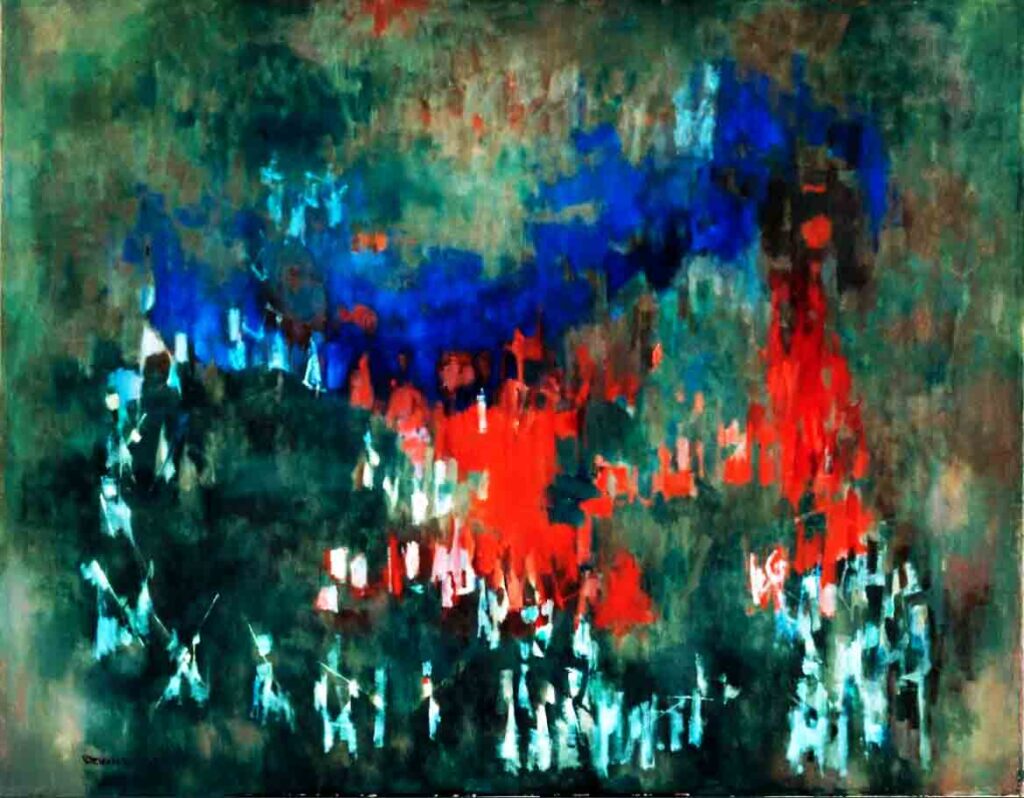
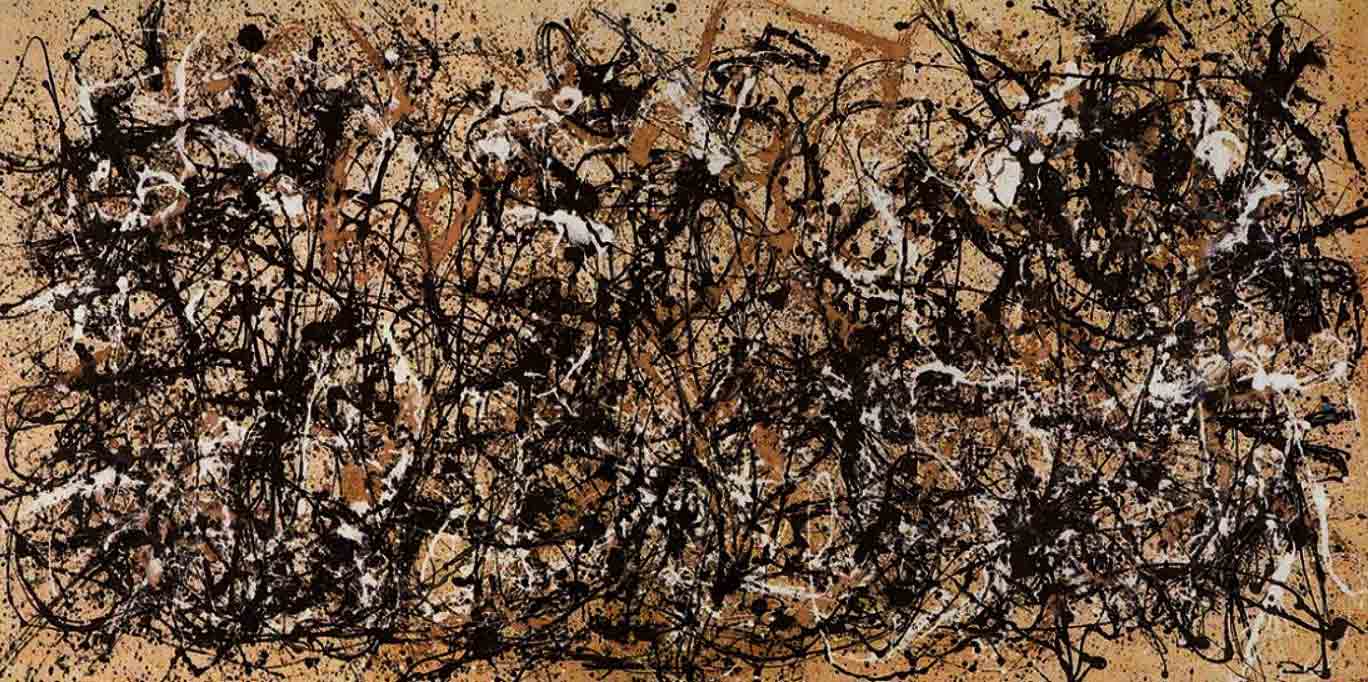
Many artists who created Action Paintings chose to construct their works—on massive canvases using brushes or other tools—with passionate, expressive, and energetic strokes and splatters, employing an intuitive approach within a deliberate lack of planning to express their inner worlds. They applied paint to the entire surface using methods such as dripping, spreading, and splattering. Since the movements and gestures used while applying the paint were considered more important than the resulting image, this technique was also known as “Gestural Abstraction.” Notable Action Painters included Pollock, de Kooning, and Franz Kline (1910–62). While the Action Painters were generally more intense and passionate, the second type of Abstract Expressionists—the Color Field painters—painted large areas of color on their massive canvases in a more subdued manner. Regardless of the method they used, all Abstract Expressionists were interested in Carl Jung’s (1875–1961) ideas on analysis, religion, dreams, and memory. Their common goal was to express the turmoil the world was experiencing in the aftermath of the war.