Ancient Mesopotamia made significant contributions to civilization in the areas of urbanization, state organization, architecture, art, technology, and, in particular, religion. Developments in the Mesopotamian region after the destruction of Babylon by Cyrus the Great and the Mesopotamian heritage.
While the New Babylonian kings maintained their rule over Mesopotamia and its surroundings—including the area formerly occupied by Assyria—the Medes had brought an end to Urartu and, advancing through Eastern Anatolia, had seized control of all of Central Anatolia as far as the Kızılırmak River. The Kingdom of Lydia, having weathered the Cimmerian invasions, was the only powerful kingdom in Anatolia still resisting the Medes. The prolonged Median-Lydian War ended in a truce following a solar eclipse, at the suggestion of the oracles. The date of this war and the subsequent treaty, as recounted by Herodotus, can be precisely calculated based on the solar eclipse: June 28, 585 B.C. Although western Anatolia was left to Lydia, most of the Near East remained under the control of the Babylonians and the Medes.
The First King of the Achaemenid Empire: Cyrus II
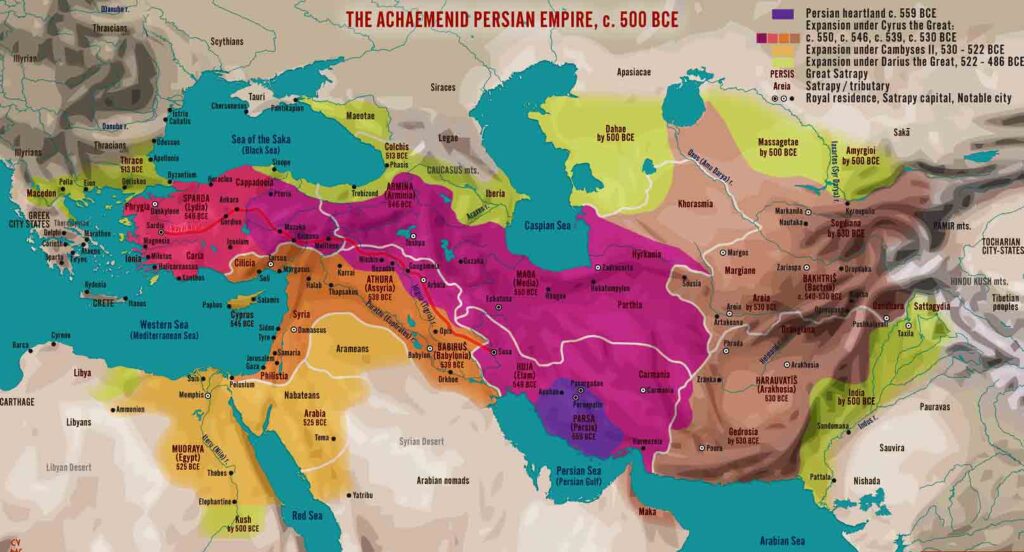
Cyrus II (530 B.C.), also known as Cyrus the Great, was the fourth king of the city of Anshan and the first king of the Achaemenid Empire. The background and rise to power of Cyrus, the first great Persian king, is almost identical to the story of the orphaned child who found work in the royal palace—a tale often attributed to the famous Akkadian king Sargon—and his subsequent rise to power. Cyrus (550–530), who took over the Median court and administration, defeated the Lydian king Croesus in 547, destroyed the capital Sardis, and established dominion over much of Anatolia. Cyrus / Kiroş / Koreş / Keyhüsrev also freed the Jews from exile. Koresh was warmly welcomed by the priests as a savior. E-sagila also “took him by the hand” and proclaimed him “King of the World, King of Babylon, King of Sumer and Akkad, and King of the Four Quarters”. He also returned to the Jews everything that had been stolen from the palace and the temple. He instructed them to rebuild their temple in Jerusalem.
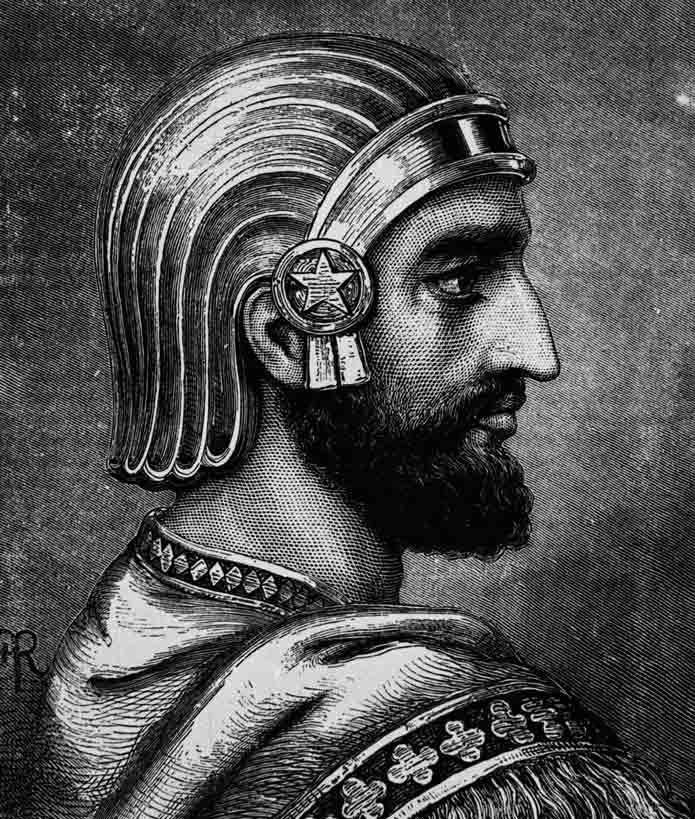
Shortly after the conquest of Babylon, Cyrus the Great commissioned the creation of an inscription to be written in his name. Known as the Cyrus Cylinder, this inscription was used to explain the rationale for the conquest of Babylon to the Babylonian people and to justify his actions. This inscription focuses heavily on the ideals of the Babylonian kingdom. While the Babylonian King Nabonidus is described as an incompetent, godless king, King Cyrus the Great is portrayed as a divinely appointed savior. Although it is often assumed that Cyrus the Great adhered to the Zoroastrian faith, it is said that there are no contemporary sources indicating that he was a follower of the Sage Zoroaster or even a worshipper of Ahura Mazda. In fact, Zoroastrianism as we know it today may not even have existed during the time of King Cyrus the Great. Beliefs and practices related to Zoroastrianism had not yet taken the form of an institutionalized religion until the late Sasanian period.
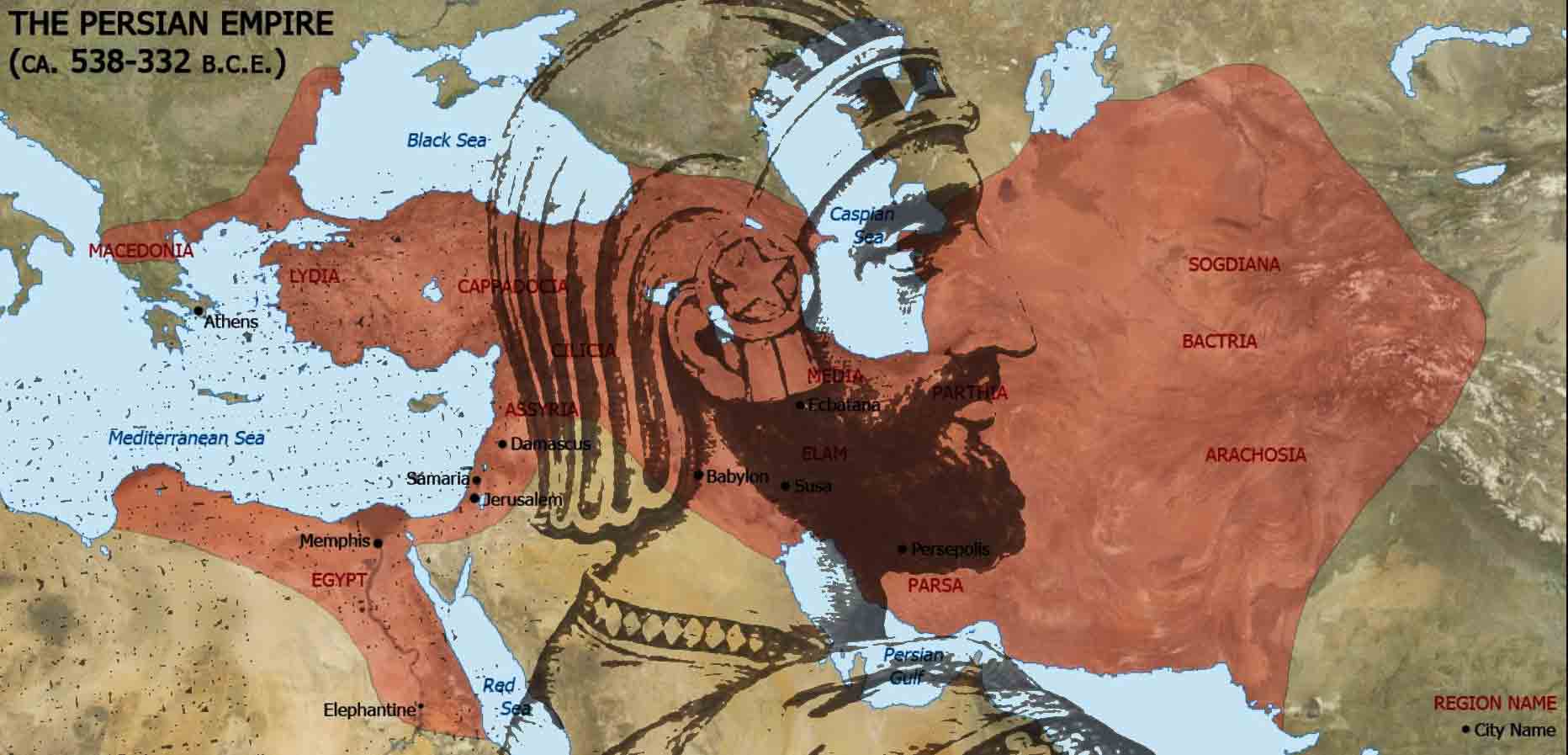
While the Persians showed respect for local kingdoms and cultures, they extended the authority of the central government to even the most remote corners through the road network and provincial system they established. All of Anatolia’s wealth and skilled labor began to serve the cities where the Persian royal courts were located. It was inevitable that this rapidly expanding empire would take an interest in its neighbor, Mesopotamia, and the mysterious Egypt. Indeed, in 539, Cyrus marched on Babylon with his armies. Although the Babylonian army attempted to resist near the famous wall that Nebuchadnezzar had built in the northern section where the Euphrates and Tigris rivers come closest to each other, it was unsuccessful, and the capital fell within a short time. With the reign of the Babylonian king Nabonidus, the Persian king also brought an end to a long era of history.
Persian Rule and Influence in Mesopotamia
With Babylon’s disappearance from the historical stage, the political dominance of the societies that had built upon Mesopotamia’s cultural legacy also came to an end. All of Mesopotamia and its surrounding regions came under the control of the Indo-European Persians. The wealth of the known ancient world now began to serve the growth of Iranian cities rather than Mesopotamia. During the reign of Cambyses II (529–522), who succeeded Cyrus, Egypt also fell into Persian hands, and a new era began in the ancient Near East. The Persians, placing importance on the beliefs and traditions of Babylon, succeeded in establishing control over the people in a short time and began implementing their own system by establishing new provinces in the region. Cuneiform continued to be used during the Persian period for writing Sumerian and Akkadian documents. However, because the alphabet was easier to use, Aramaic gradually became more widespread.
The Persians did not reject the Mesopotamian heritage; on the contrary, by restoring temples and other important structures in the region, they contributed to the continuation of this cultural legacy. The fact that Aramaic served as a common language spoken in many regions of the empire facilitated the transmission of Mesopotamian traditions to subsequent generations. (Influence of the Arab-Semitic peoples) The fundamental principles and beliefs regarding divination, magic, and religion that emerged in Sumer and Babylonia found a place in the collective memory of all Mesopotamians. (This point is important for us—particularly the influences of the Arab-Semitic peoples, such as the cult of stars and planets, the worship of the moon and the sun, etc.)
Many fundamental myths, such as “Creation” and “The Flood,” preserved in cuneiform documents, merged with the messages of later monotheistic religions—which drew from this collective memory—and have been passed down to the present day. Babylonian trade flourished thanks to the Persians, and the influence of Persian culture grew steadily. The Persian religion merged with new teachings. Their gods were imbued with qualities associated with the stars. Ahura-Mazda was identified with Bel Marduk. The goddess Anahita, meanwhile, absorbed the qualities of Nina, Ishtar, Zerpanitum, and other Babylonian “mother goddesses.”