The Kabbalah tradition is a mystical movement that has been ongoing for centuries. Since it bears many similarities to the Sufi factions of the Abrahamic religions, it has also been called Jewish mysticism. We will discuss the fundamentals of Kabbalah and important Kabbalists such as Isaac Luria.
Historical Origins of Kabbalah
There are various claims regarding the origins of Kabbalah. Kabbalists generally maintain that Kabbalah teachings do not have a specific beginning. What we call Kabbalah is something given and taught to us directly by God; therefore, it has no beginning. This is a claim put forward by some Kabbalists, particularly those who have delved deeply into Kabbalah and dedicated themselves to it. Another school of thought traces the origins of Kabbalah back to Ancient Egypt. Some even trace this process back to the Assyrians. In other words, they point to a history spanning approximately 3,000 to 4,000 years. There is also a different group that traces its origins to Ancient Greece. They attribute this specifically to Pythagoras, as we can clearly see how much Kabbalah teachings were influenced by Pythagorean philosophy. In this regard, since there is no solid basis for the other claims, the second view appears more reasonable. Of course, we cannot say with certainty that Kabbalah began in Ancient Greece; after all, we do not know this for sure. However, Pythagoras’s influence here is undeniable.
Kabbalah is, at its core, an oral tradition. Written transmission is prohibited. It is not a religion but a mystical movement; some even refer to it as Jewish mysticism. The reason it relies on oral tradition is the master-apprentice relationship. In Kabbalah, there are no methods such as teaching large groups in a specific setting. There is a master-apprentice relationship, and the tradition is passed down orally. In other words, it is practice-based. The master teaches the apprentice what to do and how to do it, but the knowledge is not conveyed through written notes; as we mentioned earlier, it is primarily practice-based. Magic is a very important part of Kabbalah. By “magic,” we mean the power to influence other beings and the methods used to do so. For this reason, there are those who use Kabbalah teachings for very base purposes. Of course, most Kabbalists are not like this, but there is a segment that uses Kabbalah for such purposes.
As a written tradition, Kabbalah dates back to the 12th century. This is the generally accepted view and is stated as such in books on the subject. The etymology of the word “Kabbalah” comes from the root “Q-B-L.” The word “kabul” (to accept) also comes from the same root. “Kabbalah” is derived from this root. Kabbalah means to accept, to receive, to adopt, or to accept what is given. If a person wishes to study Kabbalah in depth—and since a significant part of Kabbalah relates to magic, if they wish to explore its magical aspects—Kabbalah alone is not sufficient. They must also learn Hebrew. Without knowledge of Hebrew, they cannot succeed. Let this serve as a brief note.
Kabbalists interpret the Torah, the book of the Old Testament. They believe that within the Torah lie secret mysteries that God has hidden within the text. The Torah consists of the first revelations received by the Prophet Moses when God called out to him as he approached a fire near Mount Sinai. Kabbalists also believe that there are many more hidden meanings within these words. In other words, according to them, there are very secret meanings in the Torah that go beyond what was revealed to Moses. For these reasons, Kabbalah is referred to as Jewish mysticism. Incidentally, the name “Torah” is derived from the name “Tur”—that is, the place where these words were revealed to Moses.
Now, setting aside the historical context, let’s touch on the foundations, principles, and ideas of Kabbalah. First and foremost, the universe is a completely unified, single structure. Everything in the universe is a part of the Creator. In other words, everything comes from the One. At the same time, people, objects, and planets are also small gods. Since everything comes from God, they, too, are a part of Him. Therefore, everything is a small creator—that is, a “micro-logos.” Furthermore, Kabbalah explains how existence and creation emerged through the eternal light. The Creator reveals Himself through the eternal light—in objects, in life, and in matter. Beyond this, there is the tradition of the Sefirah in Kabbalah. “Sefirah” is used to mean “number” or “to count.” The word “Sefirot” is the plural form of “Sefirah” and means “numbers” in Hebrew. Thus, while the singular term “Sefirah” denotes a whole, the plural term “Sefirot” denotes the parts or stages of that whole. According to the Sefirah tradition, God reveals Himself through ten distinct manifestations.
Kabbalah texts essentially consist of three main works. The written record of Kabbalah teachings dates back to the 12th century. The first text is *Sefer ha-Bahir*, which means “The Book of Radiance.” This book was one of the most influential works on Kabbalah in the 12th century. Kabbalists view this book as a symbolic, mythical interpretation. Kabbalists are particularly interested in and engaged with symbols, numbers, geometry, and music. It is precisely at this point that we can clearly see the influence of Pythagoras. Incidentally, the word “music” we use has its roots in Ancient Greek and is derived from Pythagoras. Kabbalists also believe in the concept of the transmigration of souls. The model of the transmigration of souls they believe in resembles a Pythagorean-style Orphic transformation more than the model of reincarnation. According to Kabbalists, no matter how much you read the Torah, you cannot learn the teachings of Kabbalah. Because Kabbalah is something that develops in the heart. In other words, you cannot reach the Creator, feel Him, or see the truth within it simply by reading the book. If we draw a parallel with Islamic Sufism, the “eye of the heart” must also be open; you cannot understand Kabbalah simply by reading.
The teachings of Kabbalah were revived in the 16th century following the period after the first primary text. The person responsible for this was Isaac Luria. Luria was a religious scholar born in the 16th century in Jerusalem. His family were Jews of German-Polish descent. He later moved to Cairo, Egypt, and from there to Safed. He passed away in the Safed region. During his lifetime, he officially breathed new life into Kabbalah. Luria proposed the Theory of the Break. Luria interpreted that the Redeemer, the Messiah, would emerge from within Kabbalah. Indeed, shortly thereafter, Shabbetai Zevi appeared and claimed to be the Messiah. In this regard, Shabbetai Zevi can be considered a disciple of Isaac Luria.
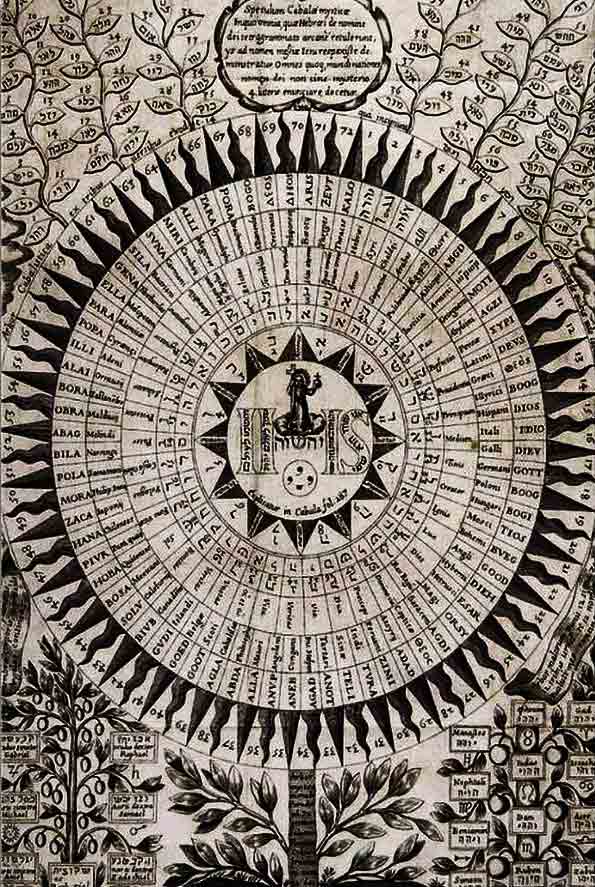
The Primary Texts of Kabbalah
As we mentioned, Kabbalah is fundamentally based on three primary texts. One of these books is Sefer ha-Zohar (The Book of Splendor), another is Sefer Yetzirah (The Book of Creation), and the third is Sefer ha-Bahir—the Book of Radiance—which we mentioned above. The authors of these books are unknown. Although the Book of Bahir is an anonymous work, it is attributed to Rabbi Nehunya ben HaKanah. HaKanah was generally a man who lived in a state of trance and ecstasy. He wrote certain texts while in this state of ecstasy. There is a traditional belief that the Book of Bahir is based on these writings. This man had disciples. In the lessons he gave, he did not discuss very foreign topics. He speaks of things that could be heard in any Sufi setting today. The reason for this is that Sufi sources stem from the same origin. He speaks of things such as subduing animalistic instincts and desires, and feeling love for the Creator and the universe.
Whatever a person seeks, they must seek it within themselves. We cannot reach the Creator by looking up at the heavens. We must start from ourselves and proceed by induction. Because human beings are also a part of the Creator; therefore, they can reach Him by starting from themselves. Otherwise, you cannot reach God through mathematics or science. In the Pythagorean sense, the transmigration of the soul was codified in the 12th century in the Kabbalah teachings through the Book of Bahir. This book also discusses the famous concept of the Cosmic Tree. In the *Yetzirah*, Kabbalah is divided into two distinct groups: one theoretical and the other practical. The Creator communicates through the numbers and letters of the universe. This is not like the belief in revelation found in the Abrahamic religions. In other words, God speaks to us through symbols.
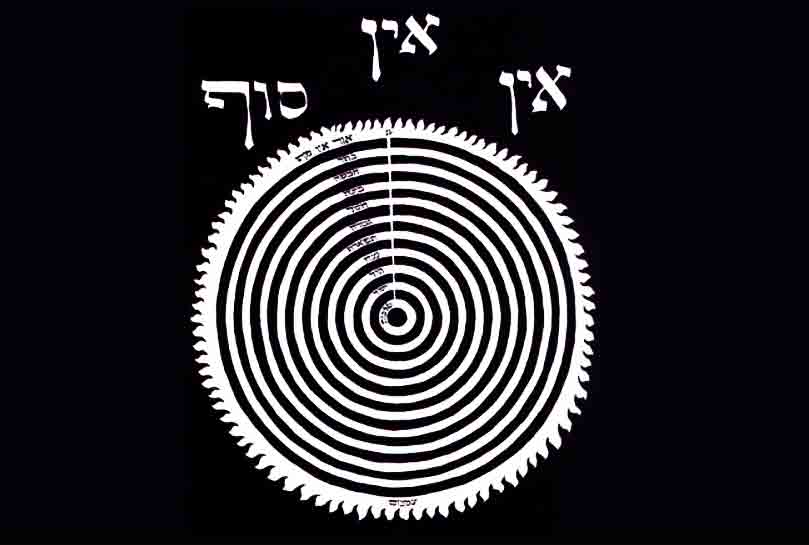
As mentioned above, this book has two sections. The first section discusses the 32 paths of wisdom, while the second section discusses creation. The first section describes the self-formation and development of existence. How did God, by limiting Himself, descend from transcendence to immanence? How did existence come into being? In the second section—the section on creation—the events that unfolded sequentially during creation are explained. In Kabbalah, there is a concept known as Ein Sof. This idea refers to the Creator’s ten stages of formation. It is an explanation that traces creation from the infinite Creator, the eternal light, through ten stages, all the way to the present day and to us, human beings. These stages are called sefirah. It can be thought of as a concept explaining God’s method of creation. This system of ten can be visualized as descending from top to bottom. The channels and qualities above influence those below, and this cycle proceeds downward in a chain-like sequence. In total, the entire creation consists of ten stages.
The Sefer ha-Zohar is, in fact, a commentary on the Torah. However, unlike the Sefer ha-Bahir we mentioned earlier, it offers more mystical interpretations. Incidentally, there is a belief that Kabbalists perform rituals specifically with ten people. This is not accurate. Furthermore, we noted that Ein Sof consists of ten stages of creation. Pythagoras’s Tetraktys triangle also consists of ten points. These can be considered related. Today, the Zohar is more popular than the earlier Sefer ha-Bahir. Presumably, the inclusion of more mystical interpretations has captured people’s interest. There are even those who claim the Zohar is more valuable than the Torah itself. The historical progression is roughly as described. Now let’s delve directly into the heart of the matter—the essence of Kabbalah. What do Kabbalists actually think and claim?
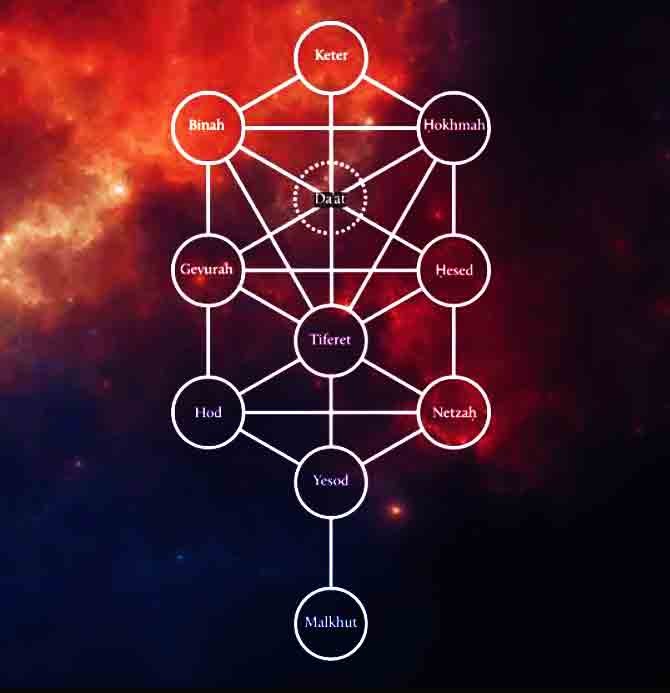
The Concept of the Tree of Life in Kabbalah
Now let’s talk a bit about the Tree of Life, or the Sefirot. This tree bears magical fruits. Only God can reach these fruits; they are harmful to humans. This Tree of Life later appears in the stories of Adam and Eve in the texts of the Abrahamic religions. However, according to Kabbalists, in its original form, the Tree of Life consists of ten Sefirot. The topmost Sefirah is the Crown, or Keter. Keter is the first light and the final destination of the cycle. This is where everyone will return. It is the very top of the Tree of Life. The Crown encompasses everything that has been and will be. It is also the First Cause—the cause of all things. It reveals the Creator’s splendor. Once Keter is experienced, there is no turning back.
Wisdom is the second Sefirah. Wisdom is the father; it represents intellect and philosophy. The third Sefirah is the Sefirah of Understanding. It represents motherhood, femininity, and nature. This Sefirah balances violence and is connected to compassion. It is in a lower category than Wisdom. The Sephira of Mercy emerges through the light of Da’at. It is love, the cause, and the teleological purpose. It is the goal; when we do something, we do it according to Hessed. There is also the Sephira of Justice, which emerges from the Sephira of Hessed—that is, Gevurah. This, too, influences action. When we do something, we do it with a sense of Justice. The entire universe operates this way. Then comes Beauty, or Tiferet. According to Kabbalists, Moses and the other prophets have reached this level. Of course, anyone can ascend even higher. If such a person can reach the level of a prophet while still alive, neither heaven nor hell will hold any significance for them.
From aesthetics and Beauty, Eternity emerges. Beneath Eternity lies Vibration, or Hod. Hod, in turn, lies beneath Beauty. Here, we have now fully entered the realm of the body and matter. Consciousness now exists, and physical and chemical processes emerge. Then comes the Foundation, or Yesod. Yesod is what Freud called the unconscious—the place that shapes one’s personality. The importance of Yesod is this: Whatever you seek, you must seek it within yourself. That is why this place resembles the unconscious; this is where you will search. One might say: Think well, think clearly, be virtuous—and you will naturally find your own path. Finally, there is Malkut, or the Kingdom. Here, the Tree of Life is completed. This is merely a bridge—a bridge to the upper realm. At this point, one reaches the world. Death is always a new beginning. After all, if you were born into this world, you arrived here naturally by passing through certain cycles of death and life, and naturally, this cycle will continue.